REVIEW · BERLIN
Berlin Walking Tour with Audioguide on Your Smartphone
Book on Viator →Operated by TouringBee · Bookable on Viator
Berlin teaches itself when you control the pace. This smartphone audioguide walk strings together key sights from Pariser Platz to Alexanderplatz, using an offline GPS map and replayable stories you can pause for breaks. One catch: the app can freeze, and the official 2-hour stroll may run closer to 4 if you add a lunch stop.
This route is built for “see the highlights, then keep wandering.” You’ll move from neoclassical landmarks to Holocaust remembrance, then into Cold War leftovers, East German quirks like Ampelmännchen, and big-picture Berlin icons such as the Television Tower and Museum Island.
If you’re comfortable reading a phone map and bringing your own headphones, this is a low-stress way to learn. If you hate tech hassles, keep a little patience handy.
In This Review
- Key things you should know before you start
- Price and value: why $6.61 can work
- How the smartphone audioguide actually works
- The walking route: what 2 hours turns into in real life
- Pariser Platz and Brandenburg Gate: start with the big postcard
- Reichstag views and the politics of transparency
- Holocaust Memorial: 10 minutes that can feel like forever
- Führerbunker: Berlin’s dark history in plain sight
- Ampelmännchen and the Trabi: East German icons, human-sized
- Checkpoint Charlie to Gendarmenmarkt: border drama then elegant calm
- Bebelplatz: book burning memory and a glass detail
- Unter den Linden landmarks: Frederick the Great, Opera, Cathedral
- Museum Island and the Marx and Engels Forum: big institutions and ideological leftovers
- Red Town Hall and Alexanderplatz: government red bricks to GDR skyline
- App performance and “works for me” vs “not for me”
- Who this tour suits best
- Should you book this Berlin smartphone audio walking tour?
- FAQ
- How long is the Berlin walking tour with smartphone audioguide?
- Is there a human guide on this tour?
- Do I need headphones?
- Does the tour include GPS navigation and offline help?
- Are entrance tickets included for attractions like viewpoints or museums?
- Where does the tour start and end?
Key things you should know before you start
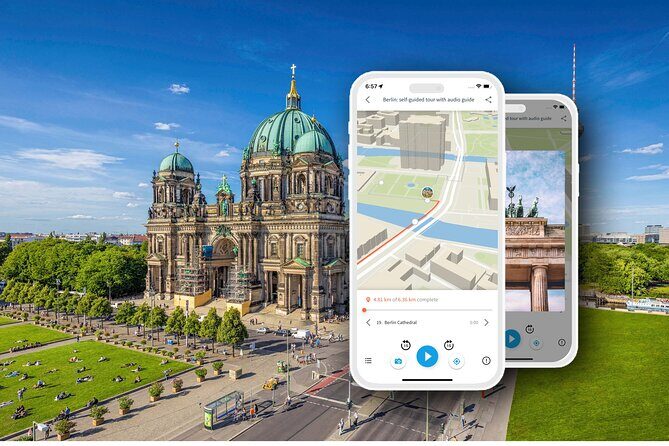
- Offline map + GPS route: No wandering in circles if your signal drops.
- 24 audio recordings: You get more than just the usual photo-op labels.
- Pause and restart anytime: Perfect for quick coffee breaks and photo moments.
- Headphones required: Plan to pack your own, since none are included.
- Estimated 2 hours can stretch: Expect extra time if you stop for lunch, viewpoints, or slower pacing.
- Some places may need separate tickets: Entrance fees are not included.
Price and value: why $6.61 can work

At $6.61 per person, you’re basically paying for audio, a map, and a route plan. In plain terms: it’s cheaper than most guided walking tours, and you don’t have to match your pace to anyone else’s.
The value is strongest if you like:
- stopping for photos without feeling guilty
- replaying confusing bits later
- taking detours for a snack or a quick restroom break
The tradeoff is also plain: this is self-guided. You’ll be doing the walking and navigation, and the experience depends on your phone behaving. One mixed point in the feedback was that the tech wasn’t always smooth, including an app freeze and occasional GPS quirks.
You can also read our reviews of more walking tours in Berlin



How the smartphone audioguide actually works

You’ll use an iPhone or Android app with a mobile ticket. After you book, you download the app, activate your purchase, and follow the route on the phone map. The route uses an offline map and GPS navigation, plus illustrations meant to help you recognize what you’re looking at.
You’ll also have audio recordings—24 tracks covering Berlin sights and history—with a 1-year access window. That matters: if you want to revisit later, you can.
Practical tip: bring your own headphones. The tour notes that headphones aren’t included, so don’t assume you can borrow a pair at the start.
The walking route: what 2 hours turns into in real life
The tour is set around roughly 2 hours, but your actual time depends on your pace. In one experience, the walk took about 4 hours, not counting lunch. Another person clocked over 10,000 steps.
That doesn’t mean the tour is poorly planned. It usually means Berlin is hard to rush. You’ll want time at key stops like the Brandenburg Gate area, the memorials, and the viewpoints around Museum Island and Alexanderplatz.
So I suggest you treat this as a half-day idea: start in the morning or early afternoon, and leave room to slow down.
Pariser Platz and Brandenburg Gate: start with the big postcard

Your tour begins at Pariser Platz, a classic square right next to the Brandenburg Gate. This is a smart opening because the area gives you context fast. The audio helps you frame the gate not just as a famous structure, but as a symbol tied to the city’s turning points.
From there, you’ll reach the Brandenburg Gate itself. Look for the neoclassical proportions, the columns, and the Quadriga statue. The story centers on how the gate went from being linked with division to becoming associated with unity after reunification. The surrounding streets are lively enough that even if you don’t linger long, you’ll feel you’re in the historic core.
If you like architecture, this start is a good “warm-up” before Berlin’s heavier stops.
Reichstag views and the politics of transparency

Next up is the Reichstag, Berlin’s parliamentary powerhouse. The audio focuses on the glass dome idea—transparency and democracy—and the contrast between historic and modern architecture.
What makes this stop worth planning for is the promise of panoramic views. But since entrance fees aren’t included, treat the dome visit as something to check in advance. If you’re hoping to climb up, build extra time for security lines and whatever the day requires.
Even if you only spend time looking around the building, this is still a key “why Berlin is Berlin” moment.
A few more Berlin tours and experiences worth a look






Holocaust Memorial: 10 minutes that can feel like forever
The Memorial to the Murdered Jews of Europe is one of those places where you don’t need a long tour. You need space to think. You’ll walk through the grid of concrete slabs, and the audio is designed to guide your attention to the feeling of the site—loss, remembrance, and weight.
The subterranean Information Centre adds essential context. If you only skim the surface, you might miss that grounding. If you have the energy, spend time inside when you can. Admission isn’t described as included, so plan on checking any ticket needs.
This stop is free to visit at the memorial area, and it’s also the emotional anchor of the whole walk.
Führerbunker: Berlin’s dark history in plain sight

After that, you’ll head to the Führerbunker, the underground complex where Hitler spent his final days. Today it’s quieter than the name suggests. It’s essentially a somber site with informational context, and part of what makes it effective is that it’s not staged like a theme park.
You’ll get a reminder of how quickly an era can end, and how the city has to live with what happened beneath it.
Because this is a stop you should treat with respect, don’t try to speed through. Ten minutes here is better than twenty elsewhere.
Ampelmännchen and the Trabi: East German icons, human-sized

Now the route changes tone. You’ll look for Ampelmännchen, the traffic light figures that began in East Germany and later became a symbol of unity.
This is a relief break in the best way. After heavy stops, the story shifts to everyday design and how culture sticks around—even after politics change.
Then you’ll also encounter the Trabant (Trabi) theme. The tour materials frame it as an East German automotive icon, now used for nostalgic trips around Berlin. It’s a fun contrast: history not as a lecture, but as something people still play with.
If you’re the kind of traveler who likes how people remember the past in small objects, this pair of stops will hit.
Checkpoint Charlie to Gendarmenmarkt: border drama then elegant calm
Next is Checkpoint Charlie, the Cold War relic tied to the city’s divided days. The audio points you toward the replica border crossing and the museum context on escape attempts. That museum piece is often what turns a quick stop into a longer one—so factor in time if you’re interested in the stories behind the escapes. Entrance fees aren’t included, so check details before you plan to go inside.
After the border site, you’ll move to Gendarmenmarkt, one of Berlin’s most symmetrical squares. This stop is about visual balance: the German and French cathedrals facing each other, plus the Schiller Monument and the nearby Konzerthaus building.
This is where the walk turns more “city stroll” again. You’ll likely want to take photos, then check out a café nearby for a short reset.
Bebelplatz: book burning memory and a glass detail
At Bebelplatz, the audio centers on the underground memorial to the Nazi book burnings. This is a powerful idea, because it connects political violence with attacks on knowledge and language.
One nice thing here: a reviewer highlighted a glass window detail they would have missed without the guide. That’s the best argument for audio tours in Berlin—many of the meaning-moments are easy to walk past unless someone points you to them.
If you have even 10 minutes, give yourself enough quiet time to let it land.
Unter den Linden landmarks: Frederick the Great, Opera, Cathedral
Your route continues onto the grand boulevard area around Unter den Linden.
First, you’ll see the equestrian statue of King Friedrich II of Prussia. The audio frames Frederick’s military reputation and the statue’s design, which gives you a clearer sense of what the monument is trying to communicate.
Then you’ll reach the German State Opera. Even if you don’t catch a performance, the building’s neoclassical presence is part of the story Berlin is telling: art, power, and public life.
From there comes Berlin Cathedral on Museum Island. The audio focuses on the big dome and ornate interior, plus terrace views. Again, plan for the possibility of paid access if you want the best viewpoints, since entrance tickets are not included.
Museum Island and the Marx and Engels Forum: big institutions and ideological leftovers
When you reach Museum Island, the audio points out the UNESCO status and the range of museums there, including major names like Pergamon Museum and Neues Museum. You won’t see everything in a short stop, but you’ll understand why people plan full days here.
If you’re museum-curious, this segment works like a teaser menu. If you’re museum-avoiding, you still get the “why this place matters” context.
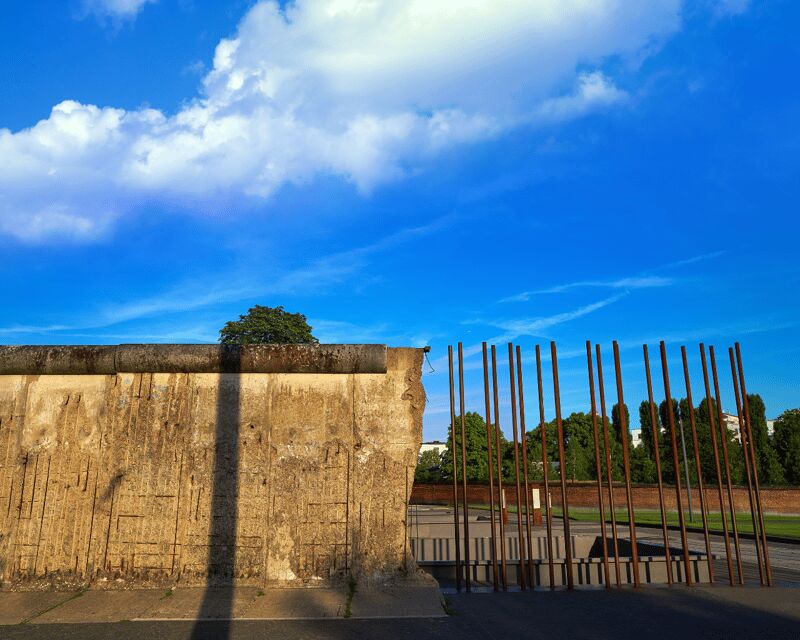
Next is the Marx and Engels Forum, a park area tied to communist theory’s founders, with statues and reliefs. The audio also references remnants connected to the Berlin Wall. What you get here is history plus a little breathing room—less about grand buildings, more about how ideology was built into public space.
Red Town Hall and Alexanderplatz: government red bricks to GDR skyline
The Red Town Hall (Rotes Rathaus) gives you a different kind of Berlin story: civic power. The audio emphasizes its red brick Neo-Renaissance style and the Neptune Fountain nearby. It’s a nice counterweight to all the monumental memorial stops earlier.
After that, you’ll reach the Television Tower at Alexanderplatz. The tour frames the tower as a futuristic GDR-era icon and the place to get panoramic views from an observation deck. Entrance fees aren’t included, so check what you’ll need if you want up there.
Finally, you end at Alexanderplatz, a real-life hub with shops, cafés, and the Weltzeituhr clock. Even if you’re tired by the end, this finish helps you wrap the day: you’re leaving history and stepping into modern Berlin’s daily rhythm.
App performance and “works for me” vs “not for me”
The overall rating sits around 3.9 out of 11 reviews, which matches what you’d expect for a tech-based self-guided tour: lots of people report smooth use, and a smaller group ran into issues.
The most praised angle is simple: the route feels planned, the stories are interesting, and it’s easy to follow. People also liked that audio guides are convenient because you can replay parts and don’t lose information to background noise.
The drawbacks tend to be tech-related:
- app freezes (especially around stops like lunch)
- GPS sometimes being inaccurate
- the voice style feeling overly theatrical for some ears
- one complaint that certain sites didn’t get enough architectural or historical description
Here’s my practical approach: download and activate early, start with enough battery, and don’t rely on GPS alone. If you miss a segment, you can keep moving using the offline map and resume when it catches up.
Also, one reviewer praised the narration by name—Francesca—so there’s a good chance you’ll find the voice friendly and clear.
Who this tour suits best
This works best if you:
- want highlights without group pressure
- like self-paced walking and photo stops
- are comfortable following a phone map
- want a low-cost way to learn Berlin’s major turning points
It’s less ideal if:
- you strongly dislike apps and want zero troubleshooting
- you only travel with guaranteed, ticketed attractions
- you need deep architectural commentary at every single landmark (some people felt the monument descriptions weren’t detailed enough)
Should you book this Berlin smartphone audio walking tour?
Yes, if you want a budget-friendly way to cover a lot of Berlin on foot and you’re happy to guide yourself with offline tech. The route connects the big symbols—Brandenburg Gate, Reichstag, Holocaust Memorial, Cold War sites, East German design, and Museum Island—into a day that moves with your pace.
I’d skip it if you’re traveling with weak phone battery, hate audio narration, or need a fixed schedule with no tech dependence. Berlin is too big to fight your phone.
If you do book: pack your headphones, start early, and give yourself time. When the app works, this is the kind of tour that turns a normal walk into a meaningful timeline you can replay later.
FAQ
How long is the Berlin walking tour with smartphone audioguide?
The tour lasts about 2 hours, though you should expect it may take longer depending on your pace and stops.
Is there a human guide on this tour?
No. It’s self-guided. You’ll use the mobile app to follow the route and play the audio.
Do I need headphones?
Yes. Headphones are not included, so you’ll need to bring your own.
Does the tour include GPS navigation and offline help?
Yes. You get an offline map with the route, plus GPS navigation to help you follow where to go next.
Are entrance tickets included for attractions like viewpoints or museums?
No. Entrance fees and tickets are not included, even though the route highlights major sites.
Where does the tour start and end?
You start at Pariser Platz, 10117 Berlin, Germany, and the tour ends back at the meeting point.