REVIEW · BERLIN
Berlin: Cold War History and Berlin Wall Guided Walking Tour
Book on GetYourGuide →Operated by Birchy's Berlin Tours · Bookable on GetYourGuide
Berlin’s past still runs under your feet. This guided walking tour brings the Cold War to life with a local historian, mixing real locations (like a visible remnant of the wall) with human-scale stories of fear and escape. I love how the tour keeps the focus on cause-and-effect, not just dates, and how you get to stand in front of major landmarks such as Checkpoint Charlie and the Berlin Wall Memorial. One thing to plan for: it’s mostly outdoors, and traffic noise and winter cold can make it harder to hear, so pick a good spot in the group and dress for the weather.
You meet outside Hopfingerbräu by the Brandenburg Gate, and the whole thing takes about 3 hours with a live guide in English or German. It’s built for real walking between sites, and it’s wheelchair accessible, so it’s a practical way to cover several big Cold War stops in one go.
In This Review
- Key points I’d keep in mind
- A Cold War walking tour that makes Berlin’s division make sense
- Getting started outside Hopfingerbräu near the Brandenburg Gate
- Brandenburg Gate: the story opens with a symbol
- The Berlin Wall segment: seeing the border as something you can measure
- Topography of Terror: the darker machinery before the Cold War
- Potsdamer Platz: the city’s fracture, in one of Berlin’s busiest corners
- Checkpoint Charlie: the famous crossing and the human stakes
- Berlin Wall Memorial: 75 minutes where the meaning lands hardest
- The quiet power of “daily life on either side”
- Who leads the tour, and why that matters for this topic
- Price and value: is $31 worth 3 hours?
- What to bring so the cold doesn’t steal your attention
- Best for: history-minded walkers and curious first-timers
- Should you book this Cold War history walking tour?
- FAQ
- How long is the Berlin Cold War History and Berlin Wall guided walking tour?
- What does the tour cost?
- Where do I meet the guide?
- What sites are included on the tour?
- Is the Berlin Wall Memorial part of the tour, and how long is it visited?
- What languages are the guides?
- Is the tour wheelchair accessible?
- What should I bring?
- Can I cancel for a full refund?
Key points I’d keep in mind
- Start right by the Brandenburg Gate so the story begins where Berlin’s identity feels clearest
- Checkpoint Charlie plus the Wall Memorial means you see both the legend and the consequences
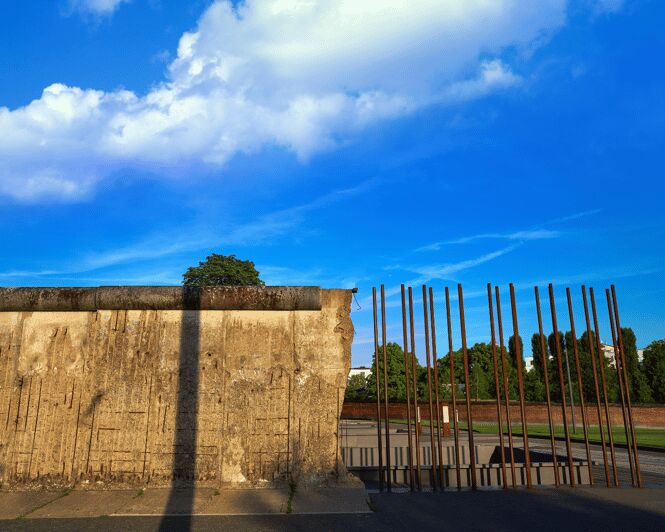
- A 200-meter stretch of the former wall helps the history feel physical, not theoretical
- Topography of Terror adds the dark prelude to the Cold War era
- Guides often bring personal touch through photos and family accounts (depending on who leads your group)
- Traffic can be loud near central sites, so position yourself to hear the guide
A Cold War walking tour that makes Berlin’s division make sense
Berlin can be confusing if you only look at architecture. This tour gives you a map for the emotions and politics that shaped the city, from the uncomfortable breakup of the wartime alliance to the wall that turned neighborhoods into borders. Instead of treating the Cold War like a museum topic, you learn how decisions in offices translated into rules you couldn’t ignore on the street.
I like that the tour doesn’t stop at one dramatic moment. You get a sequence: the backdrop before the wall, the visible border machinery, the famous crossing people watched and fought for, and then the memorial that holds the human cost. That structure helps you connect why the wall was built and why it finally fell.
And yes, you’ll walk. This is a 3-hour guided stroll, not a sit-down lecture. Come prepared for cold sidewalks and short stops where you’ll need to stand still long enough to take in what’s in front of you.
You can also read our reviews of more walking tours in Berlin



Getting started outside Hopfingerbräu near the Brandenburg Gate
Your meeting point is outside Hopfingerbräu next to the Brandenburg Gate. That’s a smart choice because the Brandenburg Gate is one of those places that instantly signals Berlin’s big themes: reunification hopes, power shifts, and a city forever rebuilding its meaning.
From there, the route moves you through central Berlin at a pace that works for most people. In winter especially, I’d plan on your breathing and hands getting cold before your mind catches up with the story. Comfortable shoes matter, and weather-appropriate layers are worth it.
If you’re sensitive to sound, keep this in mind: central Berlin traffic can be loud. One easy trick is to stand so you’re not battling the background noise. Face the guide and try to stay in a spot where your ears line up with their voice.
Brandenburg Gate: the story opens with a symbol
The tour’s first stop is the Brandenburg Gate (about 15 minutes). You won’t just admire it here. The guide uses it as a starting point to explain how Berlin became the stage for the Cold War.
This matters because the Cold War wasn’t just about tanks. It was about influence, perception, and control of movement. When you learn that, the Brandenburg Gate stops being only a photo stop and starts feeling like a hinge between eras.
The Berlin Wall segment: seeing the border as something you can measure
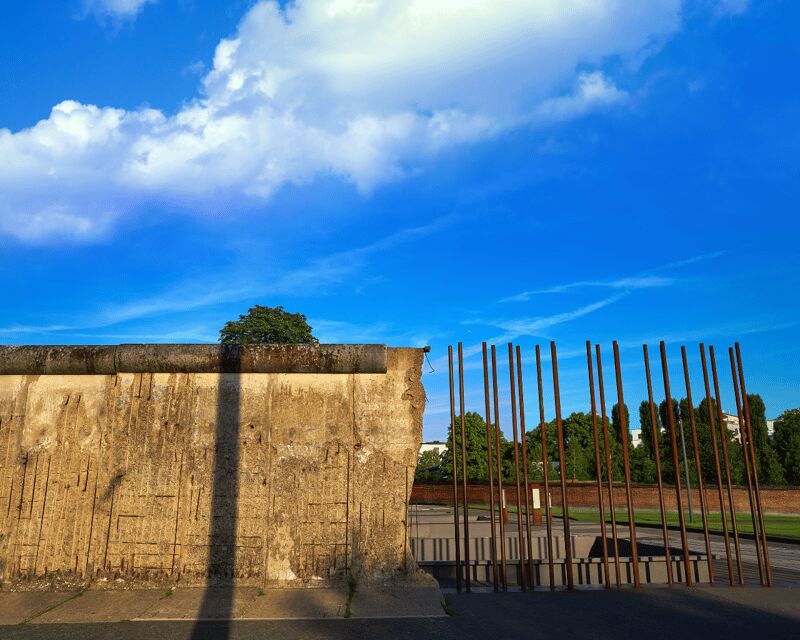
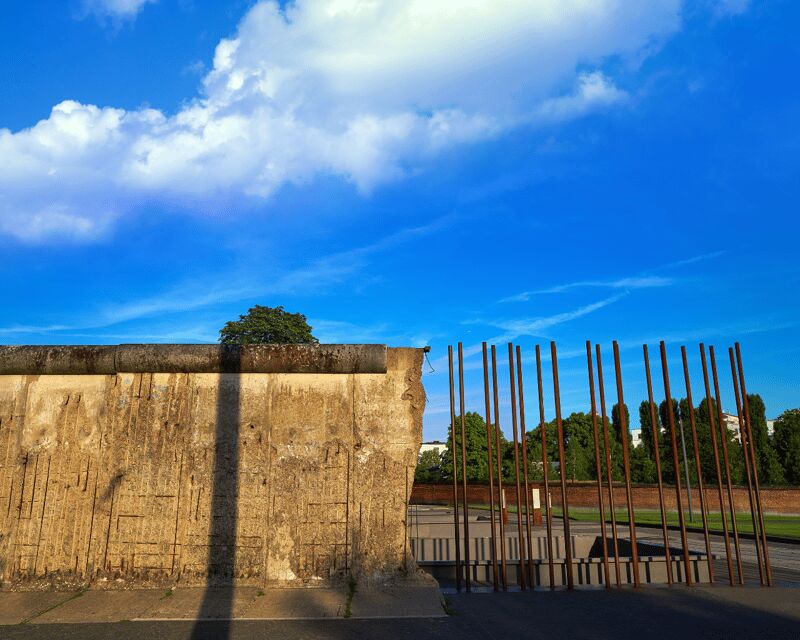
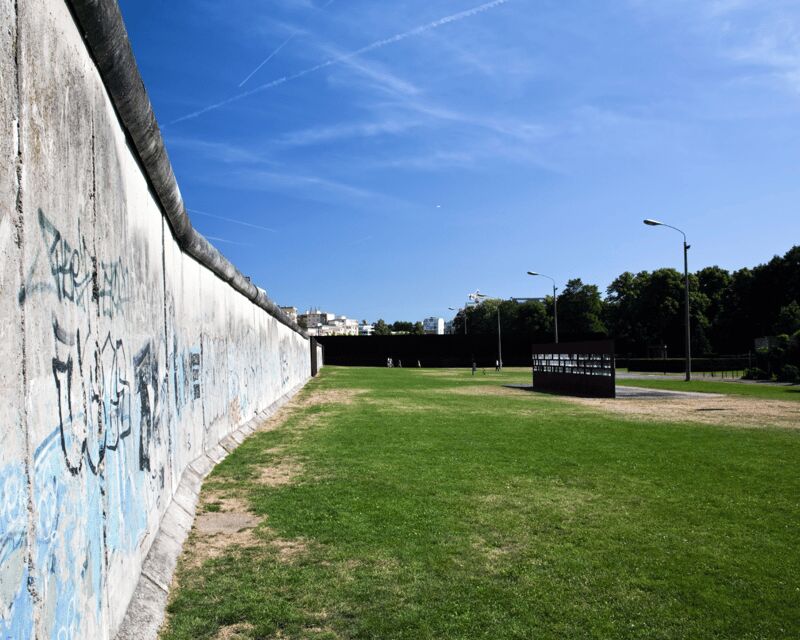
Next you’ll head to the Berlin Wall area (around 25 minutes). This is where the history becomes physical. You’ll see a 200-meter stretch of the former wall along Niederkirchnerstrasse, which gives you a scale check that no picture can fully replace.
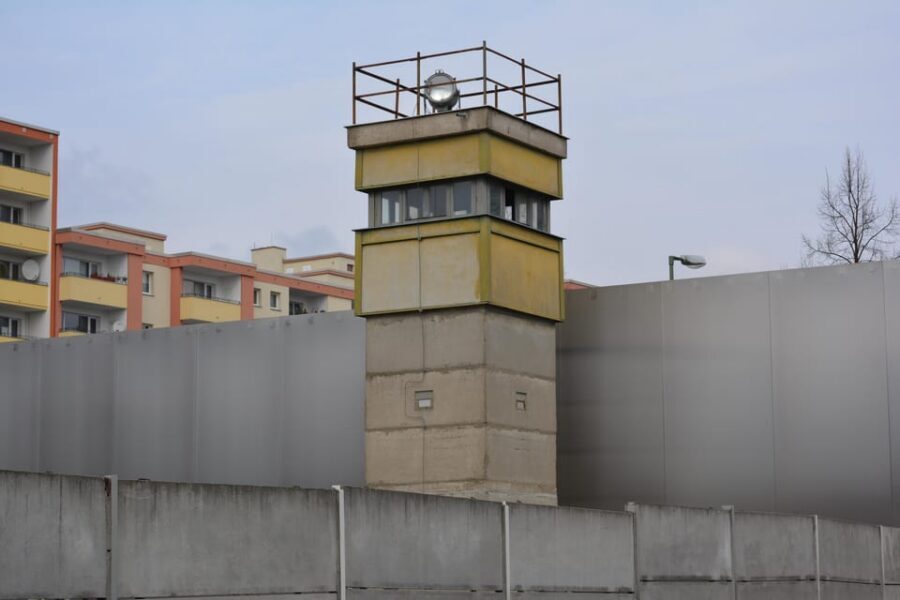
A wall like this isn’t only a barrier. It’s a system: checkpoints, surveillance, and rules backed by force. You’ll also hear about a former DDR watchtower, which helps explain how the East German border was monitored from multiple angles. The wall turns your walk into a lesson in how movement can be restricted so completely that daily life changes shape.
Even if you know the basic outline, this stop often changes how you feel about it. Standing near remnants makes the word border feel more concrete.
Topography of Terror: the darker machinery before the Cold War
Then you’ll spend time at Topography of Terror (about 15 minutes). This stop shifts the lens to the period of terror and repression that came before the Cold War’s division solidified.
Why include this? Because Berlin’s Cold War story didn’t spawn out of thin air. You’re learning about what came after World War II, but the environment of fear and control is part of the same long arc. The guide uses this context to help you understand the uncomfortable alliances that later broke down.
It’s a short visit in terms of time, so don’t expect a full museum experience. Instead, think of it as a sharp course correction: you’re going to the Cold War with a clearer sense of how power was used when people had little room to refuse.
You can also read our reviews of more guided tours in Berlin





Potsdamer Platz: the city’s fracture, in one of Berlin’s busiest corners
Potsdamer Platz takes about 15 minutes on the tour. Even today it’s busy, modern, and highly visible. That’s exactly why it’s useful.
The guide helps you connect the place you see now with the Berlin that used to be split and scarred. You learn how the division changed access, streets, and the practical reality of getting from point A to point B. It’s one thing to hear about a border. It’s another to realize how much the border reshaped the city’s layout and daily routines.
If you’re traveling in colder months, this is also a good time to check your hands and face in the wind. The guide keeps moving, but you’ll still want to stay comfortable enough to listen.
Checkpoint Charlie: the famous crossing and the human stakes
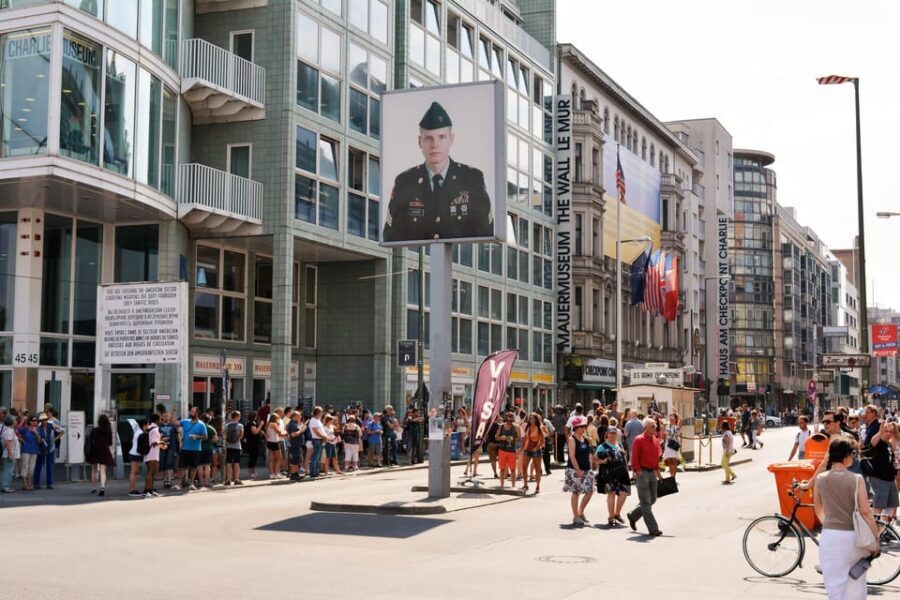
Checkpoint Charlie is next, with guided time of around 25 minutes. This is the headline site most people recognize, but the guide adds the missing layer: what it meant on a practical level.
You’ll learn about it as the most famous border crossing between East and West Berlin. The big takeaway is that crossings weren’t just about geography. They were about negotiations, surveillance, and risk. People tried to get out, people tried to get in, and the rules could change what safety even meant.
Some groups get a personal touch from the guide. In one case, Cieran shared photos connected to his own family experiences with the Berlin Wall. That kind of detail turns a well-known landmark into a story with faces and stakes you can remember later.
Berlin Wall Memorial: 75 minutes where the meaning lands hardest
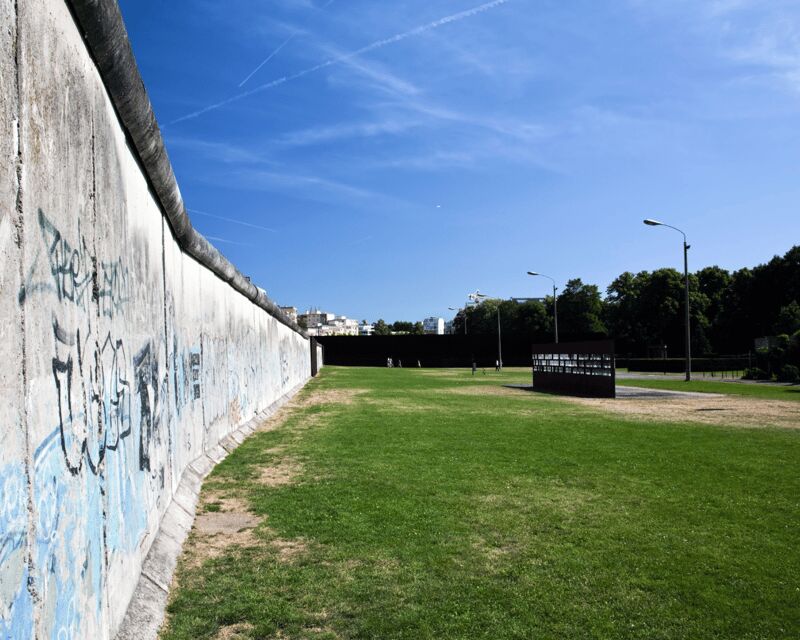
The Berlin Wall Memorial is the longest stop on the tour, at about 75 minutes, with guided time. This is where the history stops being abstract.
You’ll visit a memorial designed to commemorate the division of Berlin and the lives lost as a result. The guide helps you understand why the wall was constructed in the first place, but also why it became a place where tragedy could happen—again and again. You’re not only learning political context; you’re hearing what it meant for ordinary people trying to live, work, and breathe with restrictions around them.
This is also the stop where your listening skills matter most. Take your time here. Look around at what’s preserved and what’s marked, then let the guide connect it to the stories of escape and bravery you’ve been hearing throughout the tour.
The quiet power of “daily life on either side”
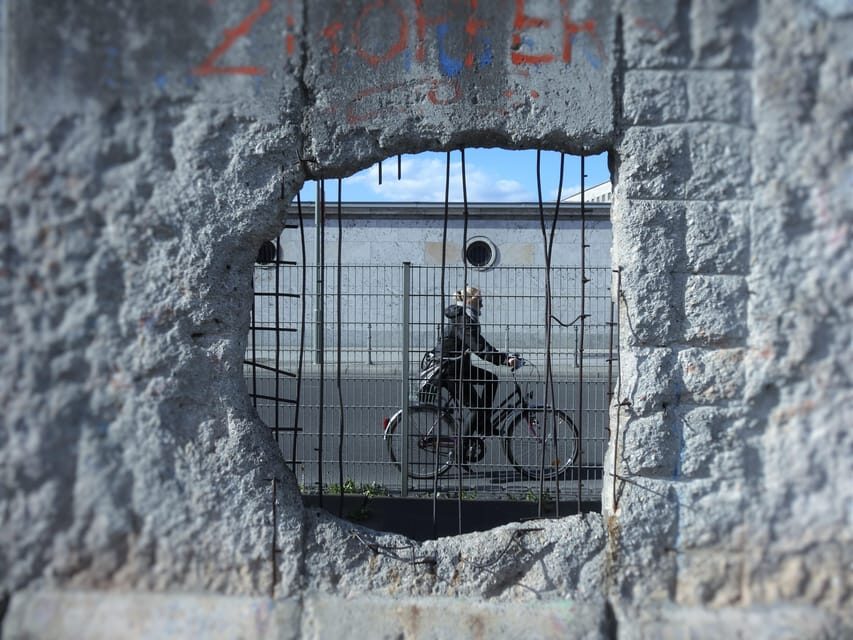
The best part of this kind of tour is what happens between the big named sites. As you walk, the guide builds a picture of everyday life on both sides of the divide.
You learn what life felt like when borders weren’t temporary lines, but permanent conditions. The tour focuses on bravery and escape, but it doesn’t skip the discomfort of what people faced when trying to live with limits imposed on movement and choice.
When you understand daily life, the wall’s purpose starts to make clearer sense: it wasn’t only keeping people in. It was also a propaganda claim about power and control. That’s why the story of its fall feels so significant. You’re seeing why it mattered to people who never asked for history to be a cage.
Who leads the tour, and why that matters for this topic
The experience is run by Birchy’s Berlin Tours, and guide quality can really shape a history walk like this. From recent groups, you might hear from guides such as Eugen, Paul, Cieran, or Cairan, depending on your date.
What stands out in the way these guides tend to teach is storytelling with structure. They explain how something happened, not only when. They connect policy decisions to the lived impact, and they leave room for questions—so if you’re curious about a specific escape route, an aspect of DDR border life, or how events connected after WWII, you’ll likely get a thoughtful answer.
If you’re the type who likes asking questions, this is a good fit. If you prefer minimal talk and maximum sightseeing, you may still enjoy it, but come with the mindset that this is an explanation-heavy walking tour.
Price and value: is $31 worth 3 hours?
At $31 per person for a 3-hour walking tour with a local guide, this is solid value for Berlin. You’re paying for three things: expert guidance, access to multiple major sites in a single outing, and interpretation of what you’re seeing so it sticks.
To judge value, think about what you’d otherwise do. Visiting Checkpoint Charlie and the Berlin Wall Memorial on your own is easy, but getting the political context and human stories in the right order takes time and effort. This tour does that ordering for you.
Also, the duration is long enough to feel complete without turning into an all-day grind. You’ll be tired afterward, but not exhausted, and you’ll still have energy to explore further on your own.
What to bring so the cold doesn’t steal your attention
Bring comfortable shoes. You’ll spend time standing at stops, and you’ll keep moving between them. Weather-appropriate clothing matters because Berlin can cut straight through layers, especially near open memorial areas.
If you’re traveling with a camera, you’ll want it handy, but don’t let it become your job. Listen first, then take photos when something clicks.
Best for: history-minded walkers and curious first-timers
This tour is a strong choice if you’re visiting Berlin for a short time and want the Cold War story told through real locations. It’s also a great match if you want to understand how WWII aftermath turned into a divided city, and how the division ended.
I’d especially recommend it if you like your history grounded in people rather than only in leaders. This tour’s focus on bravery, escapes, and the human cost makes the landmarks more meaningful.
If you’re only interested in quick photo stops, you might find the 3 hours heavier than you want. But if you want to leave with a clearer explanation of why the wall happened and why it fell, this fits well.
Should you book this Cold War history walking tour?
Book it if you want a guided, place-based explanation of Berlin’s division. The combination of central landmarks, a preserved stretch of wall, the famous crossing at Checkpoint Charlie, and the Berlin Wall Memorial makes it a full story in one outing.
Skip it (or pair it with something lighter) if you strongly dislike walking tours or if you’re likely to struggle in cold weather and loud streets. In that case, choose a day with better conditions, and plan to position yourself so you can hear the guide.
If you’re on the fence, go. This is one of those tours where you don’t just learn facts. You get the sense of how it felt when a city’s border changed the meaning of everyday life.
FAQ
How long is the Berlin Cold War History and Berlin Wall guided walking tour?
The tour lasts about 3 hours.
What does the tour cost?
It costs $31 per person.
Where do I meet the guide?
Meet outside Hopfingerbräu next to the Brandenburg Gate.
What sites are included on the tour?
You’ll see the Brandenburg Gate, Berlin Wall remnants, Topography of Terror, Potsdamer Platz, Checkpoint Charlie, and the Berlin Wall Memorial.
Is the Berlin Wall Memorial part of the tour, and how long is it visited?
Yes. The Berlin Wall Memorial includes guided time of about 75 minutes.
What languages are the guides?
The live guide speaks German and English.
Is the tour wheelchair accessible?
Yes, the tour is wheelchair accessible.
What should I bring?
Wear comfortable shoes and bring weather-appropriate clothing.
Can I cancel for a full refund?
Yes. Free cancellation is available up to 24 hours in advance for a full refund.