REVIEW · BERLIN
Berlin: Third Reich and World War II Private Guided Tour
Book on GetYourGuide →Operated by TourUpinEurope · Bookable on GetYourGuide
Berlin forces you to look closely at history. This private 3-hour route ties together the Reichstag and the Holocaust Memorial with clear explanations of how the Third Reich left scars on Berlin.
I also like the human factor: a live guide who can tailor the pace and answer questions in English, German, Russian, French, Spanish, or Italian, with Sven noted for being punctual and professional. The main drawback is straightforward—there’s a significant amount of walking in a tight time window, and food isn’t allowed during the tour, so you’ll want comfortable shoes and a practical plan for water.
In This Review
- Key things you’ll notice on this WWII Berlin tour
- How the Berlin WWII route works in just 3 hours
- Brandenburg Gate start: set your bearings before the darker stops
- Reichstag and Soviet War Memorial Tiergarten: seeing how power and war leave marks
- Holocaust Memorial and Topography of Terror: learning to read a place built for memory
- Hitler’s Bunker: what this stop is for (and how to approach it)
- Finish at Wall Museum – Checkpoint Charlie: why the story ends here
- Price and logistics: is $224 per person fair value for 3 hours?
- What to bring (and the small rules that matter on site)
- Who should book this tour, and who should skip it
- Should you book this Berlin Third Reich and WWII private guided tour?
- FAQ
- How long is the Berlin Third Reich and WWII private guided tour?
- Where does the tour start?
- Is this tour private?
- What stops are included?
- Are entrance fees included?
- What languages are available for the live guide?
- Can I take photos?
- Is food or drinks allowed during the tour?
- What should I bring?
- Is the tour suitable for wheelchair users?
Key things you’ll notice on this WWII Berlin tour
- Private group, 3 hours: a focused route without the usual herd pacing
- Multi-language live guide: English plus German and several other options
- Reichstag + Holocaust Memorial: government power and genocide memory in one sweep
- Hitler’s Bunker and Topography of Terror: the last chapter of the war explained on location
- Soviet War Memorial Tiergarten: you’ll see how Berlin is read through the end of the conflict
- Finish at Wall Museum – Checkpoint Charlie: the story closes where Berlin’s later division starts to feel real
How the Berlin WWII route works in just 3 hours
This tour is built like a guided walking timeline. In three hours, you cover sites tied to the Third Reich, the collapse of Nazi power, and Berlin’s postwar meaning—without turning it into a history lecture where you lose track of what you’re looking at.
You’ll get more value if you go in with two goals. First, you want to understand the big cause-and-effect chain. Second, you want your guide to point out what each site is trying to communicate—especially at places that are designed to make you slow down.
The tour also includes guided stops, not just stand-and-take-photos moments. That matters, because many of these places can feel abstract unless someone connects the dots.
You can also read our reviews of more guided tours in Berlin



Brandenburg Gate start: set your bearings before the darker stops
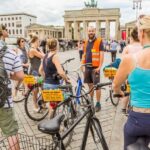
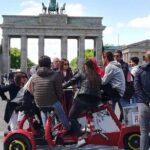
You’ll meet next to Hotel Adlon Kempinski Berlin, then start at the Brandenburg Gate. This is a useful beginning because it gives you a familiar visual landmark right away. From there, you’re not wandering through Berlin hoping your brain catches up—you’re getting a guided story line from your first step.
This first segment is also where you’ll learn how the guide will frame the day. Sometimes guides shift the exact mix of landmarks based on preferences, seasons, and weather. So if you care about a particular topic (the rise, the final months, or Berlin’s aftermath), ask early so your route matches your interest.
One practical thing: wear comfortable shoes. The tour description is clear that there’s a significant amount of walking, and three hours adds up faster than you’d think when you’re stopping for explanations.
Reichstag and Soviet War Memorial Tiergarten: seeing how power and war leave marks
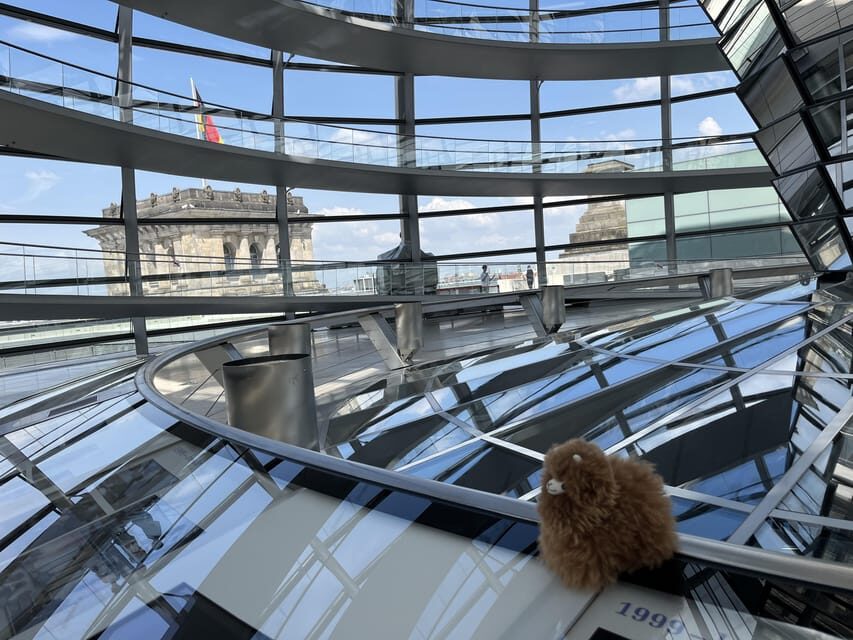
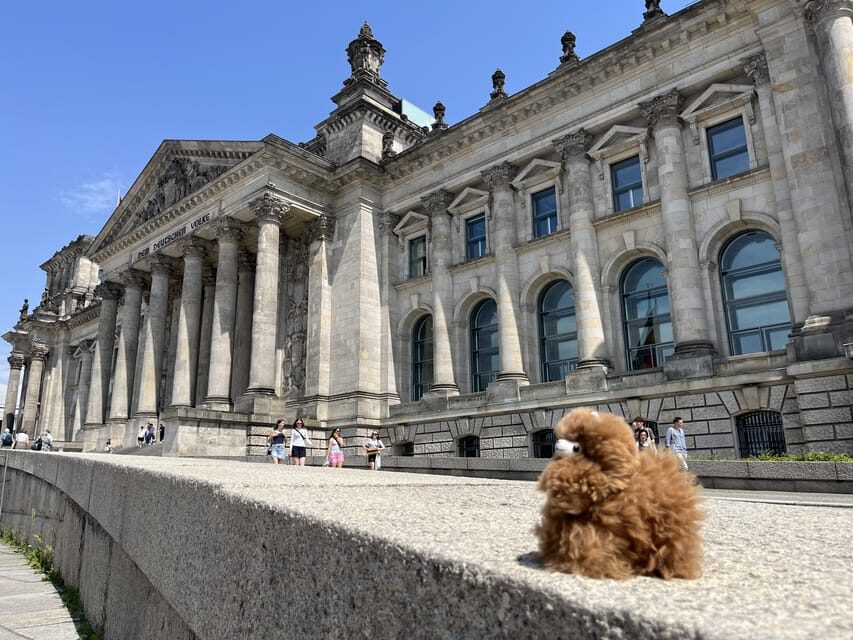
The tour moves next to the Reichstag for a guided visit. Even if you’ve seen photos before, a place like this hits differently in person because you’re looking at a building that became a symbol in the Nazi era and beyond. Your guide’s job here is to connect the architecture and the headlines into a human timeline: how political power shaped Berlin’s everyday reality, and how that power eventually collapsed.
Then you’ll visit the Soviet War Memorial Tiergarten. This stop matters because it widens the story beyond German decisions alone. Your guide will explain events that shaped Berlin in the final phase of the war, and why the city’s wartime outcome is interpreted through multiple lenses, not just one.
If you’re the type who likes to understand how narratives differ, this part is especially helpful. You’re not only focusing on one side’s story. You’re seeing how Berlin remembers the end.
Possible drawback here: if you’re expecting lots of time inside buildings, plan for a strong walking-and-speaking rhythm. This tour is designed to move, not linger.
Holocaust Memorial and Topography of Terror: learning to read a place built for memory
Next comes the Holocaust Memorial. This isn’t just a photo stop. The power of this site is in the way it forces attention—on scale, on silence, and on the feeling that you’re standing in a designed space of remembrance. A good guide turns that reaction into understanding by explaining what you’re seeing and why it’s arranged the way it is.
After that, you’ll head to Topography of Terror for another guided visit. The tour’s promise here is a deeper understanding of events that shaped the 20th century, and this stop is one of the strongest candidates for that goal. It’s also where the guide’s storytelling quality really matters, because the site can be overwhelming if you don’t have a path through the information.
What I think makes these two stops valuable as a pair is that they work on different levels. One is memory shaped for reflection. The other is designed to teach through documentation and context. Together, they help you connect emotion and facts without turning either one into background noise.
Practical note: flash photography is not allowed inside certain landmarks. Regular photos are fine, but you’ll want to turn off flash before you enter.
Hitler’s Bunker: what this stop is for (and how to approach it)
Then you’ll visit Hitler’s Bunker with a guide. This part of the tour is heavy. You’re dealing with the final period of the war and the meaning of those underground decisions for what happened in Berlin afterward.
Don’t treat this as a thrill-seeking stop. Treat it like a context stop. Let your guide explain why the location matters—what it represented, and how the story of the Third Reich turns into its final collapse.
This is also where listening pays off more than shooting photos. You’ll remember the explanations longer if you let the site set the pace rather than trying to speed-run it for pictures.
You can also read our reviews of more private tours in Berlin



Finish at Wall Museum – Checkpoint Charlie: why the story ends here
The tour ends at Wall Museum – Checkpoint Charlie. This finish point is smart because it shifts you from the WWII chapter into the way Berlin later reinterpreted the war and its consequences.
Checkpoint Charlie is strongly linked with the city’s division, and finishing here helps you leave with a bigger view. Even if your main interest is WWII, you’ll understand faster how the war’s aftermath evolved into a long political and physical split.
It’s also a practical landing zone. By the time you reach the finish, you’re in an area that’s easier to navigate, so you can decide what to do next without feeling stranded.
Price and logistics: is $224 per person fair value for 3 hours?
At $224 per person for a private, 3-hour guided experience, the value hinges on two things: what’s included and how well the guide uses the limited time.
On the plus side, the tour includes a professional multilingual guide and the private group format, so you’re not stuck waiting for others to catch up. You also don’t have to manage the whole route yourself—you’re meeting at a set point near Hotel Adlon Kempinski Berlin and getting a structured progression.
On the “watch your expectations” side, entrance fees are not included, and transportation to/from the activity is not included. Food and drinks also aren’t allowed during the tour. That means your effective trip cost can creep upward slightly depending on what entry fees apply at the stops you choose to access.
If you like history but also want a clean, guided flow—without juggling maps, transit, and ticket lines—this price can make sense. If you’re comfortable self-guiding and you’re on a tight budget, you might question the premium for a short private window.
What to bring (and the small rules that matter on site)
Bring comfortable shoes. This tour explicitly warns that there will be significant walking, and 3 hours can feel like a lot once you start stopping for guidance and entering certain locations.
Bring a camera if you want photos, plus water. Weather matters too, so wear weather-appropriate clothing and check conditions before you go.
A couple of rules to keep in mind:
- Flash photography is not allowed inside certain landmarks.
- Large bags or luggage may not be suitable, since the route is based on walking and moving between stops.
- Food and drinks aren’t allowed during the tour.
If you’re the kind of person who likes to move fast, you may feel tempted to snack anyway. Don’t. It’s one of those rules that can get you stopped at the wrong moment.
Who should book this tour, and who should skip it
This tour is not suitable for children under 10. It also includes a caution for mobility: the description lists wheelchair accessible, but it also notes it’s not suitable for people with mobility impairments and wheelchair users. That contradiction is your biggest heads-up. If accessibility matters to you, I’d confirm fit with the operator before booking so you’re not stuck with unrealistic expectations.
Who it suits best:
- Adults who want a private, guided, no-stress route
- People who want to understand WWII-era Berlin through specific locations, not just general history
- Anyone who appreciates a guide who can explain in your preferred language
Who might not love it:
- Anyone expecting a lot of indoor time with long sitting breaks
- People who struggle with extended walking
- Families with kids under 10, since the tour isn’t designed for that age group
One more practical reality check: this is a private tour with a live guide. If your schedule is strict, I’d arrive early and be ready to follow up quickly if something looks off—one outlier report mentioned a guide not showing up, so don’t treat any tour day like it’s guaranteed until you’re actually meeting your guide.
Should you book this Berlin Third Reich and WWII private guided tour?
I’d book it if you want a structured, 3-hour introduction to WWII Berlin that hits the sites that define the story: the Reichstag, the Holocaust Memorial, Hitler’s Bunker, and Topography of Terror, plus the finishing context at Wall Museum – Checkpoint Charlie.
I’d hesitate if you’re sensitive to walking time, if accessibility needs are complicated for you, or if you’re looking for a budget option where you’ll handle tickets and routing yourself.
If you do book, go in with one simple mindset: let the guide explain what you’re seeing, and you’ll leave with a clearer picture of how Berlin’s WWII story connects to what came after.
FAQ
How long is the Berlin Third Reich and WWII private guided tour?
The tour lasts 3 hours.
Where does the tour start?
You’ll start at Brandenburg Gate, meeting next to Hotel Adlon Kempinski Berlin.
Is this tour private?
Yes. It’s a private group.
What stops are included?
The guided stops include the Reichstag, Soviet War Memorial Tiergarten, Holocaust Memorial, Hitler’s Bunker, Topography of Terror, and it finishes at Wall Museum – Checkpoint Charlie.
Are entrance fees included?
No. Entrance fees are not included.
What languages are available for the live guide?
The guide is available in English, German, Russian, French, Spanish, and Italian.
Can I take photos?
Yes, photography is allowed, but flash photography is not permitted inside certain landmarks.
Is food or drinks allowed during the tour?
No. Meals and drinks are not included, and food and drinks are not allowed during the tour.
What should I bring?
Bring comfortable shoes, a camera, and water, plus weather-appropriate clothing.
Is the tour suitable for wheelchair users?
The info includes both wheelchair accessible and a note that it’s not suitable for wheelchair users / people with mobility impairments. You should confirm fit with the operator before booking.