REVIEW · BERLIN
Berlin: Historic Jewish walking tour through the city center
Book on GetYourGuide →Operated by Stitching The Past - Tour Berlin · Bookable on GetYourGuide
Berlin history has sharp edges. This 1-hour walk through the city center connects Prussian-era Berlin, the Roaring Twenties, and the changes after the Wall—using the stories of the Jewish community and the city’s tailoring industry to explain how politics can reshape everyday life.
What I like most is how practical the route feels: you start at Hausvogteiplatz, then move to Werderscher Markt and Jägerstraße, so you see the places—not just names on a plaque. I also like the focus on the Konfektion (tailoring/confection) industry, which helps you understand how an entire economic world worked before the Second World War and what extremism did to it.
The main drawback to consider is that this is a thematic historic walk in a fairly compact area. If you want a wide, stop-by-stop tour of every major Berlin sight, this one may feel too focused on one story arc—still important, just narrower in scope.
In This Review
- Key things to know before you go
- Where this tour starts: Hausvogteiplatz and the city center mood
- The real subject: Berlin’s former Jewish tailoring (Konfektion) industry
- Stop by stop: how the itinerary builds a clear storyline
- Hausvogteiplatz (guided segment)
- Werderscher Markt (15-minute visit)
- Jägerstraße (15-minute visit)
- Back to Hausvogteiplatz
- How the walk explains Berlin’s big political turns (without getting lost)
- What you’ll see (and what you’ll likely feel)
- Pace, length, and who this tour suits best
- Price and value: what $1.70 (and donation options) really means
- Practical details that help the tour go smoothly
- Should you book this Berlin historic Jewish walking tour?
- FAQ
- How long is the Berlin historic Jewish walking tour?
- Where do I meet the guide?
- Is the tour in English?
- Is it wheelchair accessible?
- What stops are included on the route?
- Is it suitable for children?
- How much does it cost, and are there payment options?
Key things to know before you go
- Hausvogteiplatz is your anchor point: you meet near the fountain by the U2 station area, and the tour begins with a guided segment there.
- You’re following the Konfektion story on foot: the route is built around where the tailoring/economic hub life happened.
- Werderscher Markt and Jägerstraße add context fast: two short visits that help you read the city’s past in real locations.
- It’s a time-compressed narrative: about 60 minutes total, so expect a clear storyline rather than long detours.
- English-speaking live guide: the tour is designed to be easy to follow without needing German history prep.
- Wheelchair accessible: it’s set up as a walk you can do with mobility needs in mind.
Where this tour starts: Hausvogteiplatz and the city center mood
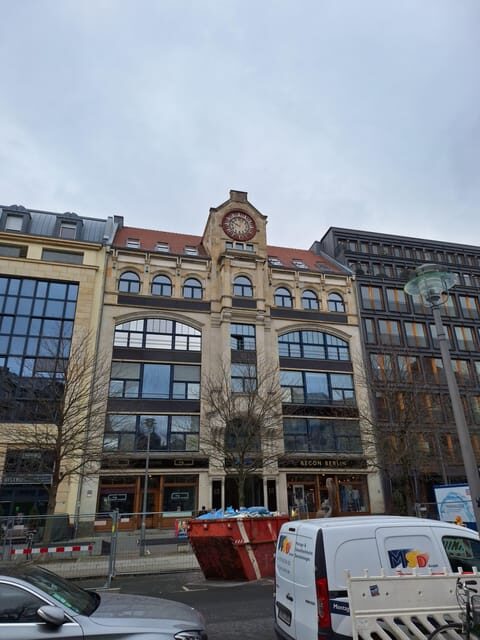
Hausvogteiplatz is a smart place to begin. It’s central, easy to orient around, and it sets the tone for what the walk is trying to do: connect Berlin’s modern streets to older layers of business, style, and community life.
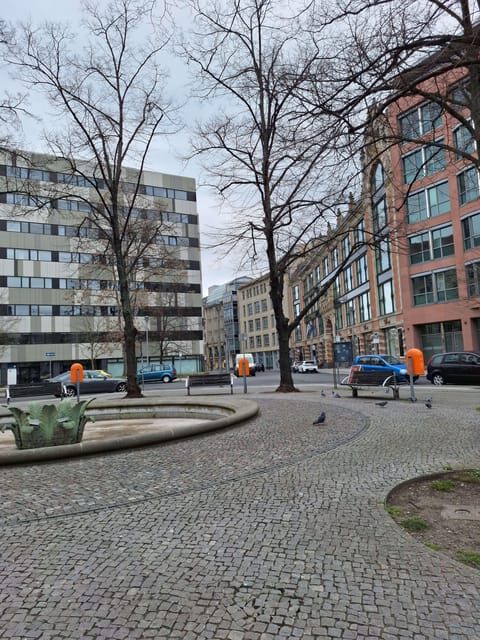
You’ll meet the guide in Hausvogteiplatz square near the water fountain, close to the U2 train station. The guide carries a white side bag, which makes it simpler than hunting for a random figure with a folder. From there, you’ll get a guided portion that lasts about 30 minutes at the start location, before moving on.
I like that the tour doesn’t waste time with a long introduction somewhere inconvenient. Instead, it gets you into the story while you’re already in the right pocket of central Berlin—so you can look around as you learn.
You can also read our reviews of more walking tours in Berlin


The real subject: Berlin’s former Jewish tailoring (Konfektion) industry
This is not a vague “general history” walk. The heart of the tour is the city’s Konfektion industry—tailoring and clothing production—along with how the Jewish population helped build, thrive in, and sustain parts of Berlin’s economic life.
That matters because the tailoring world isn’t just fashion trivia. Clothing production links to hiring, customers, workshops, trade networks, and daily rhythms. When political extremism hits, it doesn’t only change laws on paper. It can shrink markets, push people out, break businesses, and change what kinds of work can exist in a neighborhood.
The tour’s pitch is built around that cause-and-effect story. You’re looking at Berlin across major eras—Prussian Empire conditions, the Roaring Twenties, then the post–Wall-fall city—so the “how did we get here” piece stays attached to real places.
And based on the way the tour is presented, the guide clearly leans into the human part too: you hear about how the Jewish population developed and thrived, and in some cases survived, even as Berlin’s political climate grew darker. That’s heavy material, but it’s handled as an explanation of how the city changed, not just a list of tragedies.
Stop by stop: how the itinerary builds a clear storyline
This tour is tightly timed—about an hour total. That short format can be a plus. You don’t drift for long. You move, look, learn, and then you’re back where you started.
Hausvogteiplatz (guided segment)
The first guided stretch is about 30 minutes in Hausvogteiplatz itself. I’d treat this as your “setup” phase. The guide uses this starting point to frame what you’re about to see: Berlin’s former economic Jewish center district and the evolution of the area through time.
Because the tour is walking in the city center, you’ll likely be noticing building styles and street layout cues as the guide talks. Even if you’re not a history expert, you can follow the logic: where commerce formed, how neighborhoods functioned, and how political forces altered the economic reality.
Werderscher Markt (15-minute visit)
Next is Werderscher Markt for about 15 minutes. This short stop is where the narrative likely tightens from background into place-specific understanding.
Think of it as a “look here and connect it” moment. You’re not just passing by. You’re using a defined pause to orient what this area might have meant in earlier decades—then comparing that with what the city looks like now. For many people, this is where the walk shifts from learning general themes into seeing the city’s layers more clearly.
You can also read our reviews of more city tours in Berlin


Jägerstraße (15-minute visit)
After that comes Jägerstraße for another 15 minutes. This is a key thematic location because the tour is tied to the Jewish tailoring/economic story.
In practical terms, this stop helps you connect the dots between Berlin’s commercial life and the personal stories behind it. If you’re the type who likes to understand how neighborhoods work—who lived near what, where business happened, and how communities shaped the city—Jägerstraße is likely one of those moments you’ll remember later when you walk around Berlin on your own.
Back to Hausvogteiplatz
You end back at Hausvogteiplatz. That’s convenient. You don’t have to plan extra transport just to finish the experience, and it makes the tour feel like a focused walk rather than an awkward one-way route.
How the walk explains Berlin’s big political turns (without getting lost)
A major value of this tour is the way it uses one theme—economic life tied to the Jewish community and the Konfektion industry—to explain something bigger: how political extremism can change a city’s economic backbone.
The guide’s timeline runs through major shifts: from the Prussian Empire period, into the Roaring Twenties era (when fashion and economic momentum were part of the city’s identity), and then through to what happened after the Wall fell.
That post–Wall-fall part is important because you’re not left in the past. The tour talks about how Berlin progressed, showing change instead of only showing loss. You get to compare then-and-now in the same walk, which helps the information stick.
I also appreciate that the tour’s “why” is spelled out. You’re there to see firsthand how an industry and community life can be transformed by regimes. It’s not an abstract lesson. It’s grounded in specific streets and squares.
What you’ll see (and what you’ll likely feel)
The tour emphasizes historic buildings and scenic, historic areas in central Berlin. But beyond the architecture, the experience is meant to change how you read a familiar city.
Here are the kinds of takeaways you should expect to carry with you:
- Berlin as an economic machine, not just museums and monuments.
- Fashion and work as social history: the tailoring industry as a window into daily life and community networks.
- A clear cause-and-effect storyline: politics affects business, business affects communities, and communities shape the city.
- Real place comparison: you look at places, then you’re asked to think about what was happening there across different eras.
If you’re planning other Berlin stops—classic Brandenburg Gate time, museum days, or more neighborhood exploring—this walk adds something those visits often miss: the city’s economic and community undercurrents.
Pace, length, and who this tour suits best
At about 1 hour, this is a good choice if you want a history experience without burning an entire day. The pace is likely steady: 30 minutes of guided discussion at the start, then two short visits (Werderscher Markt and Jägerstraße), then back.
It’s also designed for people who prefer an English-speaking guide and don’t want to do heavy prep before arriving. The route is central and straightforward.
This isn’t for kids under 6. That’s mostly a pacing and content-fit issue: the theme involves serious political history and economic disruption. If you’re traveling with older kids who can handle that kind of story, you can decide based on their interest in history and street-level learning.
Wheelchair accessible means the route is planned to be possible with mobility needs. Still, it’s a walking tour, so you’ll want to wear comfortable shoes.
Price and value: what $1.70 (and donation options) really means
The listed price is $1.70 per person, with duration of 1 hour and multiple starting times depending on availability. That’s extremely low for a live, English-guided walking experience in central Berlin.
How do you judge value honestly? Look at what’s included: a walking tour with mentions of historic buildings and areas, a map and a list of activities in order, and a focused route centered on the Konfektion industry story. You’re getting guided interpretation, not just directions to a self-guided checklist.
One note: the experience also mentions that you can book on a donation basis by reaching out directly. So if the price you see feels unusually low, that likely explains the flexibility. Either way, you’re paying for a guide-led explanation of a specific slice of Berlin’s Jewish economic history, not a random stroll.
Practical value tip: If you’re the kind of traveler who likes to understand what you’re looking at while you walk, this tour is a good match. If you only care about ticking off landmarks and you don’t care about the politics-and-industry angle, you might find a more general architecture walk a better fit.
Practical details that help the tour go smoothly
A few operational details matter because they keep you from losing time at the start:
- Meet at Hausvogteiplatz near the water fountain by the U2 train station area.
- Look for the guide with a white side bag.
- The guide is English speaking and leads you through the central city route.
- You should expect verification of arrival for booking, either by email or by phone (including messages or WhatsApp). This matters if you’re trying to join last minute—confirm so you don’t show up for nothing.
Because the tour is only about an hour, plan to arrive a few minutes early. Berlin transit waits for nobody, and a short tour rewards punctuality.
Should you book this Berlin historic Jewish walking tour?
Yes, if you want Berlin in a way most one-day sightseeing loops miss. I’d book it if you like history that’s tied to real economic life: clothing production, commerce, and the effects of political extremism on neighborhoods. The route is compact, the story arc is clear, and the theme helps you see the city center as more than scenery.
I would skip it if you’re looking for a broad sampler of Berlin’s top landmarks, or if you prefer light, purely architectural walks with little political context. This tour is focused on one story line, and it’s built to teach you how Berlin changed—then-and-now—through that lens.
If you’re curious about Berlin’s lost Jewish tailoring industry and want a guided route you can follow while the city is still fresh in your mind, this one is a strong choice.
FAQ
How long is the Berlin historic Jewish walking tour?
The tour lasts about 1 hour.
Where do I meet the guide?
Meet in Hausvogteiplatz square near the water fountain, close to the U2 train station. The guide has a white side bag.
Is the tour in English?
Yes, the live tour guide speaks English.
Is it wheelchair accessible?
Yes, the activity is wheelchair accessible.
What stops are included on the route?
You’ll start at Hausvogteiplatz, spend time there with the guide, then visit Werderscher Markt and Jägerstraße, and return to Hausvogteiplatz.
Is it suitable for children?
It is not suitable for children under 6 years.
How much does it cost, and are there payment options?
The price is shown as $1.70 per person, and there is also a mention of booking on a donation basis if you reach out. Availability and starting times depend on booking.