REVIEW · BERLIN
Berlin: Historic Center Walking Tour with a Real Berliner
Book on GetYourGuide →Operated by You In Berlin · Bookable on GetYourGuide
Berlin can feel big and messy if you only rely on monuments. This 2-hour historic center walk in Mitte turns the key sights into a story you can actually hold in your head. You start near Nikolaikirche Museum and finish at the Brandenburg Gate, with a live guide who ties together how Berlin grew, fractured, and reinvented itself.
Two things I really like: the route hits major landmarks without rushing, and the guide style makes history feel human, not textbook. I also like that it is a small group (up to 10), so you can ask real questions and not just listen to earbuds of someone else’s conversation.
One consideration: it is a full-weather walk, so plan for wind, rain, or cold, and wear shoes that can handle cobblestones and long stretches.
In This Review
- Quick hits (what makes this walk worth your time)
- Entering the route at Nikolaikirche Museum
- Nikolaiviertel: where Berlin’s oldest center vibes show up
- Museum Island by the Spree: the story behind the skyline
- Humboldt Forum and the Palace Bridge connection
- Berlin’s academic and cultural axis: Humboldt University, State Opera, and more
- Unter den Linden walk: Frederick the Great and the monuments you keep seeing
- A moment of height: seeing Berlin’s Television Tower in context
- Brandenburg Gate: the reunification focal point
- Guides that make the city stick: Carlo, Karlo, and Karl
- Is $43 good value for a 2-hour Mitte walk?
- Best fit: who should book this?
- Practical expectations before you go
- Should you book this Berlin historic center walk?
- FAQ
- Where does the tour start?
- How long is the Berlin historic center walking tour?
- What languages is the live guide available in?
- How big is the group?
- What sights are included on the route?
- Is the tour wheelchair accessible?
Quick hits (what makes this walk worth your time)
- A tight loop through Mitte that links Nikolaiviertel, Museum Island, and the Brandenburg Gate without backtracking
- Museum Island + Humboldt Forum explained as parts of a bigger city story, not just photo stops
- A guide who goes beyond World War II and connects the city’s earlier Kingdom-of-Prussia era to reunification
- Stops aligned with the classic Berlin center axis, so you see how power and culture were arranged
- Small-group feel that makes Q&A practical, not awkward
- End at the Brandenburg Gate where the reunification story lands in real-world context
Entering the route at Nikolaikirche Museum
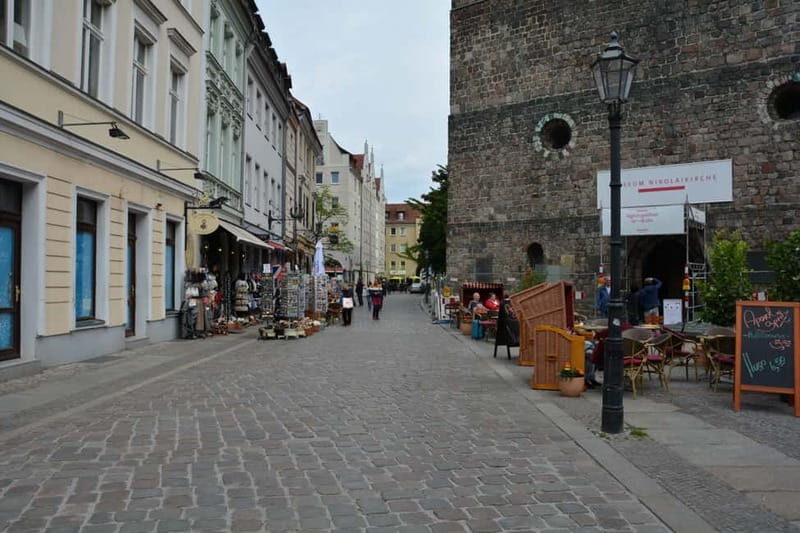
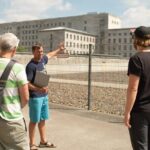
You begin in front of the Nikolaikirche Museum (St. Nicholas’ Church Museum), where your guide meets you with the Get Your Guide You in Berlin flag. This matters more than it sounds. The starting point is in the older heart of Berlin, so your walk starts with the sense that the city has deep roots, not just a postwar reset.
From here, you immediately work your way through Mitte’s most recognized sights. The pace is designed for a 2-hour window, which is exactly what you want if you only have a short time in town or you are using Berlin as a first-location city rather than a slow drift.
You should come with comfortable shoes. You will be walking enough that sneakers really pay off. And yes, it happens in all weather conditions, so bring layers and a rain plan.
You can also read our reviews of more walking tours in Berlin



Nikolaiviertel: where Berlin’s oldest center vibes show up
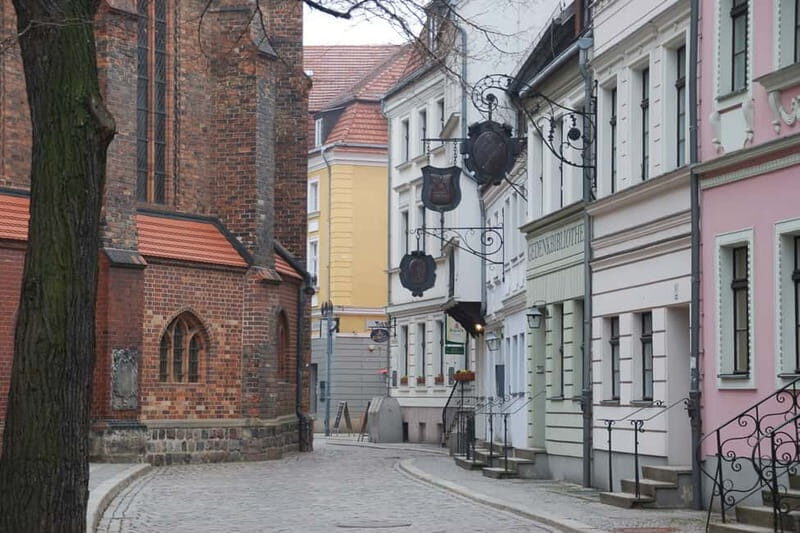
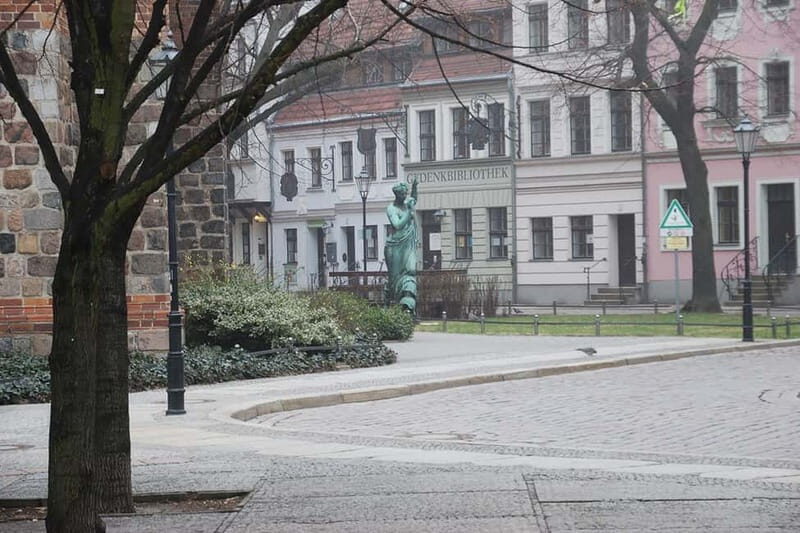
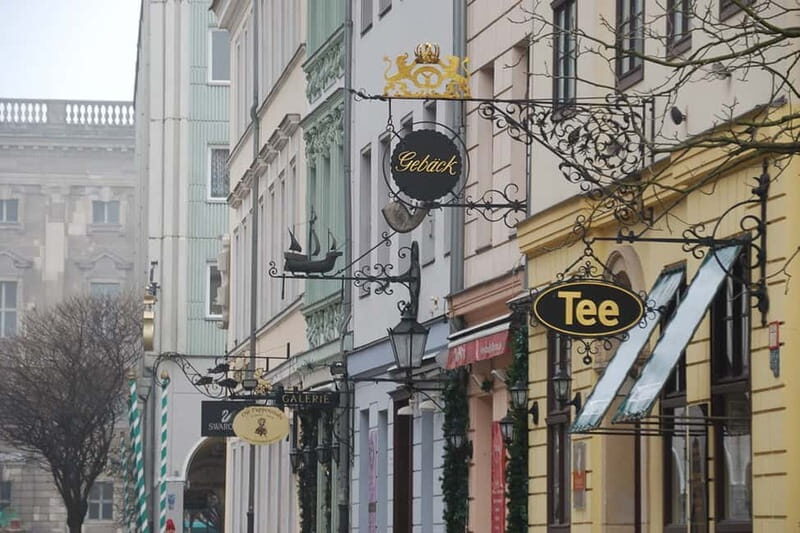
Your tour includes Nikolaiviertel, one of the key areas for understanding Berlin’s early identity. This is the kind of place where buildings feel like they are trying to balance old-world scale with modern city life. Your guide turns that into context: where Berlin started and how it evolved from a small trading village into something with real gravity.
This stop works because it anchors the rest of the route. Once you understand the city’s beginnings, the later “big” landmarks stop feeling random. They start feeling like chapters.
A drawback to expect at this stage: this is where you may want to slow down for photos. That is great, but it can also break pace if you linger too long at every facade. The route is short enough that you can still get your pictures, as long as you stay mindful of time.
Museum Island by the Spree: the story behind the skyline
One of the best pieces of the tour is the way it links walking with viewpoint geography. You follow the area around the Spree toward Museum Island, which is one of Berlin’s most iconic museum clusters. But you are not just told museum names. You get a sense of why this stretch became so important, and what it represents in the city’s cultural ambitions.
On Museum Island, you can see key landmarks such as the Berlin Cathedral area and the surrounding museum buildings, plus the old museum presence in the complex. Even if you do not go inside, the outside orientation is useful. You start noticing the relationships between domes, facades, and river sightlines.
You will also learn how Berlin’s identity has repeatedly changed hands and meanings. That is what turns a “pretty island” into an actual understanding of the city.
Practical tip: if you have limited daylight, this section is where the light often helps photos. Even in overcast weather, the water and stone give structure to pictures.
Humboldt Forum and the Palace Bridge connection
Next comes Humboldt Forum, which your guide frames as part of Berlin’s modern cultural picture, but with visible ties to older power and planning. This is where the walk starts to feel like a conversation between eras rather than a straight timeline.
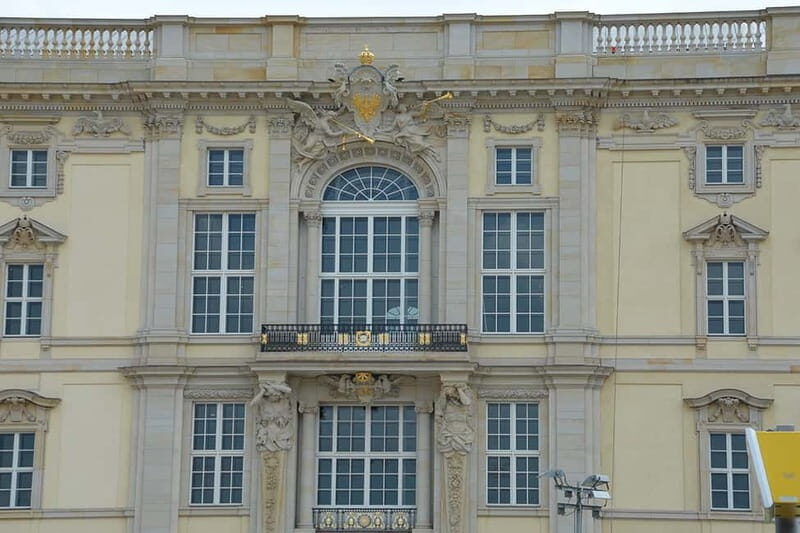
Then you move toward the reconstructed center we often associate with Berlin’s imperial past. You will see the reconstructed Berlin City Palace and you cross via Schlossbrücke (Palace Bridge) to explore the historical center around it.
Why this works: many visitors see the City Palace concept as either political symbol or architectural curiosity. In this format, you get enough context to see it as both. It is a reminder that Berlin keeps rebuilding its idea of itself.
One caution: around the Palace Bridge area, crowds can build on nice days. The tour’s group size keeps it manageable, but you may need patience while the sidewalks compress.
Berlin’s academic and cultural axis: Humboldt University, State Opera, and more
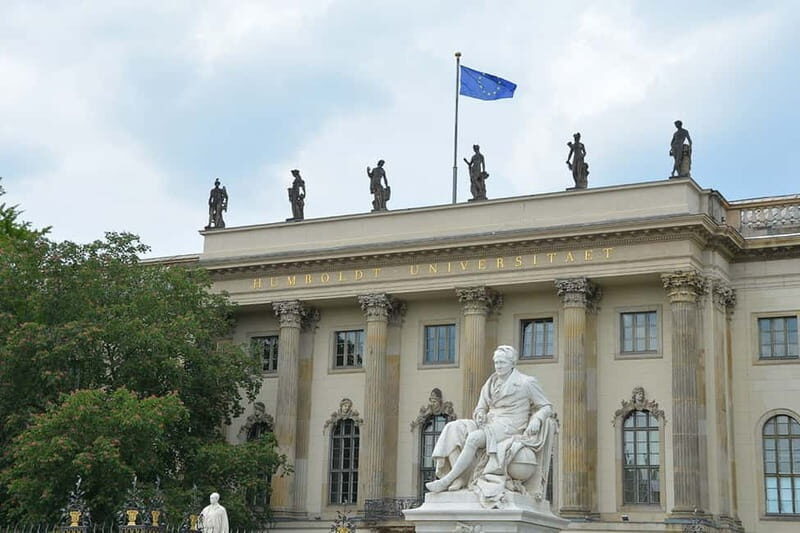
As you continue, the route lines up with Berlin’s classic “center axis” feel—an urban planning idea made visible in the way major institutions face outward. You pass by or near Humboldt University of Berlin, then continue toward major cultural landmarks like Berlin State Opera and St. Hedwig’s Cathedral along Unter den Linden.
This is one of the tour’s biggest strengths: it shows you how Berlin organizes power and culture. The opera and university do not just exist as standalone attractions. Your guide helps you understand why these kinds of buildings appear where they do, and what that tells you about the city’s priorities across different regimes.
At Berlin State Opera, you get a real sense of how the city communicates prestige through architecture. The building is impressive even from outside, and the explanation helps you see why that matters in Berlin’s long-running push to be more than a provincial capital.
If you like photos: this is where you will want to grab some wide angles along the boulevard. The street alignment makes it easier than you might expect.
You can also read our reviews of more historical tours in Berlin




Unter den Linden walk: Frederick the Great and the monuments you keep seeing
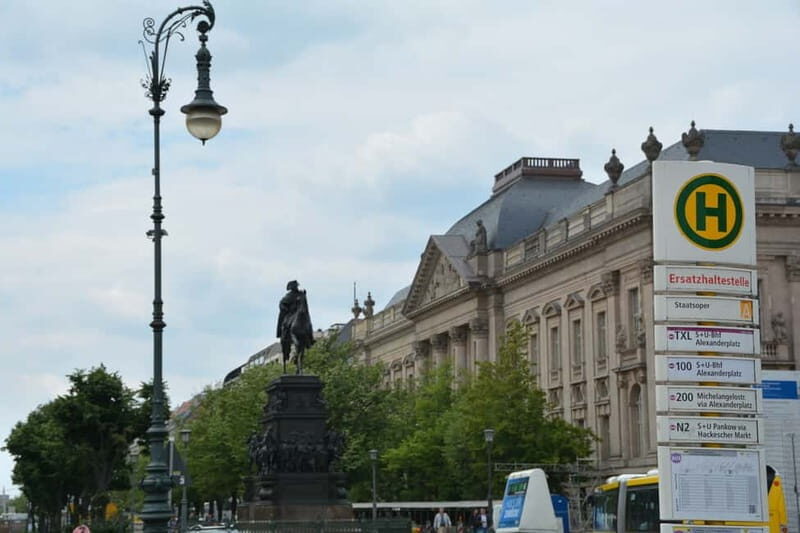
Your route includes a walk on Unter den Linden, described as the oldest boulevard in the city. This is not random trivia. It is a shortcut to understanding why Berlin looks the way it looks. When you walk this stretch, you are walking alongside centuries of political and cultural messaging.
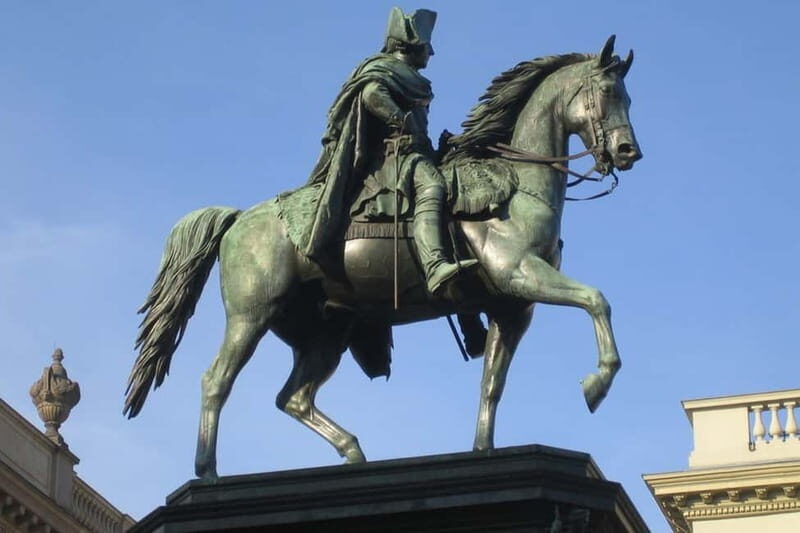
You will see highlights such as the Equestrian Statue of Frederick the Great, the State Opera, Humboldt University, and St. Hedwig’s Cathedral. Even if you have seen these landmarks in pictures, the spacing and alignment make them easier to remember.
This section also has a good rhythm. The boulevards offer clearer sightlines than some of the narrower historic lanes, which helps you keep your bearings.
A moment of height: seeing Berlin’s Television Tower in context
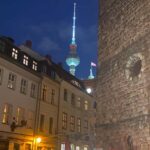
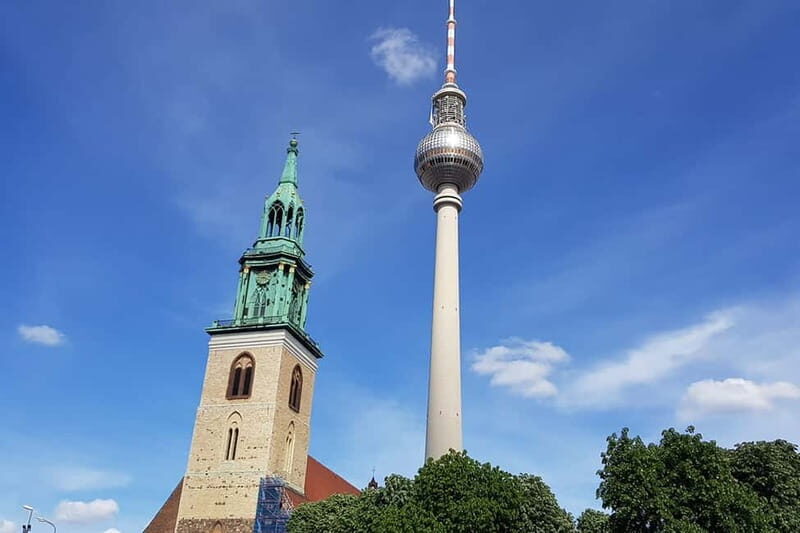
You also see Berlin’s highest building, the Television Tower as part of the broader views during the Spree-area walk. The guide uses this as a marker of modern Berlin, the kind of skyline element that signals a different era than the palaces and churches.
It is a smart inclusion because it reminds you the city did not stop evolving after the imperial period or after reunification. Berlin keeps changing its visual language. The Television Tower is one of the easiest ways to feel that shift without needing a separate ticket or extra transportation.
Brandenburg Gate: the reunification focal point
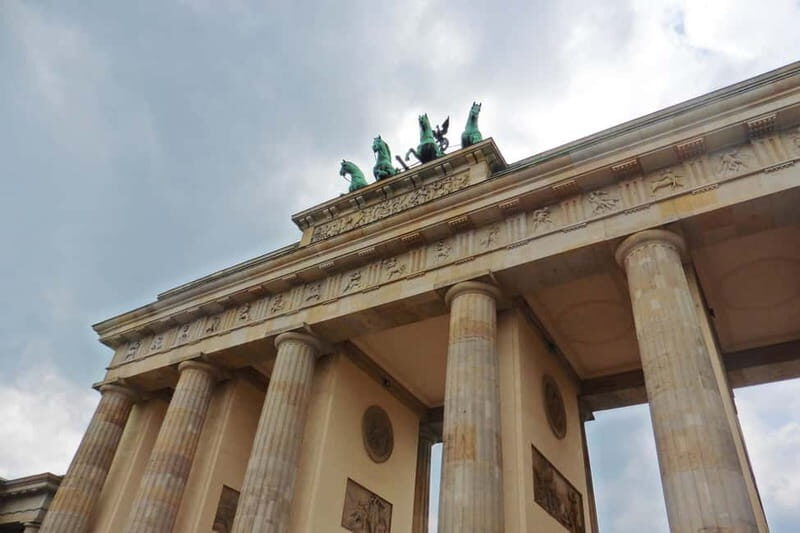
You finish at the Brandenburg Gate, one of Berlin’s most recognizable symbols, and a focal point for reunification in 1990. Here, the tour pays off because you end where many visitors want to land—but you leave with a clearer reason why that place hits so hard.
Your guide connects the landmark story before, during, and after Berlin’s division. This is where you get the emotional logic behind the monuments. It is not just a sightseeing finish line. It is the culmination of the city’s “how did we get here” conversation.
You will likely feel the place more than you expect, especially if this is your first time in Berlin. The gate does a good job of summarizing the city, but the tour helps you read it instead of just staring.
Guides that make the city stick: Carlo, Karlo, and Karl
The biggest repeat theme from the experience is the guide’s storytelling energy and how they answer questions. Names that come up in real bookings include Carlo, Karlo, and Karl—and in every case, the pattern is the same: passion for history, lots of details, and a sense of pacing that keeps you moving without shutting down curiosity.
I also like the practical kindness. In at least one case, the guide even thought ahead with umbrellas when rain moved in. That small move tells you something about the overall approach: the walk is built to be enjoyable even when Berlin insists on changing the weather mid-sentence.
Another useful theme from real experiences: starting with this tour early helps you get your bearings fast. Several people specifically said this kind of foundation made the rest of their trip easier, because you understand the center layout and how the major sites connect.
Is $43 good value for a 2-hour Mitte walk?
For $43 per person over 2 hours, this feels like strong value if you want the highlights with real context. You are not paying for a bus, multiple tickets, or a long day. You are paying for a professional city tour guide, a route through a concentrated set of landmarks, and the chance to ask questions while someone explains what you are looking at.
The small-group limit (up to 10) also matters. In many big-city walking tours, you get stuck behind taller people and can’t interact. Here, the group size supports a more conversational experience.
If you are the type of traveler who loves reading plaques but wants the story translated into plain language, this is a good match. If you only care about photos and you hate walking, you might prefer a cheaper self-guided plan. But for first-time Berlin orientation and historical context, this is priced like a practical city tool.
Best fit: who should book this?
This tour is ideal if you:
- Have limited time and want a reliable center highlights path
- Want history framed as Berlin’s continuous change, not only World War II
- Prefer walking with a guide instead of piecing together directions and meaning alone
- Value a multilingual live guide (German, English, Italian)
- Like asking questions and getting answers on the spot, not later
It also suits you if you are traveling in a “starter week” mindset—first evening in town, quick orientation, then you explore on your own.
Practical expectations before you go
A few reality checks that help you enjoy the walk more:
- Bring comfortable clothes and comfortable shoes. The tour is short, but the walking adds up.
- The tour runs in all weather conditions and on public holidays, so plan for the day Berlin gives you.
- It is designed to be wheelchair accessible, which is a plus if you need that level of mobility support.
- The route stays in central areas, so you should wear footwear that handles uneven surfaces comfortably.
If you like to maximize photos: plan to arrive a touch early so you are not rushing the first minutes.
Should you book this Berlin historic center walk?
Yes, if you want a focused introduction to Berlin’s center that connects landmarks into a story you can remember. This works especially well for first-timers, people with a tight schedule, and anyone who wants more than a list of famous buildings.
I would skip it only if you have zero interest in historical context and you are okay with self-guided sightseeing. For most visitors, though, a guided walk like this turns “I saw it” into “I understand it,” and it does it in a smart 2-hour package.
FAQ
Where does the tour start?
The meeting point is in front of the main entrance of the Nikolaikirche Museum (St. Nicholas’ Church Museum), and you should look for the tour guide with the Get Your Guide You in Berlin flag.
How long is the Berlin historic center walking tour?
It lasts about 2 hours.
What languages is the live guide available in?
The live tour guide is available in German, English, and Italian.
How big is the group?
It is a small group limited to 10 participants.
What sights are included on the route?
You’ll visit or view key spots in central Berlin, including Nikolaiviertel, Museum Island, Humboldt Forum, Humboldt University of Berlin, Berlin Cathedral, the Berlin State Opera area, Unter den Linden, and the Brandenburg Gate.
Is the tour wheelchair accessible?
Yes, the tour is wheelchair accessible.