REVIEW · BERLIN
Berlin Highlights Private Guided Walking Tour
Book on Viator →Operated by Private Tours Berlin · Bookable on Viator
Berlin hits hard when you walk it. This private, English-led highlights tour strings together Berlin’s biggest turning points with real-world storytelling as you move between sites you’d never fully connect on your own, and I especially like the private pacing and the way the guide links WWII to the Cold War in plain language; one thing to keep in mind is that a few bookings reported the tour ran shorter than the promised 4 hours and the walk can be steady, so wear shoes you trust.
You’ll get a guide meet-up before you start (pickup is offered), plus a mobile ticket, and the plan is built around iconic places that are easy to understand in sequence. It’s best suited if you’re comfortable with a moderate amount of walking and you want to ask questions along the way, not just take photos.
From what I’ve seen in guide write-ups, names like Loana, James, Ben, and Johnny come up for a reason: they tend to keep the group engaged, adjust their pace, and make time for pictures and questions without turning it into a lecture hall.
In This Review
- Key things to know before you go
- Private Berlin walking tour: the value of going slower
- The 4-hour route, stop by stop, and what each place teaches you
- Pariser Platz and the Brandenburg Gate area: where power meets symbolism
- The Reichstag and Bebelplatz: politics, propaganda, and consequence
- Holocaust Memorial and the Fuhrerbunker site: why guided words matter
- Potsdamer Platz, the Wall memorial, and Checkpoint Charlie: the Cold War as a walkable map
- Gendarmenmarkt to Unter den Linden: beauty after brutality, not as a distraction
- Museum Island: UNESCO scale, world-class museums, and a chance to breathe
- Price and logistics: is $417.23 worth it?
- Who this tour suits best (and who should adjust expectations)
- Choosing your guide style: how to get the most out of the walk
- Should you book this Berlin highlights private walking tour?
Key things to know before you go
- Private group flow: Only your group participates, up to 15, so you can move at a pace that fits you.
- Crowd-avoidance focus: A guided route beats dropping in randomly and fighting your way through queues.
- A clear WWII-to–Berlin Wall narrative: The stops aren’t random; they form one connected story.
- Landmark walking in compact space: Big-name sights like Brandenburg Gate and Checkpoint Charlie are close enough to do well on foot.
- Free admission at each listed stop: Each major stop on the route is marked as free entry.
- Guides often tailor on the fly: Several guide reports mention flexibility for interests like history, culture, and photography.
Private Berlin walking tour: the value of going slower
Berlin is famous for big sights, but the real payoff is how the city explains itself when you’re not rushing. A private walking tour matters because Berlin’s story is layered. You can stand in front of one landmark and miss what it connects to. With a guide leading you site to site, you get the cause-and-effect thread instead of a pile of postcards.
I also like that this isn’t just a “see everything” plan. With a private group size up to 15, you can ask questions, point out what you care about, and adjust your pace. That’s a big deal if you’re traveling as a family or you want more time at places that hit harder, like memorials tied to the Holocaust and the final days of the Nazi regime.
The practical tradeoff is simple: it’s still a walking tour. If you have a knee issue or limited mobility, you need to be honest with the guide about your limits and confirm how they’ll handle pacing. Some people reported that there was no vehicle, so plan around walking time rather than expecting a car ride between stops.
You can also read our reviews of more walking tours in Berlin


The 4-hour route, stop by stop, and what each place teaches you
This tour is designed as a loop that starts at Pariser Platz (Brandenburg Gate area) and ends back at the starting meeting point. You’ll hit a sequence of central landmarks that map Berlin’s modern identity: imperial power, Nazi catastrophe, Cold War division, and reunified Germany.
A helpful way to think about it: each stop answers a question.
- Who controlled Berlin, and how?
- What violence shaped the city?
- Where did the Cold War lines harden into concrete symbols?
- How did Berlin rebuild what was broken?
Here’s how the stops connect, and what you’ll likely notice.
Pariser Platz and the Brandenburg Gate area: where power meets symbolism
You start at Pariser Platz, a prestigious square at the end of Unter den Linden, and you’re immediately in the orbit of the Brandenburg Gate. This matters because the Gate isn’t just a photo. It’s been reinterpreted over and over, depending on who had power and what Berlin needed to symbolize.
From there, you’ll reach the Brandenburg Gate itself. It survived major destruction, including WWII, and later sat trapped in the middle of the Berlin Wall for decades. That single fact changes how you see it. It went from a royal entrance to a divider, then to a symbol of reunified Germany.
What to do here: take a moment to notice the Gate in the context of the street leading up to it. With Unter den Linden lined up behind it, you can feel why leaders of different eras wanted the same vista to represent their message.
The Reichstag and Bebelplatz: politics, propaganda, and consequence
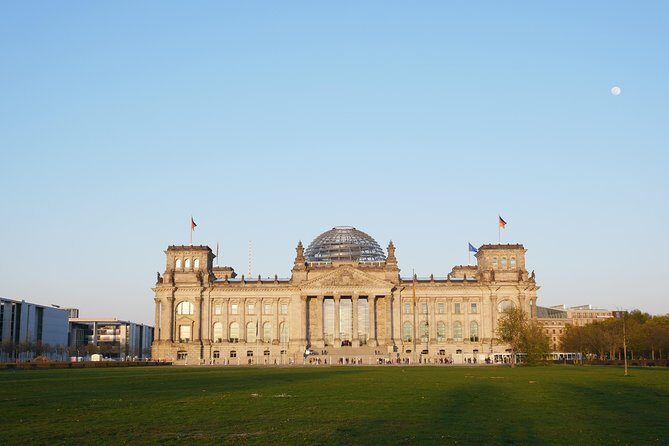
Next comes the Reichstag Building, Germany’s Parliament. It has a heavy chapter attached to it: a fire that helped enable Hitler’s rise to total control. Even if you know the broad outline, a guided stop helps you connect the political move to the physical place where it played out.
You’ll also talk about the Reichstag’s modern top, a glass dome designed by architect Sir Norman Foster. That contrast is the whole point. You’re standing in a building tied to authoritarian takeover, and then looking up at a design built for transparency and modern public life.
A strong follow-on stop is Bebelplatz, associated with Frederick’s Forum and now tied to Humboldt University, the opera area, the Royal Library, and Hedwig’s Cathedral. The key moment here is the Nazi book burnings on May 10, 1933. If you’re a reader, this stop lands differently because it’s about what gets destroyed: ideas, not just buildings.
Practical tip: these stops can pull you toward reflective thinking. If you want photos, do them quickly before you get caught up in the story. The guide’s pacing is where this part shines.
Holocaust Memorial and the Fuhrerbunker site: why guided words matter
Then you’ll walk to the Holocaust Memorial – Memorial to the Murdered Jews of Europe. It’s made of stone stelae and it’s meant to slow you down. This is one of those places where a guide’s job is to keep your feet moving while also giving you emotional context. You’ll be able to understand why it is considered Germany’s central memorial to Jewish victims of the Holocaust.
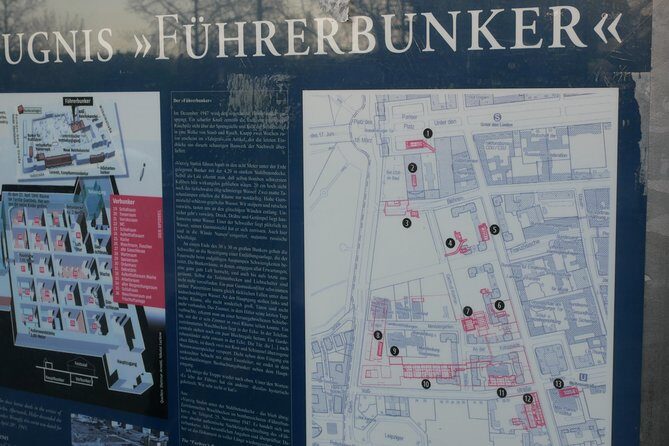
After that, the tour turns toward the Fuhrerbunker site, currently marked in a simple way as the location where Hitler spent his final days and committed suicide during the last week of WWII in Europe.
I appreciate that this tour doesn’t treat these stops like museum exhibits you rush past. Instead, it frames them as part of Berlin’s physical geography—where decisions were made and where despair ended. Still, you should know what you’re signing up for: this is heavy material, and a walking format can intensify the emotional load. If you’re sensitive to dark history, you may want to pause and take breaks.
You can also read our reviews of more guided tours in Berlin




Potsdamer Platz, the Wall memorial, and Checkpoint Charlie: the Cold War as a walkable map
Berlin’s Cold War story can feel abstract until you see the places where the division was made real. This part of the tour is the payoff for anyone who’s read about the Berlin Wall and wants to match facts to brick-and-street reality.
You’ll pass Potsdamer Platz, historically one of Europe’s busiest traffic intersections in the 1920s, destroyed during WWII, then rebuilt as a modern district in the 1990s and early 2000s. That timeline helps you see how Berlin replaced loss with redevelopment, but also how fast history can get overwritten by new construction.
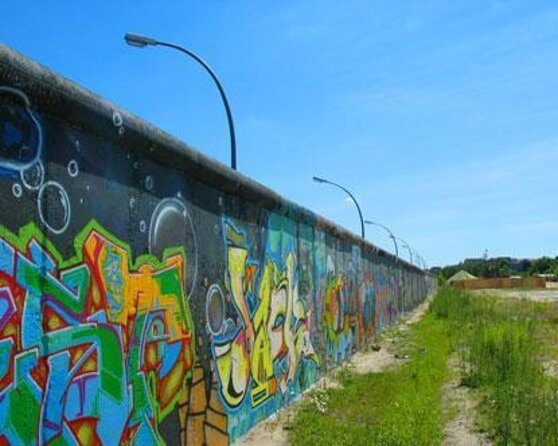
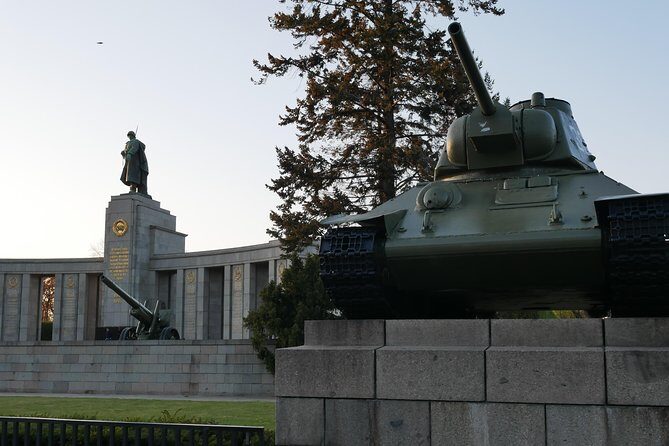
Then you’ll go to the Memorial of the Berlin Wall, one of only three remaining stretches. This segment is located on the former grounds tied to Nazi power structures. Across the way, you’ll reference the former Nazi Luftwaffe headquarters. It’s an uncomfortable pairing: the memorial sits where intimidation machinery used to operate, and a Cold War line later cut the city again.
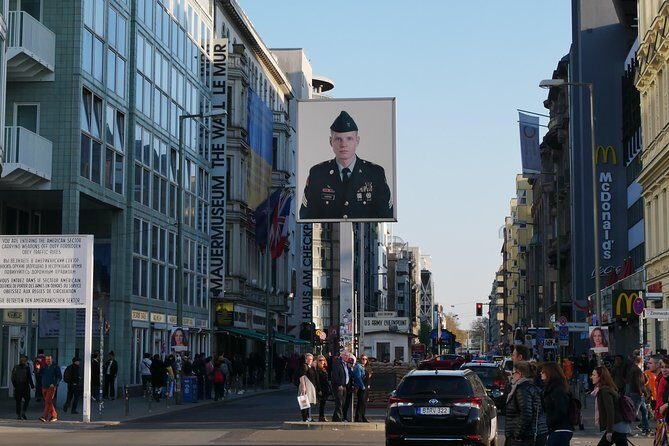
Next is Checkpoint Charlie, the famous frontline checkpoint manned by Americans and Soviets during the Cold War. This is the stop where many people finally see why this place became a symbol. The guide will likely explain how the checkpoint worked as a controlled interface between East and West, not just a dramatic movie location.
For this section, I’d plan to bring your questions. The best value comes when you ask, Why did these positions matter? and How did people experience the city day to day?
Gendarmenmarkt to Unter den Linden: beauty after brutality, not as a distraction
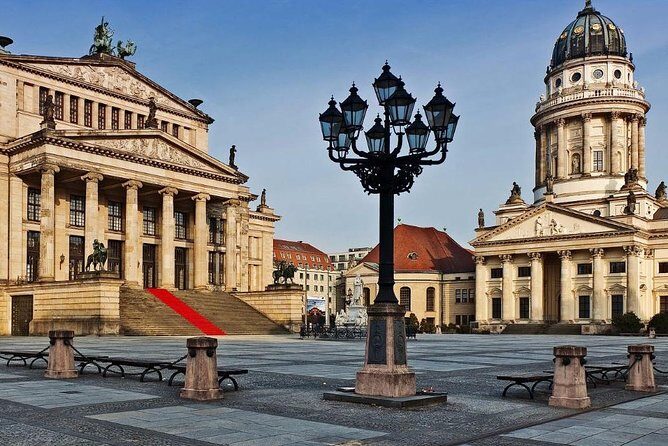
After the heavy stops, the tour brightens in a meaningful way. You’ll visit Gendarmenmarkt, widely considered one of Berlin’s most beautiful squares, with the French and German cathedrals and the Konzerthaus. Gardens and statues make it feel calmer, and that contrast is part of Berlin’s story too.
Then it’s back onto Unter den Linden, the royal boulevard connecting the Brandenburg Gate area to Museums Island and the City Palace. Walking this strip gives you a sense of how Berlin’s “official” spaces were designed to project order and authority.
I like how this tour uses these prettier locations to reinforce the bigger theme: power changes uniforms, but it still wants prominent streets and staged viewpoints.
Museum Island: UNESCO scale, world-class museums, and a chance to breathe
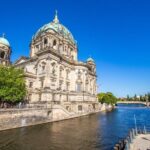
Finally, you’ll arrive at Museum Island, a UNESCO World Heritage Site featuring six world-class museums. Even if you don’t go into each museum, the area helps you understand why Berlin is more than WWII and the Wall. It’s also a city that builds cultural institutions as part of rebuilding identity.
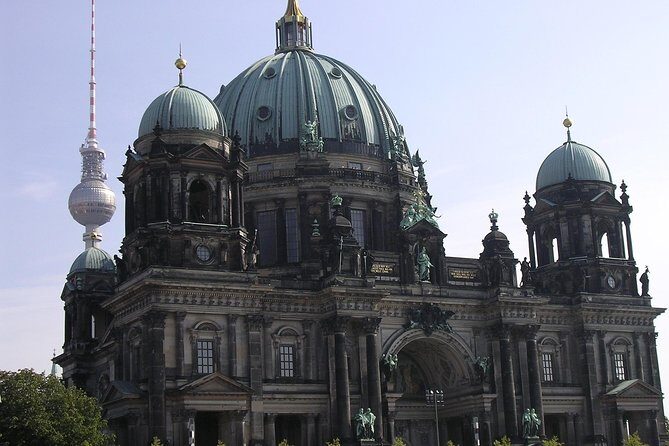
You’ll also encounter the Berlin Cathedral and mention of the newly rebuilt Hohenzollern city palace, which helps complete the “history layers” feeling that runs through the whole tour.
What to do: treat this stop like a breather. Take a minute, look around, and decide what you want to explore later on your own. Your guide can help you pick next steps based on how much time you have.
Price and logistics: is $417.23 worth it?
At $417.23 per group (up to 15) for roughly 4 hours, you’re paying for a dedicated guide, a private group setting, and a route that’s planned for narrative flow. This isn’t a cheap “stand there and read the plaque” option. But it can be a good value if you’re the kind of traveler who benefits from conversation, context, and flexible pacing.
Here’s how I judge value on a private historical walking tour:
- If you’ll ask questions, it’s worth it. Otherwise, you can get a lot from a good audio guide plus your own walking plan.
- If you’re traveling with multiple people in one group, private pricing can actually beat paying for individual tickets and separate guide time.
- If you’re a first-timer, this type of route helps you prioritize what matters so you don’t waste days doing random sightseeing.
One caution from real-world experience: some people noted the tour advertised as 4 hours but felt closer to 3. That doesn’t automatically mean it’s always short, but it’s enough that I’d manage expectations. If the extra 60 minutes matters for your schedule, ask ahead how they pace the route and how they handle photo time.
Also, confirm that you’re comfortable with walking for the whole experience. There are reports of the guide meeting people and there not being a vehicle option, so don’t assume there will be car rides to reduce walking distance.
Who this tour suits best (and who should adjust expectations)
This is a strong match if you:
- Want Berlin highlights with a WWII and Cold War storyline rather than a loose collection of monuments.
- Like asking questions and getting answers that connect different eras.
- Want a guide who adapts pace for the group and allows time for photos.
It can also work well for families, because some guides were described as keeping a 12-year-old engaged without losing adult depth. If you’re traveling with teens, that’s a real win.
You should think twice or at least plan carefully if:
- You have a knee or mobility limitation and walking may be painful. Since it’s a walking tour, you need to pre-brief your guide and agree on pacing.
- Your schedule is tight and you can’t tolerate a possible shorter-than-advertised duration.
If you’re booking, a practical move is to email or message the operator after booking with your must-sees and your comfort level. The more specific you are, the more likely the guide can make the route feel tailored instead of canned.
Choosing your guide style: how to get the most out of the walk
A good guide can turn a route into a story you remember. From guide reports, the best experiences often share a few traits:
- Strong storytelling in plain language, not just dates.
- Patience with questions.
- Flexibility if plans shift, including start-time mix-ups.
Some guide names that came up with standout feedback include Loana, James, Ben, Johnny, and Pip. You can’t control the guide, but you can control what you ask. If you want a more history-heavy approach, say so. If you want photography moments, ask for time to stop and capture details.
Also, if you’re the type who likes to connect dots, keep a running list of your questions. This is where a private setup pays off.
Should you book this Berlin highlights private walking tour?
Book it if you want Berlin’s biggest landmarks connected by a clear story, and you like learning while you walk instead of treating monuments as isolated checkboxes. It’s a good first-choice tour for people who care about WWII, the Berlin Wall era, and the way Germany redefined public symbols afterward.
Skip it or adjust expectations if you need frequent mobility breaks, if you can’t handle steady walking, or if you’re counting on exactly 4 hours. If you do book, wear supportive shoes, plan for a thoughtful pace, and be ready with a couple of questions so you get your money’s worth from the guide time.