REVIEW · MUNICH
Walking Tour on Resistance to Nazism in Munich
Book on Viator →Operated by Explora Múnich · Bookable on Viator
Munich hides resistance in plain sight. This Walking Tour on Resistance to Nazism follows stories of people who pushed back against the Nazi regime, using key locations in the city to make the history feel immediate and specific. You start at Odeonsplatz and end at Georg Elser’s memorial, with each stop focused on a different kind of resistance.
I especially like the guide-led storytelling. The experience comes across as friendly, clear, and detailed when the guide is on point, and names like Laura, Maca, Javier, and Jaime show up in the best way: curious, human, and good at answering questions. I also like the structure: you spend about 20 minutes per stop, so you get time to absorb each chapter without feeling rushed.
One possible drawback: the topic is heavy. This isn’t a light “look at old buildings” walk, so come ready for serious material and for a steady 2.5-hour stroll.
In This Review
- Key Highlights
- Munich’s Resistance Story on a One-Route, 2.5-Hour Walk
- Hofgarten: Royal Life and the Nazi Power Shift You Can Still Read in the Landscape
- Bayerische Staatskanzlei: Parties, the Sopade, and the Idea of Organized Opposition
- Prinzregentenstraße and the Former Luftwaffe Command Center: Militia Resistance From Inside
- Bavarian National Museum: Valkyrie and How Plots Form When People Decide Enough Is Enough
- Haus der Kunst: Degenerate Art and the Propaganda Pressure on What You’re Allowed to See
- Ludwigskirche: Church, Nazism, Law T4, and Religious Resistance
- DenkStätte Weiße Rose: Meeting Munich’s Most Famous Resistance Group
- Türkenstraße and the Georg Elser Memorial: Attention Turned Toward Stopping Hitler
- Guides Make the Difference: Clear Explanations and Real Conversation
- Price, Tickets, and Timing: Good Value for a Focused Walking Route
- Who This Walk Is Best For (and Who Might Want to Adjust)
- Should You Book This Resistance to Nazism Tour?
- FAQ
- Where does the tour start and end?
- What time does the tour begin?
- How long is the tour?
- How much does the tour cost?
- Is a mobile ticket used?
- Are admissions included for the stops?
- How big is the group?
- Is the tour near public transportation?
- Are service animals allowed?
- What is the cancellation policy?
Key Highlights
- Anti-Nazi stories, tied to real addresses across central Munich
- Strong guide energy with friendly, detailed explanations and Q&A time
- Free admission at each listed stop (so you’re not juggling add-on tickets)
- A tight route built from 8 focused stops over about 2.5 hours
- Major resistance chapters: royal-era change, political opposition, White Rose, Georg Elser, and more
Munich’s Resistance Story on a One-Route, 2.5-Hour Walk
If you only skim Nazi-era history, it can start to feel like a distant timeline. This walk keeps it grounded in places you can actually point to. Each stop is chosen to show a different angle of resistance, and you move through the city like you’re following a paper trail—political, cultural, religious, and personal.
The route is built for people who want context without drowning in facts. You get a clear start-to-finish path: begin in the Odeonsplatz area, then work your way through sites connected to government power, military command, plots against leadership, propaganda, church resistance, and famous underground movements. By the time you reach Georg Elser’s memorial, the “resistance” theme stops being a concept and starts feeling like a set of real choices made under real pressure.
You can also read our reviews of more walking tours in Munich


Hofgarten: Royal Life and the Nazi Power Shift You Can Still Read in the Landscape
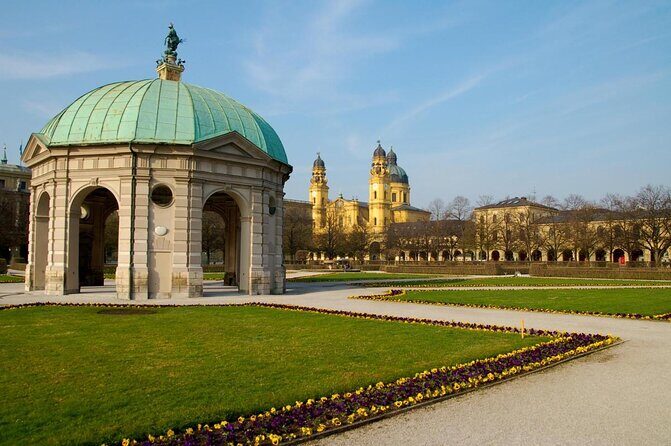
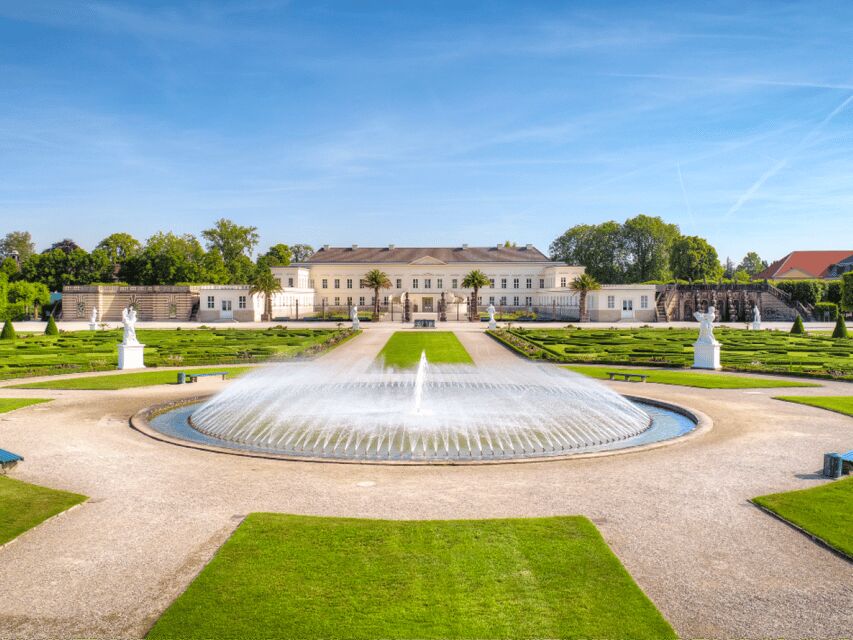
Your first stop is Hofgarten, and it sets the emotional tone for the rest of the walk. You talk about how the royal family lived during the Nazi period and what the political situation looked like around them.
This opening matters because it frames the question you’ll keep hearing all day: who had influence, who had safety, and who had to make decisions under threat. Even if you’ve read about the Nazi regime before, starting with royal life gives you a more layered sense of how power can change while the city still looks the same from the outside.
Bayerische Staatskanzlei: Parties, the Sopade, and the Idea of Organized Opposition
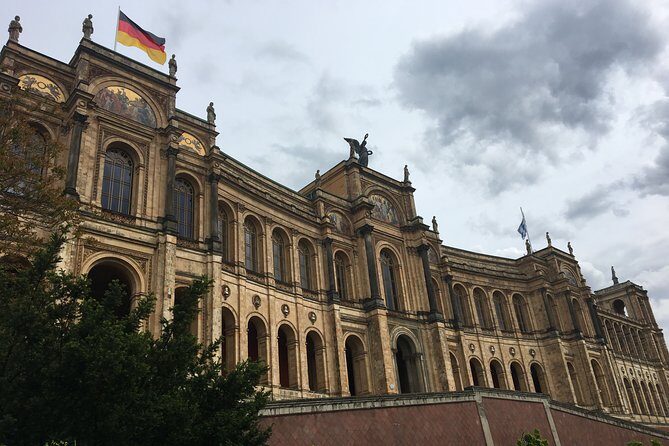
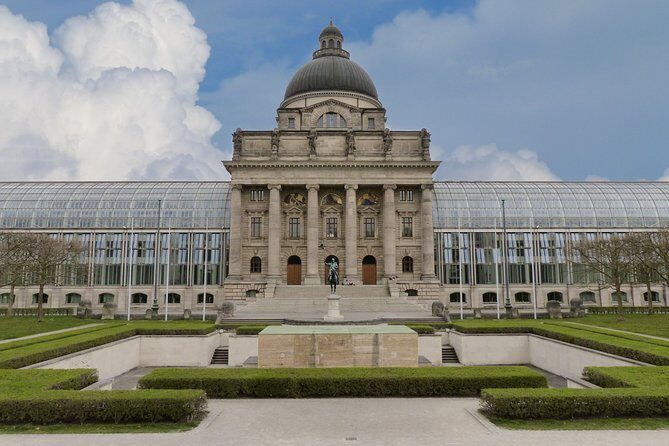
Next comes Bayerische Staatskanzlei, where the focus shifts toward political resistance. You’ll hear about how political parties pushed back against the Nazi regime and about the Sopade.
This is one of the most practical parts of the story because it shows resistance as more than street-level courage. It’s also about organization—people trying to keep opposition alive when dictatorship makes open dissent dangerous. When you stand in a place tied to governance, it becomes easier to understand why resistance could take many forms, including political networks and anti-regime messaging.
Prinzregentenstraße and the Former Luftwaffe Command Center: Militia Resistance From Inside
At Prinzregentenstraße, the walk turns toward the military side of the Nazi machine. You’ll discuss the building of the former Luftwaffe Command Center and resistance within the militia itself.
This stop helps you see that resistance didn’t only come from outside the system. Sometimes it came from people who knew the system up close and understood the risks of staying loyal. Even without getting lost in technical detail, the message lands: when an authoritarian regime controls institutions, resistance can look like quiet defiance inside the very structures doing the harm.
Bavarian National Museum: Valkyrie and How Plots Form When People Decide Enough Is Enough
Then you move to the Bavarian National Museum, where you learn what happened in the well-known Valkyrie Operation. This is the kind of topic that can get turned into a headline if you don’t anchor it in place.
Here, the museum stop gives you a way to connect the story to Munich itself rather than treating it as only a distant event tied to other cities and dates. You’ll get the main arc of the plot while also walking through the larger point: resistance wasn’t one single moment. It was people weighing their options, building support, and acting when they believed action mattered.


Haus der Kunst: Degenerate Art and the Propaganda Pressure on What You’re Allowed to See
At Haus der Kunst, the tour focuses on censorship of art. You’ll discover how Nazism tried to control culture, including the idea behind the Degenerate Art exhibition and how press control worked through propaganda.
This stop is valuable for modern visitors because it connects past control tactics to patterns you can recognize in any era. When a regime attacks art and language, it’s attacking imagination—what people think is normal, tasteful, or even true. You’ll come away understanding censorship as more than “blocking” content; it’s a strategy to shape beliefs.
Ludwigskirche: Church, Nazism, Law T4, and Religious Resistance
Next is Ludwigskirche, where you talk about the relationship between the Church and Nazism, Law T4, and how religious communities resisted the regime.
This part of the tour is where the discussion often turns from politics to conscience. You’re not just hearing what the Nazi regime did; you’re hearing about what people tried to protect when the law itself was part of the cruelty. It’s a sobering stop, and it’s also a reminder that resistance can be moral, not just militant.
DenkStätte Weiße Rose: Meeting Munich’s Most Famous Resistance Group
Then comes DenkStatte Weisse Rose, one of the most recognizable resistance stories linked to Munich. You’ll meet the best-known resistance group in the city: the White Rose.
This stop is a turning point because it brings the theme back to human voice and human risk. White Rose is often taught in broad strokes, but walking to a dedicated memorial space makes it easier to grasp how close the actions were to everyday life. It’s the kind of stop that tends to stick with you, because the story feels both specific and painfully brave.
Türkenstraße and the Georg Elser Memorial: Attention Turned Toward Stopping Hitler
Finally, you end at Georg Elser’s memorial area after visiting Türkenstraße. Here you’ll discuss Georg Elser and how attentive resistance was aimed against the life of the Führer himself.
This ending gives the tour a sharp emotional conclusion: not only opposing the regime in principle, but taking steps to try to stop its leadership. Whether you already knew Elser’s story or only knew the name, the memorial landing spot makes the final message clear. Resistance can be organized and collective, but it can also come from one person acting at personal cost.
Guides Make the Difference: Clear Explanations and Real Conversation
The strongest part of this tour is the way it’s taught. Multiple guides earn praise for being friendly and for explaining the material in an interesting, understandable way. Names you may see include Laura, Maca, Javier, and Jaime, and the common thread is how they handle the story: clear structure, good pacing, and enough detail to make you feel oriented rather than overwhelmed.
I love when a guide doesn’t just talk at you. Here, you’re set up to ask questions and get answers, and that matters with a topic this serious. If anything in the resistance story feels confusing—how it worked, what it cost, why people acted when they did—your best chance to clarify it is during the stops, while the group is still together and the guide can connect the dots on the spot.
Price, Tickets, and Timing: Good Value for a Focused Walking Route
At $19.49 per person, this is priced like a bargain for the amount of guided time you get. You’re looking at about 2 hours 30 minutes, and the route uses a full run of major sites tied directly to the resistance theme, not just “quick photos and move on.”
There’s also a practical perk built into the stop list: admissions are free for the listed venues. You’ll also use a mobile ticket, which keeps things simple on the day. And with a maximum of 25 travelers, you’re more likely to get that guide attention and less likely to feel like you’re lost in a crowd.
Timing-wise, the tour starts at 3:00 pm. That’s a nice slot for squeezing it into an afternoon without stealing your whole day. Also, since it’s near public transportation and service animals are allowed, it’s not a logistical headache if your Munich day is already busy.
Who This Walk Is Best For (and Who Might Want to Adjust)
This tour fits well if you like history that connects to place. If you enjoy walking routes where the names on buildings and streets mean something, you’ll get a lot from the way each stop handles a different type of resistance.
It also works if you want a guided explanation of serious, complicated material without having to piece it together alone. You’ll cover political resistance, cultural censorship, resistance connected to religious life, and resistance tied to famous plots and underground movements. That mix helps you avoid the common “single-issue” problem with history tours.
One heads-up: because the subject matter is intense, it may not feel ideal for kids or for anyone who wants an upbeat afternoon. Keep your expectations realistic. This is a think-and-feel kind of walk, not a sightseeing-only loop.
Should You Book This Resistance to Nazism Tour?
I’d book it if you want Munich’s anti-Nazi story told through real locations, with a guide who keeps things clear and conversational. At $19.49, with a focused 2.5-hour route, free admission at the listed stops, and a small group limit, it’s strong value for a serious theme.
Choose something else only if you want a purely light, casual history walk. The route covers censorship, dictatorship-era changes, and resistance against cruelty. If that sounds like what you came to Munich for, this is a smart, well-structured way to experience it.
FAQ
Where does the tour start and end?
The tour starts at Odeonsplatz, Odeonspl., 80333 München, Germany, and it ends at Georg-Elser-Platz, 80799 München-Maxvorstadt, Germany.
What time does the tour begin?
The start time is 3:00 pm.
How long is the tour?
It runs for approximately 2 hours 30 minutes.
How much does the tour cost?
The price is $19.49 per person.
Is a mobile ticket used?
Yes, the tour includes a mobile ticket.
Are admissions included for the stops?
The listed stops note admission ticket free.
How big is the group?
The tour has a maximum of 25 travelers.
Is the tour near public transportation?
Yes, it is near public transportation.
Are service animals allowed?
Yes, service animals are allowed.
What is the cancellation policy?
You can cancel for a full refund up to 24 hours in advance of the experience’s start time. If you cancel less than 24 hours before, the amount you paid is not refunded. If the minimum number of travelers isn’t met and the tour is canceled, you’ll be offered a different date/experience or a full refund.