REVIEW · MUNICH
Walking Tour on Origins of Nazism in Munich – English
Book on Viator →Operated by Todo Tours · Bookable on Viator
Munich tells a brutal story fast. This English walking tour traces how Adolf Hitler, sent to spy on the German Workers’ Party, helped ignite the Nazi movement, then connects major turning points to the very streets and squares you’ll walk past. You’ll use a mobile ticket, and the whole experience runs about 2 hours.
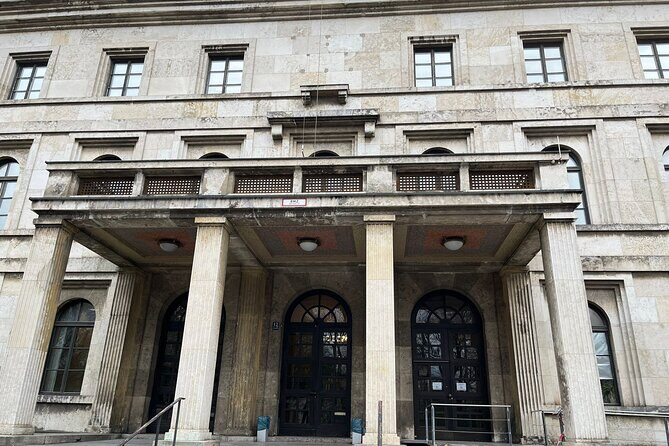
I especially like how the route balances dark locations with visible reminders of victims and resistance. The Platz der Opfer des Nationalsozialismus grounds the tour in consequences, not just ideology, and the guided pacing keeps the heavy material from feeling random. I also loved the fact that you pass real “power-and-propaganda” landmarks, including Staatliches Hofbräuhaus, tied to the Nazis’ early base, and Haus der Kunst, described here as an early propaganda building.
One drawback: two hours is short for a subject this large. If you leave wanting more context, you’ll likely want to pair the walk with a museum visit afterward so the timeline clicks into place.
In This Review
- Key Highlights You’ll Feel Right Away
- Why This 2-Hour Nazism Origins Walk Works in Munich
- Meeting at Marienplatz: Getting Positioned for a Clean City-Center Walk
- Platz der Opfer des Nationalsozialismus: Starting With the Cost
- Staatliches Hofbräuhaus: The Nazi Base in a Munich Drinking Hall
- Haus der Kunst and Hofgarten: Propaganda Space and the Power of Planning
- Odeonsplatz: A Square That Still Feels Like a Stage
- Königsplatz: Where the City’s New Backbone Shows Its Intent
- What You Learn: Key Episodes and How the Story Connects
- Price and What You’re Really Paying For
- Who This Tour Fits Best (and Who Might Prefer a Different Plan)
- Should You Book This Tour on Origins of Nazism in Munich?
- FAQ
- What language is the walking tour offered in?
- How long is the tour?
- How much does it cost?
- Where does the tour start and end?
- Is a printed ticket required?
- Is lunch included?
- What’s included in the price?
- Are admissions included?
- How big is the group?
- What is the cancellation policy?
Key Highlights You’ll Feel Right Away
- A short, structured 2-hour route that moves quickly through Munich’s most relevant sites
- Start at a victims’ memorial (Platz der Opfer des Nationalsozialismus) before moving into party landmarks
- Hands-on context at Hofbräuhaus and Haus der Kunst, where the “how it took hold” story becomes visible
- Munich squares built for power, especially Odeonsplatz and Königsplatz, tied to the Third Reich’s urban vision
- Built-in admissions mix: some stops are free, others include admission so you’re not hunting tickets
Why This 2-Hour Nazism Origins Walk Works in Munich
This tour is built for people who want a reality check without getting lost in a textbook. In just about two hours, you cover a chain of places tied to the rise of the Nazi party—so you can connect dates and names to stone, layout, and location. That’s the key value: the city itself becomes your “timeline.”
I also appreciate the tone. The route doesn’t treat Nazism like a detached academic topic. It threads in consequences—especially through memorial space—so the lesson lands with weight, not just facts. And because it’s an English expert guide, you’re not stuck trying to interpret signs or architecture on your own.
The pacing is tight on purpose. You’re not wandering. You’re moving from point to point, with short time blocks at each stop. That makes it a good fit if you’re doing Munich sightseeing anyway and want to add one focused, meaningful thread to the day.
You can also read our reviews of more walking tours in Munich
Meeting at Marienplatz: Getting Positioned for a Clean City-Center Walk
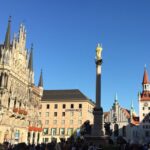
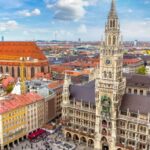
You meet near Mariensäule, at Marienplatz 22 (Marienplatz), with the tour starting at 3:00 pm. The walk ends at Königsplatz 1, so you finish in another major square area—useful because it’s easy to continue your day without backtracking.
Two practical points make this smoother:
- The group is capped at 35 travelers, so you’re not stuck in a huge herd.
- It’s near public transportation, which helps if your day is already in motion.
You’ll also be using a mobile ticket, which is ideal when you’re balancing photos, transit, and cold-weather surprises. And since confirmation happens at booking, you can plan without last-minute scrambling.
Booking-wise, this one tends to get reserved ahead—on average about 35 days in advance—so if you’re traveling at a busy time, it’s smart to lock it in early.
Platz der Opfer des Nationalsozialismus: Starting With the Cost
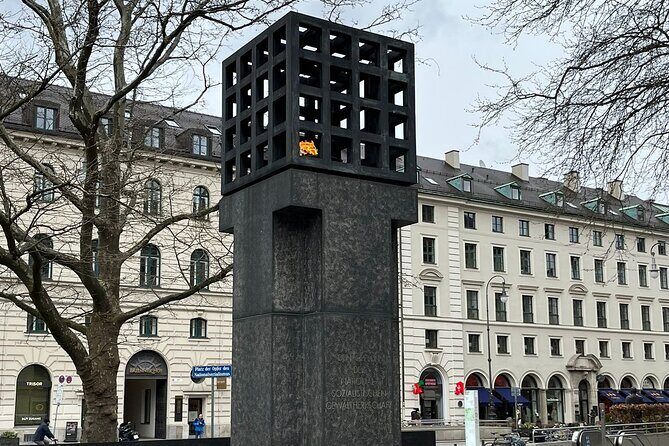
Your first stop is the Platz der Opfer des Nationalsozialismus—the Square of the Victims of National Socialism. You’ll spend about 15 minutes here, and it’s free.
This opening matters. It’s easy to walk into a story like this from the “how did they recruit people?” angle. Starting with the victims flips the frame. You’re reminded from the beginning that the Nazi project wasn’t a thought experiment—it produced suffering on a vast scale.
Also, a memorial square works well on a walking tour because it doesn’t require museum time to understand the message. It’s immediate. You can take in the space, then move on with the guide filling in the why and how.
If you’re sensitive to heavy subject matter, this is also where you’ll feel the tone set. You may want to arrive a few minutes early so you can gather yourself before the history starts moving fast.
Staatliches Hofbräuhaus: The Nazi Base in a Munich Drinking Hall
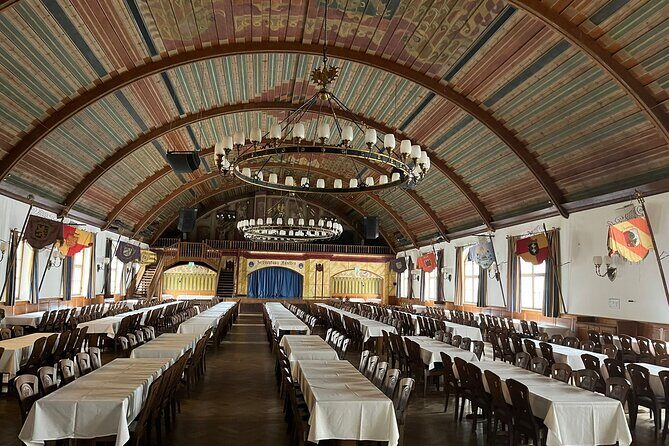
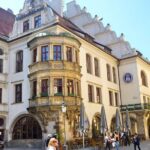
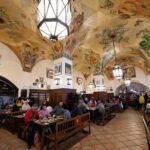
Next up is Staatliches Hofbräuhaus, often described as a major brewery landmark. Here you’ll spend about 15 minutes, and admission is included for this stop.
The surprising part is how ordinary the setting can feel. A brewery hall is a place for beer, crowds, and Bavarian life—yet this tour ties it to where the Nazi party established its base. That contrast is exactly why this stop hits hard. It helps you understand how political power can grow in normal everyday spaces, not only in grand government buildings.
What I like about this kind of stop is the way it sharpens your questions. Instead of only memorizing leaders, you start asking how supporters gathered, how ideas spread, and how the party made itself visible and organized.
One practical note: because brewery locations can attract people year-round, arriving on time helps. Don’t show up late and then rush through this part. Give it your full attention.
Haus der Kunst and Hofgarten: Propaganda Space and the Power of Planning
Then the tour moves to Haus der Kunst, where you’ll spend about 15 minutes. Admission is included here too. This stop is described as the current museum space and the first propaganda building of the Third Reich.
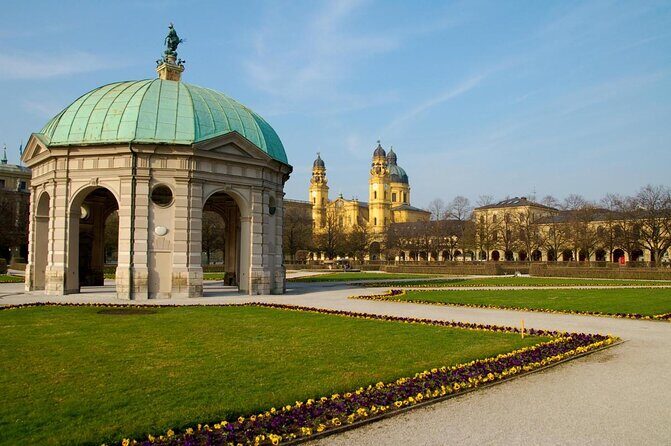
This is a smart pairing with the next stop: Hofgarten, one of Munich’s most important parks. You’ll spend around 20 minutes at Hofgarten, again with admission included.
Why does it work? Because it connects two different kinds of “stagecraft”:
- Architecture and building use for messaging (propaganda)
- Outdoor public space for spectacle, movement, and city presence (parks and planning)
You’re not just looking at pretty grounds. You’re seeing how rulers liked to shape how people moved and gathered. Even if Hofgarten is calm in your moment, the historical use of planned spaces makes you think differently about what “public” can mean.
At these two stops, you’ll likely get a clearer sense of how the Nazi project didn’t rely only on speeches. It used environments—built form plus crowd dynamics—to reinforce its message.


Odeonsplatz: A Square That Still Feels Like a Stage
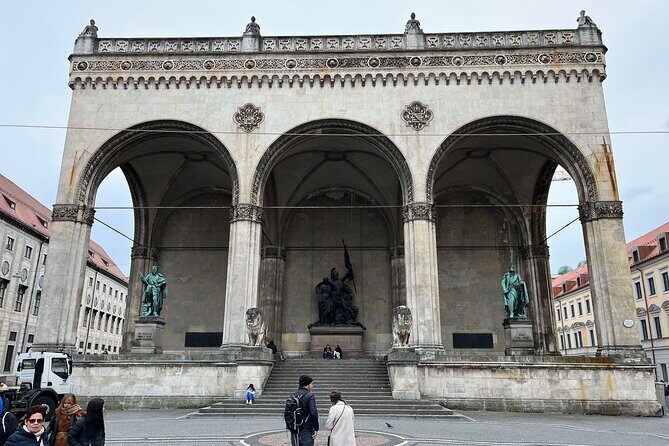
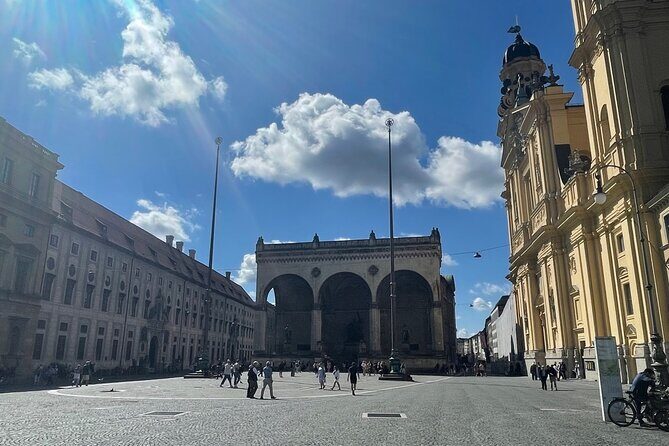
After Hofgarten, you’ll reach Odeonsplatz for about 15 minutes. This stop is free.
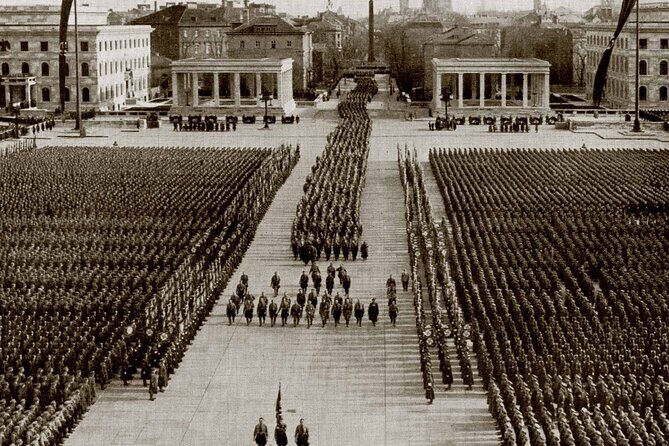
Odeonsplatz is one of Munich’s most important squares, and the tour treats it that way for a reason. Squares like this are designed for visibility. That’s why they matter in political storytelling: big ideas need big space so people can see, gather, and feel part of something.
Even when you’re standing still, the feel of the square helps you understand how ceremonies and public displays can shape belief. The guide’s job here is to connect the space to the story without turning it into pure architecture talk.
If you like taking photos, this is a good stop for it—but keep one foot in the present. Don’t just shoot. Listen while you look. The meaning is in the pairing of view + explanation.
Königsplatz: Where the City’s New Backbone Shows Its Intent
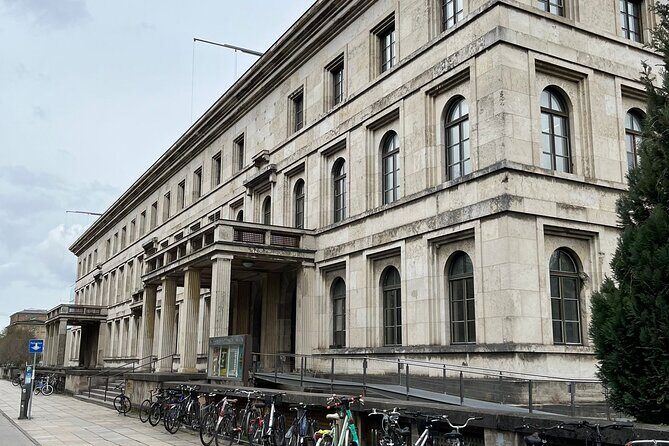
The tour wraps at Königsplatz, with about 15 minutes there. Like Odeonsplatz, it’s free.
This area is described as one of the main squares that formed the backbone of the new city designed by the Third Reich. That’s a strong phrase, but it’s also useful. It tells you what to watch for: the way the square layout and “public monument energy” can signal authority.
Königsplatz is also a good final stop because it gives you room to process. You finish in a major open area rather than being dropped into a random street corner. From here, it’s easier to keep exploring Munich with your new context in mind.
And because the tour ends here, you can plan a next step without panic: a coffee, a museum nearby, or simply more walking with a sharper sense of how the city’s power-story was built.
What You Learn: Key Episodes and How the Story Connects
The tour is framed around major turning points in the rise of Nazism. You’ll hear how Hitler arrived in Munich on an early mission tied to spying on the German Workers’ Party, then how that initial involvement helped lead to the Nazi party’s transformation into the Third Reich’s engine.
You’ll also get mention of specific episodes that show the Nazi movement shifting from ideology into action—events such as:
- a Hitler coup attempt
- the burning of Goebbels’ books
- the Night of Broken Glass
The point isn’t to shock you for the sake of it. It’s to help you understand momentum: how the party moved from recruitment and propaganda into political control and violence. In a walking format, those episodes feel more concrete because you connect them to locations tied to the rise of the movement.
This is also where a good guide matters most. You want a guide who can hold your attention without getting lost in pure trivia. The subject is controversial and complex, and the tour is designed to answer questions you might have—especially about what Nazism meant in practice, and what it caused.
One thing to do on your end: if any of this starts to feel heavy or confusing, slow down and ask for clarification. You’ll get more from the tour if you engage rather than just absorbing.
Price and What You’re Really Paying For
At $20.16 per person, this walk is priced like a “fast but meaningful” option. What you get for the money is a real guide plus structured stops in central Munich, including a mix of free sites and included admissions.
Here’s the value math I see:
- You’re paying for an expert guide to connect sites to the story.
- The route includes stops where admission is included (not every stop is paid separately by you).
- It’s about 2 hours, which makes it realistic on a busy schedule.
It also helps that it’s capped at 35—not a private tour, but small enough that the guide can still manage the flow.
With a 4.4/5 average rating across 19 reviews, it’s a clear sign the format lands for most people. I wouldn’t call it a casual sightseeing add-on. But for the price, it’s a strong way to get grounded quickly in a difficult part of Munich’s and Germany’s 20th-century story.
Bring the right mindset: this is an educational walk, not a history-themed photo shoot.
Who This Tour Fits Best (and Who Might Prefer a Different Plan)
This is best for you if you:
- want a focused, guided introduction in English
- like learning through place-based context
- have a few hours in Munich and want something more substantial than general city highlights
- care about the resistance and victims angle, not just the rise of leaders
It may be less ideal if you:
- need a lighter tone right now (the topic is dark)
- prefer deep museum-style time for complex topics
- want a long, multi-hour program with more breathing room
Because the tour duration is short, it’s a great first step. If you’re the kind of traveler who comes back from a guided walk and immediately wants more, that’s a good sign—not a problem. Just plan to keep exploring after.
Should You Book This Tour on Origins of Nazism in Munich?
I’d book this if you want a clear, organized introduction to the origins and rise of Nazism in Munich, with visible stops tied to the party’s early presence and a memorial start that keeps the focus on victims. The expert guide and the place-by-place structure do the heavy lifting for you.
I’d hold off only if you know you want more time in museums or you want a more extended, slower timeline. In that case, you might do better with a longer educational program on its own. But if you want a smart, guided hit of context while you’re already in the center of the city, this is a solid match.
FAQ
What language is the walking tour offered in?
The tour is in English.
How long is the tour?
The duration is about 2 hours.
How much does it cost?
The price is $20.16 per person.
Where does the tour start and end?
It starts at Mariensäule, Marienplatz 22, 80331 München and ends at Königsplatz 1, 80333 München.
Is a printed ticket required?
No. You’ll have a mobile ticket.
Is lunch included?
No. Lunch is not included.
What’s included in the price?
An expert guide is included.
Are admissions included?
Some stops are free, and others include admission as part of the tour.
How big is the group?
The tour has a maximum of 35 travelers.
What is the cancellation policy?
You can cancel for a full refund if you cancel up to 24 hours before the experience starts. If you cancel less than 24 hours before, the amount paid is not refunded.