REVIEW · AACHEN
Germany: Guided tour of Aachen
Book on GetYourGuide →Operated by Viva´s Tour · Bookable on GetYourGuide
Aachen rewards slow looking. In just two hours, you get a guided path through the city’s big signatures, from Aachen Cathedral to the Elisenbrunnen spa building. I like that the route mixes landmark facts with street-level details, so the old town feels like more than postcard stops.
Two things I really like are the cathedral-focused storytelling and the way the tour weaves history into what you can actually see. You also get Printen culture in the mix, not just dates and names.
One possible drawback: the experience quality seems to vary. Some groups complained about guide preparedness and English fit, so it’s smart to check the guide details and your own expectations for how deep the Charlemagne thread will go.
In This Review
- Key points worth knowing before you go
- From Aachen Central Station to Marschiertor: the smart way to start
- Printen cookie stops and old-town streets: more than a photo break
- Aachen Cathedral and Treasury: the 8th-century core you came for
- Charlemagne Center: tying the cathedral to the Franks king
- Aachen Town Hall and Carolingian architecture: look up, not just forward
- Couven Museum and the doll fountain: quirky landmarks that add color
- Elisenbrunnen: ending at Aachen’s 18th-century visitor magnet
- Price and value: what $25 buys in 2 hours
- Who should book this guided Aachen walk
- Should you book the Aachen Cathedral and Charlemagne walking tour?
- FAQ
- Meeting point and start time
- How long is the tour?
- What languages are offered?
- Is it a wheelchair-accessible tour?
- Are pets allowed?
- Is this tour guided only?
Key points worth knowing before you go
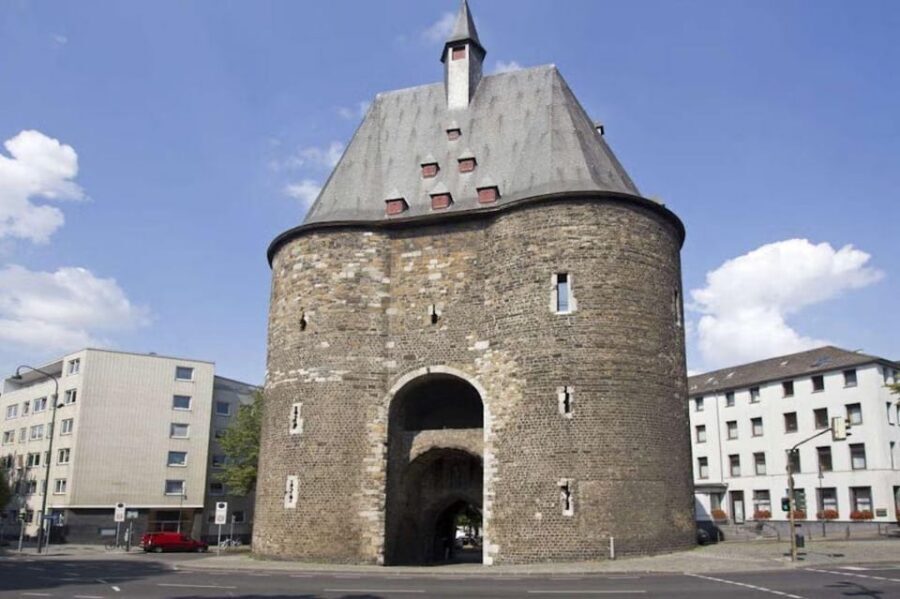
- Marschiertor (13th century): you start by walking through a medieval wall entrance, not a random city street.
- Aachen Cathedral and Treasury: the heart of the tour, framed around its 8th-century origins.
- Charlemagne Center stop: you get the temple-to-Franks king connection explained rather than left implied.
- Carolingian architecture focus: the route points you to Aachen Town Hall for its architectural identity.
- Local texture with Printen: you pass the pastry shops tied to Aachen’s emblem cookie.
- End at Elisenbrunnen: you finish where 18th-century visitors turned the city into a destination.
From Aachen Central Station to Marschiertor: the smart way to start
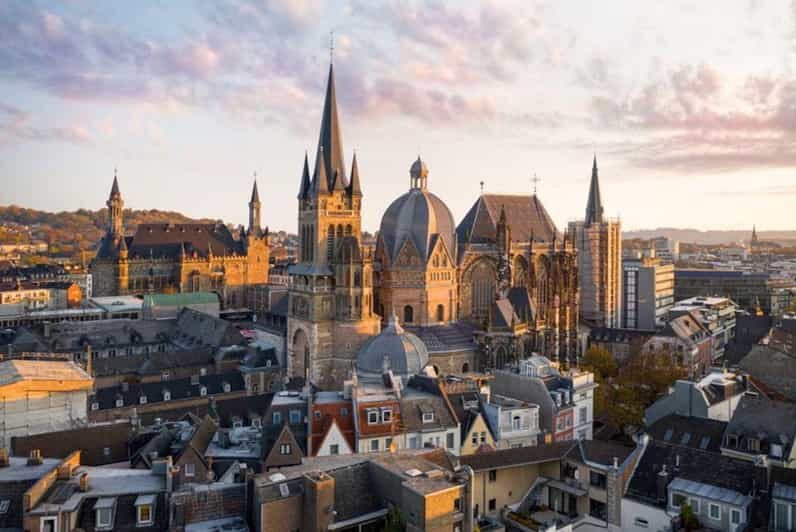
If you like city walks that feel organized, this one starts in the easiest possible spot: Aachen Central Station. You meet at the station at the scheduled time, then the guide leads you straight into the historic center. That matters more than it sounds. With a good beginning, you get your bearings fast and you stop spending time figuring out where everything is.
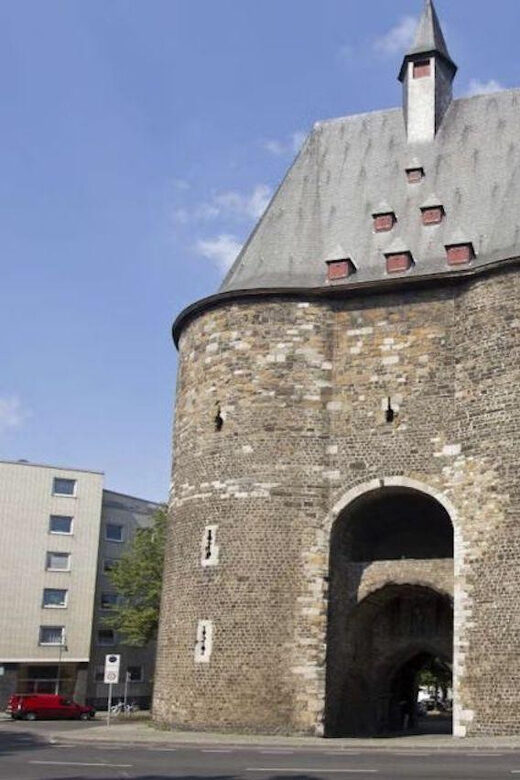
From there, you’ll cross one of Aachen’s medieval wall entrances: Marschiertor, dating back to the 13th century. This is a great first “wow” moment because it’s not a museum artifact behind glass. It’s part of the city’s fabric, and it gives you a sense of how Aachen defended itself and directed movement inside the old boundaries. Even if your history brain isn’t on full power, the fact that this is an actual medieval gateway helps the story stick.
Practical thought: in a short tour, the pace is usually steady. You’ll want comfortable shoes and a jacket if the weather is changeable. Aachen can feel breezy in open stretches, and your route includes outdoor walking between major points.
You can also read our reviews of more guided tours in Aachen

Printen cookie stops and old-town streets: more than a photo break
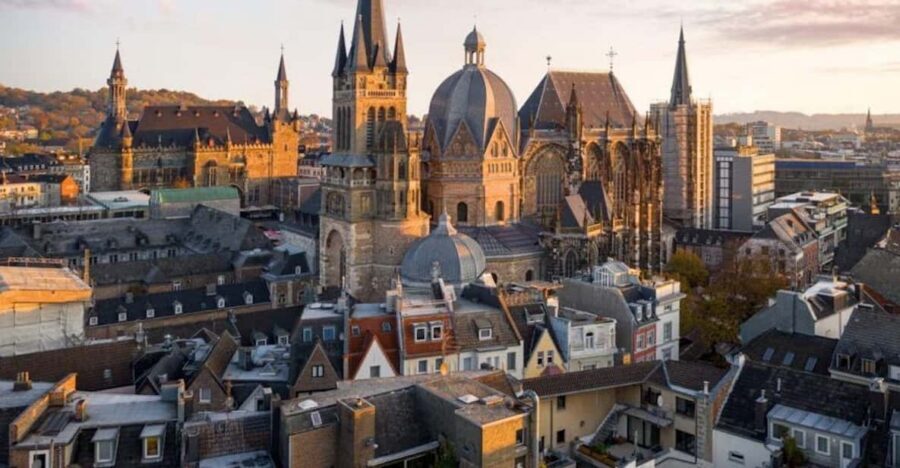
As you walk through the old town, the tour guides you through the atmosphere—especially the pastry shops known for Printen cookies. The description frames Printen as an emblem of Aachen, and that’s the key idea: this isn’t random “snack culture.” It’s part of the city identity, tied to places you can actually smell and see.
This kind of detail is what makes a two-hour guided tour feel worth it. Without the street-level cues, you’d arrive at the cathedral and town hall with your knowledge stuck in your head. With it, you start thinking like a visitor in Aachen: you’re in a town where local food traditions have a real presence.
One small consideration: the tour’s focus is walking and seeing monuments, not doing a tasting. If you want a guaranteed food stop with time inside a shop, you might find you’ll need to plan your own detour after the tour ends.
Aachen Cathedral and Treasury: the 8th-century core you came for
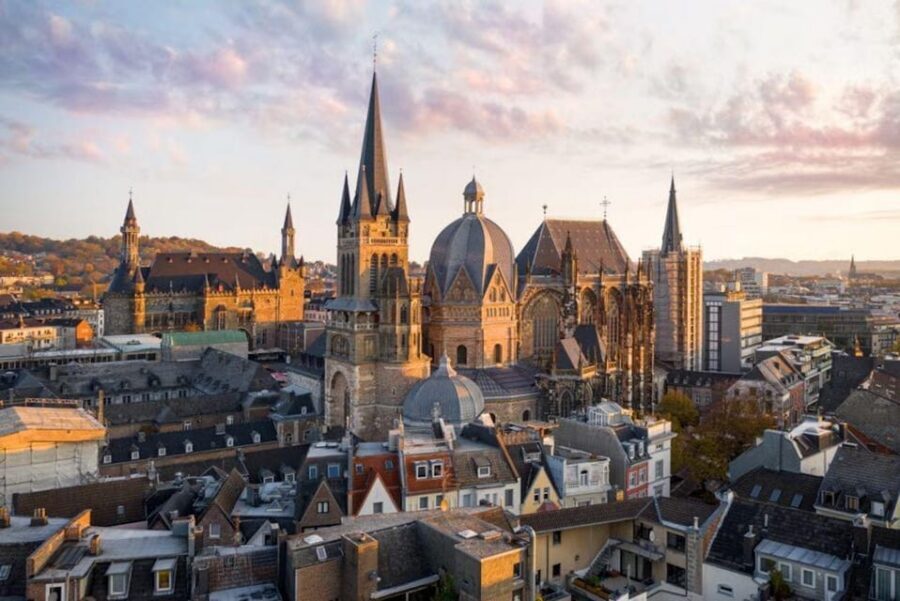
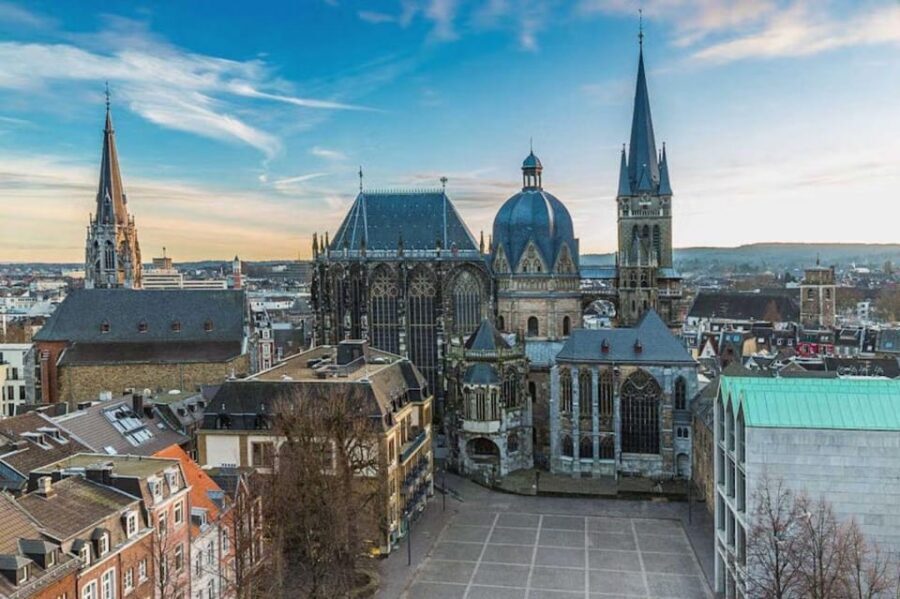
The big anchor of this experience is Aachen Cathedral and its Treasury. The origins are described as reaching back to the 8th century, and the tour treats the cathedral as a monumental complex, not a quick stop you glance at from outside. If Aachen is on your list because of its royal past, this is where the city’s pull gets most direct.
A cathedral treasure visit can go two ways: either it becomes a list of artworks, or it becomes a story about power, faith, and legitimacy. Here, the tour sets you up for the second approach by promising you’ll learn the relationship between this temple and the ancient king of the Franks. That’s helpful. It means you’re not just admiring stone and gold. You’re connecting the building to why it mattered in the first place.
What to expect on the ground: you’ll spend time looking at the cathedral complex, then move on rather than lingering for hours. For most people, that’s a good match. You get the centerpiece, and you don’t lose the rest of the route to cathedral fatigue.
If you’re the kind of visitor who loves in-depth explanations and wants long pauses inside every major site, a two-hour format may feel tight. But if you want orientation plus key meaning, it’s a solid structure.
Charlemagne Center: tying the cathedral to the Franks king
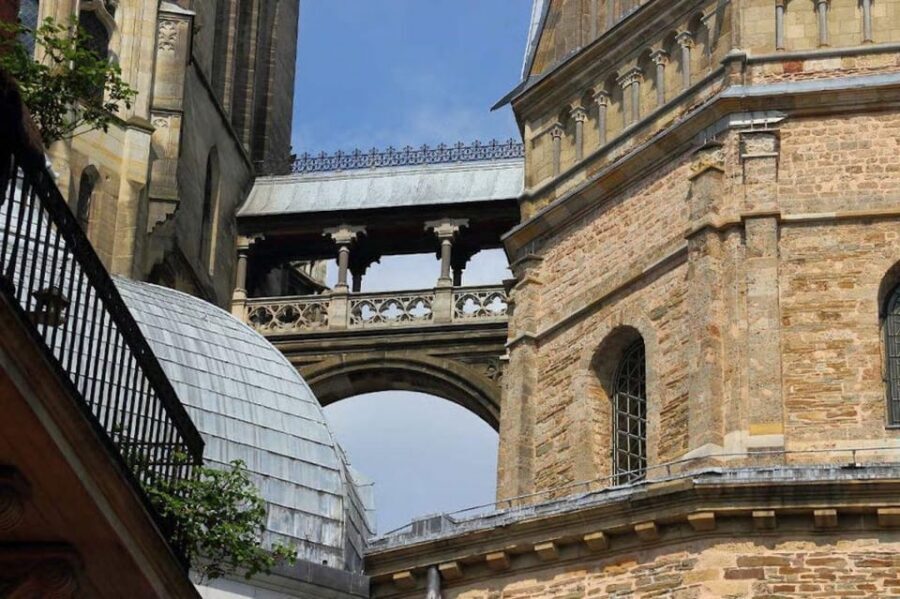
After the cathedral, you head to the Charlemagne Center for the storyline connection. The tour explicitly points out the relationship between the temple and the ancient king of the Franks, and the Charlemagne Center is where that explanation lands.
This stop is valuable because Charlemagne isn’t just a name you tack onto a timeline. It’s the reason Aachen is famous. When you understand why Charlemagne matters here, everything else starts to make more sense: why the cathedral took on such importance, and why later civic buildings and monuments grew from this reputation.
That said, based on the feedback I saw, the depth of Charlemagne focus can be a deciding factor. Some visitors said they wanted more Charlemagne content and felt the guide spent too much time on other themes. So if Charlemagne is your main reason to come, be sure you’re aligned with the kind of tour you want: short and sightseeing-heavy, or tightly centered on Charlemagne.
Aachen Town Hall and Carolingian architecture: look up, not just forward
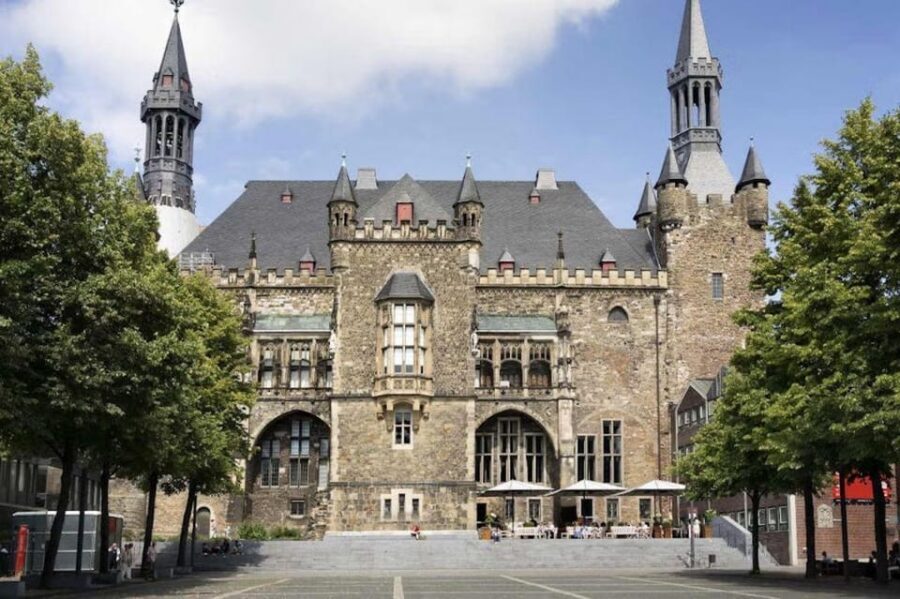
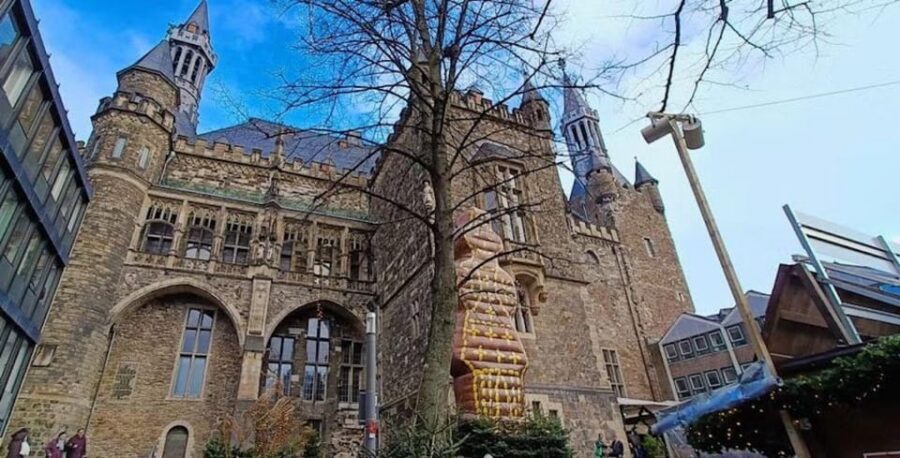
Next you’ll contemplate Aachen Town Hall, described as a prime example of Carolingian architecture. This is a smart inclusion because it broadens the story. You’re not only in church territory. You’re also looking at how Carolingian influence shaped civic identity.
One practical tip: when you’re moving quickly on a guided walk, you can miss architectural details if you’re staring at the ground for pacing. Take a couple of seconds to look up at the exterior features and proportions the guide highlights. With a Carolingian framing, you’ll usually notice how the building’s character feels tied to early medieval style, not just “old building that happens to be famous.”
This portion also helps you understand Aachen as a lived-in city. It’s easy to reduce Aachen to one famous complex. The Town Hall stop nudges you toward seeing the city as a place where history shows up in more than one kind of building.



Couven Museum and the doll fountain: quirky landmarks that add color
As you continue, the tour passes the Couven Museum, described as a bourgeois house converted into a museum. That’s a helpful contrast point. The cathedral and royal storyline can make a city feel all about power and ceremony. A bourgeois home turned museum signals another angle: what everyday life looked like when the city’s wealth and taste evolved.
You’ll also see the doll fountain, described as the most famous doll fountain in Germany. This is the kind of stop that can feel random if you only care about “serious history.” But in a short tour, a quirky landmark is often the best way to keep memory sticky. It gives you something visual and unusual you can connect to Aachen without needing a reference book.
If you’re a detail person, enjoy this as a mental palate cleanser. If you hate any stop that feels too whimsical, you might see this as a time filler. The good news is that it’s positioned between bigger architecture moments, so it doesn’t dominate your schedule.
Elisenbrunnen: ending at Aachen’s 18th-century visitor magnet

The tour ends at Elisenbrunnen, described as the most important tourist center in 18th-century Europe. That’s a strong closing note because it shifts the story from early medieval glory to the city’s later role as a destination.
Elisenbrunnen is also an ideal finish because you’re likely to be near activity afterward. Even if your tour time ends there, the location helps you keep momentum: you’re at a recognizable landmark, and you can decide what to do next without feeling lost.
This ending is also thematically satisfying. Aachen’s story isn’t only about Charlemagne and the cathedral complex. It’s also about how later Europe came to Aachen seeking what the city offered, turning it into a travel stop. Ending at Elisenbrunnen reinforces that the city’s fame had multiple chapters.
Price and value: what $25 buys in 2 hours
At $25 per person for a 2-hour guided walk, you’re paying for three main things: direction, interpretation, and time efficiency. You don’t have to figure out the best order for the cathedral, Town Hall, and Elisenbrunnen. You also get a guide to translate what you see into a story—especially around Aachen Cathedral, the Treasury, and the Charlemagne connection.
The value question comes down to guide delivery. Because the feedback I saw is mixed, the pricing can be a bargain if your guide is strong and a disappointment if your guide isn’t. Some visitors praised a guide named Alejandro for excellent knowledge and friendly treatment. Others reported poor preparation, low engagement, and English that made explanations hard for an English-speaking group, along with complaints about not enough Charlemagne focus.
So, here’s how I’d judge value before you book:
- If you want a quick overview with key named stops and you care most about the big sights, $25 is reasonable.
- If you want deep Charlemagne detail and very smooth explanations in English, you should be more selective.
Who should book this guided Aachen walk
This tour is a good fit if you:
- Want a short, organized route through Aachen’s top monuments.
- Like guided storytelling that connects buildings to key figures like Charlemagne.
- Prefer seeing multiple landmarks in a compact time window.
It might not be the best fit if you:
- Plan your trip around Charlemagne to the point where you want an extended, focused narrative.
- Are picky about English fluency and don’t want explanations to feel rushed or incomplete.
- Hate anything that feels quirky, because you’ll see the doll fountain.
Should you book the Aachen Cathedral and Charlemagne walking tour?
If your goal is to leave Aachen with a clear mental map—cathedral to Charlemagne Center to Carolingian Town Hall to Elisenbrunnen—this is worth considering. The route is built around the strongest anchors of the city: Aachen Cathedral and Treasury, the Charlemagne Center, and then the most important “city story” monuments around it.
My advice: book if you’re comfortable with a 2-hour format and you want orientation plus highlights. Skip if Charlemagne depth is your top priority and you’re concerned about guide quality, since the feedback quality signals that can swing the experience a lot.
FAQ
Meeting point and start time
You meet at Aachen Central Station at the indicated time to begin the guided walk.
How long is the tour?
The tour lasts 2 hours.
What languages are offered?
The live guide is available in English and Spanish.
Is it a wheelchair-accessible tour?
Yes, the tour is wheelchair accessible.
Are pets allowed?
No, pets are not allowed.
Is this tour guided only?
Yes. It includes a guided visit.