REVIEW · BERLIN
Private Taxi Tour City East & West History and Architecture 3-4h
Book on Viator →Operated by Gunter Bauer GAT-Productions · Bookable on Viator
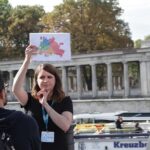
Berlin has layers, and this ride threads them. In 3 to 4 hours, you cover East and West Berlin’s biggest architecture and history beats—without wasting time on transfers. I like that it’s done by private taxi, so you get quick, close-up stops plus a guide who can explain what you’re seeing right there in the street.
Two things I especially like: you’ll spend real time at the landmarks that need context (think Kaiser Wilhelm Memorial Church, the Reichstag area, and the Cold War sites), and you also get the practical comfort upgrades that matter in Berlin weather—air-conditioned comfort plus onboard WiFi. One thing to consider: the schedule is intentionally packed, so some stops are short photo-and-walk moments; if you want long museum time at every building, you may feel a bit rushed.
In This Review
- Key highlights in plain terms
- Why this private taxi route feels like Berlin’s backstage tour
- Price and time: when $150-ish buys real value
- Gunter Bauer GAT-Productions: stories that match what you see
- West Berlin first: Kaiser Wilhelm Memorial Church, Zoo Berlin, and Ku’damm
- Kaiser Wilhelm Memorial Church: war scars turned into design language
- Berlin Zoo: a royal collection turned into a global showcase
- Ku’damm and Kantstraße: West Berlin’s shopping boulevard, reshaped over time
- KaDeWe, Europacenter, and Bahnhof Zoo: shopping architecture with history behind it
- Europacenter and the Memorial Church interior: quiet under noise
- KaDeWe: a luxury department store where the scale is the story
- Bahnhof Zoo and the Berlin metro story
- The government mile: Reichstag, Parliament’s glass, and the Chancellor’s building
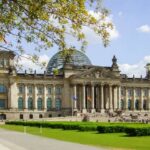
- Reichstag: from war-era symbol to working parliament
- Federal politics buildings: Kanzleramt and the media-facing façade
- Gendarmenmarkt and Unter den Linden: cathedrals, book burning, and perfect square geometry
- Gendarmenmarkt: French and German meetinghouses that look cathedral-like
- Forum Fridericianum: the book burnings on a square you can walk across
- Unter den Linden: palaces for royal childhoods and a “mourning for all victims” sculpture
- Rebuilding symbols: Humboldt Forum, Alexanderplatz, Hackesche Höfe, and Nikolaiviertel
- Humboldt Forum: a rebuilt palace courtyard plus a modern concrete shell
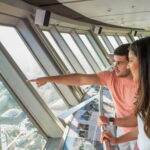
- Alexanderplatz: socialist redesign ambitions and the TV tower as proof
- Hackesche Höfe: Art Nouveau courtyards restored after division
- Nikolaiviertel: reconstruction architecture where “old Berlin” is staged
- Cold War stops: Topography of Terror, Checkpoint Charlie, and the divided-city texture
- Topography of Terror: four layers of Berlin’s last 100 years
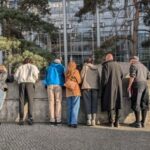
- Checkpoint Charlie: what you’re seeing vs what it represents
- The practical stuff that makes the day work in real life
- Should you book this Berlin East & West taxi tour?
- FAQ
- How long is the private taxi tour?
- What does the price include?
- Is pickup offered, and where?
- Is the tour offered in English?
- Is this a private tour?
- Are any entrances included?
- Can I cancel for a full refund?
Key highlights in plain terms
- Private taxi with pickup in-city: get door-to-door within the S-Bahn ring included
- English-speaking guide with big-story details: Gunter Bauer GAT-Productions turns streets into timelines
- Short stops, smart pacing: you see a lot fast, with breaks built in
- Major West-to-East landmarks: Ku’damm, Gendarmenmarkt, the Reichstag area, Humboldt Forum, and more
- Cold War sites on one route: from Topography of Terror to a Checkpoint Charlie photo stop
- Photo-friendly guide: the guide takes photos and shares them afterward (as shared in the tour reviews)
Why this private taxi route feels like Berlin’s backstage tour
Berlin is huge, but the stories are concentrated. This taxi tour is built to connect the dots between the flashy boulevards of Ku’damm and the heavy history of the divided city. Instead of jumping between transit lines, you ride between districts and spend your legs where it counts: at entrances, key viewpoints, and squares.
I also like how the guide’s approach is practical. You don’t just get dates. You get the “why it looks like that” behind the architecture—what was preserved after war, what was rebuilt for reunification, and what was designed to impress power.
And because it’s private, the pace can match your group. One review noted the day worked well even when weather was cold because you’re inside the warm taxi a good chunk of the time. If your trip is tight and you still want the big Berlin hits, this is a strong fit.
You can also read our reviews of more city tours in Berlin
Price and time: when $150-ish buys real value
The price is listed at $150.18 per person for about 3 to 4 hours. That sounds like a lot until you price out what’s bundled here:
- Private transportation in an air-conditioned vehicle
- Pickup within the S-Bahn ring included (and pickup outside the ring costs extra)
- WiFi on board
- A guided route that hits major landmarks on both sides of the historical divide
What really sells the value is how much context you get in that time window. Berlin’s “famous” buildings can feel confusing if you’re just reading signs. With a guide laying out the background, you’ll get more meaning from each stop than you would on a self-guided sprint.
Also, some stops are clearly marked as free, and the Humboldt Forum admission is included. Even without counting those directly, the tour’s value comes from the combination of logistics + interpretation.
Gunter Bauer GAT-Productions: stories that match what you see
The guide behind the experience is Gunter Bauer (GAT-Productions). The strongest pattern from the reviews is simple: he communicates well, he’s friendly, and he connects the “look” of a place with its political and cultural purpose.
You’ll also notice the tour is built for conversation. In multiple reviews, people mention he answered questions, shared personal stories, and handled the day with care—especially with older travelers. One review even praised his rescheduling help when plans changed due to an external delay.
A small but real bonus: the guide takes photos during the stops and sends them afterward. That helps when you’re doing fast “arrive, see, understand, move on” moments where everyone wants pictures but doesn’t always get them.
West Berlin first: Kaiser Wilhelm Memorial Church, Zoo Berlin, and Ku’damm
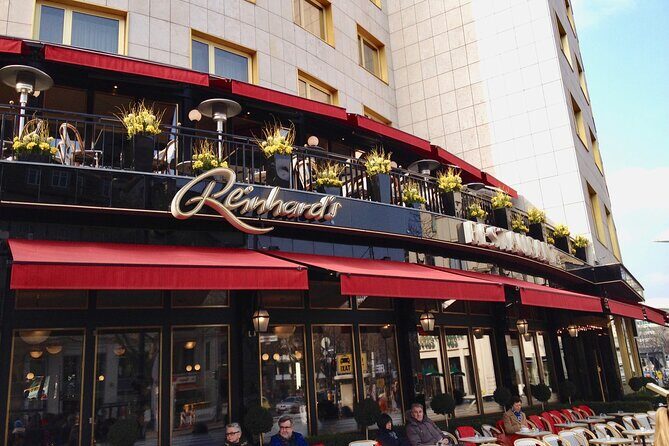
Your day often starts in the West with symbols that show how Berlin coped with destruction and reconstruction.
Kaiser Wilhelm Memorial Church: war scars turned into design language
You’ll see the famous Kaiser Wilhelm Memorial Church from more than one side. What grabs people isn’t just the scale—it’s the mix of old and new forms.
Key details you’ll likely hear about:
- The plan after the war wasn’t to preserve everything, but resistance meant at least the tower and the west portal stayed.
- The surviving portal includes faces of the Holy Family and disciples that echo Prussian kings and emperors.
- The newer church hall and tower were built around the outside in a modern style based on Egon Eiermann designs—Berliners have been known to call it stuff like lipstick and powder compact.
The practical takeaway: even if you’re not religious, this church is one of the most visual ways to understand Berlin’s “we kept part of the wound” mindset.
You can also read our reviews of more private tours in Berlin

Berlin Zoo: a royal collection turned into a global showcase
Next, you’ll head to Berlin Zoo, one of Germany’s oldest zoos. The numbers matter here: around 16,000 animals across roughly 1,600 species.
You’ll get the story of how it started as royal grounds and then became public:
- Founded after King Friedrich Wilhelm IV shifted animals near Berlin.
- Buildings were erected in styles tied to the countries the animals came from—helpful for understanding why you’ll see so many different “worlds” along the zoo lanes.
- You’ll be pointed to architectural landmarks like the elephant gate, with the monkey enclosure behind it, plus the lion gate near the Zoo station.
If you’re a “look-first” traveler, you’ll appreciate the design logic as much as the animals.
Ku’damm and Kantstraße: West Berlin’s shopping boulevard, reshaped over time
From Kantstraße (which in its longer course relates to a Chinese quarter) you’ll connect toward the famous Kurfürstendamm, usually shortened to Ku’damm.
The guide’s explanation of Ku’damm’s design is worth paying attention to:
- It was modeled in spirit after Paris’s Champs Élysées, even down to candelabras reminiscent of post-victory French references.
- Today, it’s less about villas and nightlife and more about a shopping strip with flagship stores and fashion brands—then it feels lonely at night.
That change isn’t just about economics. It’s about how West Berlin marketed itself and how tourism reshaped local life.
KaDeWe, Europacenter, and Bahnhof Zoo: shopping architecture with history behind it
This part of the route is where you can see how West Berlin blended leisure with power and reinvention.
Europacenter and the Memorial Church interior: quiet under noise
You’ll revisit the Memorial Church area from another angle, then go into the surrounding “modern West” setting near the Europacenter.
Two details are especially “Berlin-specific”:
- The newer church interior uses a special construction—a double wall with about 2 meters of soundproofing air—so it can feel surprisingly quiet even in a loud zone.
- The concrete structure can be fragile, and scaffolding appears fairly often due to exposure to traffic emissions.
From there, you’ll also hear that the Europacenter is one of the city’s oldest shopping centers (recently around 50 years old), and it even once included an ice rink, later removed to optimize space. You can see how Berlin stores adapt like the city itself adapts: change happens.
KaDeWe: a luxury department store where the scale is the story
Next is Kaufhaus des Westens (KaDeWe). This is the heavyweight: it’s listed as the largest single department store in continental Europe at about 60,000 m².
What you can expect in a stop like this:
- Many shops, but the big draw is the gourmet floor.
- Expect high-end choices described in the tour materials, like champagne sipping and even oysters.
A practical note: if you want affordable souvenirs, KaDeWe may not be your best hunting ground. But if you want to see how West Berlin built a consumption culture around “experience,” it’s a must.
Bahnhof Zoo and the Berlin metro story
You’ll pass Bahnhof Zoo, historically important as a major West Berlin station and still huge by sheer scale. You’ll also get context about the subway: Berlin’s metro is old (not as old as Moscow’s system, and roughly comparable to Paris’s age), and historical decisions shaped how tracks were routed.
Even if you don’t ride, the buildings and placement tell you how West Berlin’s city planning differed from other capitals.
The government mile: Reichstag, Parliament’s glass, and the Chancellor’s building
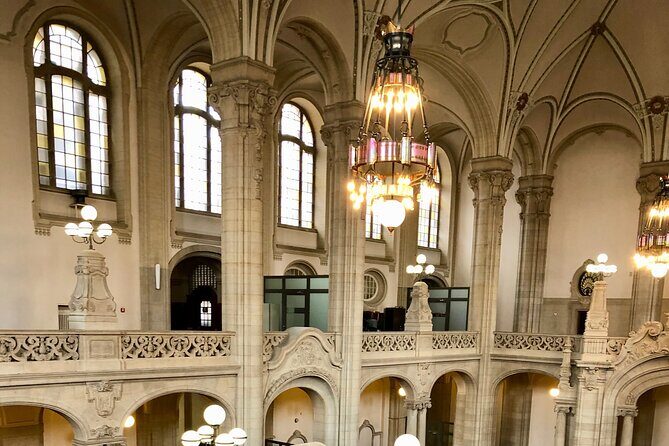
Once you move toward the central government zone, the tour shifts tone. The architecture gets more official, and the explanations get more political.
Reichstag: from war-era symbol to working parliament
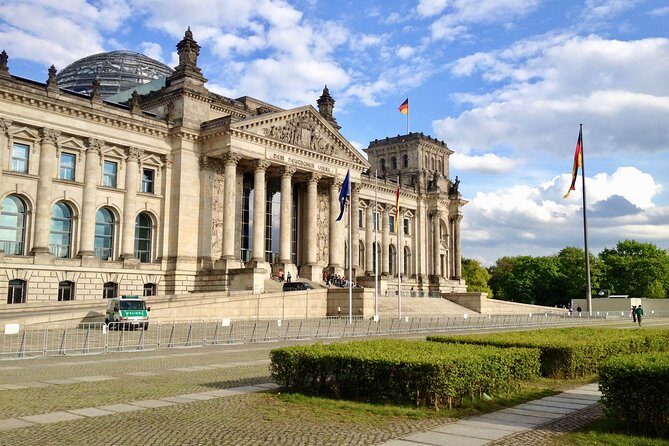
You’ll see the Reichstag complex and get the big “how it works” explanation:
- Parliamentary work happens in committees; plenary speeches are the final stage.
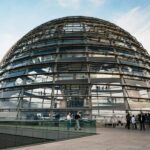
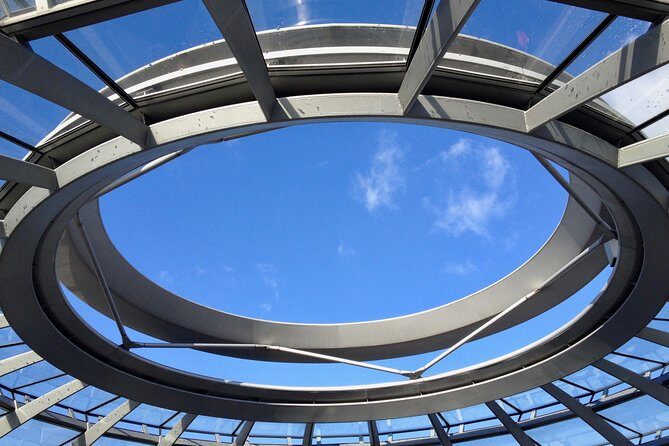
- The building is described as a glass parliament you can see from outside, and it runs over three floors across more than 200 meters.
The dome experience is part of Berlin’s modern identity, and the glass is now a symbol of openness that contrasts sharply with the building’s older, darker associations.
Federal politics buildings: Kanzleramt and the media-facing façade
You’ll also see the Chancellor’s Office (Kanzleramt) area. Key details provided in the tour information:
- About 500 office rooms for over 300 employees.
- The official presidential apartment exists above a rotunda, but it’s described as not used; the Chancellor lives across from Museum Island.
There’s also a modern media-facing building detail: a large giant window façade area relates to journalists observing once or twice a week from the capital—so you’re looking at architecture built around attention and oversight.
Gendarmenmarkt and Unter den Linden: cathedrals, book burning, and perfect square geometry
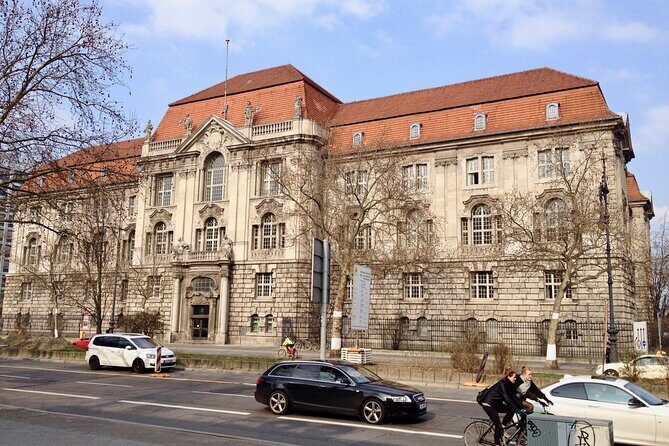
This is one of the loveliest parts of central Berlin, and it’s also where Berlin’s ideological past mixes with aesthetic polish.
Gendarmenmarkt: French and German meetinghouses that look cathedral-like
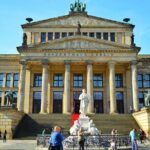
At Gendarmenmarkt, you get one of the city’s most beautiful squares (and it’s easy to see why). The “cathedrals” here are:
- The German cathedral (contains a museum for parliamentary history of Germany)
- The French cathedral (still used for Reformed services in French Sundays)
- Plus a Huguenot museum behind it, connected to refugees who were allowed to build here
The key is that these buildings are “meetinghouses” dressed up with cathedral-like towers—Berlin does that frequently: function and style get braided together.
Forum Fridericianum: the book burnings on a square you can walk across
Near the cultural complex sometimes called the Forum Fridericianum, you’ll hear how the square relates to important institutions and a very dark moment.
A standout detail:
- On May 10, 1933, books considered unsuitable by Nazi ideology were burned in a public setting tied to the space.
- There’s a glass window in the floor that points to an empty library area when the crowd isn’t in the way.
This is a good stop for travelers who want the meaning behind place names, not just photos.
Unter den Linden: palaces for royal childhoods and a “mourning for all victims” sculpture
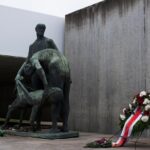
As you move along Unter den Linden, you’ll pass royal-linked buildings where crown princes and princesses were born and raised. You’ll also hear about the Käthe Kollwitz sculpture (a Pietà form) used as a memorial for war and tyranny victims, replacing an earlier idea that involved a flame-like concept.
It’s heavy content, but the square layout and monuments help make it easier to process.
Rebuilding symbols: Humboldt Forum, Alexanderplatz, Hackesche Höfe, and Nikolaiviertel
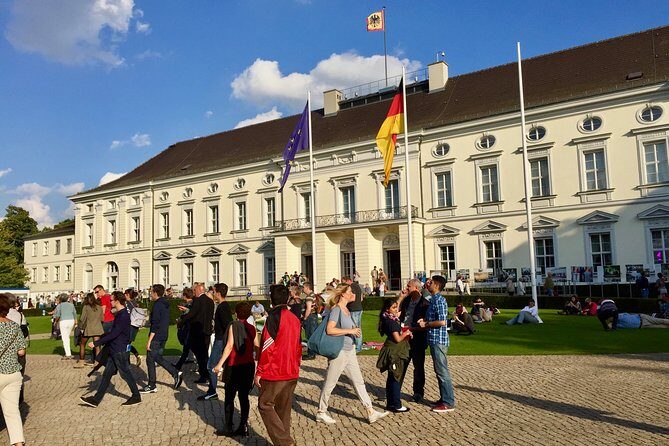
Berlin loves rebuilding. Some of it is controversial; all of it tells you something.
Humboldt Forum: a rebuilt palace courtyard plus a modern concrete shell
You’ll see the transformation of the Berlin Palace site into the Humboldt Forum.
The story to listen for:
- For decades the area was mostly parking lot.
- The palace silhouette survived wartime damage, and interior parts were used right after the war for exhibitions.
- East Berlin authorities eventually blew up the palace for months, then later the site was reconstructed externally in a close-to-exact way.
- The Schlüter inner courtyard is reconstructed in detail, and the modern building holds non-European art collections plus university collections.
- Opening is described as happening in stages around 2020/2021.
This stop is valuable because it shows how reunification shaped cultural priorities—and what “authentic reconstruction” means in practice.
Alexanderplatz: socialist redesign ambitions and the TV tower as proof
You’ll also move through Alexanderplatz. The tour framing here emphasizes:
- The square’s older name history (Ochsenplatz) and its origin just outside early city walls.
- During the GDR era, a socialist redesign approach with huge space for marches.
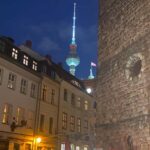
- The television tower stands as a proof-of-build-engineering symbol and remains the highest in Germany.
If you like seeing how political systems tried to control visual space, this is a great moment.
Hackesche Höfe: Art Nouveau courtyards restored after division
At Die Hackeschen Höfe, the tour focuses on the courtyard ensemble:
- Built in 1908 as a showcase where living and work were meant to mix.
- In GDR times, it fell into dilapidation and was partly warehouse-used.
- After the Wall, it was among the first restored areas, keeping the Art Nouveau charm.
What’s useful for you: this is a relaxing break from big monument moments. You’re in courtyards where you can actually slow down and absorb a different Berlin tempo. The stop also ties in brands and cultural details like KPM porcelain and Ampelmännchen.
Nikolaiviertel: reconstruction architecture where “old Berlin” is staged
Finally, you may reach Nikolaiviertel and Nikolaikirche area.
- It was reconstructed in the 1980s as old Berlin backdrops.
- The tour material notes it was a small area where only a few houses existed in reality, while walls of the church remained without roof and spire before reconstruction.
- You’ll also visit the Knoblauchhaus, furnished in Biedermeier style and linked to a cloth maker family story.
- The area is positioned for views over the Spree, with traditional restaurants nearby.
This is a stop that helps you understand Berlin’s approach to heritage: sometimes it’s “documented” history, and sometimes it’s purposeful re-creation.
Cold War stops: Topography of Terror, Checkpoint Charlie, and the divided-city texture
This is where the tour turns from architecture to raw history.
Topography of Terror: four layers of Berlin’s last 100 years
At Topography of Terror, you get a layered timeline described in the tour materials:
- Imperial/Prussian layers (including the former Prussian Landtag and Kunstgewerbemuseum)
- A major Nazi-era building connection, including the Reichsluftwaffen Amt von Göring
- Excavations in the 1980s revealing old torture cells and leading to an open-air exhibition
- A documentation center about Nazi terror dating from reunification efforts
A practical plus: the site notes toilets on location, which matters when you’re doing multiple stops in a single afternoon.
Checkpoint Charlie: what you’re seeing vs what it represents
At Checkpoint Charlie, the tour includes a short photo stop. Here’s the key you should remember:
- The visible checkpoint is a replica of the US armed forces checkpoint from the 1960s.
- The famous sign and some visuals aren’t original either.
- Still, it’s tied to why the crossing matters, including the intense Cold War tank confrontation in October 1961.
So you’re looking at a reenactment. The lesson is real: Berlin’s Cold War memory is both physical and interpretive.
The practical stuff that makes the day work in real life
If you want your taxi day to feel smooth, a few habits help:
- Bring water. One review specifically suggested it for staying comfortable.
- Dress in layers. Berlin weather changes fast, and even with a warm taxi, you’ll walk short distances between stops.
- Plan on photo pacing. Some stops are listed as around 10–15 minutes, so use those moments to get the angles you’ll want later.
- If you care about museums, use the taxi context first, then decide later. You’ll understand the place before you commit time.
Also, because the tour is private, it’s easier to ask the guide to adjust emphasis. One review explicitly said the tour can be customized to interests, which is a big advantage if your priorities are, say, architecture over politics—or the reverse.
Should you book this Berlin East & West taxi tour?
I’d book this if you want:
- A fast, guided way to connect West Berlin glamour with East Berlin’s Cold War reality
- A comfortable ride with meaningful stops that don’t require you to master Berlin transit first
- A guide-led explanation that makes buildings and squares easier to understand
I wouldn’t book it if you want a slow day of deep museum time every stop. This tour is built for movement and context, not for long standalone ticketed wandering across dozens of floors.
If you’re visiting for a few days and you want the big themes—war scars, reunification reconstruction, political architecture, and Cold War memory—this is one of the most efficient ways to get there.
FAQ
How long is the private taxi tour?
It runs about 3 to 4 hours.
What does the price include?
The experience includes private transportation, WiFi on board, an air-conditioned vehicle, parking fees, and pickup from your desired location within the city (with extra cost outside the S-Bahn ring). Both taxi travel and the city tour have included VAT.
Is pickup offered, and where?
Pickup is included within the S-Bahn ring. Pickup outside the ring or from areas like the airport/Berlin S-Bahn ring is available for an extra charge.
Is the tour offered in English?
Yes, it is offered in English.
Is this a private tour?
Yes. It’s private, so only your group participates.
Are any entrances included?
Yes. The Humboldt Forum admission is listed as included, and several major stops are marked as free (for example places like Brandenburg Gate, Gendarmenmarkt, and Topography of Terror).
Can I cancel for a full refund?
Yes. Free cancellation is available if you cancel at least 24 hours in advance of the start time.