REVIEW · KONSTANZ
Private city tour in Constance
Book on Viator →Operated by Stadtführungen in Konstanz & Reiseleitungen rund um den Bodensee · Bookable on Viator
Konstanz is small, but the stories hit hard. This private city tour mixes lively humor with real local context as you walk from the harbor into the old town council city. I especially like the way the guide turns big events into something you can picture, including the Council era around 1414–1418.
I also like the practical flow of the route. The stops are clustered in the historic center, many viewing points are admission-free, and the tour ends where it’s easy to grab a coffee or keep wandering. One thing to consider: this is an old town, on-foot walk, and cathedral access depends on timing (especially Sundays and late starts).
In This Review
- Key Highlights You’ll Feel on This Walk
- A Private, Foot-First Look at Konstanz’s Medieval Core
- Starting at Constance Harbour: Imperia and the Council Years (1414–1418)
- A quick cathedral moment early in the route
- Hohe Haus by the Fischmarkt: A Building with a 1194 Backstory
- Inside the Münster: Timing Matters for Cathedral Access
- Münsterplatz and the Roman Layer: Constantia’s Clues in Plain Sight
- Niederburg’s Narrow Streets: Medieval Houses and Baroque Power
- Wessenbergstraße and Obermarkt: Shopping Streets with Medieval Consequences
- Kaiserbrunnen: Kings, Emperors, and the Fountain’s Weird Animal Crew
- Who This Tour Is Best For (And Who Might Want Something Else)
- Price and Value: Paying for a Private Group Experience
- Practical Timing Tips So Your Day Doesn’t Get Tripped Up
- Should You Book This Private Constance City Tour?
- FAQ
- How long is the Private City Tour in Konstanz?
- How much does the tour cost?
- Is this a private tour or shared with other people?
- Where does the tour start and end?
- Can kids and teens join?
- Can seniors or people who need seating participate?
- Is the cathedral visit included, and does it depend on timing?
- Are there any entry fees for the stops?
- What if the weather is bad?
- Is there free cancellation?
Key Highlights You’ll Feel on This Walk
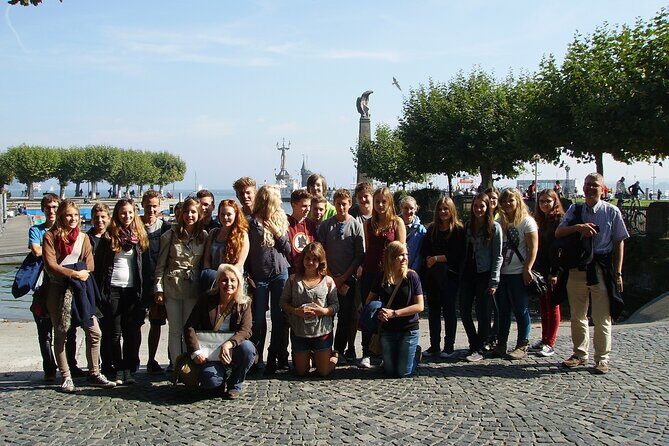
- Imperia at the Harbour: the guide brings the Council-era connections to life right where you start.
- Free entry stops: key sights along the route are marked as ticket-free so you’re paying for guiding, not adds-ons.
- Council-city details that make sense: you get names, places, and why they mattered—without a lecture vibe.
- Roman roots at Münsterplatz: you’ll spot clues to Constantia and the older Roman walls.
- Kaiserbrunnen’s strange animals: the fountains’ odd creatures come with explanations, not just pointing.
A Private, Foot-First Look at Konstanz’s Medieval Core
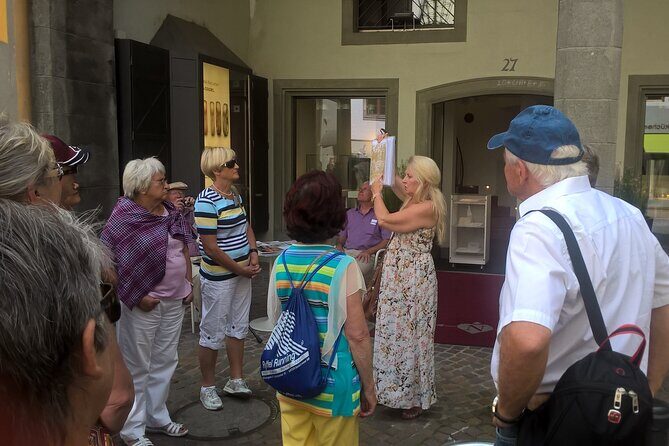
This is a private city tour for a single group, sized up to 15 people. You meet in the center near Hafenstraße and finish at Kaiserbrunnen at Marktstätte, so you’re not zigzagging across town with lots of transfers. And yes, it’s primarily on foot—especially in the old town—because that’s where the medieval street pattern and sightlines actually work.
What makes the tour feel different is the tone. The guide approach is described as entertaining and lively, with humor and fun built in, but the information still lands. I like that balance: you walk away remembering names and places, not just a few random facts you’ll forget tomorrow.
There’s also a thoughtful crowd mix here. The tour is designed for kids starting at age 4, and for teens in an age-appropriate way. Older guests are welcome too, with seating options to keep the pace relaxed. If you’re traveling with a stroller, you’ll find it’s planned for that as well, and service animals are allowed.
You can also read our reviews of more city tours in Konstanz


Starting at Constance Harbour: Imperia and the Council Years (1414–1418)
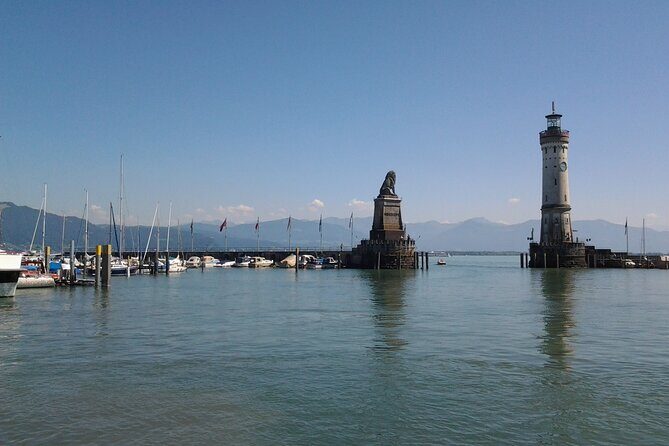
You begin at the port area on Hafenstraße. From the start, you’re not just looking at water—you’re being pulled into Konstanz’s past as a historic lake city with a big reputation beyond its size.
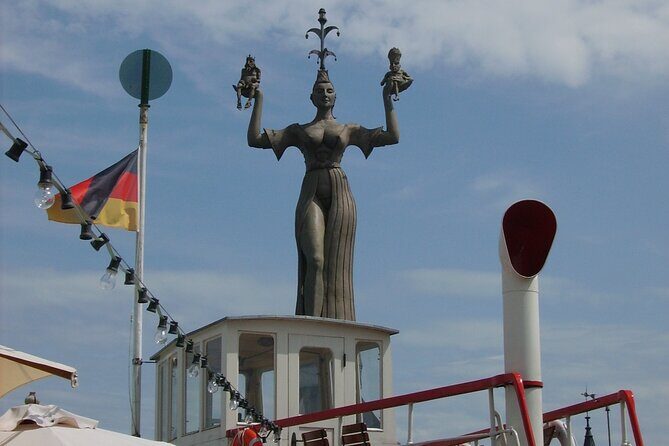
The guide introduces you to Imperia, a courtesan tied into the city’s Council-period stories. The point isn’t to toss out legends; it’s to explain how people, power, and events intersect in this place. You also learn about the world event of the Council held from 1414 to 1418, and how that era shaped what came after.
After that, you move through the old town center with imposing buildings and smaller, charming townhouses that have been standing for close to a thousand years. This is where the tour earns its “get your bearings fast” value: you see the medieval layout in motion, not as a static postcard.
A quick cathedral moment early in the route
The first stretch includes a short visit to the cathedral of Konstanz. It’s the former Episcopal Church, and the guide frames it as a key piece of how the city worked—religiously and politically—over time. Then the tour ends around the market place area, which is a smart finish because you’re right where you can recharge with a snack or browse local boutiques.
Hohe Haus by the Fischmarkt: A Building with a 1194 Backstory
Next you stop near the corner of Hohenhausgasse and Oberer Fischmarkt at the Hohe Haus. The standout fact here is the date: it dates back to 1194, and the guide has the kind of story that makes you look at a building’s shape differently.
You’ll hear how the house is supposedly built from top to bottom, and you’ll get the guide’s related anecdotes. This kind of stop is great on a walking tour because it slows the pace just enough for your eyes to catch details you’d otherwise miss—old stone transitions, street-level angles, and why certain buildings became landmarks.
The Fischmarkt stop is also marked as admission-free, which is helpful if you’re trying to keep costs predictable and time flexible.
Inside the Münster: Timing Matters for Cathedral Access
Konstanz’s historic center centers on the Münster (the minster). Here, the guide shows off special features of the former Episcopal Church and ties it into contemporary context too, not just medieval naming.
But cathedral access isn’t automatic at every time slot. If you’re starting after 18:00, you should plan on missing visits to the Konstanz Minster. The same late start condition also notes that the Rosgartenmuseum won’t be visited either because those places close earlier.
On Sundays and church holidays, there’s another rule to know: the cathedral cannot be visited before 11:30 a.m. due to services. If you’re traveling on a Sunday, the safest move is to schedule a time that respects that start window.
This is the biggest practical “gotcha” on the whole experience. If cathedral access is a must for your group, choose your start time carefully.
You can also read our reviews of more private tours in Konstanz
Münsterplatz and the Roman Layer: Constantia’s Clues in Plain Sight
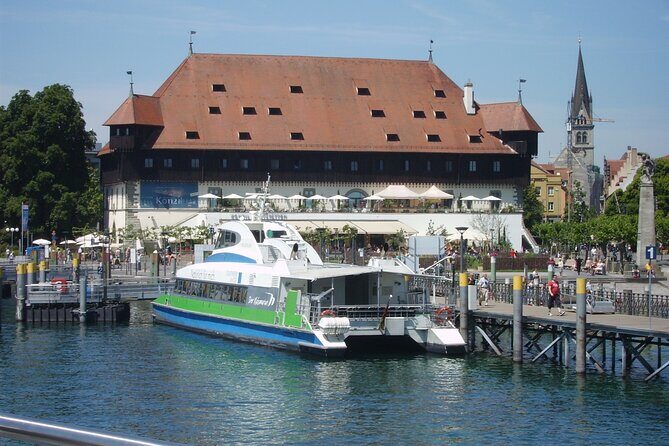
At Münsterplatz, the setting opens up. You’ll find the area lined with cathedral courtyards from the Baroque period, reflecting how Konstanz was still a bishop’s seat in later centuries.
Underneath that later layer, you’ll also hear about the earlier Roman influence. The tour connects this square with Constantia, a castle built by the Romans almost 2,000 years ago—something that ultimately helped give Konstanz its name. You’ll take a look at remains of ancient Roman castle walls, which is the kind of sight you might walk past without context.
This stop is valuable because it helps you understand why Konstanz looks the way it does today. The city’s identity is layered—Roman beginnings, bishop power, Baroque surroundings—so the place doesn’t feel random once you’ve got that framework.
Niederburg’s Narrow Streets: Medieval Houses and Baroque Power
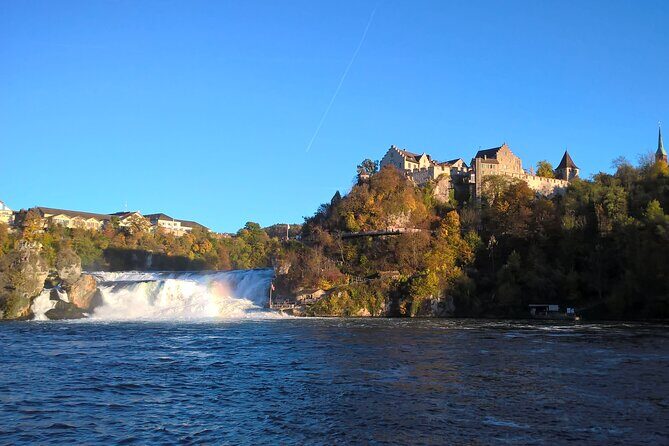
The Niederburg area is Konstanz in the most compact, lived-in form. The tour highlights medieval stone houses and administrative buildings from the Baroque period still dominating the district today. You’ll also hear about pawnshops of wealthy cathedral owners, which adds a money-and-power angle to what might otherwise feel like “pretty old streets.”
As you walk the narrow lanes, the guide’s anecdotes help those buildings feel inhabited, not museum-still. This is a good stop if you like atmosphere and small details—doorways, wall textures, and the sense that the town was shaped by commerce and church influence for centuries.
It’s also admission-free, so the value is in what you hear, not what you pay to enter.
Wessenbergstraße and Obermarkt: Shopping Streets with Medieval Consequences
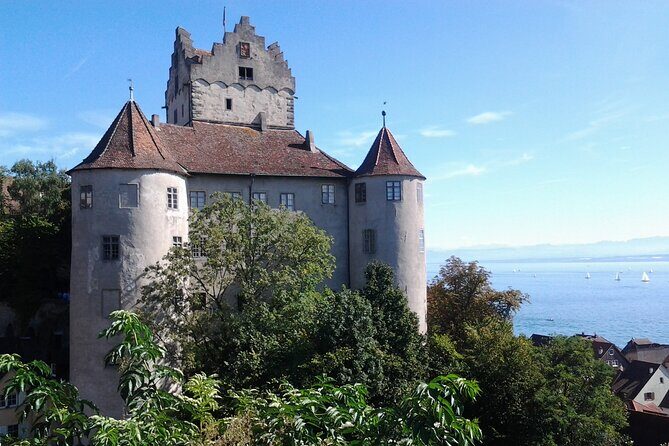
From Niederburg, you head toward Wessenbergstraße, a pedestrian zone. The guide keeps this part useful rather than purely scenic: you get shop time, café suggestions, and practical tips, which is perfect mid-tour when your legs start to ask for a breather.
Then you reach Konstanzer Obermarkt, an important trading center in earlier times. This stop adds an edge. You’ll learn about the pillory used for public punishments in the Middle Ages—something you don’t usually expect to hear about in a market square that now feels normal.
The tour also connects Obermarkt with the Council period and includes the story of the cradle of Prussia standing here. After a couple of these details, you start to see the pattern: markets weren’t just places to buy food. They were places where city power showed itself.
The Obermarkt stop is also admission-free, so it stays simple and flexible.
Kaiserbrunnen: Kings, Emperors, and the Fountain’s Weird Animal Crew
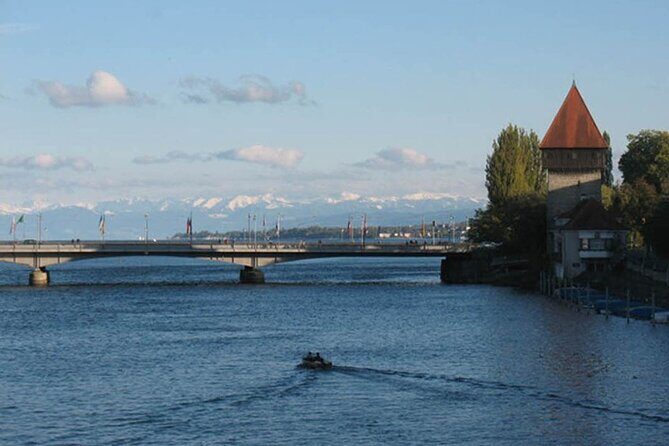
The final stop is Kaiserbrunnen in the heart of the council city. The name comes from the numerous kings and emperors who made stops in Konstanz over history. This is a “look down and look closer” moment.
Then comes the playful part: you’ll encounter strange animals at the fountain, including a horse with eight legs and rabbits with fish tails and fins. The guide doesn’t just point them out; you learn why those creatures are there and what makes Konstanz a place where these odd details belong.
This finale is a great way to end because it ties everything together. Earlier stops gave you the Council-era context and the Roman-and-medieval timeline. Kaiserbrunnen gives you a visual symbol of that layered identity—history you can see without squinting at plaques.
Who This Tour Is Best For (And Who Might Want Something Else)
This tour is ideal if you like guided walking that feels fun but still factual. It fits families with kids from age 4, because the guide is set up to make the medieval council city understandable for younger minds. It works for teens too, especially if they enjoy stories and a bit of humor rather than strict “museum narration.”
It’s also a strong choice for seniors, since seating is offered so the pacing stays comfortable. If your group includes mixed ages, this is one of the rare tours that doesn’t force everyone to follow the same endurance level.
One detail I particularly appreciate is that it’s described as suitable for disabled travelers and strollers, with unlimited access everywhere. For visually impaired guests, the tour is designed according to needs. So it’s not just a one-size-fits-all stroll.
If you’re the type who wants lots of indoor time and minimal walking, you may find this less suitable. It’s old town on foot, so you’ll be outside for the whole story.
Price and Value: Paying for a Private Group Experience
The price is $225.73 per group, with a maximum group size of up to 15. That’s worth thinking about in terms of math: private tours usually cost more per person when you split it up, but here you’re buying a full group guiding service.
Also, many of the stops are marked as admission ticket free. That matters because it keeps the price from turning into a stack of extra entries. You’re paying for a guide who knows the corners of Konstanz and can connect places to stories—whether it’s Imperia at the harbor, Roman roots at Münsterplatz, or animal symbolism at Kaiserbrunnen.
One more value point: there’s a mention of long-time guiding experience in Konstanz—thousands of city tours over decades. That shows up in how the route is paced and how the anecdotes connect to what you’re seeing.
Practical Timing Tips So Your Day Doesn’t Get Tripped Up
Pick your start time with intention. If you schedule after 18:00, plan for the fact that the Konstanz Minster and the Rosgartenmuseum won’t be visited because they close at 18:00. If you’re aiming for cathedral highlights, go earlier.
On Sundays and church holidays, cathedral access is delayed until 11:30 a.m. That’s a big deal if your group wants the church interior as part of the experience. Build your schedule around that, and you’ll avoid disappointment.
Weather matters too. The tour requires good weather, and if it’s canceled due to poor weather, you’ll either be offered another date or a full refund.
Finally, wear walking shoes. The route is on foot through the historic center, with narrow streets and a steady pace through several districts.
Should You Book This Private Constance City Tour?
Book it if you want an efficient way to understand Konstanz in a small amount of time. You’ll get humor plus context, and a route that focuses on the city’s council-era identity, Roman traces, and medieval city life—without dragging you into endless detours.
I’d especially recommend it if:
- Your group includes different ages (kids and seniors together).
- You want a private format where your group sets the tone.
- You care about stories tied to real places, like Imperia and the Council years.
- You’d like a finish at Kaiserbrunnen where you can keep exploring on your own.
Skip it or consider an alternative if:
- You can’t do walking or have limited mobility and want mostly indoor stops (this tour is explicitly foot-first).
- Cathedral visits are non-negotiable, but your timing lands after 18:00 or during a Sunday before 11:30.
FAQ
How long is the Private City Tour in Konstanz?
It runs about 1 hour 30 minutes, with the walk described as ending after roughly 2 hours depending on the pace of the group.
How much does the tour cost?
The price is $225.73 per group, for groups of up to 15 people.
Is this a private tour or shared with other people?
It’s private. Only your group participates.
Where does the tour start and end?
You start at Hafenstraße, Konstanz, and the tour ends at Kaiserbrunnen, Marktstätte (both are in the city center area, within walking distance of the train station and port).
Can kids and teens join?
Yes. The tour is designed so children from age 4 and young people can experience the medieval council city in an age-appropriate way.
Can seniors or people who need seating participate?
Yes. Seating is offered for older guests so the pace can be leisurely.
Is the cathedral visit included, and does it depend on timing?
The tour includes a short cathedral visit, but access depends on timing. If the start time is after 18:00, the Konstanz Minster (and Rosgartenmuseum) won’t be visited. On Sundays and church holidays, the cathedral can’t be visited before 11:30 a.m.
Are there any entry fees for the stops?
Many of the listed stops are marked as admission ticket free.
What if the weather is bad?
The tour requires good weather. If it’s canceled due to poor weather, you’ll be offered a different date or a full refund.
Is there free cancellation?
Yes. You can cancel up to 24 hours in advance for a full refund.