REVIEW · KONSTANZ
Constance: Private City Tour – The Mystical Constance
Book on GetYourGuide →Operated by See-Guide · Bookable on GetYourGuide
Konstanz gets a darker side on foot. This private city walk mixes medieval mystics, spooky symbols, and even miracle stories, all while you’re still in daylight. I like that it’s playful and not just gloomy, and I love how the guide ties the weird stuff to real places you can stand in and look around.
Two big wins for me: I’m into the theatrical-but-grounded storytelling, and I especially appreciate guides like Ms Baumann who can keep things fun while explaining what you’re looking at. Also, you can choose German or Spanish, so you won’t be stuck guessing. The one catch is that this tour leans hard into spooky imagery and dark themes, so if you prefer strictly straightforward sightseeing, you may find the tone a bit too intense.
In This Review
- Key points before you go
- Konstanz at 2 hours: the vibe and why it works
- The 2-hour route: where you meet and how the walk is paced
- Stop-by-stop: from the port clock to Obermarkt
- 1) Historische Hafenuhr (Historic Port Clock) — your story kickoff
- 2) Konstanz Port — a quick look at the harbor world
- 3) Stadtgarten, Konstanz — a calmer interlude
- 4) Dominicans Island — stories with a “this place feels separate” feeling
- 5) Rheintorturm — the tower stop for extra drama
- 6) Niederburg, Konstanz — the older streets stretch a bit longer
- 7) Münsterplatz — the square moment
- 8) Konstanz Cathedral — the main “visit” stop
- 9) Pfalzgarten — a garden pause with meaning
- 10) and 11) two extra guided sightseeing segments — quick “mystery points”
- 12) Obermarkt — finish where the city feels central
- The spooky theme: symbols, demonic figures, and miracle stories
- Language, guide style, and what that means for your experience
- Price and value for a group up to 15
- Who should book this spooky Konstanz city tour
- Should you book Constance: Private City Tour – The Mystical Constance?
- FAQ
- What is the price for Constance: Private City Tour – The Mystical Constance?
- How long is the tour?
- Where do I meet the guide?
- What languages are offered?
- Is the tour wheelchair accessible?
- What should I bring?
Key points before you go
- Spooky moments in daylight: the “dark” theme runs even in the afternoon.
- Medieval mystics and canonized figures: you’ll hear about mystics connected to Konstanz.
- Symbols you’d miss on your own: signs, marks, and eerie visual details get explained.
- Ghost stories plus miracle tales: macabre stories sit alongside real-event miracle talk.
- Private group, up to 15 people: one guide for your group for a more personal pace.
Konstanz at 2 hours: the vibe and why it works
This is a 2-hour walking tour with a guide who keeps the energy up and the stops short. In that time, you don’t need to “finish” Konstanz—you just need a route that helps you notice the city’s stories. That’s what I like about the format: it’s not museum fatigue, and it’s not a long slog through cold streets either.
The theme is intentionally spooky: mysterious symbols, dark corners, demon-like figures, macabre images, and allegories. But it’s not trying to shock you for the sake of it. It’s more like a guided puzzle. You learn what to watch for, then you stand in front of the setting and the story makes a little more sense.
And yes, the tour runs during the day. That matters. You still get to enjoy Konstanz Cathedral-area views and the waterfront atmosphere, without committing to an evening schedule that can be harder to pull off when you’re juggling transport, food, and weather.
You can also read our reviews of more city tours in Konstanz
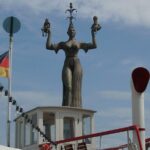
The 2-hour route: where you meet and how the walk is paced
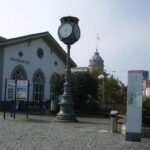
You start at the Historische Hafenuhr (Historic Port Clock). It’s right next to the Council Building and beside the ticket office for Lake Constance Shipping Company. That’s a smart meeting point because it’s hard to miss once you’re near the harbor zone, and it anchors you immediately in the city center’s action.
From there, the tour moves through key old-town areas in quick, manageable segments. Many stops are around 10 minutes, with a couple a little longer—especially in the older streets around Niederburg. Practically, this means:
- You’ll get enough time to hear the story at each place, without lingering long enough to freeze your feet.
- You’ll still cover a satisfying slice of Konstanz’s center in just two hours.
The walking is the main “effort.” If you’re visiting in comfort-first mode, plan for shoes you don’t regret by minute 40.
Stop-by-stop: from the port clock to Obermarkt
Here’s how the tour unfolds, and what each part is good for. Even when the stops are brief, the guide uses each location as a stage for spooky symbolism and old-world meaning.
1) Historische Hafenuhr (Historic Port Clock) — your story kickoff
You begin at the port clock by the Council Building and the shipping ticket office. Starting here isn’t random. Ports pull people in—trade, travelers, rumors, and all the human chaos that comes with it. The guide uses this opening to set the mood and get you ready to read the city differently than you would on a normal stroll.
What you’ll get: orientation + a theme for how to interpret the “mysterious signs” you’ll see later.
Watch for: details on nearby facades and edges of the harbor-front area. The guide will point out what to pay attention to.
2) Konstanz Port — a quick look at the harbor world
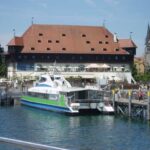
Next is the Konstanz Port area for a short guided sightseeing stop. Even with limited time, the harbor gives you the right atmosphere for “ghost story” storytelling. Water plus old streets equals instant mood.
Why it matters: it helps the spooky parts feel connected to the city’s everyday life, not just fantasy.
Possible drawback: this is brief, so if you want long photo time, budget that for after the tour.
You can also read our reviews of more private tours in Konstanz
3) Stadtgarten, Konstanz — a calmer interlude
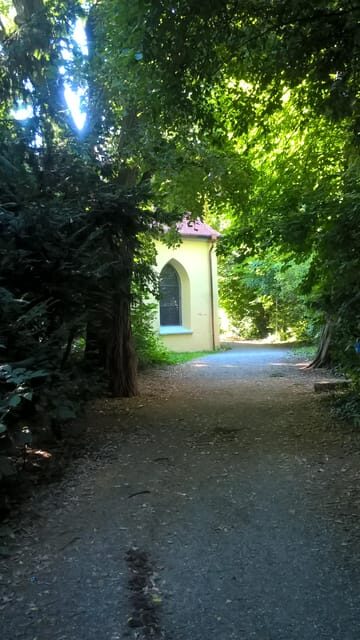
You’ll pass by Stadtgarten for another short stop. This is a good breather. The tour’s tone stays spooky, but the scenery is softer—more open space, less tight architecture.
What to expect: a shift from harbor energy into the city’s calmer rhythm, while the guide keeps linking symbolism to place.
4) Dominicans Island — stories with a “this place feels separate” feeling
Then comes Dominicans Island. Islands naturally feel a bit removed, even in a real working city. That makes it perfect for the tour’s blend of dark figures and “what’s really going on here?” storytelling.
What you’ll get: an explanation-heavy stop where the guide frames the spooky theme around what you’re seeing in front of you.
5) Rheintorturm — the tower stop for extra drama
At the Rheintorturm (a tower), you get one of the more dramatic architectural moments. Towers are built for visibility and authority—so it makes sense the guide uses it as a key location for mysterious symbols and ominous tales.
Why it’s worth it: vertical structure helps the guide connect “signs” to meaning.
Tip: if you like architectural details, slow your pace slightly during the stop so you can actually look where the guide directs your attention.
6) Niederburg, Konstanz — the older streets stretch a bit longer
You’ll spend about 15 minutes in Niederburg, which is the longest neighborhood stop besides the cathedral visit. This is where you’ll feel the old-town maze vibe: tighter passages, older streets, and the kind of corners where stories seem more believable.
What to expect: spooky representations, cryptic messages, and the allegory side of the tour.
Practical note: this is where comfortable shoes matter most. It’s easy to forget you walked a lot until your calves remind you.
7) Münsterplatz — the square moment
Next is Münsterplatz, a short guided stop. Squares are great on walking tours because they give you both breathing room and a “center of gravity” for your photos.
Why I like this stop: it sets you up for the cathedral in a way that feels natural—like you’re arriving, not just passing by.
8) Konstanz Cathedral — the main “visit” stop
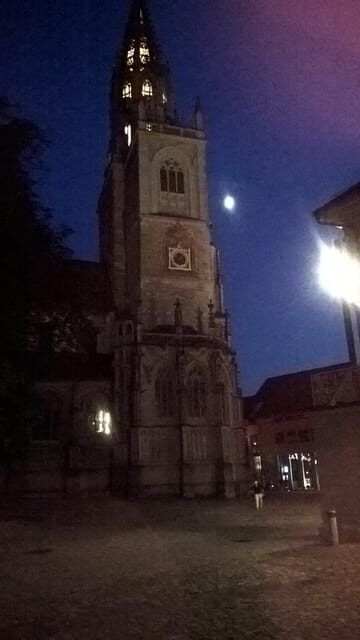
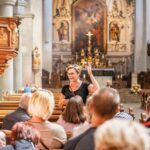
Then you reach Konstanz Cathedral for a 15-minute guided visit and sightseeing. This is the moment where the tour’s themes connect to a real, powerful landmark. The guide uses the setting to talk about medieval mystics connected to Konstanz and the theme of miracles.
What you’ll get: the most “story-dense” part of the route, with guided context that helps you make sense of what you’re seeing.
Good to know: you should plan to look up as well as around; church architecture usually rewards both.
9) Pfalzgarten — a garden pause with meaning
After the cathedral, you’ll head to Pfalzgarten for a shorter guided segment. Gardens and outdoor spaces give your eyes a break after the indoor-heavy feel of a cathedral area.
Why it works in a spooky tour: you don’t feel trapped in darkness. You keep the mood, but you regain perspective.
10) and 11) two extra guided sightseeing segments — quick “mystery points”
The schedule includes two additional guided sightseeing stops (each around 10 minutes) without named locations in the outline you have. That’s not a problem—walking tours often use these slots to catch specific facades, side streets, or visual cues that are best pointed out on foot.
How to use this time: keep your attention sharp. This is where the guide’s storytelling is likely tied to smaller details: symbols, inscriptions, and those “why is that there?” elements.
12) Obermarkt — finish where the city feels central
Finally, you get to Obermarkt for the last guided stop, and it’s also where the tour ends. Obermarkt is a natural “wrap-up” location because it feels like a hub. Once you’re done, you’re positioned to keep exploring at your own pace.
Value of ending here: you finish near the action, not on the edge of the city where you have to fight for transport.
The spooky theme: symbols, demonic figures, and miracle stories
This tour’s pitch is “spooky,” but the real hook is how the guide uses the city like a reading book. You’ll hear about mysterious symbols and enigmatic messages—plus darker visuals like demon-like figures, macabre images, and abysmal allegories. Some of the language also leans into oracular sayings and occult-style representations.
Here’s the best part for most people: you don’t just get told a scary story. You get directed to look at specific places and details, which turns “spooky” into “I can actually see what you mean.”
And then there’s the unusual balance: the tour doesn’t only trade in ghosts. It also focuses on real miracles that happened in Konstanz and medieval mystics who worked there and were canonized. That blend can feel surprising at first, but it’s also what makes the tour more than a gimmick. You come away thinking about how medieval belief systems can include both fear and faith in the same worldview.
Language, guide style, and what that means for your experience
The tour is led by a live guide available in German and Spanish. That’s a big quality-of-life detail. When you understand the words, you don’t miss the subtle explanations behind symbols and stories.
One standout detail from the guide feedback you have: Ms Baumann is noted as fun and engaging, and people highlight that she offers the tour well in German or Spanish. If you’re choosing between languages, pick the one you’re most comfortable with so the spooky theme stays fun rather than confusing.
Because the tour is private and your group size can go up to 15, you’re less likely to feel like a body in a line. That’s especially useful for a theme like this, where the guide may want to pause for a close look or tailor a moment to what your group seems interested in.
Price and value for a group up to 15
The price is $234 per group, for up to 15 people, with a 2-hour duration. That’s not cheap in per-person terms if you’re a solo traveler—but it can be very reasonable if you’re splitting the cost with friends, a family group, or a small travel circle.
Here’s a practical way to think about value:
- If you fill more of the group capacity, the per-person cost drops a lot.
- If it’s just a couple of you, you’ll feel the price more, but you still get a dedicated guide and a structured route.
For the money, you’re paying for someone to steer you through Konstanz with a theme. You’re also paying for context—especially around the cathedral and the “miracle” side of the stories—so it’s not just paying for walking.
In short: it’s a good value when you want guidance and story focus, and when you can bring at least a few people to share the group cost.
Who should book this spooky Konstanz city tour
This tour fits best if you like:
- walking tours that interpret architecture and symbols, not just “here’s a building” facts
- spooky storytelling that still feels grounded in real places
- a day-time option that doesn’t require evening logistics
It may not fit as well if you:
- prefer light, non-scary sightseeing
- want only straightforward history with no demon/macabres-style imagery
- dislike tours that ask you to pay attention to small visual details
If you’re the type who enjoys switching lenses—seeing old towns as story engines—this will feel like your kind of outing.
Should you book Constance: Private City Tour – The Mystical Constance?
I’d book it if you want a 2-hour Konstanz highlight that’s different from the usual “quick landmarks” routine. The combination of spooky symbols, a guided cathedral visit, and the twist of miracle stories makes this feel like a themed tour with real structure, not just a sketchy ghost walk.
Skip it if dark imagery isn’t your thing, or if you want a completely factual, low-theater approach. Otherwise, grab it—especially if you can go with a group so the cost per person feels fair.
FAQ
What is the price for Constance: Private City Tour – The Mystical Constance?
It costs $234 per group, and the group size can be up to 15 people.
How long is the tour?
The tour lasts 2 hours.
Where do I meet the guide?
Meet at the Historische Hafenuhr (Historic Port Clock), next to the Council Building and the Lake Constance Shipping Company ticket office.
What languages are offered?
The live guide is available in German and Spanish.
Is the tour wheelchair accessible?
Yes, the tour is listed as wheelchair accessible.
What should I bring?
Bring comfortable shoes, since it’s a walking city tour.