REVIEW · BERLIN
Berlin during Nazism – Tour in Italian
Book on Viator →Operated by Vive Berlin Tours · Bookable on Viator
Nazism leaves scars you can walk through. This Italian, small-group Berlin tour connects Hitler’s rise to power with the places where resistance, Nazi persecution, and Jewish community life played out in real space. I especially like the small-group attention and the way the route links several hard-but-crucial story lines, from Operation Valkyrie to Jewish quarter landmarks and Otto Weidt’s rescue work; one heads-up, though, is that the topic is emotionally heavy and not a casual history stroll.
You meet at Potsdamer Platz 10 at 10:00 am and finish near Hackescher Markt, with a professional guide leading you in Italian for about 3 hours. The group size is capped at 20, so you’re not lost in a crowd, and you do get time at each stop to actually take in what you’re seeing.
Even if Berlin is known for walls and modern reinvention, this tour shows the darker underlayers—Jewish institutions, memorial sites, and the ruins tied to deportations. It’s also practical: many listed entrances are free, and you get a mobile ticket, so you spend less time fussing and more time learning.
In This Review
- Key Things That Make This Tour Worth Your Time
- Berlin During Nazism in Italian: What You’ll Be Facing
- Potsdamer Platz to Hackescher Markt: How the Route Works
- German Resistance Memorial Center: Operation Valkyrie in Plain Sight
- The T4 Memorial: How Nazi Eugenics Came Before the Holocaust
- Anhalter Bahnhof Ruins: The Station Where Deportations Began
- Scheunenviertel Jewish Quarter: A Living Community, Then a Target
- Otto Weidt’s Museum Workshop: The Schindler From Berlin Connection
- New Synagogue and Old Jewish Cemetery: Two Stops, Two Layers of Loss
- Why This Tour Feels Like Good Value at $27.87
- Who Should Book This (and Who Might Not)
- Should You Book Berlin During Nazism in Italian?
- FAQ
- What language is the guide?
- How long is the tour?
- How many people are in the group?
- Where does the tour start and end?
- Is the ticket mobile?
- Do I need to buy admission tickets for the stops?
- Is transportation included in the price?
- What if it rains?
- Can I bring a service animal?
Key Things That Make This Tour Worth Your Time
- Small group (max 20): more chances to ask questions and stay focused in difficult subject matter
- Operation Valkyrie location explained at the German Resistance Memorial Center
- T4 memorial context about Nazi euthanasia and why it’s treated as a precursor to the Holocaust
- Anhalter Bahnhof ruins and deportation routes tied to 1942–1945
- Jewish quarter sites + Otto Weidt’s factory story: persecution and rescue, side by side
- End near Hackescher Markt so you’re not stuck far from food and transit afterward
Berlin During Nazism in Italian: What You’ll Be Facing
Berlin during the Third Reich isn’t one “type” of history lesson. It’s a chain reaction, and this tour is built to show the cause-and-effect in physical locations, not just dates.
You’ll start with the political climb—Hitler’s rise to power in 1933—and then move toward the machinery that followed. The tour highlights how World War II reshaped Germany and affected the wider world, but it doesn’t treat the war as abstract. You’re pointed toward specific sites that mark decisions, planning, and consequences.
At the same time, you don’t only see victims in silence. The route also makes room for resistance and for people who tried to save others. That blend matters. It keeps the story from becoming only one long dirge, while still staying respectful and grounded in what happened.
If you prefer sanitized history, this route isn’t that. The best way to enjoy it is to go with clear expectations: you’re walking through places where cruelty and state power were real.
You can also read our reviews of more tours and experiences in Berlin.



Potsdamer Platz to Hackescher Markt: How the Route Works
Logistically, this one is fairly easy to manage once you’re on the ground. Your meeting point is Potsdamer Platz 10 (near S/U-Bahn Potsdamer Platz). You’re looking for the blue bicycle of VIVE BERLIN TOURS and their logo flag—small detail, but it saves time on a busy Berlin morning.
The tour runs about 3 hours, which is a good window for history that needs context. You’ll make several short stops, plus a few longer moments at key memorials and Jewish landmarks. The pace is meant to keep you oriented: enough time to understand each place, not so long that you’re rushing for the next train.
The end point is Hackescher Markt (10178 Berlin). That’s a practical choice, because you finish with options: places to eat, wander, and reset. It also means you’re not forced into a long trek back right after a heavy day’s content.
One more detail that helps: the tour operates in all weather conditions. Berlin can do rain-with-agenda, so dress for the day you’ll actually get, not the sunny one you hoped for.
German Resistance Memorial Center: Operation Valkyrie in Plain Sight
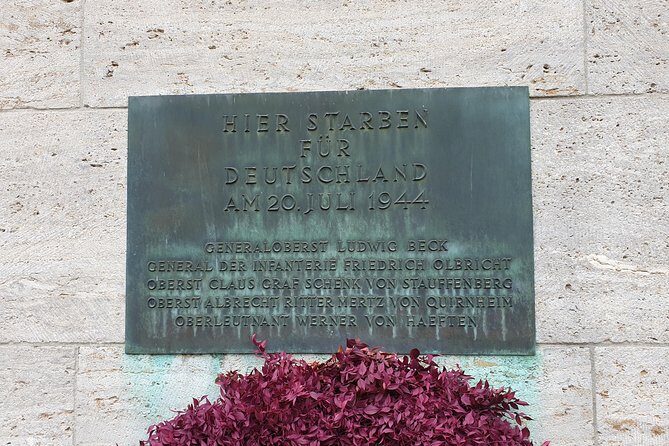
One of the strongest parts is the German Resistance Memorial Center. You’re visiting in the place where the operation Valkyrie was directed, and the guide uses that location to explain how resistance to National Socialism formed and acted.
This isn’t about turning resistance into a movie plot. The center’s goal is to show how individuals and groups took action against the dictatorship across the years from 1933 to 1945. That time span matters. It shows resistance as something that grew under pressure, not something that magically appeared late in the war.
There’s also something quietly powerful about understanding that the rebellion didn’t only live in hindsight. The memorial pushes you to see resistance as human choices made inside a violent system.
If you’ve ever felt like Nazi-era history gets stuck in leaders and laws, this stop gives you a different angle: agency. Even if outcomes were tragic, the actions were real.
The T4 Memorial: How Nazi Eugenics Came Before the Holocaust
Next is the T4 Memorial for the Victims of the Nazi Euthanasia Program. This is one of the most important stops on the route because it addresses a part of the Nazi system that people often learn about too late, or only in broad strokes.
The memorial honors about 300,000 victims, including people killed because of mental and physical disabilities or chronic diseases. The tour explains the Nazi eugenics program known as T4, named after Tiergartenstrasse 4, the office from which it was directed.
The tour also makes a point that the T4 program is considered a precursor to the Holocaust. That framing is not just academic. It helps you understand how the ideology moved from defining who mattered, to deciding who could be excluded, and then to organized killing.
This stop can land hard. You’re dealing with policies that were dressed up as rational decisions, while the impact was mass murder. If you’re the type who likes historical “why,” this is where the tour gives you structure.
Anhalter Bahnhof Ruins: The Station Where Deportations Began
From T4, the story shifts toward transport and execution. Anhalter Bahnhof is now only ruins, but that’s part of what makes it chilling. The site was once the biggest European station at the end of the 1800s—then war destroyed what remained.
Here, you’re told that from the station departed many death trains from 1942 to 1945. Hearing that in the presence of the ruins changes the feeling of the words. You’re not picturing a distant event—you’re seeing a physical trace of how the system moved people.
What I like about this stop is the restraint. There’s no need for theatrical language. The location itself does the work: it’s difficult to mentally distance yourself when you’re standing where rail lines shaped life and death.
If you want to understand how genocide was administered like logistics, this is one of your best lessons in the tour. The story isn’t just ideology—it’s infrastructure.



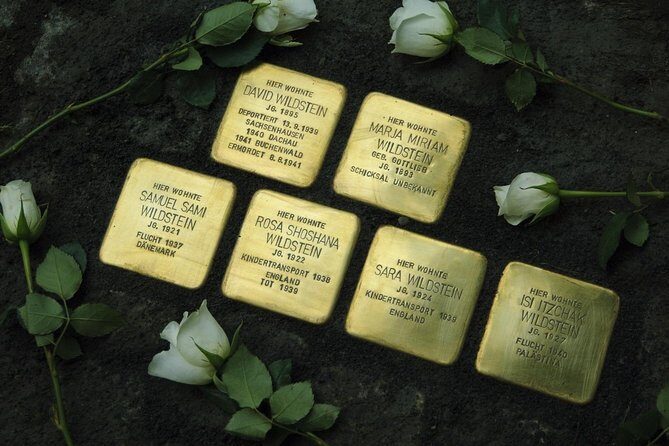
Scheunenviertel Jewish Quarter: A Living Community, Then a Target
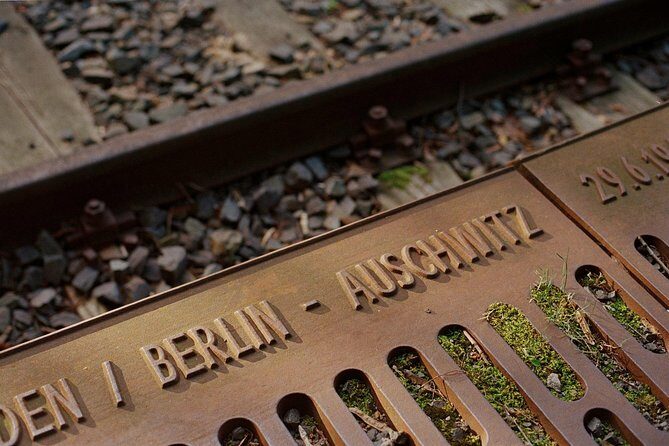
In Berlin, the Jewish Quarter isn’t only a memorial space. Scheunenviertel was (and in some ways still is, through preservation and teaching) a neighborhood connected to institutions and everyday life.
You spend time around the Jewish quarter area with visits tied to major Jewish landmarks. The route includes the New Synagogue and the school connected to Moses Mendelssohn, the Enlightenment philosopher and a major modernizer of Judaism. That matters because it shows a community that wasn’t only defined by persecution—it also built schools, worship spaces, and cultural leadership.
The tour’s approach here feels balanced: it doesn’t rush past Jewish life just to get to the tragedy. It treats culture as part of the story before it becomes a target.
One practical note: the tour is Italian. So if you don’t speak Italian, you’ll need to choose based on your comfort level with that language. If you do, the payoff is that you’ll likely grasp the nuances of how the guide connects place names with meaning.
Otto Weidt’s Museum Workshop: The Schindler From Berlin Connection
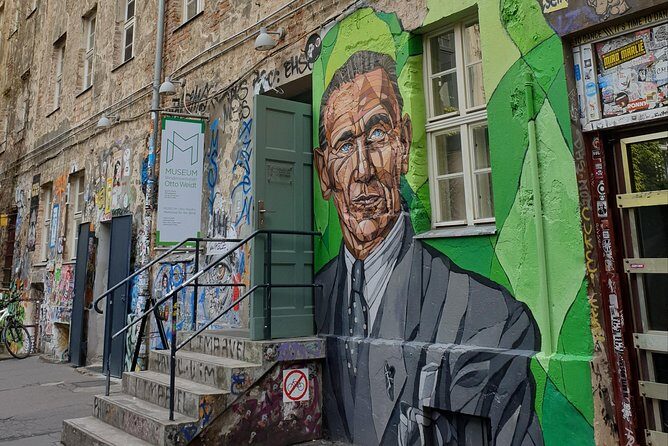
Then you reach Museum Blindenwerkstatt Otto Weidt. Otto Weidt is sometimes called the Schindler from Berlin, and the tour explains why.
Weidt hired Jewish workers, including blind and disabled employees, as part of efforts that helped them avoid deportation to Nazi extermination camps. The story is remembered in the original location of his factory.
This stop brings a different emotional tone. It’s still within Nazi history, but you get a clear example of rescue carried out through work, protection, and daily risk. It also highlights something important: survival wasn’t only about luck. It was about people making choices with real consequences.
I also appreciate how the tour doesn’t treat this as a feel-good detour. The guide frames it as part of the broader system of persecution. Rescue happened inside a deadly world, not in a safe bubble.
New Synagogue and Old Jewish Cemetery: Two Stops, Two Layers of Loss
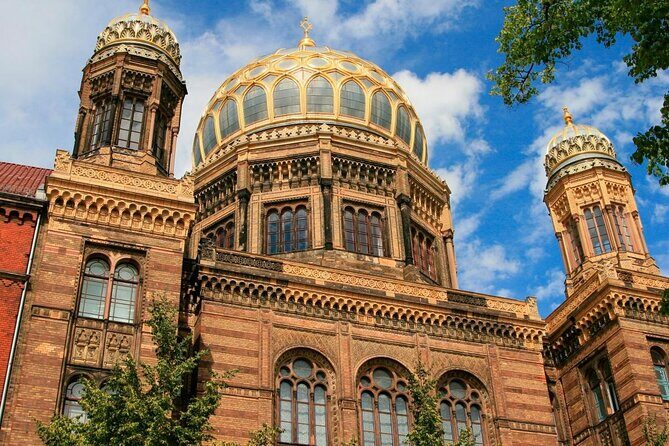
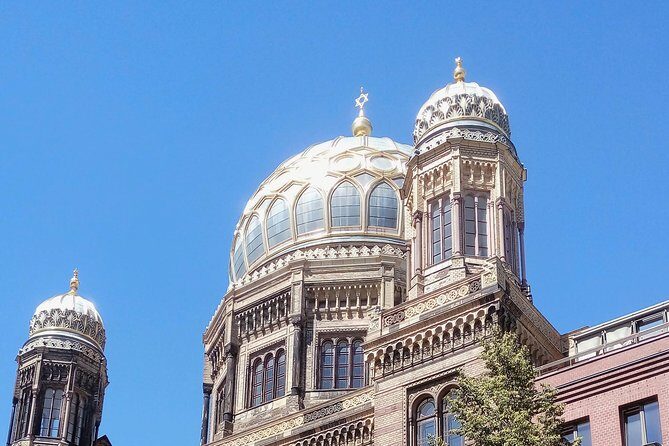
The tour includes Stiftung Neue Synagoge Berlin – Centrum Judaicum, where you visit the New Synagogue (Neue Synagoge). Built in 1866, it could seat 3,200 people, and the guide presents it as a symbol of a thriving Jewish community.
That “before” matters. You’re not only learning what was destroyed. You’re seeing what Jewish life had built—large, organized, and public-facing.
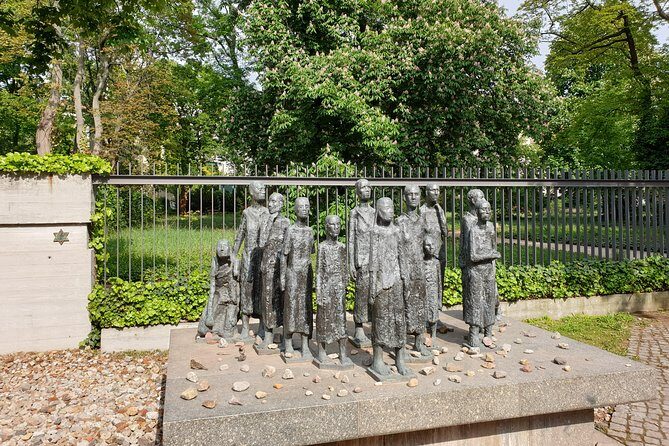
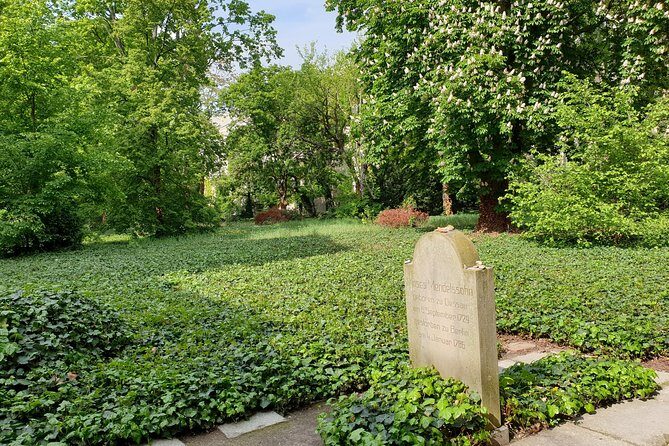
After that, the route continues to the Alter Judischer Friedhof (Old Jewish Cemetery) on Hamburger Straße. The cemetery was once the resting place of many famous members of Berlin’s Jewish community and is described as the oldest recognizable cemetery in the inner city. Today, very little remains of the original place, and it was destroyed during the Nazi period by the Gestapo.
Together, these two stops do something powerful: they show how loss can erase physical structures while leaving meaning behind. The New Synagogue helps you understand continuity and community scale. The old cemetery gives you the brutal counterpart: deliberate destruction aimed at memory.
Why This Tour Feels Like Good Value at $27.87
For $27.87 per person, this isn’t expensive for a guided, language-specific historical walk that lasts around 3 hours. The math works best when you compare what’s included.
You get a professional guide and a guide in Italian, plus local taxes. The tour also lists admission tickets as free for the stops included on the route. That means you’re not paying repeatedly just to enter memorial spaces.
Also, you’re not dealing with a massive crowd. With a maximum of 20 people, the guide can actually manage the group and keep your attention where it matters—especially important for sensitive, detailed topics.
The main extra cost is transportation: the tour does not include travel to or from attractions. You’ll want a day card for Berlin public transport in zones AB. If you’re already planning to use transit all day, you can keep the overall budget under control.
Finally, the tour is popular enough that it’s often booked about 56 days in advance. If your dates are fixed, early booking is a smart move.
Who Should Book This (and Who Might Not)
This tour suits you if you:
- want Italian narration with a structured story across Nazi-era power, resistance, and persecution
- prefer small-group learning where you can actually follow details without shouting over a crowd
- care about Jewish Berlin landmarks and about how rescue stories fit beside memorials
It may not suit you as well if you:
- want a light, surface-level walk
- get overwhelmed by emotionally intense topics in a short time window
- need a fully self-paced experience with no scheduled stops
If you’re visiting Berlin for the first time and you want one guided history thread that connects politics, memorials, and place-based memory, this is a strong candidate.
Should You Book Berlin During Nazism in Italian?
Yes, if you’re ready for serious history delivered clearly and respectfully. The small-group size, the practical route from Potsdamer Platz to Hackescher Markt, and the mix of resistance, T4 euthanasia victims, deportation-related rail history, and Jewish quarter sites make it feel like more than a checklist.
I’d book it if you can handle the emotional weight—and if Italian is your comfort zone for listening and understanding. If Italian isn’t your thing, you might prefer a different language option.
For the right traveler, this tour gives you a map of Berlin’s darkest chapters without turning it into spectacle.
FAQ
What language is the guide?
The guide provides commentary in Italian.
How long is the tour?
It lasts about 3 hours.
How many people are in the group?
The tour has a maximum of 20 travelers.
Where does the tour start and end?
It starts at Potsdamer Platz 10, 10785 Berlin and ends at Hackescher Markt, 10178 Berlin.
Is the ticket mobile?
Yes, it’s listed as a mobile ticket.
Do I need to buy admission tickets for the stops?
The listed stops show admission ticket as free. You still may want to follow the guide’s instructions on-site.
Is transportation included in the price?
No. You’ll need to arrange getting to and from the attractions. A day card for public transport for zones AB is suggested.
What if it rains?
The tour operates in all weather conditions, so dress appropriately.
Can I bring a service animal?
Yes, service animals are allowed.