REVIEW · KONSTANZ
Konstanz: Private Guided Walking Tour
Book on GetYourGuide →Operated by Travmonde OÜ · Bookable on GetYourGuide
Two naked rulers and one statue explain everything. I love how this Konstanz private walking tour turns big European events into real street-level moments. You’ll connect the Rhine-side city to Roman power, medieval church politics, and even Count Ferdinand von Zeppelin’s birthplace.
My favorite part is the story behind the Imperia Statue in the Marina. It’s not just a photo stop; you’ll learn exactly who the figures are and why they’re shown the way they are.
One thing to consider: 2 hours moves quickly, so if you want lots of time inside churches or museums, you’ll likely want to follow up on your own.
In This Review
- Key highlights worth planning for
- Konstanz on the Rhine: why this city feels like a crossroads
- Starting at the Imperia Statue: the Council of Constance, explained in sculpture
- The Council building and Pope Martin V: from politics to a physical landmark
- Roman fortress clues and medieval trade routes you can spot while walking
- Zeppelin in Konstanz: the inventor’s birthplace and a modern pop-history twist
- Jesuit Church, town theatre, and the old-school stage life of Germany
- The Triumph of Satire Fountain: when history turns funny
- Stephanskirche and the execution square: power, faith, and public life
- Price and value for a 2-hour private group up to 15
- Who this tour fits best (and who might want a different plan)
- Should you book this Konstanz Private Guided Walking Tour?
- FAQ
- How long is the Konstanz private guided walking tour?
- Where does the tour start?
- Is this tour private or group-based?
- What languages are available?
- What major sights are included?
- Are entrance fees included?
- How many people can be in a group?
- Can the tour be customized?
- What are the cancellation terms?
Key highlights worth planning for
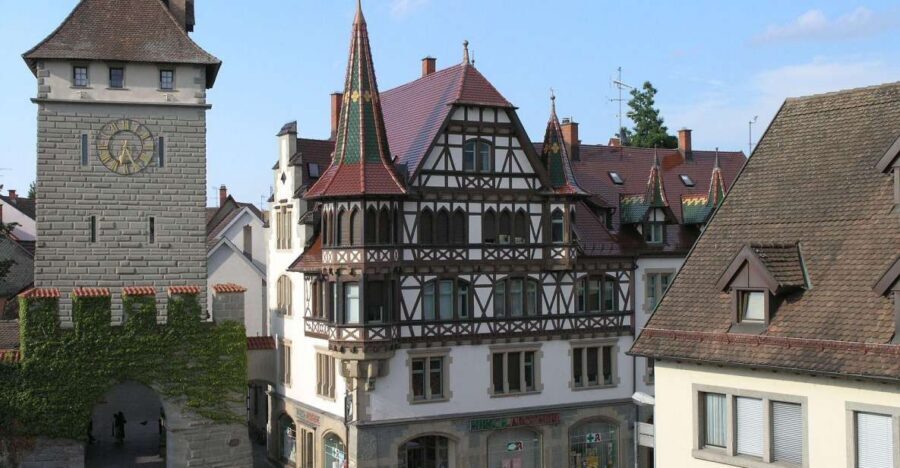
- Imperia Statue in the Marina: a woman holding Pope Martin V and Emperor Sigismund, with symbols of power that make the Council of Constance easy to remember
- Council building details: a 14th-century site that was later used as a granary and warehouse, where Pope Martin V was elected
- Count Zeppelin’s hometown link: a monument honoring Ferdinand von Zeppelin, born in Konstanz in 1838
- Town theatre and Jesuit Church: a look at major local stages and religious architecture in a compact route
- Triumph of Satire Fountain: more than 30 comical figures and water basins that make learning feel playful
- Stephanskirche glass windows and rococo touches: Romanesque origins plus striking round-arched stained glass
Konstanz on the Rhine: why this city feels like a crossroads
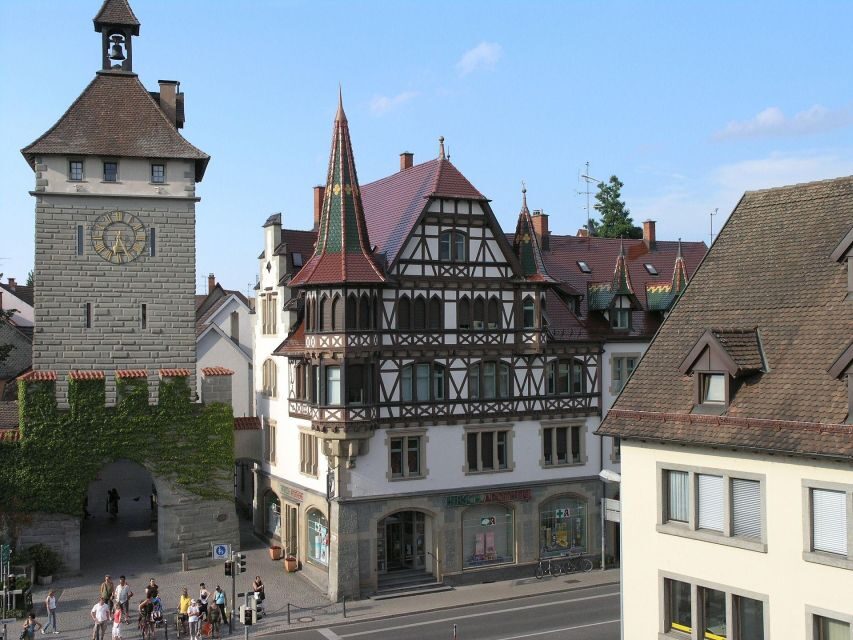
Konstanz sits right up to the Swiss border, with the Rhine cutting the city into two parts. That geography matters because it helped shape who came through—merchants, clergy, and rulers moving between regions. On this walk, you don’t just hear dates. You start to see how location drives history.
I like that the tour treats Konstanz like a place shaped by movement. The city sat on major commerce routes linking Italy, France, and Eastern Europe. When your guide ties those routes to the Roman era and later medieval life, the sights stop feeling random.
Also, the walking format keeps it friendly and manageable. In a couple of hours, you cover landmarks that would otherwise feel scattered across the map. That’s smart value when you’re in town for a short stay.
You can also read our reviews of more walking tours in Konstanz
Starting at the Imperia Statue: the Council of Constance, explained in sculpture
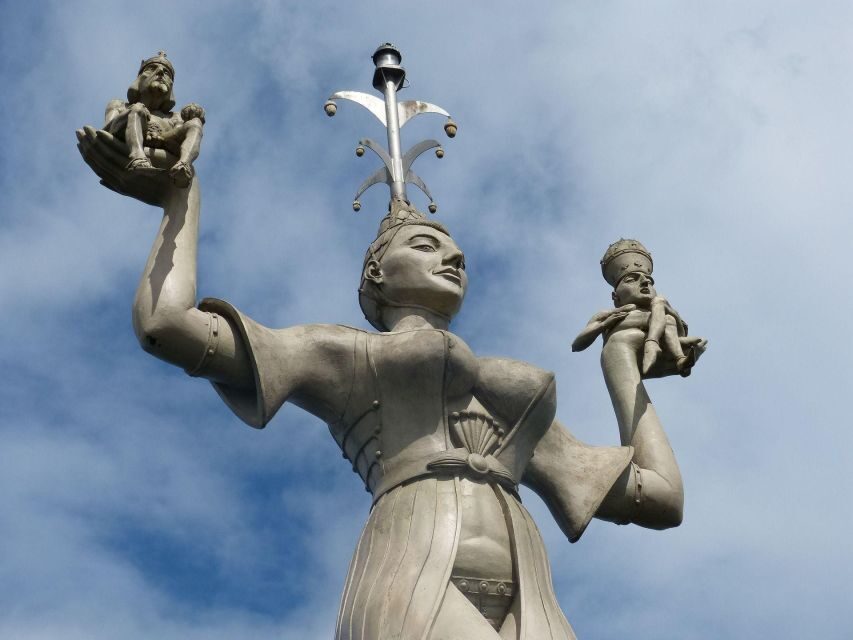
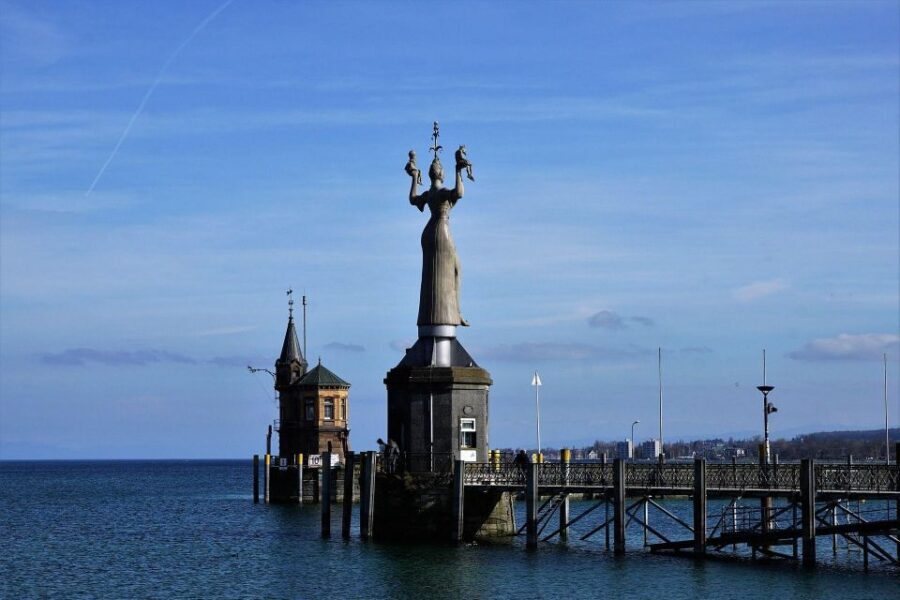
You meet in front of the Imperia Statue in the Marina (Hafenstraße 2, 78462 Konstanz). Even if you’ve never studied the Council of Constance before, the statue gives you an anchor.
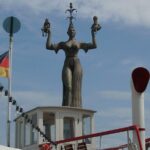
The Imperia Statue commemorates the Council of Constance, held between 1414 and 1418. The sculpture shows a woman holding two naked men in her hands. One is Pope Martin V, the pope elected during the council. The other is Emperor Sigismund, the king who called the council.
What makes this stand out from typical monuments is the symbolism. Both figures are shown naked except for the crown and papal tiara—visual shorthand for who has secular power and who has religious authority. Your guide helps you read the statue like a history page you can walk around.
Practical tip: take a minute to look at the details from different angles. You’ll get more out of the sculpture once your guide explains why the artist chose that arrangement in the first place.
The Council building and Pope Martin V: from politics to a physical landmark
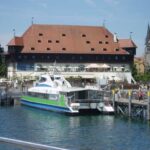
After the statue, you’ll move to the council-related site tied to Pope Martin V. The Council building dates to the 14th century. It also had a second life later on, being used as a granary and a warehouse for a period of time.
That reuse is one of those history facts you can almost feel. It’s a reminder that even major church politics eventually became part of everyday economic life. The building is tied to a specific turning point: it’s the place where Pope Martin V was elected.
If you’re wondering why a guide spends time here, it’s because the meaning is layered. The council wasn’t just paperwork; it reshaped religious leadership in the era. When you connect that election story to a real, standing structure, it sticks in your mind.
This stop also works well if you like architecture that has lived through eras. You’re not only learning about the past event—you’re noticing how the same space served different needs over time.
Roman fortress clues and medieval trade routes you can spot while walking
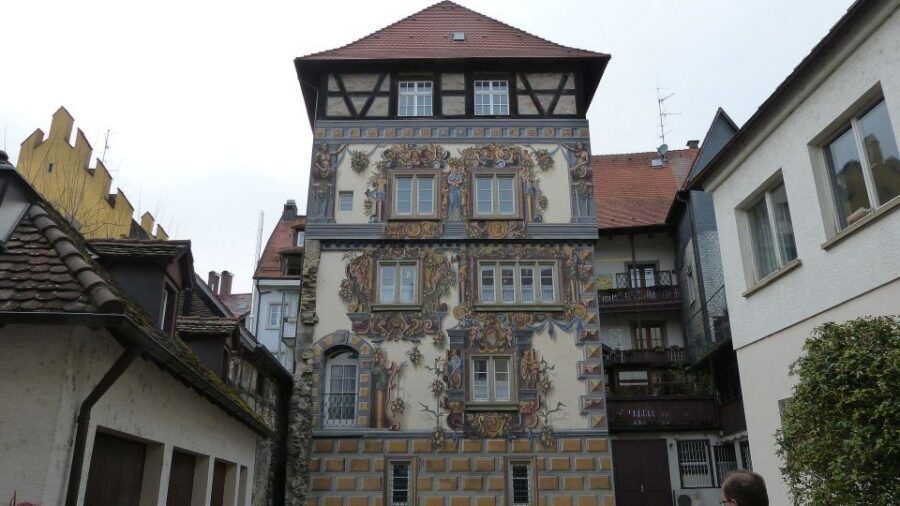
Konstanz has Roman emperors in its story, including the city’s ancient fortress roots. You’ll also hear how medieval bishops, traders, and power brokers left their mark in the 15th century.
The tour doesn’t ask you to memorize a textbook. It helps you understand the city as a moving hub. Konstanz’s location between Italy, France, and Eastern Europe meant people and ideas flowed through, and not always peacefully.
As you walk, I like the way the guide links these threads to what you can see in front of you. Streets and landmarks become signposts for different chapters—Roman military presence, medieval religious authority, and later European political shifts.
If you enjoy connecting places to broader European events, this part gives you that payoff without requiring advanced background knowledge.
Zeppelin in Konstanz: the inventor’s birthplace and a modern pop-history twist
Then there’s the Count Ferdinand von Zeppelin connection, and it adds a refreshing change of pace. One monument in town reminds you that Zeppelin—born in Konstanz in 1838—became the key name behind the zeppelin.
This is one of those history facts that feels both local and internationally known. It helps you see how the city continued to matter long after medieval councils and papal politics. It’s not just old stones; it’s a link to an innovation story that reached far beyond Germany.
Even if you don’t care about aviation, the point lands: major European figures often started in ordinary places. Your guide’s job here is to connect that birthplace detail to the broader cultural memory of Konstanz.
You can also read our reviews of more guided tours in Konstanz


Jesuit Church, town theatre, and the old-school stage life of Germany
The route also includes the Jesuit Church and the town theatre. The theatre is described as the oldest stages in German-speaking regions, which is a bold claim—and it’s the kind of detail that makes you look around more carefully.
Standing near these buildings, it’s easier to appreciate that cities aren’t just about religion and politics. They also have performance spaces, public gathering, and cultural life. In other words: the history isn’t only about who held power. It’s also about how communities spent time.
The Jesuit Church adds another angle to the story. You’ll hear about how medieval and early modern religious life showed up in the built environment. Then the theatre reminds you that civic identity has more than one expression.
This combo is especially good if you like a balanced tour where the mood changes every few stops. It keeps the walk from becoming a single-note lecture.
The Triumph of Satire Fountain: when history turns funny
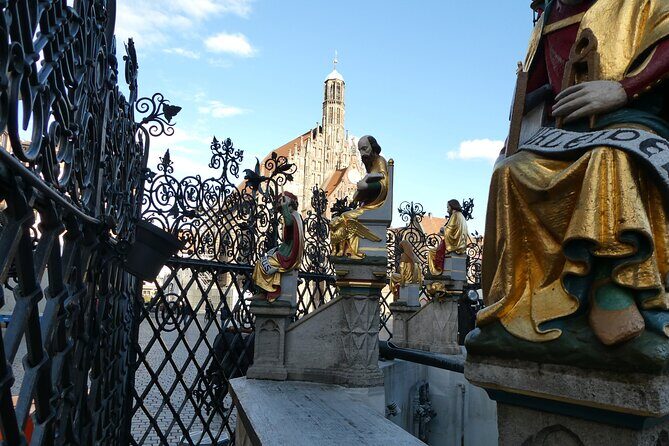
Next comes the Triumph of Satire Fountain, a sculpture with more than 30 comical figures and multiple water basins. This isn’t history delivered with a straight face. It’s history with a grin.
That matters because it gives you a break from the heavy themes—papal elections, emperors, and all the power struggles. The fountain lets you see how a city expresses opinion, humor, or social commentary in public art.
Your guide will help you connect the fountain to the broader idea that public spaces carry meaning. Even if you don’t memorize the background of each figure, you’ll leave remembering how unusual it is: a crowded, playful monument that invites looking.
Practical tip: if you’re taking photos, try to capture the water basins too, not just the faces. The fountain works as a whole composition.
Stephanskirche and the execution square: power, faith, and public life
The tour continues with Stephanskirche, a church with Romanesque origins plus rococo elements. Round-arched windows are decorated with impressive glass paintings, and it’s one of the stops where you’ll likely slow down because the visuals do part of the teaching for you.
What I like about this part is the contrast. Romanesque foundations suggest permanence and older religious styles. Rococo decoration signals a later layer of taste and influence. That mix helps you understand that churches weren’t frozen in time—they changed as styles and resources changed.
Then you’ll go through the square where, in the Middle Ages, it served as a place for executions and community affairs. That detail is sobering, but it’s also useful. It reminds you that public spaces served every kind of civic function, not just celebration and markets.
If you tend to think of medieval life as distant, this stop makes it concrete. You’re standing in the kind of environment where serious punishments happened in the same neighborhood as everyday social activity.
Price and value for a 2-hour private group up to 15
The tour costs $294 per group for up to 15 people, and it lasts about 2 hours. For a private format, that pricing can feel very reasonable if you’re traveling with friends or family and want a guide’s attention rather than joining a large fixed group.
Here’s how I’d think about value: you’re paying for a professional local guide who stays with your group only, plus the planning needed to hit key historical stops efficiently. Entrance fees aren’t included, so if a future stop requires paid entry, you’ll need to budget separately.
Another plus is the flexibility. The tour notes that you can customize on the spot with your local guide. That’s the difference between a generic highlights walk and something that actually fits what you care about—Roman roots, church politics, art, or Zeppelin-era connections.
This tour is also a good match for first-time visitors to Konstanz who want a strong orientation in a limited window. You’ll leave with a mental map of where the big stories happened.
Who this tour fits best (and who might want a different plan)
This tour is ideal if you want history explained in plain language and you like walking from one meaningful landmark to the next. It’s also a good pick if you enjoy architecture and public art, because the route includes church elements, a major theatre connection, and the comedic fountain.
It may be less ideal if you’re hoping for a long museum-style experience or you want lots of independent exploration time. Two hours is tight. It’s perfect for highlights and context, not for leisurely wandering at every stop.
If you’re traveling in a mixed-interest group, it holds up well: there’s church history, political history, Roman references, and a technology-related monument tied to Zeppelin.
Should you book this Konstanz Private Guided Walking Tour?
I think it’s a smart booking if you want Konstanz to make sense fast. The Imperia Statue and the Council of Constance connection give you a clear storyline right away, and the rest of the route keeps adding layers—Roman foundations, theatre culture, Jesuit presence, and public art like the Triumph of Satire Fountain.
Book it if you value a guide who can connect symbols to meaning and point out what’s easy to miss on your own. Skip it if your priority is spending hours inside sites or if you prefer unguided wandering with no structured narrative.
Either way, for a short visit to Konstanz, this is the kind of guided walk that helps you look at familiar streets and suddenly understand what they’re trying to tell you.
FAQ
How long is the Konstanz private guided walking tour?
It’s 2 hours.
Where does the tour start?
In front of the Imperia Statue, in the Marina, Hafenstraße 2, 78462 Konstanz.
Is this tour private or group-based?
It’s a private group tour. Your group is guided only by your local guide.
What languages are available?
The live tour guide is available in English and German.
What major sights are included?
You’ll see the Imperia Statue, the Council building tied to Pope Martin V, monuments connected to Count Ferdinand von Zeppelin, the Jesuit Church, the town theatre, the Triumph of Satire Fountain, and Stephanskirche, plus a square that historically served for executions and community affairs.
Are entrance fees included?
No, entrance fees are not included.
How many people can be in a group?
The price is per group up to 15 people.
Can the tour be customized?
Yes, the description notes possible customizing on the tour with your local guide on the spot.
What are the cancellation terms?
You can cancel up to 24 hours in advance for a full refund.