REVIEW · NUREMBERG
Nuremberg Old Town Tour: Medieval Times and Nazi Trials
Book on GetYourGuide →Operated by Dennis Ugalde · Bookable on GetYourGuide
Nuremberg tells two stories at once. This guided walk links medieval landmarks with the darker chapters of the Nazi trials, led by Dennis Ugalde. I especially love the photo comparisons that help you see how the streets changed after the wars, and I also like the way the guide folds in food traditions so you know where to eat afterward. One possible drawback: the Nazi-era material is part of the story, so if you prefer lighter history, go in with clear expectations.
The tour runs about 2.5 hours and starts (and ends) at the Schöner Brunnen on the Hauptmarkt, so you can pair it with lunch or an afternoon wander. It’s friendly and practical too, with live guiding in Spanish and English and a wheelchair-accessible route.
In This Review
- Key highlights you will feel fast
- Starting at Hauptmarkt: quick bearings, easy meeting point
- How the tour connects medieval Nuremberg to Nazi trials
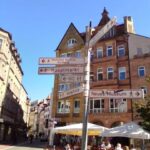
- The Hauptmarkt and old-town rhythm: the story begins in the square
- Fleisch Bridge and the Island of Love: river views with historical weight
- Weißgerbergasse and Old City Hall: medieval lanes you can still read
- Imperial Castle (Kaiserburg): a guided 30-minute history lesson in stone
- Albrecht Dürer’s House: art and the human scale of the past
- The extra in-between stops: short segments that keep momentum
- Food tips during the walk: practical and tradition-focused
- Price and value: $15 for 2.5 hours of guided context
- Who this Nuremberg old town tour suits best
- Quick practical tips so the walk feels easy
- Should you book this Nuremberg Old Town Tour?
- FAQ
- Where do I meet the guide?
- How long is the Nuremberg Old Town Tour?
- Which languages are offered?
- Is the tour wheelchair accessible?
- What should I bring or wear?
- Can I cancel or change plans?
Key highlights you will feel fast
- Green-umbrella meet-up at the Schönner Brunnen on Hauptmarkt, so you find the group quickly.
- Photo tour format that compares old images with what you see today.
- World War II survivor sights that let you track what remained after near-total destruction.
- River views at the Fleisch Bridge area, including time for the Island of Love.
- Kaiserburg Castle focus with a guided segment long enough to actually notice details.
- Old-town food and traditions woven into the walk, not tacked on at the end.
Starting at Hauptmarkt: quick bearings, easy meeting point
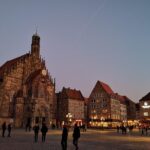
You begin at the Schönner Brunnen on Nuremberg’s Hauptmarkt, the city’s big central square. Your guide waits with a green umbrella, which is a small detail, but it matters when you’re trying to orient yourself in a busy historic center.
The walk is designed to be straightforward: you start in the most central tourist hub, then move outward on foot to the major medieval and wartime-relevant stops. With about 2.5 hours total, you’re not stuck for half a day, and you still get a real story instead of a rushed checklist.
I like that the pacing is built around short sightseeing windows and then a few longer “anchor” moments. That keeps your brain from melting after the first 30 minutes, especially when the topic shifts from medieval Nuremberg to the Nazi era.
You can also read our reviews of more tours and experiences in Nuremberg.

How the tour connects medieval Nuremberg to Nazi trials
This is not a one-theme tour. The whole point is that Nuremberg’s medieval setting and its role in the Nazi period are tied together in the same streets, buildings, and river bends.
Your guide explains why Nuremberg is known for the Nazi trials, then steps back to cover the city’s beginnings and its medieval era. You’ll hear how Nuremberg links to Hitler and how the city’s wartime destruction shaped what you can still see today.
The way the tour is structured is what makes it work: you’re moving through places while the history is explained, so it feels like cause-and-effect instead of memorizing dates. And because the walk includes photo comparisons, you can literally watch the city evolve in your mind as you stand in the same viewline.
If you want a careful warning: this tour includes Nazi-era content. You don’t need to be a history buff to enjoy it, but you do want to be mentally prepared for serious topics.
The Hauptmarkt and old-town rhythm: the story begins in the square
You spend time at Hauptmarkt Nürnberg with guided commentary, roughly 35 minutes in this first anchor portion. This matters because Hauptmarkt is the stage for so much of the old city’s life—trade, civic identity, and the everyday flow of people.
From here, the guide sets the framework for the rest of the walk: what Nuremberg was, what it became, and why it matters that so many structures still survived the World Wars. Even if you only catch a few phrases, you start to notice patterns in the architecture and street layout as the tour moves on.
You’ll also get a sense of what to look for in the later stops. The guide points out the right details so you’re not just taking photos while the history passes by like background noise.
A nice extra here is the guide’s ability to keep things engaging in either English or Spanish, depending on the group. If you’ve ever been on tours where you can tell the guide is doing the minimum, this one doesn’t feel like that.
Fleisch Bridge and the Island of Love: river views with historical weight
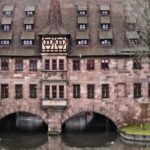
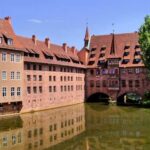
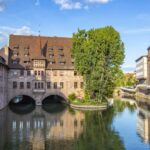
Next, you move toward the river area and the Fleisch Bridge. You get about 20 minutes here for sightseeing, which is enough time to slow down, look at the water and the bridge angles, and take photos without feeling rushed.
This is also where the “Island of Love” enters the story. The tour builds in time to spot it and connect what you see today with what the city used to be—an easy way to keep the tour from becoming only dark and heavy.
One of the strengths of the walking route is that it changes the visual mood. You go from square-level civic history to a riverfront landscape where bridges, islands, and crossings naturally fit into the story.
There’s a photo-tour element too, so you’ll compare how the area looks now versus earlier images. That’s one of the quickest ways to understand what the wars did to the city and why rebuilding mattered.
Weißgerbergasse and Old City Hall: medieval lanes you can still read
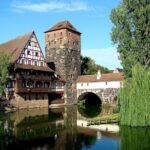
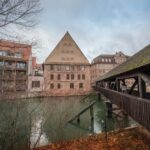
After the river focus, you head into the old-town streets for the Weißgerbergasse segment, about 15 minutes of sightseeing time. This area is all about getting a feel for the medieval side of Nuremberg—tight lanes, old building lines, and the kind of street scale that makes the past feel close.
Then you pass by the Old City Hall with around 15 minutes of stop-and-go sightseeing time. Even when you’re just walking past, the guide’s commentary helps you notice why civic buildings mattered so much in the medieval city. It’s the difference between seeing a facade and understanding what kind of power and everyday life lived behind it.
This portion works well if you like “small” history. You get less of the grand monument feel and more of the lived-in city vibe, which is where a lot of Nuremberg’s charm really comes from.
And because the tour also talks about what survived the World Wars, you’ll notice the contrast between durable old fabric and newer layers. That contrast is often what makes the city’s story stick.
Imperial Castle (Kaiserburg): a guided 30-minute history lesson in stone
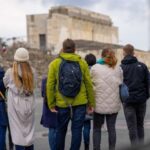
The big medieval anchor is the Imperial Castle of Nuremberg, the Kaiserburg. You get about 30 minutes here with guided exploration, which is just the right amount of time to make it more than a photo stop.
Castle time on a tour like this is where your guide’s style matters. Dennis Ugalde keeps the material clear and adapts the pace to the group, so you’re not standing there waiting while the explanation drags, or getting lost because the guide is racing ahead.
You’ll learn how the castle connects to Nuremberg’s rise and why it sits at the center of the city’s identity. Even if you’ve only seen castles from outside before, this segment helps you understand the role castles played—protection, authority, and symbol.
It’s also one of the best moments for “connect the dots.” You start to see how medieval power structures align with how later events played out in the same civic center.
Albrecht Dürer’s House: art and the human scale of the past
Later, you reach Albrecht Dürer’s House for about 20 minutes of sightseeing. Dürer is one of those names that can sound like a school lesson until you stand in the place and realize he belonged to this city’s real streets.
This stop brings a different kind of energy. After the heavier narrative about war and the Nazi era, the tour shifts to creativity and the human scale of history. It’s a helpful pacing tool, even if you don’t call it that.
You’ll have time for photos and for the guide to point out what to notice. When the tour is done right, you leave thinking: this wasn’t just a “site visit,” it was a way to understand why Nuremberg produced people like Dürer in the first place.
And since the walk is built around short windows and longer explanations, you’re not mentally exhausted by the time you get here. That makes the stop feel like a reward.
The extra in-between stops: short segments that keep momentum
You’ll also have shorter sightseeing breaks along the way, including a 15-minute segment that’s not tied to one named monument in the basic flow. These parts matter because they prevent the tour from becoming a strict, stop-start routine.
They’re often where the guide squeezes in key context: how the street layout reflects old planning, why certain places were important, and what to look for in the next few minutes. Even when you’re not at a headline building, you learn how to read the city.
Another small but useful feature is that the tour includes a general “compare the past and present” approach. When your brain knows to look for differences, you see more than just buildings—you notice survival, change, and the direction of rebuilding.
Food tips during the walk: practical and tradition-focused
One of the reasons I like this tour format is that it doesn’t treat food as an afterthought. Your guide talks about the best foods in the city and the traditions behind them, while you’re still moving through the historic core.
This gives you something you can act on right away. Instead of walking away with a vague suggestion like eat local, you get guidance that helps you choose where to eat and what style of food fits the city.
It also keeps the tour human. History can get heavy fast, and food is a natural bridge back to everyday life. You’ll feel more like you’re learning how people lived in different eras, not just collecting facts.
If you plan to eat in the Hauptmarkt area afterward, this tour helps you do it smarter—so you’re not guessing at the last minute.
Price and value: $15 for 2.5 hours of guided context
At $15 per person, this is a solid value for a guided walk that covers both medieval Nuremberg and its Nazi-era significance. The price matters less than what you get for it, and here you get a guided narrative plus multiple major stops.
You’re not just paying for entrance tickets or one landmark. You’re paying for the “how it all connects” part: the guide’s explanation across Kaiserburg, old civic areas, the riverfront, and the Dürer connection.
It’s also a good trade if you’re short on time. With about 2.5 hours, you can fit it into a day without sacrificing the rest of your itinerary.
If you’re traveling on a budget, this is one of those experiences that’s easy to justify. You spend less than on many paid attractions, yet you come away with way more context than you’d get from wandering alone.
Who this Nuremberg old town tour suits best
This tour is a great fit if you want guided context but still enjoy walking and seeing places up close. The mix of Hauptmarkt, the river area around Fleisch Bridge, Weißgerbergasse, and Kaiserburg keeps the route interesting even when the subject matter turns serious.
It also works well for people who like learning history through “where” rather than through books. Standing in the city helps the story stick, especially with the photo comparisons and the focus on what survived World War II.
If you’re traveling with limited mobility, the tour is wheelchair accessible. Still, it’s a walking tour, so it’s worth thinking about your comfort level with several stops on foot. Also note the tour is not suitable for people over 95 years.
Quick practical tips so the walk feels easy
Wear comfortable clothes and comfortable shoes. You’ll be on your feet through old streets and between key points, so your footwear matters more than you think.
Bring water. It sounds basic, but it’s one of those things you’ll be glad you did once you’re out in open areas around the square and river.
Check the weather ahead of time and plan for it. The meet point is on Hauptmarkt, and outdoor time is part of the deal.
And yes, bring a camera. The photo comparison approach gives you a reason to take pictures and a way to think about what you’re capturing.
Should you book this Nuremberg Old Town Tour?
Book it if you want a guided walk that connects medieval Nuremberg with the city’s role in the Nazi trials, and you like seeing how the past changed after World War II. The route hits major landmarks—Schöner Brunnen/Hauptmarkt, Fleisch Bridge and the Island of Love, Weißgerbergasse, Kaiserburg, and Albrecht Dürer’s House—without turning into a slow, exhausting marathon.
Skip it only if the Nazi-era material would feel too heavy for your trip. Otherwise, this is one of the better ways to get oriented fast, learn the story in plain language, and walk away with both context and food ideas for the rest of your day.
FAQ
Where do I meet the guide?
You meet at the Schönner Brunnen on Nuremberg’s Hauptmarkt. The guide will be waiting with a green umbrella.
How long is the Nuremberg Old Town Tour?
The tour lasts about 2.5 hours.
Which languages are offered?
The live guided tour is available in Spanish and English.
Is the tour wheelchair accessible?
Yes, the tour is listed as wheelchair accessible.
What should I bring or wear?
Wear comfortable clothes and comfortable shoes, and bring water. A camera is a good idea for the photo comparisons. Also check the weather before you go.
Can I cancel or change plans?
Yes. You can cancel up to 24 hours in advance for a full refund. The tour also offers reserve now and pay later, so you can book without paying immediately.