REVIEW · BAMBERG
Bamberg Free Walking Tour
Book on GetYourGuide →Operated by Nuremberg Free Walking Tour - The Original · Bookable on GetYourGuide
Bamberg packs a lot into two hours. This tip-based walk takes you through the UNESCO Old Town, with a clear story of how the city grew from a castle into a bishop-centered power hub.
I especially like the way the guide builds an easy mental map fast, so the streets stop feeling random and start feeling meaningful.
I also love the mix of famous views and daily life details. You’ll see Little Venice and key architectural landmarks, then hear how Bamberg’s identity is shaped as much by students, athletes, and fishermen as by its reputation for Franconian beer.
That balance makes the tour feel like real city life, not just postcard stops.
One possible drawback: plan for a break. One review specifically asked for a clearer heads-up about finding a toilet during the walk, so don’t count on everything being conveniently timed.
In This Review
- Key things you’ll notice on this Bamberg walk
- Finding your guide at the Centurione statue by the Lower Bridge
- A 2-hour Bamberg overview: sights plus context you can actually use
- Little Venice: the canal-side look that explains Bamberg’s “island city” vibe
- Old Town Hall: where civic history meets the architectural timeline
- Romanesque cathedral and old residence: the grand parts of Bamberg’s identity
- The city’s big stories: bishops, persecution, and baroque contrast
- Bamberg today: fishermen, students, and sports alongside the beer reputation
- What happens after the walking portion ends
- Price and value: $3.54 for a 2-hour, tip-based city guide
- Should you book the Bamberg Free Walking Tour?
- FAQ
- Where is the meeting point for the Bamberg Free Walking Tour?
- How do I recognize the guide?
- How long is the tour?
- What language is the tour guide?
- Is it a free tour?
- What are some of the stops you’ll see?
- How much history does the tour cover?
- Does the tour talk about Bamberg’s culture and people?
- Will the guide help after the walk ends?
- Can I cancel for a refund?
Key things you’ll notice on this Bamberg walk
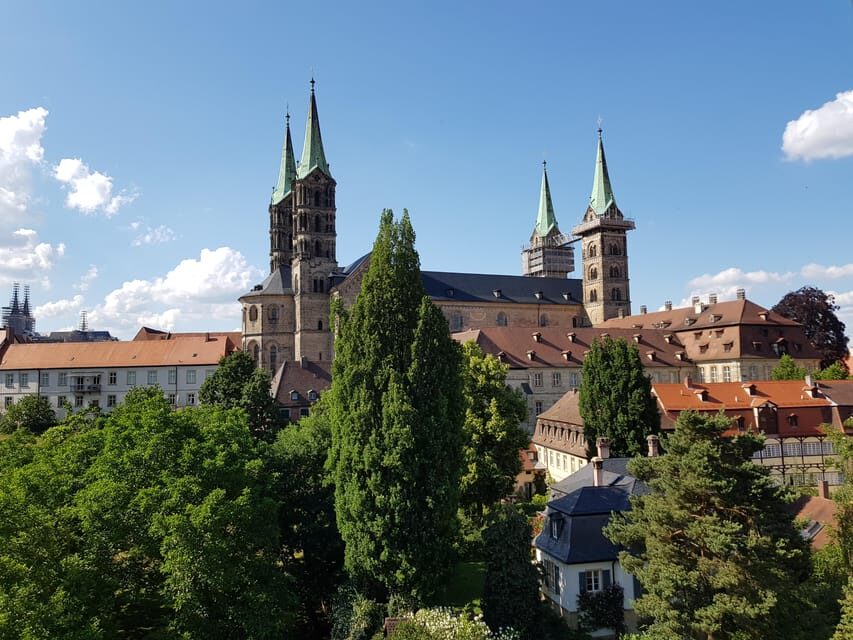
- UNESCO Old Town coverage that turns confusing streets into a simple story
- Little Venice and other major landmarks, explained in plain language
- A history timeline spanning more than 1,000 years, not random facts
- Culture beyond beer: locals shaped by many different groups and routines
- Strong guiding energy from people like Thomas and Julia, called out by guests
- Plenty of time at the end for your questions and next-step ideas
Finding your guide at the Centurione statue by the Lower Bridge
You’ll meet at the Centurione statue, the one with a black face near the Lower Bridge. It’s the kind of meeting point that’s easy once you’re there, but frustrating if you show up without a plan.
Look for your guide by the white umbrella with the green logo. That detail matters, because Bamberg’s old town has plenty of corners and small groups. The tour is only two hours, so getting started promptly helps you see the best parts without rushing.
And yes, it’s a German-language tour. If you’re not comfortable in German, you can still follow along with body language and context, but this is best if you can understand at least the basics.
You can also read our reviews of more walking tours in Bamberg

A 2-hour Bamberg overview: sights plus context you can actually use
The goal of this tour is not to list every building. It’s to give you a strong overview—so you can explore on your own afterward without feeling lost.
In two hours, you cover:
- the architectural highlights in Bamberg’s old town
- a quick-but-clear look at how the city changed over time
- what life in Bamberg feels like today (not just what it used to be)
This is where the value really shows. Bamberg’s old town can be visually overwhelming, especially if you only know it through photos. A good guide helps you connect what you see to why it exists. That connection is what makes the rest of your day better.
You also get a big historical frame. The guide explains that Bamberg was first mentioned in 907 as Castrum Babenberch, then grew under the bishops into one of Franconia’s important cities from 1007 onward. You’ll hear how different eras left their mark, including the contrast between baroque splendor and the city’s darker chapter of witch persecutions.
Little Venice: the canal-side look that explains Bamberg’s “island city” vibe
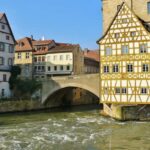
One of the first big visual hits is Little Venice. Even if you’ve seen similar “Venice-like” spots in other places, this one makes sense in Bamberg’s setting—because Bamberg’s water and historic street layout aren’t just scenery. They’re part of the city’s structure.
What I like about this stop on the tour is the way it works as a reference point. When you return later on your own, you’ll remember where you are and how the old town is arranged. That’s a practical benefit, not just a nice view.
A small consideration: this is a walking tour. If you’re expecting a slow stroll with plenty of time to sit, you might feel slightly on the move. But that pace is also what keeps it a strong overview tour.
Old Town Hall: where civic history meets the architectural timeline
The tour also visits the old town hall. This matters because it anchors the story of Bamberg’s power structure. The guide doesn’t treat history like a distant textbook. Instead, it ties key institutions to what you’re standing in front of.
Even if you’re not a “history building” person, this kind of stop helps you understand how a city organized itself—especially in a place where bishops played such a major role. Once you grasp that, Bamberg’s architecture starts to feel less random and more like a set of chapters.
If you like your sightseeing with a clear explanation, this stop delivers. If you’re hoping for a long interior visit, don’t count on it; the tour is built around an outside-and-on-the-walk experience.
Romanesque cathedral and old residence: the grand parts of Bamberg’s identity
Next you’ll get to the Romanesque cathedral and the old residence. These are heavy hitters in terms of “why Bamberg looks the way it does.”
Here’s what makes them work within the tour:
- The cathedral gives you the church-centered side of the story.
- The old residence shows the political and cultural authority that came with the city’s rise.
- Together, they help explain the baroque-bishop contrast the guide discusses.
I appreciate that the guide keeps the tone readable. It’s not just “look at this style.” It’s closer to: Bamberg changed, the people in charge changed, and the buildings changed with them.
If you’re sensitive to long standing or uneven stone streets, just keep your pace steady and take a moment when you need it. The tour is short, but old towns are still old towns.


The city’s big stories: bishops, persecution, and baroque contrast
Bamberg’s history isn’t only about pretty facades. The guide makes a point of covering the city’s darker chapter too, including the criminal persecution of witches, set against the later baroque splendor.
I like tours that include that contrast, because it keeps the city honest. Bamberg isn’t a museum with a single mood. It’s a place where beauty and hardship sit in the same timeline.
This is also where the tour’s “overview of more than 1,000 years” becomes more than a slogan. When you hear that Bamberg developed under the bishops from 1007 onward, and then you connect that to both the celebrated and the troubling parts of history, the landmarks you saw earlier start to carry more meaning.
Bamberg today: fishermen, students, and sports alongside the beer reputation
Yes, you’ll hear about Franconian beer. But this tour makes it clear that Bamberg isn’t only a beer stop.
The guide talks about how different groups shape Bamberg’s image—fishermen, basketball players, and students—so you get a fuller sense of who actually lives here and what the city feels like now.
That matters because it changes how you explore after the tour. Instead of treating Bamberg like a checklist, you start noticing the rhythm: where people gather, what kinds of life fill the streets, and why the old town feels lived-in rather than frozen in time.
It’s an effective way to balance the “look up” sightseeing with a bit more “look around” awareness.
What happens after the walking portion ends
At the end, you’re not just dropped off and forgotten. The guide stays available to answer questions and offer tips for things to do in and around Bamberg.
That practical step is underrated. If you have limited time, a good next-plan suggestion can save you from picking the wrong direction. If you have extra time, it helps you decide what’s worth extending versus what can wait.
Price and value: $3.54 for a 2-hour, tip-based city guide
This tour is described as a tip-based walking experience, with guides working exclusively on that basis and being grateful for a reward at the end. At the same time, the price shown is $3.54 per person, and you can reserve without paying immediately.
In plain terms, you’re paying very little for a guided framework. The big value comes from:
- the 2-hour time window (enough to get oriented)
- the key landmarks packed into that time
- the historical context that helps you make sense of what you see
- a guide who can steer you toward better independent exploring afterward
If you’re the type who loves a “start smart” city introduction, this is a strong deal. If you hate guided storytelling and prefer to wander alone right away, you might feel the cost isn’t worth it. But for most visitors, the orientation payoff is real.
Should you book the Bamberg Free Walking Tour?
Book it if you want:
- a fast way to understand Bamberg’s layout and big landmarks
- a history overview that reaches back to 907 and 1007
- cultural context beyond beer (with real examples of how different groups shape the city)
- a short guided format where you can still explore on your own after
Skip it if you only care about one or two specific sights and don’t want a guided story, or if you strongly prefer tours in English (this one is German).
FAQ
Where is the meeting point for the Bamberg Free Walking Tour?
You meet at the Centurione statue, a black face not far from the Lower Bridge.
How do I recognize the guide?
The guide carries a white umbrella with a green logo.
How long is the tour?
The tour lasts 2 hours.
What language is the tour guide?
The live tour guide speaks German.
Is it a free tour?
The guide works on a tip basis. The price shown is $3.54 per person, and tipping is expected at the end.
What are some of the stops you’ll see?
The tour includes architectural highlights such as Little Venice, the old town hall, the Romanesque cathedral, the old residence, and more.
How much history does the tour cover?
You get an overview of more than 1,000 years of Bamberg’s history, including that it was first mentioned in 907 and developed under the bishops from 1007 onward.
Does the tour talk about Bamberg’s culture and people?
Yes. You’ll hear that Bamberg is more than beer capital, including mentions of fishermen, basketball players, and students.
Will the guide help after the walk ends?
Yes. After the guided tour, the guide is available to answer questions and provide tips for things to do in and around Bamberg.
Can I cancel for a refund?
Yes. You can cancel up to 24 hours in advance for a full refund.