REVIEW · NUREMBERG
Nuremberg: Medieval Ages Tour in Spanish
Book on GetYourGuide →Operated by Hallo Nuremberg! · Bookable on GetYourGuide
Nuremberg gets dark fast. This Spanish tour lines up witch-hunt history, public punishments, and the city’s defenses in a walk you can actually finish in one afternoon. It also comes with the weird, wonderful medieval stories that still feel oddly current.
I love how the guide turns big topics into street-level scenes, especially around the executioner Franz Schmidt and the grim reminders of those public trails. I also like the practical flow: photo stops, short guided chunks, then a finish at the Imperial Castle of Nuremberg where you can take it all in.
One possible drawback: if you want only cozy medieval charm, this tour may feel heavy. The subjects include witch trials and frequent punishments, so it’s best for ages and temperaments that can handle darker history.
In This Review
- Key Things That Make This Tour Worth Your Time
- Starting at Frauenkirche: Where Your Medieval Story Begins
- How the Tour Handles Witch Hunts and Public Punishments
- Trödelmarkt Island and the Franz Schmidt Connection
- Weissgerbergasse: Street Life and How the Past Feels Built In
- Military Tactics and Invaders: Why the City Looked This Way
- Ending at the Imperial Castle of Nuremberg
- Price and Time: Is About $20 a Good Deal?
- Who This Tour Suits Best (and Who Should Rethink It)
- Should You Book This Medieval Ages Tour?
- FAQ
- Is the tour offered in Spanish?
- How long is the tour?
- Where do I meet the guide?
- Does the meeting point change during certain dates?
- What’s included in the price?
- Is food or drinks included?
- Are museum tickets included?
- What should I bring?
- Is the tour wheelchair accessible?
- Is cancellation possible after booking?
Key Things That Make This Tour Worth Your Time
- Witch trials explained in human terms: the story links accusations to the streets where it happened.
- A visit tied to Franz Schmidt’s life at Trödelmarkt Island.
- Legends you can picture as you walk: devils, knights on flying horses, and even galactic aliens.
- Everyday medieval life, not just dates: professions, routines, and customs that still shape Nuremberg.
- Ends with a fortress viewpoint at the Imperial Castle area for a satisfying finish.
Starting at Frauenkirche: Where Your Medieval Story Begins
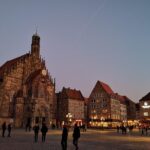
You meet in front of the main entrance of the Frauenkirche at Hauptmarkt, and you’ll spot your guide by a red and white umbrella. It’s a smart start because Hauptmarkt is a natural “anchor” square: you get bearings fast and the old town feels instantly walkable.
The first stop is the Church of Our Lady (Frauenkirche), which also works well as a quick photo moment before you move on. Even if you’re not a church person, it helps set the medieval mood. This tour doesn’t treat the past like a museum label; it treats it like a place where real people lived and feared.
If you’re visiting in the late-2025 window (between Nov 22, 2025 and Jan 6, 2026), you should know the meeting point shifts to the area next to the Ship of Fools Fountain at Plobenhofstraße 10, between the Museumsbrücke Bridge and Hauptmarkt. The umbrella tip still applies, but double-check so you’re not standing in the wrong square.
You can also read our reviews of more tours and experiences in Nuremberg.


How the Tour Handles Witch Hunts and Public Punishments
The heart of this experience is the darker side of medieval Nuremberg: witch hunts and the public trails connected to them. The tour frames it around hundreds of women being accused of witchcraft, and it doesn’t rush past the emotional weight of what that meant. You’ll hear how fear spread, how accusations turned into consequences, and how the city functioned under that kind of pressure.
Here’s what I think is valuable for you: the guide doesn’t only list crimes. You’ll also learn how everyday life continued alongside this cruelty—daily activities, professions, and routines were still happening even as punishments were part of the public rhythm.
Expect the walk to include guided segments where the story gets more specific and the streets start to feel like evidence. You might find yourself looking at cobblestones differently afterward, because your brain finally links the geography with what people suffered there. This is one reason the tour gets such strong marks: it sticks.
Trödelmarkt Island and the Franz Schmidt Connection
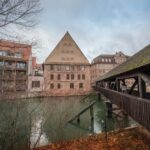
As you continue through the old town, the tour pulls you toward Trödelmarkt Island, where the executioner Franz Schmidt lived. This is one of those moments that changes the whole tone of a city tour. Suddenly, the “medieval” label stops being vague.
Your guide connects the dots between that residence, the era’s public executions and punishments, and the everyday logic of how authorities handled threats and dissent. Even though the topic is grim, the storytelling format matters: short, clear guided explanations while you’re still walking through the right parts of the city.
You’ll also hear medieval legends that reportedly originated from Nuremberg—stories of devils, knights on flying horses, and even galactic aliens. That mix can sound playful, but it actually serves a purpose. Legends were how people made sense of the unknown, and the tour uses them to show how imagination and fear could live side by side in the same streets.
Weissgerbergasse: Street Life and How the Past Feels Built In
At Weissgerbergasse, the tour shifts from headline history to something more personal: what daily medieval life looked like. The guided time here is short, so the goal isn’t to overwhelm you. Instead, you get a focused moment to understand how the city’s customs and jobs shaped day-to-day routines.
This is where a good guide really makes or breaks the experience. In Spanish groups led by guides like Federico (and also Jonathan and Víctor in past tours), the stories tend to stay lively, and the guides are often happy to answer questions without steamrolling the group. One review even highlighted that the guide helped with practical travel questions—things like how to get around and where to eat—so the tour can act as a bridge to the rest of your trip.
If you like tours where you leave with more than facts—if you want the feeling of how a city “works” historically—this stop helps.
Military Tactics and Invaders: Why the City Looked This Way
Not every medieval tour explains why cities were designed to survive. This one does. You’ll hear about military tactics used by city officials to protect against invaders, and that changes the way you read the old town.
It’s not just about walls and fear. The interesting part is how protection shaped behavior: where people gathered, how the city organized itself, and what authorities prioritized. Medieval life wasn’t only about religion and legend; it was also about survival planning.
This part of the tour pairs well with the legend stories, too. When you hear about defense strategies right after stories full of devils and impossible knights, you start to see a pattern: people were interpreting danger from every angle, whether it came from enemies, illness, or the unseen.

Ending at the Imperial Castle of Nuremberg
The tour finishes at the Imperial Castle of Nuremberg. That ending works because you’re already carrying the city’s themes in your head—accusations, punishments, legends, and defenses. Standing at a fortress-like setting gives your brain a “big picture” moment before you head back to modern streets.
Even though the castle area is the final stop, the tour isn’t only a sightseeing checklist. It’s more like a timeline you walk through, then you close it with a view that makes the whole story feel physical.
For most people, the final leg feels like relief: you’ve spent the last couple hours in heavy historical topics, and now you get space to think. Take a minute with your photos. Look back at what you just walked through. You’ll understand the city more than when you started.
Price and Time: Is About $20 a Good Deal?
At $20 per person and 3 hours total, this tour is priced like a “smart add-on” to a Nuremberg visit rather than a full-day commitment. That matters because 3 hours is long enough to get real context, but short enough that you’re still free afterward for food, museums, or just wandering the old town at your own pace.
Value-wise, you’re getting:
- A Spanish live guide
- Multiple guided segments plus photo stops
- A heavy-topic history angle (witch hunts and public punishment)
- Specific place ties like Trödelmarkt Island and the Franz Schmidt connection
- A strong ending at the Imperial Castle
Not included: food and drinks, and museum tickets. So if you want a snack or lunch, you’ll plan that on your own before or after the walk. The tour is built for walking and storytelling, not for turning into a meal event.
If you’re spending only a day or two in Nuremberg, this timing is especially useful. It gives you enough background to enjoy the rest of the city without feeling lost.
Who This Tour Suits Best (and Who Should Rethink It)
This is a good fit if you want:
- A guided way to understand medieval Nuremberg’s toughest chapters
- Stories that connect history to geography
- A guide who keeps you engaged and answers questions along the way (as shown in strong reviews mentioning guides like Jonathan, Víctor, and Federico)
It may not suit you if:
- You’re traveling with younger kids who might be distressed by witch trials and public punishments
- You prefer light, entertainment-only medieval content
- You want strictly “academic history” with no legend storytelling at all
Also, wear comfortable shoes. The experience is built on walking through the historic center, and you’ll move from square to street to castle area.
Should You Book This Medieval Ages Tour?
I’d book it if your goal is to understand Nuremberg as more than scenery. The tour’s best strength is how it ties together fear, justice, legend, and defense into a walk you can feel in your legs. At $20 for 3 hours, it’s hard to beat for the amount of story you get, especially if you’re spending limited time in town.
I’d skip or choose a different style if you want only cheerful medieval vibes. The subject matter includes witch hunts and punishments, and the tour treats that honestly.
If you do book, it helps to come with one mindset: you’re not touring a theme park. You’re walking through the kind of history that shaped real lives. That’s why the experience lands.
FAQ
Is the tour offered in Spanish?
Yes. The tour includes a Spanish guide.
How long is the tour?
The duration is 3 hours.
Where do I meet the guide?
Meet in front of the main entrance of the Frauenkirche in Hauptmarkt. The guide carries a white and red umbrella.
Does the meeting point change during certain dates?
Yes. Between Nov 22, 2025 and Jan 6, 2026, the meeting point is next to the Ship of Fools Fountain, Plobenhofstraße 10, between the Museumsbrücke Bridge and Hauptmarkt.
What’s included in the price?
The tour includes a Spanish guide.
Is food or drinks included?
No. Food and drinks are not included.
Are museum tickets included?
No. Museum tickets are not included.
What should I bring?
Bring comfortable shoes.
Is the tour wheelchair accessible?
Yes. The tour is wheelchair accessible.
Is cancellation possible after booking?
The tour offers free cancellation up to 24 hours in advance for a full refund.