REVIEW · LEIPZIG
Der Leipziger Passagen-Rundgang in der Altstadt
Book on GetYourGuide →Operated by Leipzig Details GbR · Bookable on GetYourGuide
Passages turn Leipzig’s Old Town into a maze with a point. This Leipzig Old Town alley walk traces 800 years of trading culture through narrow and wide passageways you’d never notice on your own. I love that you see both the famous market-area routes and the quieter, seldom-trodden backs streets. I also like that the focus stays practical and visual, with a plan of the passages so you can keep track while you walk. One possible drawback: it’s a lot of turning corners on cobbles, so if you hate walking with frequent short stops, you may prefer a slower city stroll.
The tour lasts about 1.5 hours, yet it covers a surprising amount of ground in Leipzig’s compact center. You’ll start at Stadtgeschichtliches Museum Leipzig in the Altes Rathaus area, meet in a passage by the entrance, and finish back where you began. You’ll also have a choice of a shared or private tour, which can change the pace and how many questions you get answered.
In This Review
- Key things that make this tour worth your time
- Why Leipzig passageways matter more than you think
- Starting at Altes Rathaus: where the route begins
- Walking Leipzig’s 30+ alleys: narrow, wide, and surprisingly varied
- The market-area story: the “first shopping center” effect
- Marktgalerie and Brühl-Höfe: seeing new build work in an old framework
- Shared vs private: how to pick the right pace for your day
- The guide factor: what to listen for
- Price and time: does $16 feel like a fair deal?
- Who should book this Leipzig passages walk
- Should you book the Leipziger Passagen-Rundgang?
- FAQ
- How long is the Leipzig Old Town passage tour?
- Where do I meet the guide?
- What language is the tour guide speaking?
- Is the tour wheelchair accessible?
- Can I choose a shared or private tour?
- What’s included in the tour price?
- Is free cancellation available?
- Can I reserve without paying right away?
Key things that make this tour worth your time
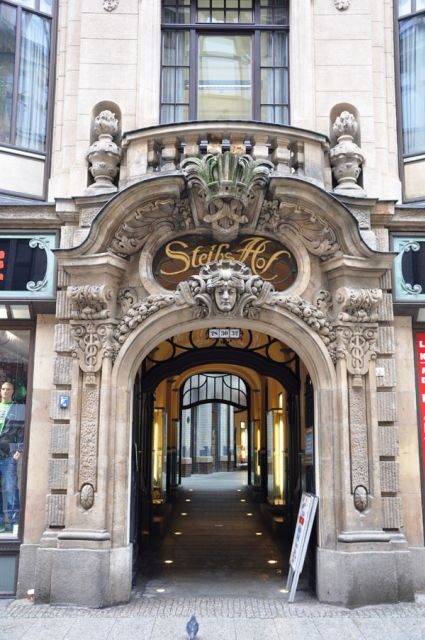
- 30+ alleyways and passages in Leipzig’s Old Town, including hard-to-find back corners
- Old and new in one route, so you can compare historic trading lanes with modern projects
- Market-area back courtyards framed as the city’s first shopping center model
- A guide-led story that explains why these passageways were built the way they were
- Plan of the passages, helpful for remembering what you saw during and after the walk
- Shared or private option, so you can match the experience to your travel style
Why Leipzig passageways matter more than you think
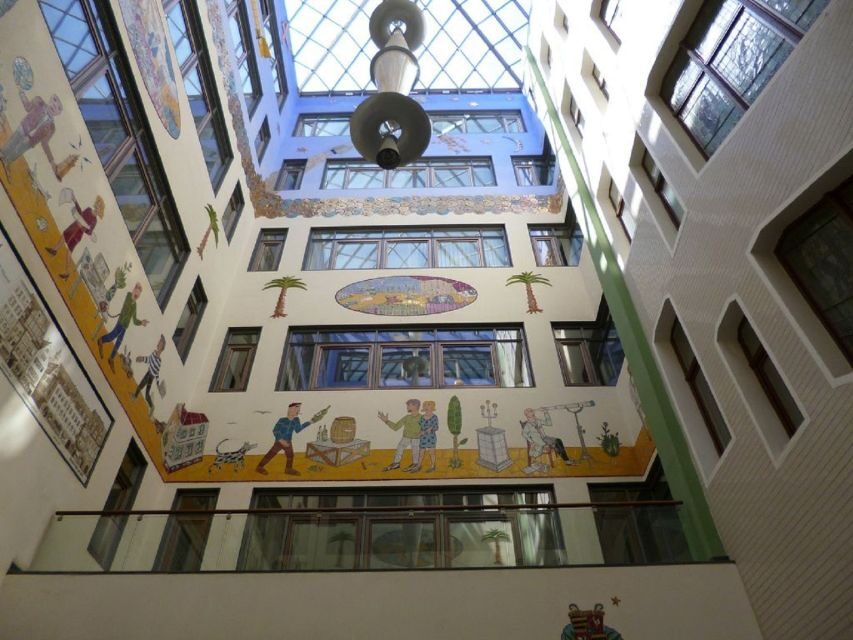
Leipzig is one of those cities where the street map looks ordinary, but the city underneath the street-level story is where the magic is. These passageways and mercantile lanes grew from trade. Cloth merchants’ houses shaped the streets. The alleys weren’t just decoration or leftover medieval leftovers. They were designed for movement—specifically for business.
Here’s the key idea I like: these routes show how Leipzig worked. You’re not just looking at buildings; you’re learning how people moved goods and people through a dense center. The passageways were built so horse-drawn carriages could pass through town without turning around at every awkward corner. That one detail alone helps you understand why the lanes feel the way they do—narrow in spots, wider in others, sometimes surprisingly direct.
You’ll also get the sense of Leipzig’s scale, right in the middle of the Old Town. The poet Goethe described Leipzig as a whole world in a nutshell. On this tour, that line stops being poetry and starts being practical: compact streets, layered centuries, and a constant relationship between commerce and everyday life.
And yes, Leipzig coffeehouse culture is part of the story too, because trading cities don’t just move goods—they move people into places where they talk. Expect the guide to connect passageways to the rhythm of daily life, not only to dates on a timeline.
You can also read our reviews of more tours and experiences in Leipzig.



Starting at Altes Rathaus: where the route begins

Your meeting point is Markt 1, at the Altes Rathaus area. You meet in the passage under the tower at the entrance to the Stadtgeschichtliches Museum Leipzig. That matters. You’re not starting on an open square and then wandering into alleys by chance. You start inside the passage-network logic, which helps your brain click into the route right away.
From the start, you’ll understand what kind of walking you’re signing up for: short segments, directional changes, and constant chances to look up. Leipzig passageways often reward you for watching the details rather than only staring straight ahead. Even if you’re not a “look at façades for hours” person, this route gives you a reason to glance up and sideways constantly.
The tour is led live and spoken in German, so if German is your strong suit you’ll get maximum value. If it’s not, you might still enjoy the walk for the structure and visual cues, but the narration is the whole point. If you’re traveling with basic language confidence, it helps to mentally prep for a story-driven experience rather than a silent self-guided stroll.
The tour also includes a plan of the passages. That’s a smart add-on because passage networks can blur together. Having a map in your hand helps you connect what you see to what you’re moving through, so you don’t lose the thread when the street names change or the alley feels like it has the same shape as the last one.
Walking Leipzig’s 30+ alleys: narrow, wide, and surprisingly varied

This is the core of the experience: you’ll see 30 or more alleyways in the Old Town. That number is what makes the tour feel efficient. In 1.5 hours, you don’t just “sample” the Old Town—you get a real sweep across the passage network.
What I’d watch for as you walk:
- Narrow and wide lanes side by side. The size differences often hint at changing uses over time.
- Old and new sections along the way. Even when the architecture looks similar at a distance, the guide’s framing helps you spot what’s older versus newer.
- Visible and seldom-trodden alleyways. Some stretches are easier to spot from major streets; others are easy to miss if you’re just trying to get somewhere.
A practical thing to remember: you’ll likely do a lot of small steps and repeated corner turns. That’s part of the fun, because these lanes are built for movement, not for casual sightseeing where you stop and stare for ages. Come prepared with comfortable shoes and a pace that works for tight spaces.
The best moments tend to be the “small” transitions. A passage that feels like a shortcut turns into a back courtyard. A wide lane suddenly funnels into something tight and older. When the guide points out why that matters, the alley stops feeling like a hallway and starts feeling like a piece of city infrastructure.
One theme you’ll hear tied to many of these lanes: the area around the market functioned like an early shopping center. Instead of the shopping center being a single building, it was a network of connected spaces—merchant houses, courtyards, and passageways acting like a web. That framing changes how you’ll interpret everything you pass after the tour. The Old Town stops being just photogenic streets and becomes a working system.
The market-area story: the “first shopping center” effect
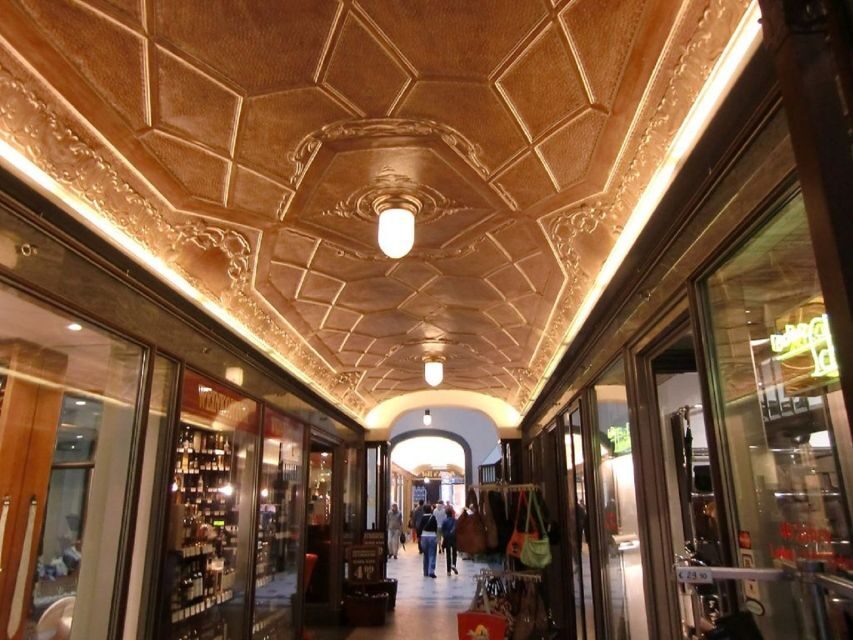
Leipzig’s market surroundings are central to how this city organized trade. You’ll spend time around the market area and the surrounding back courtyards and alleys. The guide’s goal is to show you how these spaces acted like a connected marketplace.
Why this is valuable for you:
- You get a clear mental model. Once you understand it, you stop seeing random courtyards and start seeing a plan.
- It explains Leipzig’s street pattern. Why certain blocks feel connected. Why you can move through without constant detours.
- It adds meaning to architecture. A passage doesn’t have to look impressive to be important. In a trading city, function often drives form.
This is one of those experiences where the guide’s storytelling does the heavy lifting. The route itself is physical, but what makes it stick is the explanation of how trade shaped the space: movement of goods, merchants operating close together, and the need to keep traffic flowing.
If you like walking tours that give you context you can actually use—like understanding what you’re seeing in the city rather than just hearing dates—this part is for you.
Marktgalerie and Brühl-Höfe: seeing new build work in an old framework
A big plus is that the route isn’t locked in the medieval past. The tour connects the old passage tradition to newer architecture, including Marktgalerie and Brühl-Höfe. This isn’t just name-dropping modern sites. It’s about continuity: Leipzig keeps building in a way that still respects the passage logic.
When you reach these newer developments, you’ll get a useful contrast. You can look at the modern structures and ask: how does a newer building still fit into the old city’s movement patterns? The answer is often in how spaces connect—how people can pass through, how lanes and courtyards create circulation, and how the city continues the idea that shopping isn’t only one big hall.
This kind of comparison is why I’d rate the tour above a standard “see old streets” loop. Leipzig’s story is not only what it preserved; it’s how it kept the same street-thinking while changing the buildings.
If you’re the kind of visitor who worries that Old Town tours will feel stuck in one time period, this segment helps. It reminds you that cities are living systems, not museum sets.



Shared vs private: how to pick the right pace for your day

You can choose between a shared or private tour. That’s more than just group size—it changes how you’ll experience the details.
In a shared format, you generally get:
- A consistent pace that fits everyone in the group
- Less time for side questions
- More “group energy” if you enjoy hearing different people react to the same sights
A private tour is a good choice if you want:
- More time on the streets you care about most
- Direct answers to questions about what you’re seeing
- A slower pace through the back courtyards and passage turns
One small point that matters: both tour options still run about 1.5 hours. That means you’re not losing time by choosing one structure over the other. You’re just adjusting how the guide manages the flow and interaction.
So if you’re a history-minded walker who likes to ask follow-ups, private can be worth it. If you’re just eager to get the full passage overview and move efficiently through the Old Town, shared is totally fine.
The guide factor: what to listen for
This tour lives and dies by the guide’s delivery. The good news is the tour has a track record of enthusiastic, story-driven guiding. In past experiences, guides such as Max Uhlmann have been praised for explaining with lots of enthusiasm, even when weather conditions were not ideal. Other named guides like Frau Mausberger and Birgit have been highlighted for knowledge and passion in the narration.
Here’s what you should listen for, so you get value even when the alleys look similar at first glance:
- Why a passage exists at all (trade, movement, carriage routes)
- How the market area functioned as a linked shopping center
- What’s old versus what’s newer, and why that continuity matters
- How new projects like Marktgalerie and Brühl-Höfe relate to the passage tradition
If the guide is strong, you’ll leave with more than a list of streets. You’ll have a working understanding of how Leipzig’s Old Town moved people through commerce.
Price and time: does $16 feel like a fair deal?
At $16 per person for about 1.5 hours, you’re buying two things: local expertise and concentrated routing. You could try to wander the passageways on your own, but you’d likely miss the story glue that makes the network feel coherent.
This price tends to be fair because:
- You get a guided explanation rather than random sight-hopping
- The route covers a high number of alleyways in a short window
- You receive a plan of the passages, which improves your ability to remember and navigate later
So I’d treat this as a “best use of time” purchase. In Leipzig, where the center is compact but the passage network can be confusing, this is an efficient way to get oriented and learn the logic of the streets without turning your vacation into a self-made scavenger hunt.
Who should book this Leipzig passages walk
This tour is a great fit if you:
- Like walking tours that explain how a city worked, not just what it looks like
- Want to connect Leipzig’s historic trade identity to architecture you can still see
- Enjoy narrow streets and courtyards, and you’re okay with a quick pace
- Prefer German-led storytelling and can follow a guided talk
It may not be your best match if you:
- Strongly dislike guided group walks and frequent turns
- Need a lot of free time to sit, linger, and photograph without interruption
- Want mostly major landmarks rather than alleys and passageways
If you’re visiting Leipzig for a day or a weekend, this tour also makes a strong “first-or-second day” move. It helps you understand the Old Town structure so everything you do afterward feels more connected.
Should you book the Leipziger Passagen-Rundgang?
If you want an efficient way to understand Leipzig’s Old Town at street level, book it. The value comes from the combination of 30+ passageways, expert guidance in 1.5 hours, and the way the route ties market-area trade logic to newer developments like Marktgalerie and Brühl-Höfe. Even if the streets blur a little during the walk, the included passage plan and the guide’s framing help it click.
Choose this tour if you like practical context and you want to walk away feeling you can read the city better. Skip it only if you want a slow sightseeing loop or you dislike guided walking in tight spaces.
FAQ
How long is the Leipzig Old Town passage tour?
The tour lasts about 1.5 hours.
Where do I meet the guide?
Meet at Markt 1, 04109 Leipzig, at the Stadtgeschichtliches Museum Leipzig, Altes Rathaus. The meeting point is in the passage under the tower at the entrance.
What language is the tour guide speaking?
The live tour guide speaks German.
Is the tour wheelchair accessible?
Yes, the tour is wheelchair accessible.
Can I choose a shared or private tour?
Yes, you can choose between a shared or private tour.
What’s included in the tour price?
The tour includes an expert guide and a plan of the passages.
Is free cancellation available?
Yes. You can cancel up to 24 hours in advance for a full refund.
Can I reserve without paying right away?
Yes. You can reserve now and pay later.
If you tell me what month you’re going and whether you prefer shared or private, I can help you pick the best approach for your timing and walking comfort.