REVIEW · MUNICH
Munich: Middle Ages Tour with Night Watchman
Book on GetYourGuide →Operated by schwarzgold.info - Wolfgang Brehm · Bookable on GetYourGuide
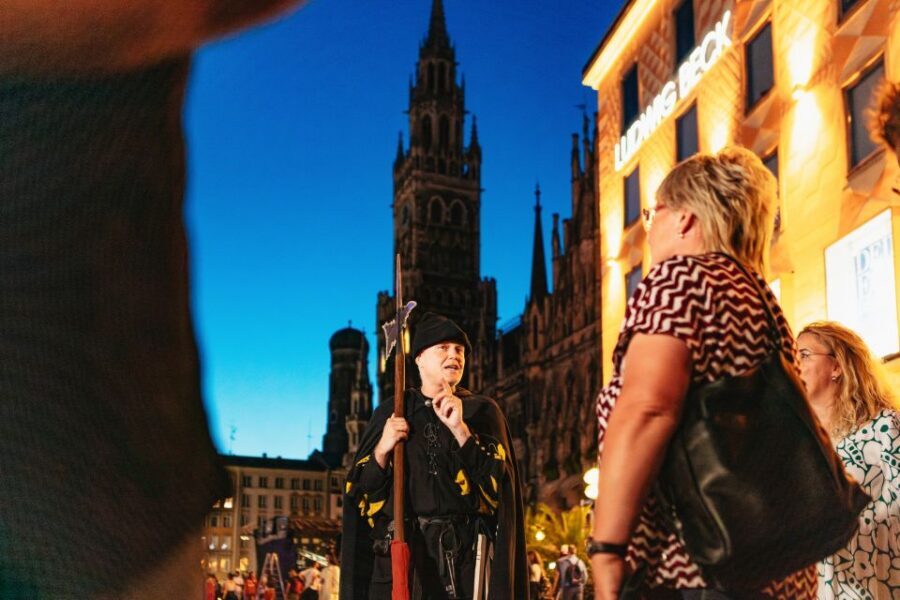
Medieval Munich starts with a lantern and a horn. This 1.5-hour walk with Wolfram, in full medieval gear, is a fast, theatrical way to see central Munich while learning how justice worked back when the city had gates, walls, and very public punishments. I especially like the mix of big landmarks (walls, gates, church ruins, old civic buildings) with the human stories—interrogations, executions, and everyday rules people broke. The only real catch is the subject matter: you’ll hear about punishments and torture methods, and the guide speaks German.
You’re based around Marienplatz, so you won’t waste time commuting across town. This tour also runs rain or shine, so wear something you can move in and keep handy for wet cobblestones. If you want history that stays light and kid-friendly, this may not be your match; it’s not suitable for children under 12.
In This Review
- Key things to know before you go
- Meeting Wolfram at Marienplatz: the tone is set fast
- St. Peter’s Church and the scent of incense
- Viktualienmarkt and the civic pulse of old Munich
- Frauenkirche, castle territory, and the sense of defensible space
- City walls, Schwabinger Gate, and a halberd moment
- Metzgerzeile and the medieval idea of punishment
- Executions, interrogations, and prison torture techniques
- Price and value: why $21 can feel like more than a quick walk
- Who this tour suits best (and who should skip it)
- Should you book the Munich Middle Ages Night Watchman tour?
- FAQ
- Where does the tour start?
- How long is the tour?
- Is food and drinks included?
- What’s included in the price?
- What language is the tour guide?
- Is the tour wheelchair accessible?
- Can I take photos or record video?
- Does the tour run in bad weather?
Key things to know before you go
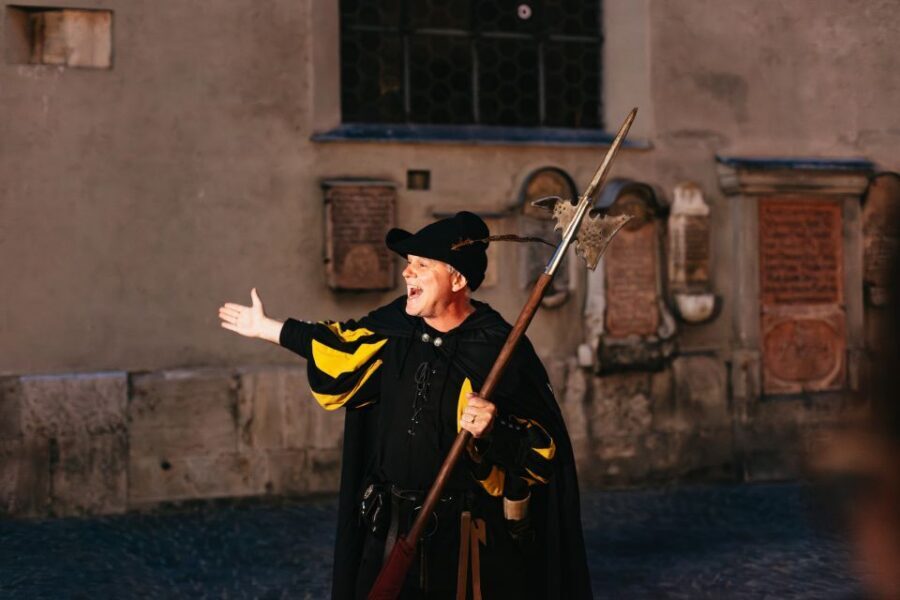
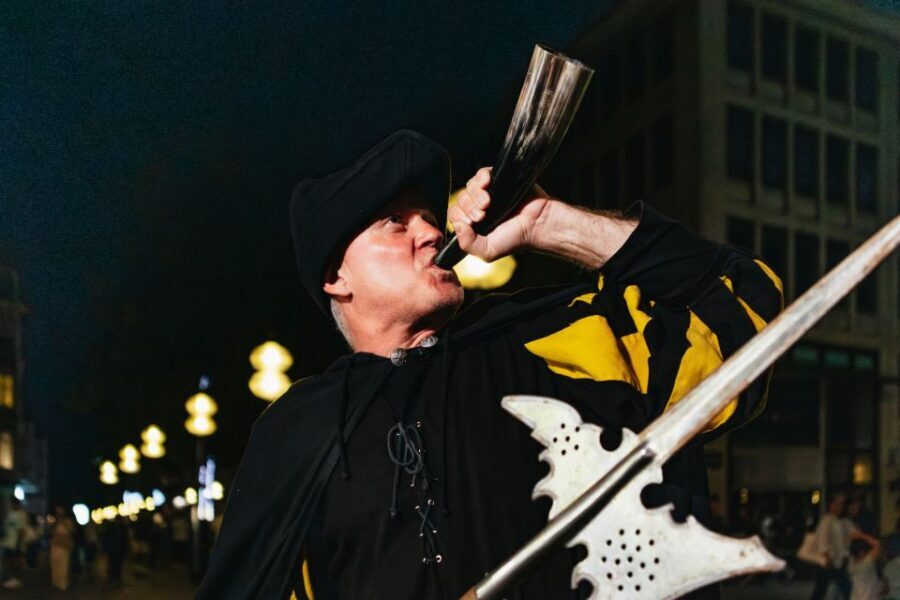
- Wolfram leads from Marienplatz with lantern, halberd, and horn for a properly medieval vibe
- Dark justice stories are front and center, including interrogations, executions, and prison torture techniques
- You’ll see major stops close together, from St. Peter’s Church remains to Rathaus-area landmarks and Frauenkirche
- Expect reenactment moments, including a halberd fight and the dramatic closing of a gate
- Small “sensory” details matter, like incense in the St. Peter’s Church area and artifacts such as silver pennies
Meeting Wolfram at Marienplatz: the tone is set fast
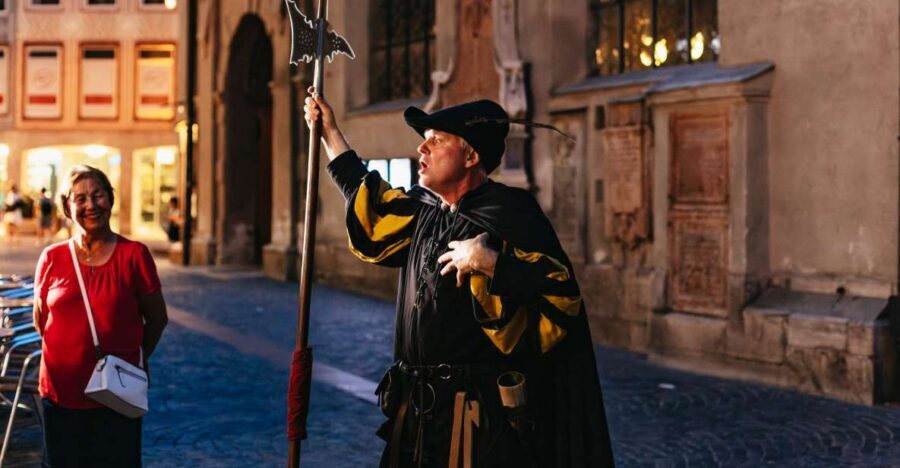
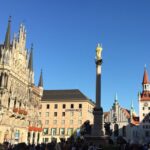
The experience starts in the middle of it all: Marienplatz, right by Rathaus Apotheke am Marienplatz. Your guide stands out in typical medieval clothing, and the meeting point is very specific—about 25 meters left of number 8. If you like getting oriented quickly, plug in the GPS (48.13737, 11.57588) into Google Maps and you’ll find the exact spot without guesswork.
What I like about this format is the pacing. You don’t drift through Munich for hours hoping the story catches up. In the first minutes, you’re already in character, guided by Wolfram and supported by props like a lantern, halberd, and horn. That matters because medieval Munich is easy to misunderstand if you only view buildings as pretty backdrops. Here, you get the sense of how the city worked day to day—and how quickly authority could shift from law to punishment.
This is also a good tour for people who want history without a lecture voice. Wolfram’s storytelling approach gets highlighted in the tour’s feedback, with many people mentioning that it’s both lively and informative. It’s the kind of guiding style that keeps you paying attention even when the topics turn uncomfortable.
One practical note: no flash photography and no video recording. So if you like grabbing photos, plan on using normal phone/camera settings (without flash) and focus on listening.
You can also read our reviews of more evening experiences in Munich

St. Peter’s Church and the scent of incense
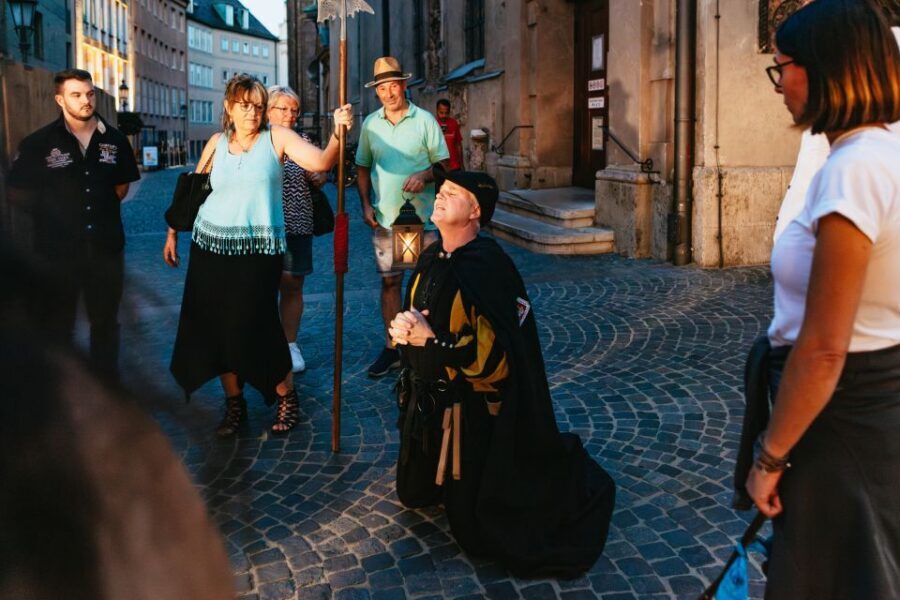
One of the earliest stops is St. Peter’s Church area—specifically described as ancient remains where you can smell incense. That detail is small but important. Medieval history doesn’t just live in stone. It lived in smell, noise, and ritual. So when the guide talks there, you’re getting a sensory reminder of what religious life and public attention felt like.
The tour includes guided time at St. Peter’s, and it’s positioned early in the walk for a reason: it helps you shift from modern Munich’s skyline to the medieval city’s spiritual center. If you’ve ever visited a church and found yourself staring at artwork without context, this stop works differently. The guide’s medieval lens turns the space into a living scene.
A second stop near this area is also listed, so you should expect the guide to use the church zone more than once. Practically, that means you’ll have time to settle into the flow of the stories, rather than rushing straight from one landmark to the next.
If you’re sensitive to strong scents, note that you’ll encounter incense in this section.
Viktualienmarkt and the civic pulse of old Munich
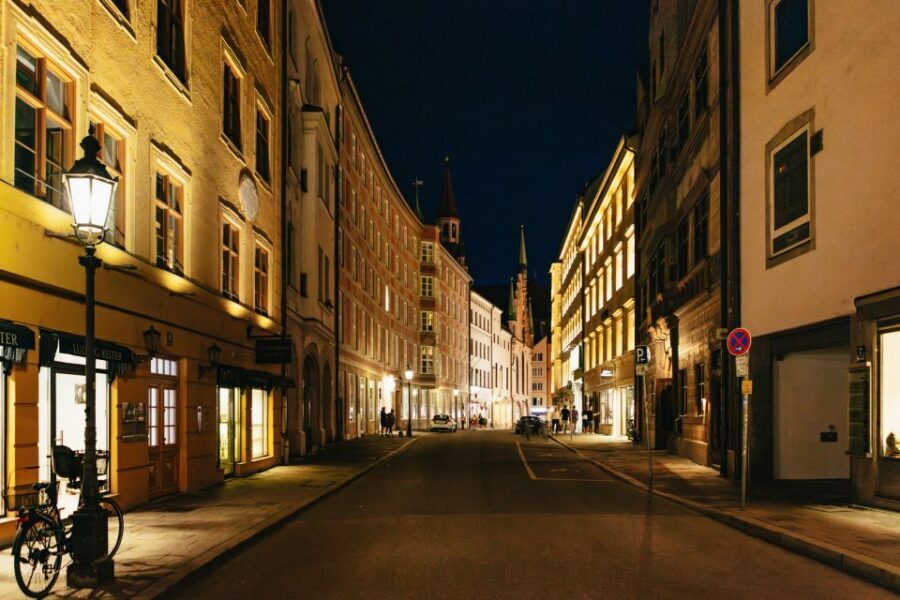
Next up is Viktualienmarkt, Munich’s famous food market square. Even if you mostly think of it as modern and lively, this tour uses it as a bridge. Markets are where people gathered, traded, heard news, and formed opinions about power and fairness. In medieval cities, that social center was never separate from politics. So this is a smart stop for understanding how ordinary life and authority met.
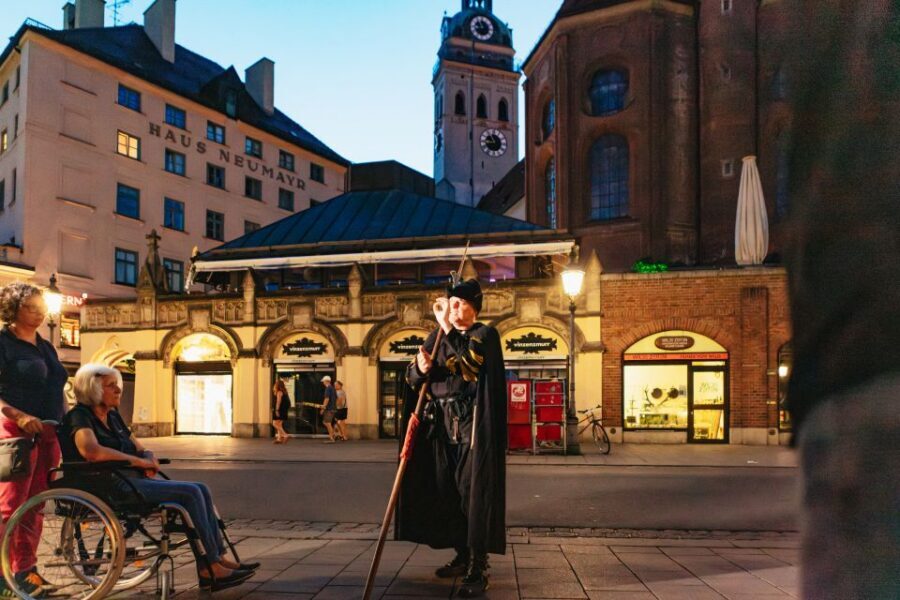
From there, you move into Munich’s older civic and administrative feel: Old Town Hall and then Alter Hof and Marienhof. These names sound like a quiz, but the point is straightforward: you’re walking through the spaces where decisions got made and where public rules came from.
Here’s what makes this part valuable for you: it turns architecture into cause-and-effect. Instead of just seeing a façade, you learn why certain punishments and public displays weren’t random cruelty. They were designed to warn everyone else. When a guide ties rules to the places you’re actually standing near, the city becomes easier to remember later.
And because you’re moving through central Munich on foot, you get built-in sightseeing momentum. This helps if you only have a short time window in town and you don’t want to commit to a half-day tour.
Frauenkirche, castle territory, and the sense of defensible space
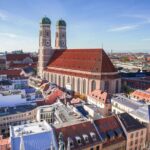
You’ll also reach Munich Frauenkirche (the main church near the center) for a guided visit. This stop helps you connect medieval life with the visual language of the city. It’s easy to think of medieval Munich as purely about small streets and walls. But the city had power centers and monumental religious structures that shaped how people navigated and understood authority.
Then the tour shifts outward and upward in concept by discussing the city’s castle and defensible areas. You don’t just talk about walls as a concept—you’re set up to see them. That matters because defensive architecture is one of the clearest ways to understand historical priorities. Cities built to protect themselves, control movement, and manage who could enter.
In a modern visit, we often walk past gates and walls without noticing what they controlled. Here, you’re learning to read those features. That’s the big payoff: you’ll start noticing the city’s “security logic” as you walk.
City walls, Schwabinger Gate, and a halberd moment
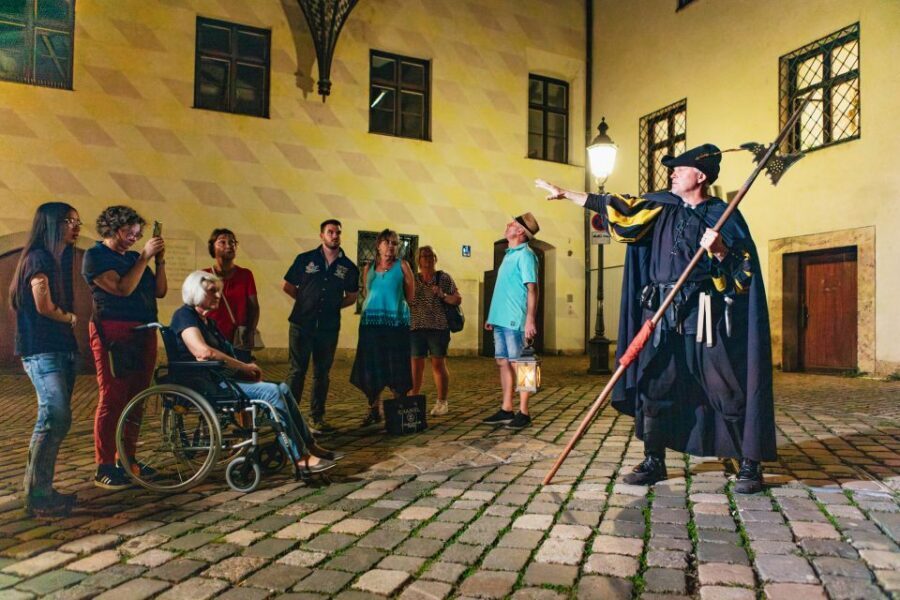
A key part of the experience is walking to Munich’s 12th-century city wall. That’s one of those facts that sounds like trivia until you actually stand near it and see the scale. Walls weren’t just borders. They were part of daily life: where people could go, where threats were managed, and how the city communicated with anyone outside it.
The tour also includes the Schwabinger Gate and the castle zone as part of this route. Again, the value is not just the stop name. It’s the way the guide connects the structure to enforcement—how boundaries were guarded, and how authority was visibly represented.
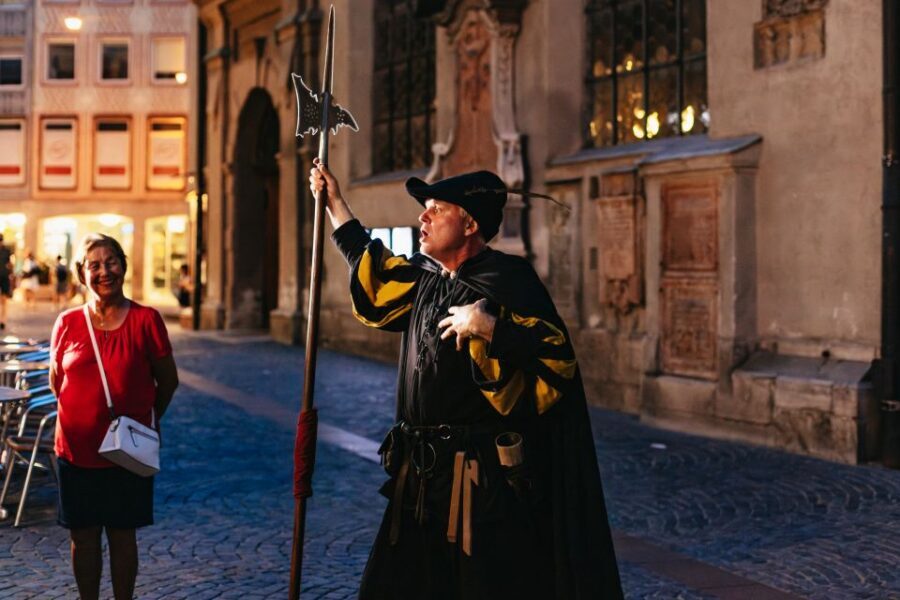
One of the most attention-grabbing moments is described as the closing of the Talburg Gate and a fight with a halberd. That’s not the kind of detail you get from a standard historical walk. It’s a theatrical way to make you feel what a gate meant. A gate closing meant movement changed instantly. People outside couldn’t come in. People inside couldn’t leave the same way. It’s hard to forget that after you’ve watched it reenacted.
If you don’t enjoy dramatic staging, this might be the part you either love or tolerate. But even if you’re not into performance, it’s still useful. It turns one of the city’s most important medieval control points into a story you can visualize.



Metzgerzeile and the medieval idea of punishment
At some point, you’ll hear about punishments for bad bakers at Metzgerzeile. This is where the tour gets especially grounded in everyday life. Medieval justice wasn’t only about grand crimes. It also targeted how food and trade affected the public. And bakers were part of that, because bread quality and fairness weren’t just personal problems; they affected health and trust.
This is also where you start to understand why certain punishments were so public. The goal was deterrence. The tour connects the grim theme—executions and punishments—with the social reason behind them.
You’ll also encounter stories that mention cemeteries and interrogations, plus artifacts like silver pennies. Those details help fill in the gap between “official history” and the lived experience. Even without heavy modern documentation, these clues give you a sense of what people carried, what they were judged by, and what the legal system required.
Executions, interrogations, and prison torture techniques
This tour is not sanitized. You’ll learn about executions and beheadings and hear about terrifying torture techniques used in medieval prisons. The guide also talks about interrogations and the idea of punishment as part of a larger system.
How should you handle that as a visitor? Think of it as context, not entertainment. You’re walking in the city where those events would have been part of the background reality for many residents. The tour uses the setting to give the stories gravity, and the guide’s medieval presentation helps keep the timing and logic clear.
Still, it’s worth being honest with yourself. If you find details about torture or executions stressful, you might prefer a lighter Munich tour that sticks to art and architecture.
The good news is that the total duration is only 1.5 hours. That’s a practical advantage. You get the message without being stuck for a long stretch. And because the group is guided across central sights, you can step away right after if the content hits too hard.
Price and value: why $21 can feel like more than a quick walk
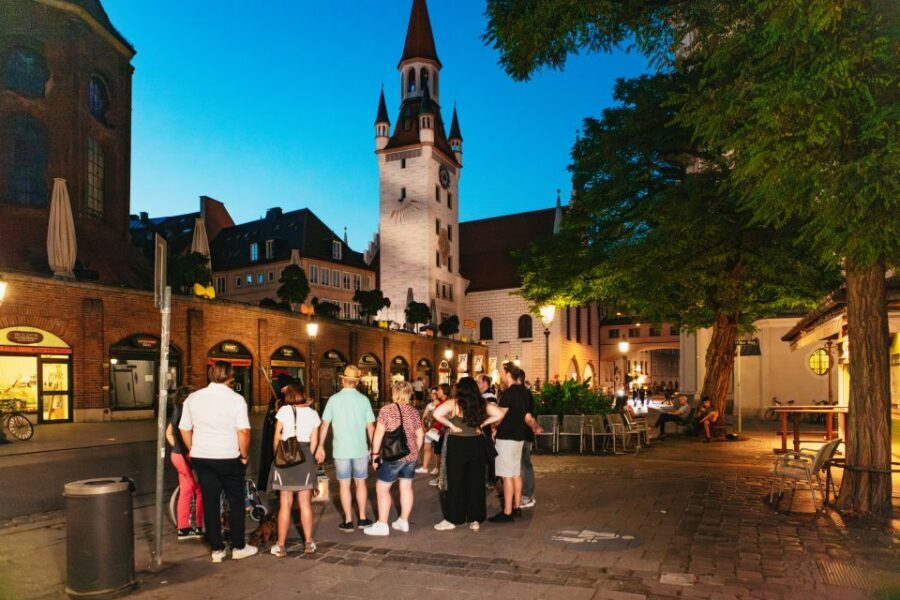
At $21 per person for about 1.5 hours, the value is driven by three things: storytelling, access to multiple landmarks in one route, and the theatrical guide setup. For this price, you’re not paying just for walking. You’re paying for a structured narrative that links places like St. Peter’s Church area, Rathaus-area buildings, Frauenkirche, walls, gates, and castle territory to how medieval Munich actually functioned.
Add in the medieval garb, plus the props and dramatized moments like the halberd fight and gate closing, and the experience becomes closer to a curated performance with historical commentary than a typical self-guided stroll.
No food or drinks are included, so you’ll want to plan on a drink or snack before or after. But that’s also part of the value equation: you can choose what fits your schedule rather than being locked into a bundled meal.
Who this tour suits best (and who should skip it)
This is a strong pick if you:
- Want a short, high-impact way to see medieval Munich’s central layout
- Enjoy guides who use character and props to explain history
- Are curious about how punishment and law worked, not just how buildings looked
- Can handle German-guided explanations and want to practice listening
You might want to skip it if you:
- Prefer light, non-dark history
- Don’t want to hear about executions, torture techniques, or public punishment
- Are traveling with kids under 12 (the tour isn’t suitable for them)
Because it’s described as wheelchair accessible, it should be manageable for many mobility needs, though you’ll still be on foot in public outdoor spaces. Wear grippy shoes.
Should you book the Munich Middle Ages Night Watchman tour?
I’d book it if you want your Munich visit to include more than postcard landmarks. This tour is built to make medieval Munich feel practical and human: laws tied to real places, punishment tied to community fear and fairness, and gates/walls explained as tools of control. Wolfram’s medieval presentation style is a big reason the experience lands—people consistently call out how entertaining and informative it is, and how he answers questions confidently.
Skip it if your priority is quiet sightseeing or if the topics of torture, executions, and harsh punishments would ruin your day. Also, if you’re not comfortable with German-only guidance, you’ll likely struggle to get the full value.
If you can handle the darker themes and you want a concentrated 90-minute story walk, this is good value for your time.
FAQ
Where does the tour start?
Meet your guide in front of Rathaus Apotheke am Marienplatz, about 25 meters left of number 8. The provided GPS is 48.13737, 11.57588 for Google Maps.
How long is the tour?
The tour lasts about 1.5 hours.
Is food and drinks included?
No. Food and drinks are not included.
What’s included in the price?
You get a guide in medieval garb.
What language is the tour guide?
The live tour guide speaks German.
Is the tour wheelchair accessible?
Yes, it is listed as wheelchair accessible.
Can I take photos or record video?
Flash photography is not allowed, and video recording is not allowed.
Does the tour run in bad weather?
Yes, it takes place rain or shine.