REVIEW · FRANKFURT
Frankfurt: Walking Tour – discover the city with VR glasses
Book on GetYourGuide →Operated by TimeRide GmbH · Bookable on GetYourGuide
History feels close when the city rewinds. This 45-minute Frankfurt walking tour pairs a live German guide with a VR headset, so you can line up today’s streets with what they looked like centuries ago at five key stops, including St. Paul’s Church. It’s a clever way to make big German-history moments feel physical, not abstract.
I especially like the compare-and-contrast setup: you’re not just hearing dates, you’re looking at the same location in different eras. I also like the focus on Frankfurt’s role, with the story tying directly to the democratic beginnings connected to the National Assembly in the Paulskirche. One thing to consider: the VR segments can feel a bit fast, so if you prefer slower pacing while still listening, plan to give your attention to both the visuals and the guide’s narration.
In This Review
- What makes this VR walking tour special
- VR Over Frankfurt: what you’re actually buying for $30
- Meeting at TimeRide and how the tour flows
- Stop 1 at TimeRide: setting up the story you’ll see later
- Paulsplatz: comparing streets across time
- St. Paul’s Church (Paulskirche): where democracy takes center stage
- Roemerberg: rounding out the timeline with on-the-ground perspective
- What the VR experience feels like (and how to get the best out of it)
- Language, weather, and pacing: the small details that can make or break it
- Included value: what you get, what you don’t
- Who should book this Frankfurt VR walking tour
- Value check: is it worth $30?
- Should you book it?
- FAQ
- Where does the tour start?
- How long is the Frankfurt walking tour with VR?
- Is the tour guided in English?
- Does the tour run in bad weather?
- What’s included in the price?
- Is it suitable for young children?
What makes this VR walking tour special
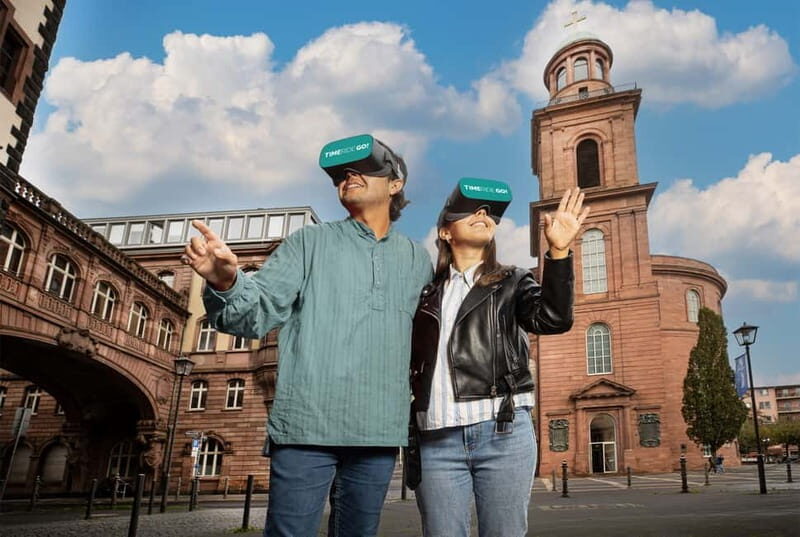
- VR on-site: Put on the headset at each stop and see the city as it changed over time
- Five stops in 45 minutes: Enough variety without turning into an all-day project
- Frankfurt-centered story: The tour repeatedly circles back to the city’s importance
- St. Paul’s Church spotlight: Strong emphasis on the roots of modern democracy
- Good for families, with one rule: Great for history lovers, but not for kids under 6
- Rain or shine: You still get the experience no matter the weather
VR Over Frankfurt: what you’re actually buying for $30
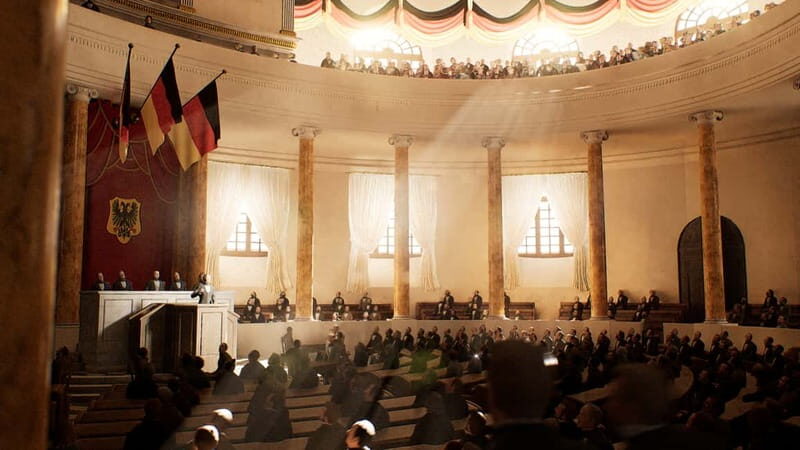
At $30 per person for a 45-minute walking tour, you’re paying for two things at once: a guided city walk plus VR time tied to specific locations. Traditional tours rely on photos, maps, and your imagination. Here, the imagination gets a handhold.
The value also comes from how the tour uses your attention. Each stop is short and structured. You hear the story, you look through the headset, then you walk to the next viewpoint. That rhythm helps you connect the past to real streets you can still stand on today.
It’s also a practical pick if you’re touring Frankfurt on a tight schedule. You get a full arc of German history—spanning roughly from early Roman presence on the Rhine to later 20th-century change—without committing to a long museum day.
You can also read our reviews of more walking tours in Frankfurt



Meeting at TimeRide and how the tour flows
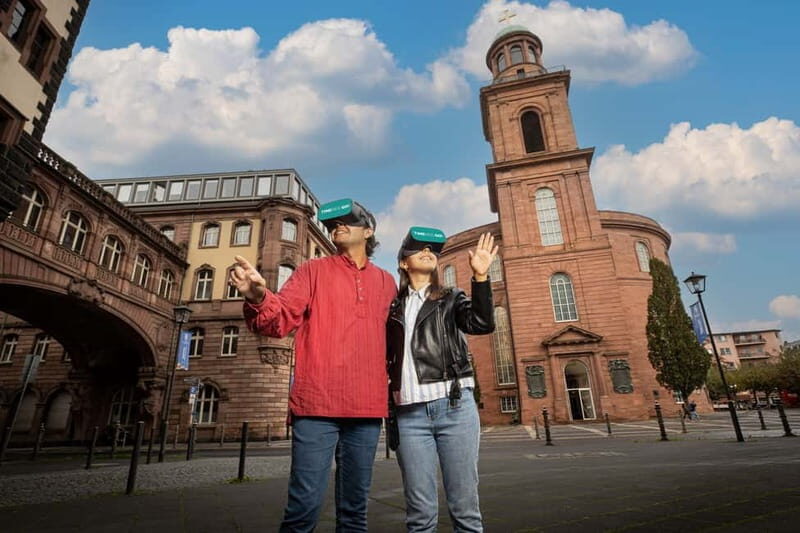
You start at TimeRide in Frankfurt. The whole experience is designed to be quick, mobile, and easy to follow, with a live guide talking in German. You’ll get a short intro before the VR part begins.
From there, you move through five stops. Each one includes guided narration plus a VR moment where you look directly into the past from the spot you’re standing in now. The pace is intentionally brisk, but it’s not chaotic—there’s a clear order, and it ends back at TimeRide.
Two practical notes that matter for your comfort:
- It’s rain or shine, so wear shoes that handle wet pavement.
- It’s German-language, so if you don’t read or follow German well, you may find yourself leaning on visuals rather than understanding every spoken detail.
Stop 1 at TimeRide: setting up the story you’ll see later
The tour begins with a TimeRide segment (about 10 minutes). Think of this as the briefing that helps you get more out of what comes next. When the headset goes on later, you’ll recognize what the guide is trying to show you: how Frankfurt’s role sits inside larger German events.
This first stop also helps you adjust to the format. You’ll understand when to listen, when to look, and how the walk ties into the VR scenes. That matters because VR works best when your brain isn’t juggling too many unknowns.
Paulsplatz: comparing streets across time
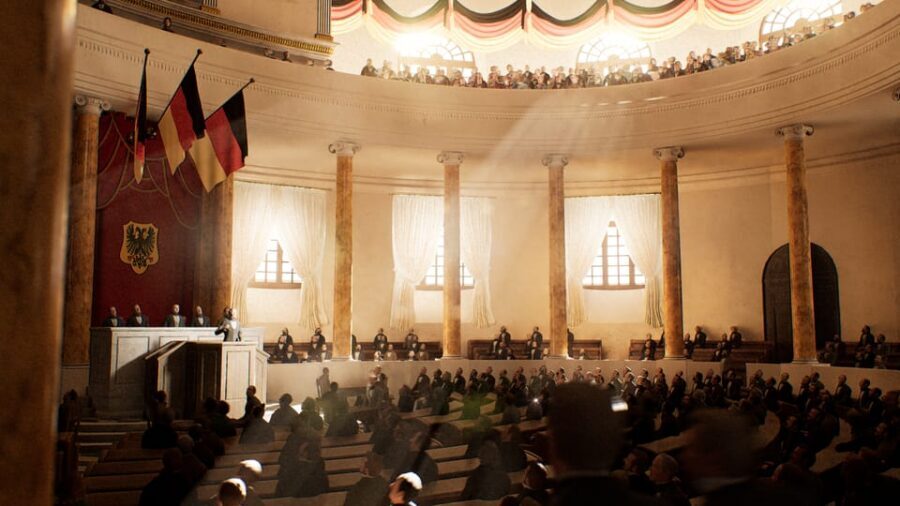
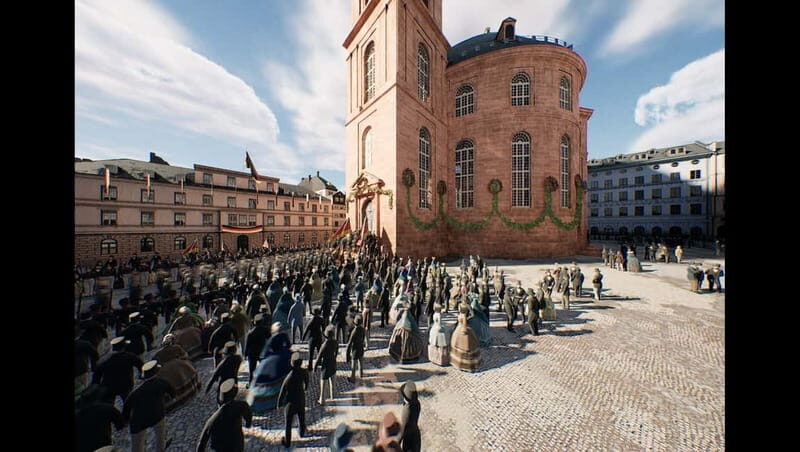
Next is Paulsplatz, Frankfurt (around 10 minutes). This is where the tour’s core idea starts paying off: you compare what’s in front of you now with what the same area represented in earlier eras.
You’re not expected to be a history scholar. The guide tells the story in digestible pieces, and the VR visuals give your mind an anchor. It’s a smart way to get beyond “I walked past a building” and instead think, This place changed meaning across generations.
One possible drawback here is attention management. Some people find it tricky to process the visuals while listening. If you tend to get a little overloaded in fast-paced VR, try to focus on one scene at a time and let the guide’s narration guide you.
St. Paul’s Church (Paulskirche): where democracy takes center stage
Then comes the biggest meaning stop: St. Paul’s Church with about 15 minutes on site. This is the moment the tour turns toward the roots of modern democracy, not just in a general way, but specifically through Frankfurt’s connection to the National Assembly.
Here’s what makes it stand out: the story doesn’t float off into vague ideology. The narration links major turning points—especially the aftermath of the French Revolution in the early 19th century—to the emergence of German democratic steps, with Frankfurt’s Paulskirche at the heart of that theme.
Even if you’ve never studied German constitutional history, you’ll likely understand the point. The tour frames it like a bridge: moving from older structures toward ideas of freedom, equality, and unity. And because you’re at St. Paul’s Church in real life (not just in a textbook), it lands harder.
Practical tip: since this is the longest stop, it’s also your best chance to mentally slow down. If the tour has felt quick so far, use this segment to reset your focus—listen first, then let the VR visuals reinforce the narrative.
You can also read our reviews of more city tours in Frankfurt





Roemerberg: rounding out the timeline with on-the-ground perspective
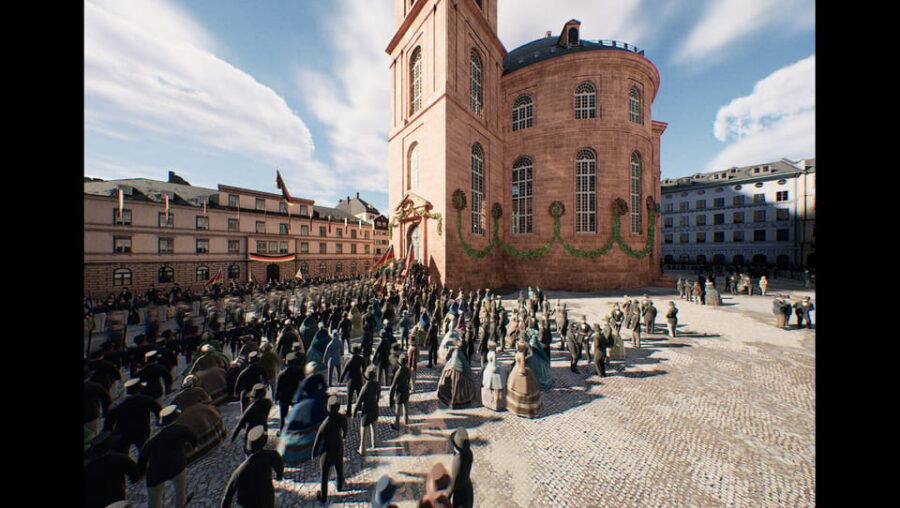
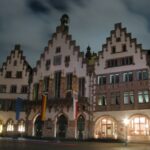
The last stop is Roemerberg (about 10 minutes). By now, you’ve built a rhythm: walk, listen, VR look, then move on. Roemerberg gives you one more on-site comparison, using the same idea—what you see today helps you understand what you just learned about the past.
Even without turning this into a deep dive on architecture or street-by-street history, the tour keeps the purpose clear: you’re linking place to time. You start to notice how cities aren’t static. They’re layered. The same corners can belong to different eras, different politics, different hopes.
What the VR experience feels like (and how to get the best out of it)
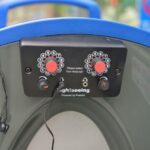
The VR portion is a key reason this tour isn’t like a typical walking tour. At each stop, you put on VR glasses and view the city as it looked back then. The overall journey covers nearly 2,000 years of German history, with a strong focus on Frankfurt’s role.
You also get variety in the timeline. The tour journey stretches from early Roman settlers on the Rhine to major later change—ending with the fall of the Berlin Wall. That’s a big sweep for a 45-minute format, so the visuals are intentionally brief.
Based on reviews, the pacing can feel a bit quick. One person even wished the virtual travel showed a little slower. If you’re the type who needs time to process what you’re seeing, you can still make it work:
- Keep your eyes on the guide’s cues, not just the headset.
- Treat each VR moment like a snapshot, not a full movie.
- Save your questions for when the guide naturally opens space to talk (you’ll get more out of a short answer than from trying to mentally rewind mid-scene).
Language, weather, and pacing: the small details that can make or break it
This tour is guided in German and takes place rain or shine. It’s also wheelchair accessible, which is great if you need step-free movement and smoother pacing.
The biggest fit factors are not complicated:
- If you enjoy history and you like visuals that explain context, you’ll likely love this.
- If you struggle with German narration, you might still get value from the VR comparisons, but you’ll miss some of the story details.
- If your idea of a relaxed tour is slow and meandering, the 45-minute structure may feel a little speedy.
Also note the age limit: it’s not suitable for children under 6. That’s worth taking seriously. VR requires attention and comfort, and the format depends on listening while wearing the headset.
Included value: what you get, what you don’t
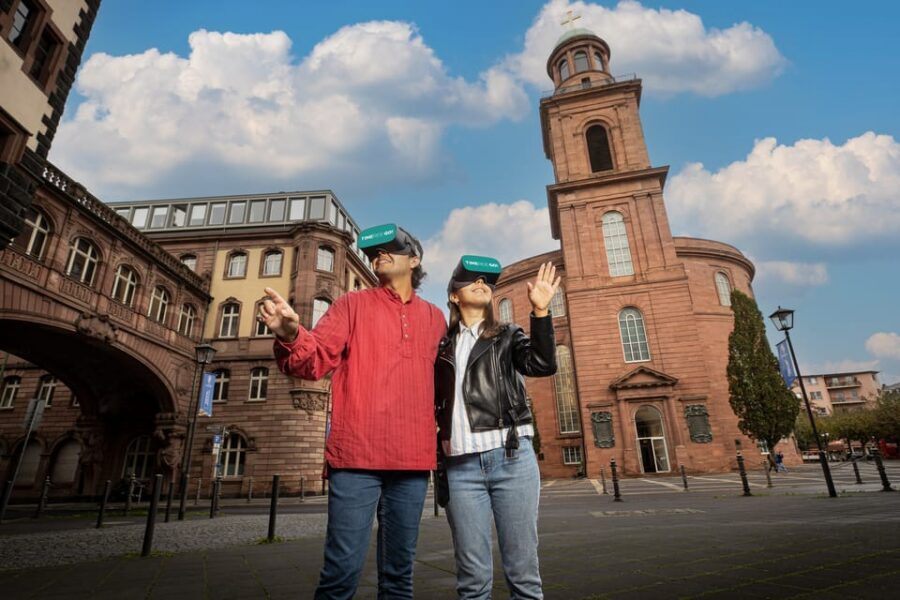
This experience includes a VR headset and a tour guide. You also can skip the ticket line for this activity, which helps you stay on schedule in central Frankfurt.
What’s not included is entry to the TimeRide exhibition Frankfurt 1891. That means this tour is focused on the walking + VR experience, not a full museum-style add-on. If the exhibition itself is on your must-do list, plan for it separately.
Who should book this Frankfurt VR walking tour
I think this tour is a strong match for:
- History lovers who want a quick hit of context tied to real places
- Families (with kids 6+) who learn best through pictures and stories
- First-timers in Frankfurt who want a structured overview of key sites
- Travelers who like technology when it has a job, not when it’s just a gimmick
It might be less ideal if:
- You need everything in English (the live guide is German)
- You prefer very slow VR pacing and lots of contemplation time
- You’re expecting a long, in-depth museum experience (this is intentionally short)
Value check: is it worth $30?
For $30, you’re getting a 45-minute guided experience plus VR equipment. In practical terms, that’s a good deal if you want the explanation from a live guide and you’re curious about the city’s layered past—but you don’t want to spend hours.
The format also helps with time efficiency. You cover multiple meaningful stops in one go. And because the story focuses on Frankfurt—especially St. Paul’s Church—you’re likely to leave with a clearer sense of why this city matters in German democratic history, not just a list of landmarks.
If you’re the type who likes to understand what you’re looking at, this is one of those purchases that tends to feel fair.
Should you book it?
If you want a history tour that actually changes what you see—by showing the city across time right where you stand—then yes, book it. The five-stop structure, the Frankfurt-centered focus, and the emphasis on the Paulskirche and democratic roots make it feel more purposeful than a generic walk.
If you’re hesitant because of VR pacing or because the guide is in German, don’t ignore that. But you can still enjoy the core idea of comparing past and present on-site. Just go in with the right expectations: this is a brisk, visual-guided sprint through major moments, not a slow, chapter-by-chapter lecture.
FAQ
Where does the tour start?
The meeting point is in front of TimeRide Frankfurt. Please arrive there so the tour can start on time.
How long is the Frankfurt walking tour with VR?
The tour lasts about 45 minutes.
Is the tour guided in English?
No. The live tour guide provides the tour in German.
Does the tour run in bad weather?
Yes. The tour takes place rain or shine.
What’s included in the price?
You get a VR headset and a live tour guide.
Is it suitable for young children?
It is not suitable for children under 6 years old.