REVIEW · LEIPZIG
Leipzig: City Center Guided Walking Tour
Book on GetYourGuide →Operated by Leipzig Details GbR · Bookable on GetYourGuide
Leipzig moves fast, even on foot. This city-center walk is a smart way to connect Leipzig’s famous sights with the people who shaped them, from composers to the events of 1989. I especially like how the tour links music history to real buildings, and how it covers the historic center without wasting time.
You’ll walk with a live guide (often including Max, who comes across as genuinely pleasant and easygoing) and you can choose German, English, or French. One possible drawback: at 1.5 hours, the pacing is efficient, but it may still feel a touch long if you prefer slower sightseeing breaks.
In This Review
- Key things to notice before you go
- A 1.5-hour Leipzig loop through the city’s big landmarks
- Market Square and Old Town Hall: Leipzig’s civic center, explained
- St. Thomas’s Church: where Leipzig’s music reputation becomes real
- St. Nicholas’s Church and the 1989 Peaceful Revolution story
- Mädler Passage and Auerbachs Keller: culture in a classic Leipzig lane
- Goethe, Schiller, and the thinkers who turned Leipzig into a cultural magnet
- Guide style, group size, and why Max matters
- Price and value for a group up to 25
- Practical tips for a smooth city-center walk
- Should you book this Leipzig city-center walking tour?
- FAQ
- How long is the Leipzig city center guided walking tour?
- What does the tour cost?
- Where do we meet for the tour?
- Which languages are available for the live guide?
- Is the tour wheelchair accessible?
- Is the tour offered in a private group format?
- What sights are included in the city-center route?
- Is a ticket included?
- Can I get a refund if my plans change?
- Is there a reserve now and pay later option?
Key things to notice before you go

- A focused 1.5-hour route that hits major landmarks in a short time window
- Live guide in German, English, or French, not a self-guided audio shuffle
- Music-country stopovers, from St. Thomas’s Church to the city’s composer legacy
- 1989 Peaceful Revolution context tied to St. Nicholas’s Church and Stasi-related sites
- Mädler Passage and Auerbachs Keller for a classic Leipzig cultural stop
- Good group energy and size, with feedback praising the atmosphere and how the group feels
A 1.5-hour Leipzig loop through the city’s big landmarks

If you like tours that stay practical, this one fits. Leipzig’s center is dense, and in about 90 minutes you get a guided circuit that prioritizes the places most tied to the city’s identity. You’re not doing a long marathon, so it’s also a great “first day” option to orient yourself.
The route is built around landmarks that matter on more than one level. You’ll see the civic heart (the market area), the religious landmarks (especially the churches), and the cultural corridor (Mädler Passage and Auerbachs Keller). The trick is that the guide doesn’t treat these as random photo stops. They’re used as anchors for themes: music, literature, and political change.
Pace-wise, the tour is short and structured. That’s a plus if you want momentum. It can be a mild downside if you’re the type who needs frequent pauses to stretch, grab snacks, or linger.
You can also read our reviews of more walking tours in Leipzig



Market Square and Old Town Hall: Leipzig’s civic center, explained

Leipzig’s market area is more than a place to look at pretty buildings. It’s where you can read the city’s public life: trade, administration, and the everyday rhythm of people meeting face-to-face. The Old Town Hall is your main civic anchor here, and it helps you understand how Leipzig organized itself—long before modern street signs and transit apps.
What I like about starting with this area is that it gives you a framework before the tour moves into the heavier themes. When you later hear about composers, writers, and the revolution, you’re not jumping into topics cold. You’ve already seen that Leipzig has long had a strong civic backbone, and that cultural life isn’t separate from politics and commerce.
Practical note: this is a natural place to take photos because the buildings provide context for your later “oh, that’s where that story fits” moments. Just don’t spend so long here that you miss the rest of the route.
St. Thomas’s Church: where Leipzig’s music reputation becomes real

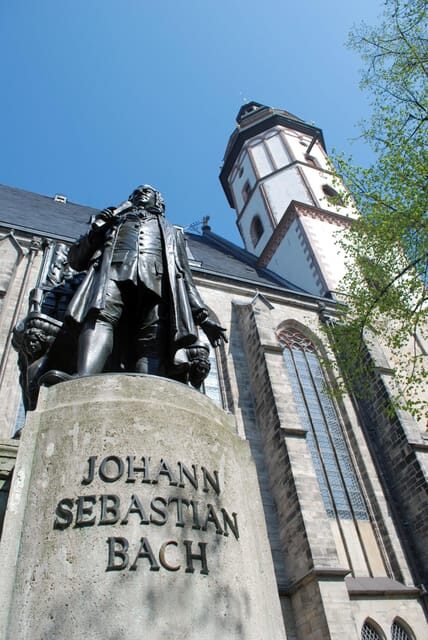
St. Thomas’s Church is one of those stops that sounds famous on paper—and then feels even more meaningful in person. This is where Leipzig’s musical identity stops being an abstract reputation and becomes something you can point to. The tour connects the church to the city’s composer legacy, including Johann Sebastian Bach.
It also helps that the guide weaves together multiple music figures tied to Leipzig, not just one name. You’ll hear how Mendelssohn and Schumann also left marks on the city. That matters because it stops the story from becoming a single-person highlight reel. Leipzig is presented as a place that kept producing and supporting major musical talent over time.
And yes, there’s an added layer for classical-music fans: Leipzig’s reputation as a music-city connects to the Gewandhaus Orchestra. Even if you’re not an expert, the guide’s job is to translate why an orchestra name is more than a label. It represents institutions and traditions that shaped the city’s modern identity.
Drawback to consider: churches can involve standing and walking in and around entrances and exterior viewing points. If you’re sensitive to long outdoor stops in cold or wet weather, plan accordingly.
St. Nicholas’s Church and the 1989 Peaceful Revolution story

This is the part of the tour that gives Leipzig extra emotional weight. St. Nicholas’s Church is tied to the Peaceful Revolution of 1989, and the tour uses it as a real-world marker for that moment. You’re not just told that something happened; you’re guided to places that connect the city to the broader story of political change.
What makes this stop valuable is the way it connects history to a human setting. A church is not a neutral backdrop. It’s a building with a role in community life—so when political movements use it, the location becomes part of the narrative. From a visitor perspective, that turns Leipzig from “a nice historic city” into “a city where real choices and risks played out.”
The tour also mentions visiting original locations of the uprising, and it includes the once secretive headquarters of the secret police, the Stasi. That shift—from church setting to state security context—helps you understand how the revolution changed the atmosphere in Leipzig, and why these locations matter far beyond local memory.
If you prefer lighter sightseeing (only buildings, no heavier context), this section might be intense. But if you want Leipzig to make sense as a living history, it’s a strong highlight.
Mädler Passage and Auerbachs Keller: culture in a classic Leipzig lane
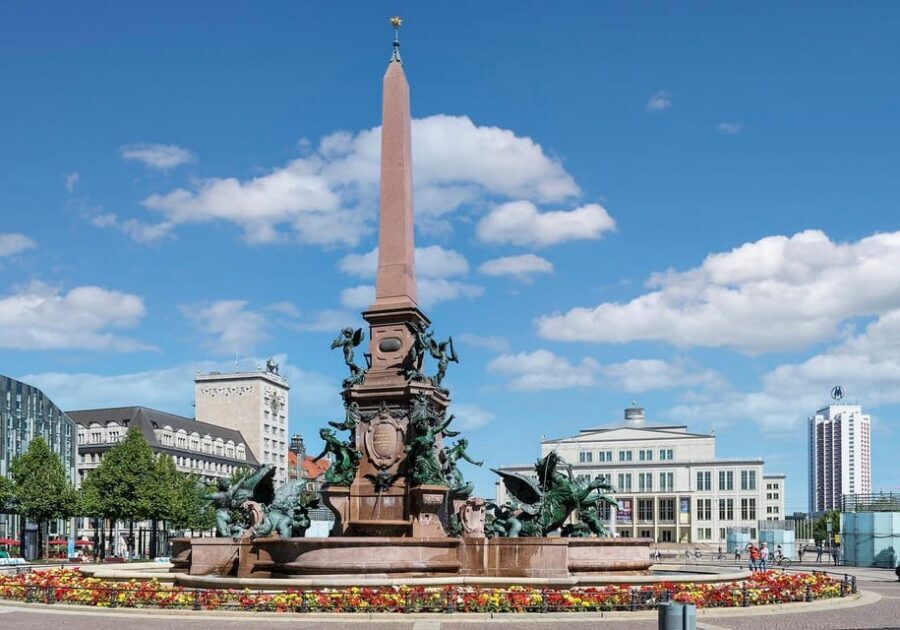
After the churches and revolutionary context, the tour moves into the city’s cultural groove. Mädler Passage is a key stop because it’s tied to Leipzig’s legendary restaurant culture, specifically Auerbachs Keller. Even if you don’t plan to dine there, it’s one of those addresses that helps you understand why Leipzig has long had an arts-and-intellectual reputation.
Why this matters: food and gathering spaces are part of the cultural ecosystem. Auerbachs Keller isn’t presented as just a name—it’s used to show how the city’s public life blended with literature and the arts. It’s a reminder that culture isn’t only in concert halls and churches. It lives in meeting points too.
Also, this is a nice pacing reset. After walking through heavier historical sites, you get a more everyday-feeling stop where the guide can point out how the city’s creative reputation took physical form in places people actually visited.
Tip: if you’re a detail person, keep an eye on the passage environment. It gives you a sense of Leipzig’s built character—especially when the guide links it back to writers and cultural figures.
You can also read our reviews of more guided tours in Leipzig






Goethe, Schiller, and the thinkers who turned Leipzig into a cultural magnet
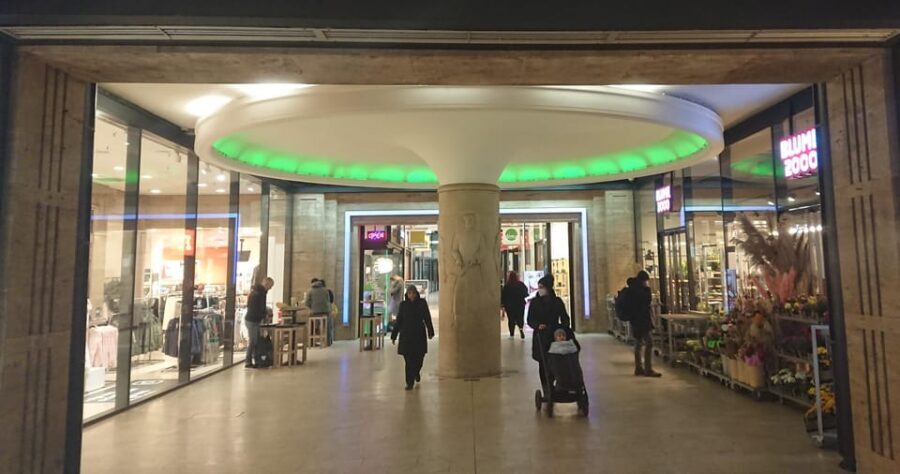
Leipzig isn’t only about music. It also has a literature and philosophy thread, and this tour makes it easy to follow. You’ll hear that Johann Wolfgang von Goethe studied poetry in Leipzig during the late 1760s. That connection is useful because it’s concrete: a specific person, a specific period, and a reason Leipzig became a stop for major minds.
You’ll also get Friedrich Schiller in the storyline. His presence in Leipzig helps explain why the city became a “cultural stronghold,” not just a musical one. The guide ties these figures into what Leipzig looks like today, showing how ideas and art don’t stay trapped in books. They shape institutions, public reputation, and even the kinds of buildings people choose to remember.
What I like here is the balance. The tour doesn’t treat writing and philosophy as a detour from music. It presents them as parallel tracks in the same cultural system. That makes Leipzig feel more cohesive at the end of the walk.
Guide style, group size, and why Max matters
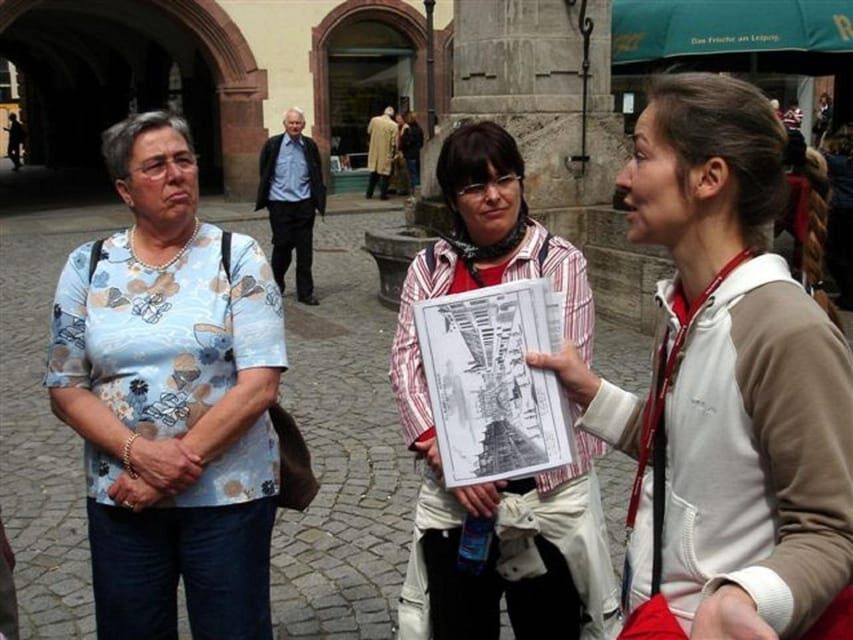
The tour is led by a live guide, and that’s a big deal on a city-center walk where you’d otherwise just be counting buildings. The guide provides structure: where you stop, what you notice, and what each landmark means. You can choose German, English, or French, which is helpful if your group isn’t all comfortable with one language.
The standout in the feedback is the guide vibe. Comments highlight good mood, interesting content, and a group size that feels comfortable. And Max gets specific praise for being pleasant and sympathetic, which fits the best kind of guided experience: you get facts, but also a guide who keeps the tone human.
One consideration: tours like this work best when you’re okay with listening while walking. If you want silent, independent time at each stop, you might find the format less satisfying. And as noted, a 1.5-hour tour can feel a bit long for some people, depending on your walking tolerance and how quickly you like to move on.
Price and value for a group up to 25
The price is listed at $188 per group (up to 25 people) for 1.5 hours. That pricing structure changes how you should think about value. You’re not paying like an individual ticket where each person’s cost is locked. Instead, you’re buying a private-group style experience you can scale within that group limit.
So the value depends on your party size. If you have a few people, it can feel like a splurge compared with cheaper per-person options. If you can travel as a small group, the cost becomes more reasonable, because one guide is serving everyone together.
What also affects value: the tour includes a ticket and runs with a live guide, not just a route map. That matters in Leipzig because so many of the landmarks are layered with meaning. A guide’s interpretation can save you hours of researching and piecing together a story alone.
As a quick decision rule: if you want context and you like a guided narrative, the price makes sense. If you mainly want free-choice time and don’t care about historical connections, you could find cheaper ways to walk the center on your own.
Practical tips for a smooth city-center walk
Meeting point can vary depending on the option you book, so check your specific confirmation details before you head out. Plan to arrive a little early so you’re not scrambling when the group forms.
Wear comfortable walking shoes. You’ll be on your feet for the 1.5-hour duration, and you’ll be stopping outside at multiple landmarks. If weather is messy, consider a light rain layer and something warm for church areas and exterior viewing points.
If you care about language comfort, pick the guide language that your group understands best. You can choose German, English, or French, and the quality of the experience tends to rise when everyone can follow without mental translation.
Accessibility is addressed: the tour is wheelchair accessible. If you use a wheelchair or have mobility needs, it’s worth planning for smooth pacing and noting that meeting points can vary.
Finally, if you’re traveling with a group and want more control, private group availability is listed. That can be useful if you’d rather keep a smaller circle, ask more questions, or sync with your schedule.
Should you book this Leipzig city-center walking tour?
Book it if you want a compact Leipzig experience that explains the city through music, churches, and political turning points. The route is efficient, the guide is live and language-supported, and the pacing works well for first-time visitors who want meaningful context without spending half a day.
Skip it or consider a different option if you prefer long stops and slow roaming. At 1.5 hours, the tour moves with purpose, and a small subset of people find it a bit too long. Also, if you don’t want revolutionary-era context in your sightseeing, the St. Nicholas and Stasi-related content may feel heavy.
If you’re deciding based on confidence: the overall rating is 4.7 out of 5 from 157 reviews, and the strongest praise clusters around engaging content, good group energy, and a friendly guide presence. For many visitors, that combination is exactly what makes a short city walk worth it.
FAQ
How long is the Leipzig city center guided walking tour?
The tour duration is 1.5 hours.
What does the tour cost?
The price is $188 per group (up to 25 people).
Where do we meet for the tour?
The meeting point may vary depending on the option you booked.
Which languages are available for the live guide?
The live tour guide is available in German, English, and French.
Is the tour wheelchair accessible?
Yes, the tour is listed as wheelchair accessible.
Is the tour offered in a private group format?
Yes, private group availability is offered.
What sights are included in the city-center route?
The tour covers the market place with the Old Town Hall, St. Thomas’s Church, St. Nicholas’s Church, Mädler Passage, and Auerbachs Keller. It also includes locations connected to the 1989 Peaceful Revolution and the Stasi.
Is a ticket included?
Yes, the ticket is included.
Can I get a refund if my plans change?
Free cancellation is available up to 24 hours in advance for a full refund.
Is there a reserve now and pay later option?
Yes. You can reserve now and pay later.