REVIEW · LEIPZIG
1.5 hour walking tour through beautiful Leipzig
Book on GetYourGuide →Operated by Treffpunkt Leipzig · Bookable on GetYourGuide
Leipzig has a way of turning street corners into stories. This 1.5-hour walking tour connects the city’s Old Town to major names like Bach, Faust, and Goethe as you move from landmark to landmark. You’ll also get a real sense of daily life as the tour threads through the market area.
I especially like how it mixes big cultural figures with very specific places: the start at Thomaskirchhof, the coffee-house stop at Zum Arabischen Kaffeebaum, and the literary stops around Auerbach’s Cellar and the Mädler Passage. One watch-out: the tour is German only, so if you’re not comfortable listening in German, you may miss part of the storytelling.
In This Review
- Key highlights at a glance
- Starting at the New Bach Monument and Thomaskirche
- Coffee-house stop at Zum Arabischen Kaffeebaum
- Through Barthels Hof: Leipzig’s court-yard scale
- Renaissance town hall and the lively market square
- Faust legend at Mädler Passage and Auerbach’s Cellar area
- Goethe’s presence at Naschmarkt
- St. Nicholas Church and the cry We are the people
- Price and value: why $11 is a bargain if you like context
- How the pace and 1.5 hours work on the ground
- Language reality: German-only storytelling
- Practical tips for meeting point and comfort
- Should you book this Leipzig walking tour?
- FAQ
- FAQ
- How long is the Leipzig walking tour?
- What is the price?
- Where do I meet the guide?
- What’s included in the price?
- Is food or drinks included?
- What language is the tour conducted in?
- Does the tour run if it rains?
- Is it wheelchair accessible?
- What are some of the main places the tour covers?
- How flexible is cancellation?
Key highlights at a glance
- New Bach Monument + Thomaskirche: you start where Bach’s Leipzig story is meant to be understood
- Zum Arabischen Kaffeebaum: a stop at one of Europe’s oldest coffee houses
- Barthels Hof and Renaissance market views: Old Town backdrops with a lived-in feel
- Mädler Passage above Auerbach’s Cellar: Faust legend gets tied to the exact spot
- Naschmarkt + Goethe mention: the tour plays with literature in physical locations
- St. Nicholas Church and We are the people: Leipzig’s role in a world-reaching cry
Starting at the New Bach Monument and Thomaskirche
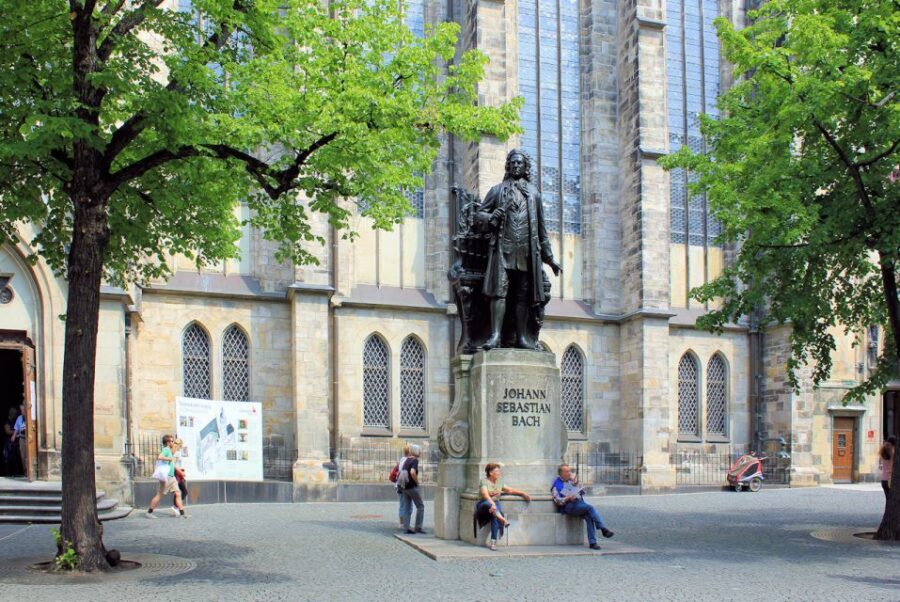
Your tour begins at the New Bach Monument in Thomaskirchhof (Thomaskirchhof 18, in front of Thomaskirche). Your guide holds a sign reading Treffpunkt Leipzig, and it’s worth arriving at least 5 minutes early so you don’t have to sprint through the first explanations.
This opening matters because Bach isn’t treated as a name you sort of know. Instead, you learn about the life and work of Johann Sebastian Bach and the St. Thomas Choir right in front of the church that anchors that relationship. If you’ve ever wondered why Leipzig is so tied to sacred music, this is the moment the city starts making sense.
The tone here is practical. You’re not just looking at stonework; you’re being pointed toward the meaning behind it. Even if you’re not a die-hard classical fan, it’s a strong way to get oriented in Leipzig’s Old Town without feeling like you’re reading a brochure while walking.
You can also read our reviews of more walking tours in Leipzig

Coffee-house stop at Zum Arabischen Kaffeebaum
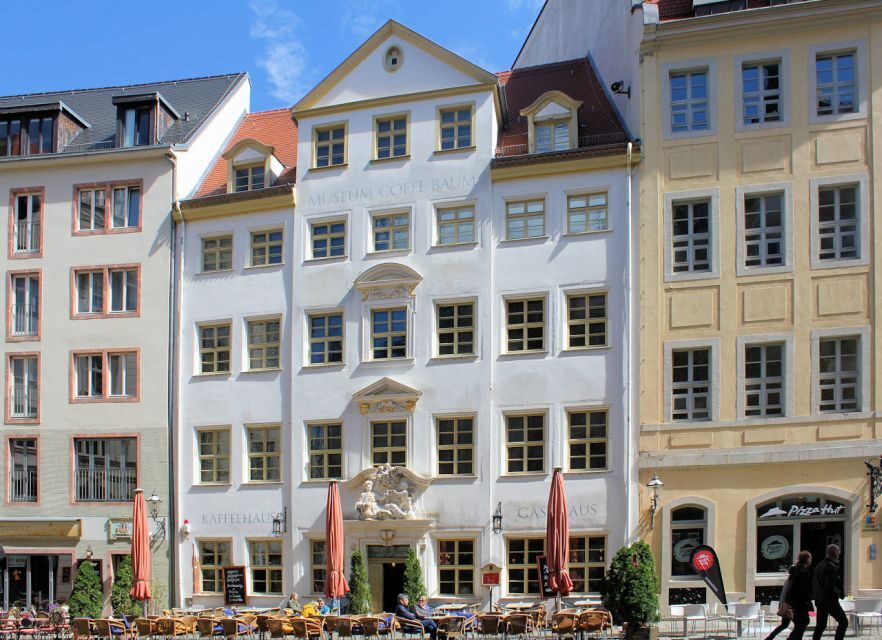
Next up is Zum Arabischen Kaffeebaum, one of the oldest coffee houses in Europe. This is a great mid-morning (or mid-afternoon) style break, even though the tour is still moving—coffee-house stops on walking tours do two jobs: they slow you down just enough to absorb the vibe, and they remind you that cities run on habits, not just monuments.
I like the way this stop connects culture to everyday life. Leipzig’s Old Town isn’t only about churches and famous authors; it’s also about where people gathered, talked, and stayed awhile. Even if you don’t stop for a drink (food and drinks aren’t included), you’ll get why the place earns a spot on a serious walking route.
The “oldest” detail gives you instant context. You’re standing in a location that’s survived centuries of Leipzig’s changing eras, which makes the later stories—Faust, Goethe, and the church-related historical moments—feel less random and more connected.
Through Barthels Hof: Leipzig’s court-yard scale
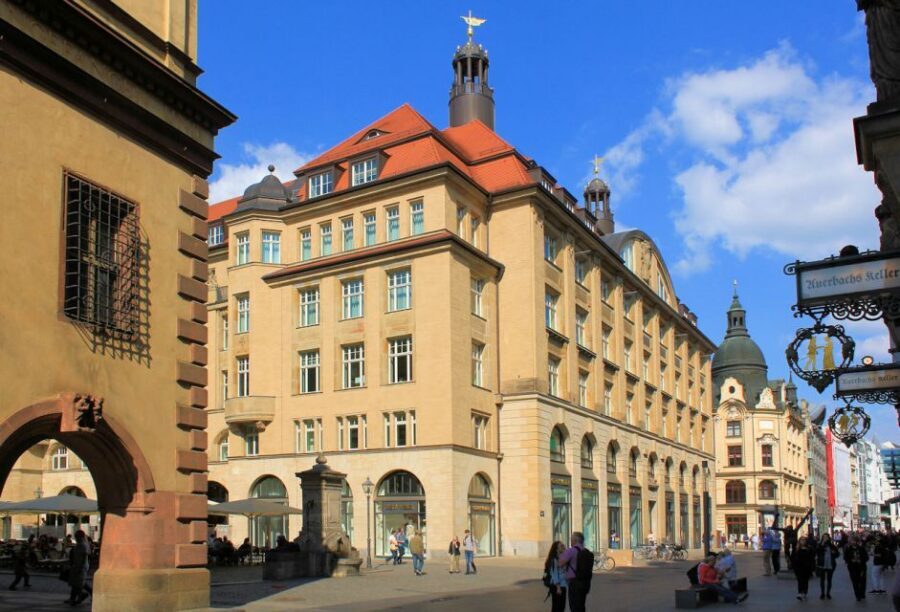
From the coffee house, the route takes you to Barthels Hof. The “hof” element is important. Leipzig’s Old Town isn’t only wide streets and big facades; it also has courtyards and tucked-away spaces where the city feels human-sized.
A courtyard stop also helps your legs. The tour is only 1.5 hours total, so every segment needs to do something useful. Barthels Hof is one of those “pause and look around” stops where you can catch your breath, notice details, and reset before the busier market stretch.
This is the kind of segment I recommend when you want walking-tour value, not just a long list of famous sites. Courtyards tend to be where you feel the personality of a place.
Renaissance town hall and the lively market square
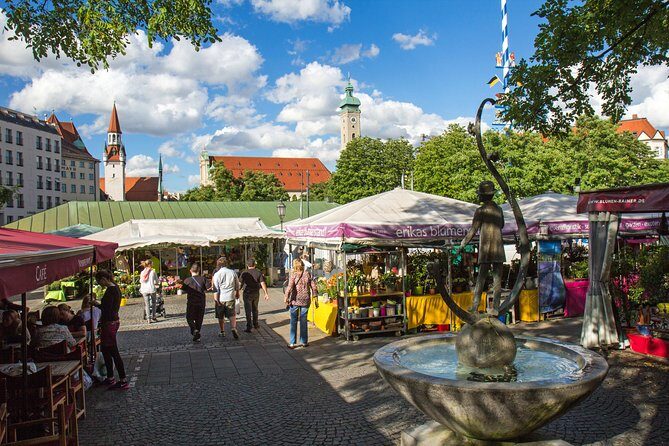
After courtyards, you land in the market square area. This is where the tour earns its “local culture” promise. The market square gives you constant visual cues: people moving through daily errands, storefront rhythms, and the sense that Old Town is still working.
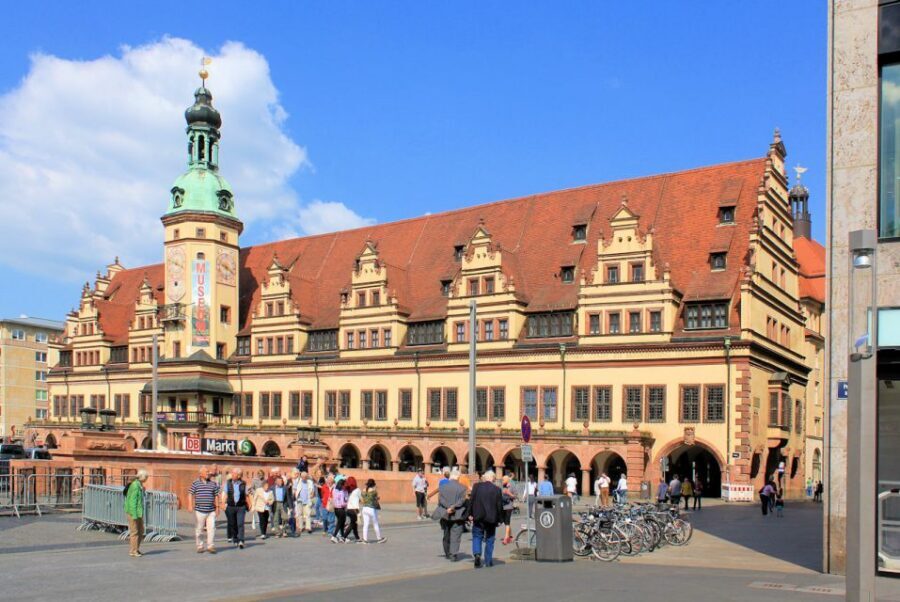
Your guide points out the Renaissance town hall, and that’s a key moment because you’re not just seeing one pretty building. You’re learning to recognize how a city’s civic center shapes its identity. Town halls weren’t decoration. They were where official life met the public.
I like how this segment blends sightseeing with atmosphere. You don’t have to pretend you’re shopping; just standing in the flow helps you understand why Leipzig’s historic core feels lived in.
If it’s your first time in Leipzig, this part is ideal. It gives you a “grid” for the rest of the tour. You’ll start recognizing what’s around you, which makes even short walks later in the day feel easier.
Faust legend at Mädler Passage and Auerbach’s Cellar area
The route then moves through the Mädler Passage, where you’re positioned above Auerbach’s Cellar. This is where the tour turns literary. You’ll hear the Faust legend linked to the exact setting around the cellar, not just as a vague story attached to Leipzig.
Why this works: literature often feels “floating,” like it lives only in books. Tie it to a specific alley, passage, and cellar area and the story becomes physical. You start to understand why cultural landmarks get remembered—because people can point to where the imagination was fed.
Also, this is one of the best sections for keeping attention. Faust and Leipzig history are a natural match, and your guide has enough concrete locations to make the narrative feel grounded.
One practical note: passages can be narrower and a bit echo-y. If you’re trying to follow in German, keep close to your guide rather than drifting with friends a few steps behind.


Goethe’s presence at Naschmarkt
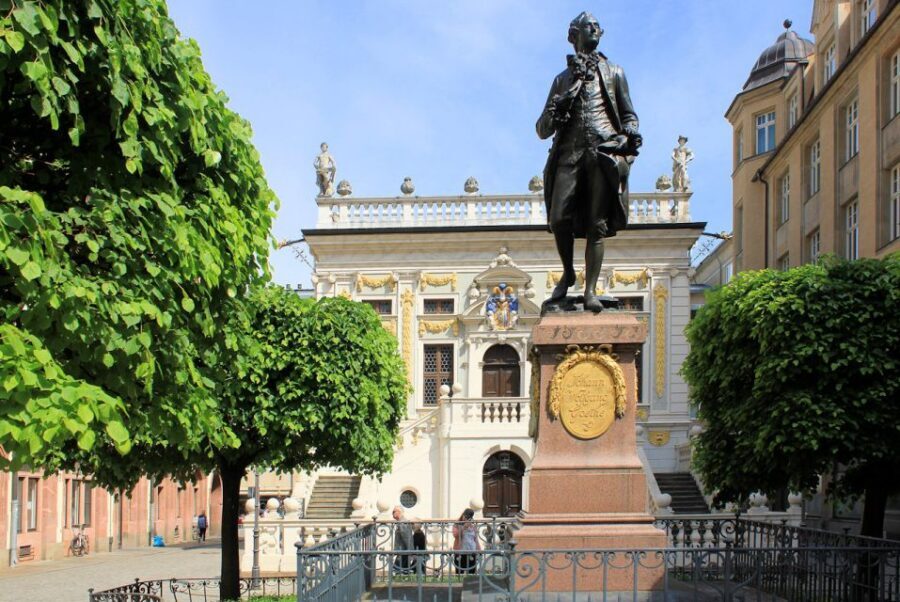
From there you head toward Naschmarkt, and here the tour introduces Johann Wolfgang Goethe as a student connected to the area. The setup is basically this: you walk into another Leipzig “stage,” and the guide uses the spot to connect Goethe to the city’s story.
Even if you know Goethe mainly through reading, the payoff is how your brain links author and place. It’s not just name-dropping. It’s a walking method for turning literary history into something you can navigate.
This stop also creates a satisfying rhythm: Bach at Thomaskirche, coffee-house old-world culture, then literature in passages and market-adjacent spaces. By the time you reach the next church, Leipzig’s theme has become clear—stories matter here, and they’re tied to real spaces.
St. Nicholas Church and the cry We are the people
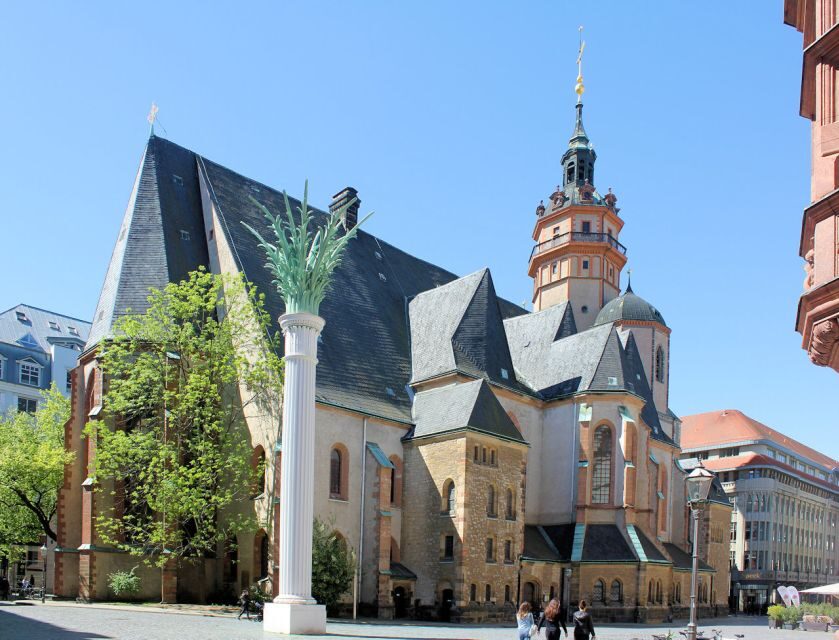
The tour finishes with a visit to St. Nicholas Church (Leipzig’s oldest church). Here you get the emotional and historical weight of the route: the cry We are the people was proclaimed to the world from this place.
This isn’t just another church stop. It’s a moment that pulls Leipzig’s identity into modern meaning. You’re seeing a religious landmark, yes—but also a place tied to public voice and collective action.
If you want a quick way to understand why Leipzig shows up in big European conversations, this is the clearest shortcut on the route. Your guide frames the church as part of the city’s heritage, events, and famous people, and the connection to a widely known cry makes the site feel immediate.
Even if you visit only one church on a short trip, make it count. St. Nicholas Church is the one that gives the tour a strong “why it matters” ending.
Price and value: why $11 is a bargain if you like context
At $11 per person for a 1.5-hour walking experience, the value is about focus, not quantity. You’re paying for a live guide and a structured route that connects multiple iconic stops—Thomaskirche, the coffee-house, literary locations near Auerbach’s Cellar, and St. Nicholas Church—into one coherent narrative.
Food and drinks aren’t included, and that’s normal for a guided walk. Still, you’re getting enough major touchpoints that you’d easily spend more time (and more money on transport) trying to stitch together the story on your own.
The best comparison isn’t to other tours in Leipzig—it’s to trying to self-guide without a storyline. If you’re the type of traveler who likes meaning behind a building (who reads plaques, asks questions, or enjoys Bach/Faust/Goethe connections), this price feels fair because it’s paying for interpretation.
How the pace and 1.5 hours work on the ground
This is a short route, so the pace stays steady. You’re walking through Old Town, hitting key points, and then finishing in a church setting. If you’re planning your day, treat it like a “morning or afternoon orientation” walk rather than your whole sightseeing plan.
Because it’s rain or shine, you’ll want sensible shoes. Wet cobblestones and slick street edges can make even a short walk feel longer. The good news: the tour is designed for people who walk at different speeds. It’s listed as wheelchair accessible and suitable for people with walking disabilities, so it’s not a steep, rugged outing.
Group size isn’t stated here, so plan on typical guided-walk behavior: expect to stay near your guide and listen through crowds. In market areas, you might need to pause and wait for the right moment to move on.
Language reality: German-only storytelling
Here’s the biggest “consideration” for this tour. The tour guide speaks German only.
If you can follow spoken German at least moderately, you’ll probably get the full payoff—especially in the Faust and Bach storytelling sections, where the guide is likely connecting names to specific spaces and details. If you can’t, you can still enjoy the visual landmarks, but the narrative will be harder to track.
My practical advice: read your Leipzig highlights beforehand in any language you like, then show up ready to enjoy what you can. That way the German narration becomes icing instead of a barrier.
Also, plan to take in cues—pointing, posture, and the physical descriptions around each stop do a lot of work even when you miss a sentence.
Practical tips for meeting point and comfort
- Meet at Thomaskirchhof 18, in front of Thomaskirche, at the New Bach Monument
- Look for the sign: Treffpunkt Leipzig
- Arrive at least 5 minutes early
- Bring a light rain layer since it runs rain or shine
- Wear comfortable shoes; you’re on foot for 1.5 hours
- Plan around a German-only guide if that’s a factor for you
If you need a moment to rest or you’re moving slowly, don’t fight it. The route is short, and your guide can usually help you keep the pace without turning it into a sprint.
Should you book this Leipzig walking tour?
I’d book it if you want a compact Old Town walk that connects Leipzig’s famous names to the places you can actually point to: Bach at Thomaskirche, coffee-house culture at Zum Arabischen Kaffeebaum, literary storytelling near Auerbach’s Cellar, and the powerful ending at St. Nicholas Church with We are the people.
I wouldn’t prioritize it if German-only narration is a deal-breaker. You can still enjoy the sights, but this tour is clearly built around interpretation, not just photo stops.
FAQ
FAQ
How long is the Leipzig walking tour?
It lasts 1.5 hours.
What is the price?
The tour is $11 per person.
Where do I meet the guide?
The meeting point is at the New Bach Monument in Thomaskirchhof, Thomaskirchhof 18, in front of Thomaskirche. Your guide will be holding a sign that says Treffpunkt Leipzig.
What’s included in the price?
The tour includes a live tour guide.
Is food or drinks included?
No. Food and drinks are not included.
What language is the tour conducted in?
The tour is conducted in German only.
Does the tour run if it rains?
Yes. It runs rain or shine.
Is it wheelchair accessible?
Yes. The tour is listed as wheelchair accessible and suitable for people with walking disabilities.
What are some of the main places the tour covers?
You’ll visit or pass key Leipzig highlights like Thomaskirche (with Bach and the St. Thomas Choir focus), Zum Arabischen Kaffeebaum, the Mädler Passage above Auerbach’s Cellar, and St. Nicholas Church, including the story of the cry We are the people.
How flexible is cancellation?
It offers free cancellation up to 24 hours in advance for a full refund.