REVIEW · LEIPZIG
Leipzig: 3-Hour Bike Tour
Book on GetYourGuide →Operated by Leipzig Details GbR · Bookable on GetYourGuide
Pedal past Leipzig’s showpieces, fast and fun. This 3-hour bike tour lets you cover a lot of ground and still feel like you’re strolling with a local, from the Old Town area to Rosenthal Park and the Jugendstil-heavy Forest Street Quarter.
I especially like the mix of famous landmarks and neighborhood texture—think Rosenthal Park for giraffes and then a glide through streets where buildings wear decorative leaf-and-flower details.
One possible catch: it’s German-only, and you’ll either need to bring your own bike or rent one at the start.
In This Review
- Key highlights to look forward to
- Why Leipzig clicks better from a bike seat
- Starting smart at Mobilitätszentrum (just west of Hauptbahnhof)
- Renaissance edges and old fair-ground stories in the city core
- Rosenthal Park: giraffes, zebras, and a zoo-adjacent feel
- Waldstraßenviertel Jugendstil: leaves, flowers, and women on the facades
- Augustusplatz and the Monument to the Battle of the Nations
- Plagwitz and Buntgarnwerke: Leipzig’s industrial story in motion
- Price and bike rental: is it good value for $25?
- Who this Leipzig bike tour is best for
- Should you book this bike tour in Leipzig?
- FAQ
- How long is the Leipzig bike tour?
- What’s the price per person?
- Is a bike included, or do I need to bring my own?
- Where is the meeting point?
- What’s included in the tour price?
- What language is the live guide?
Key highlights to look forward to
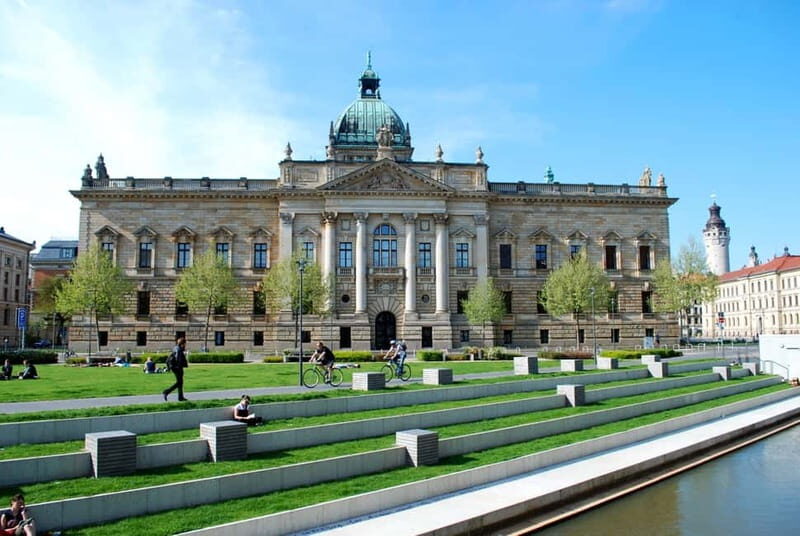
- Rosenthal Park animals in a quick stop near the zoo zone (giraffes, zebras, gazelles)
- Jugendstil in the Waldstraßenviertel (leaf, flower, and women motifs on stately buildings)
- The Battle of the Nations monument area plus Augustusplatz views
- Plagwitz and Buntgarnwerke for Leipzig’s industrial, textile-era story
- A guide-led route that goes beyond the center so you see more than the obvious sights
Why Leipzig clicks better from a bike seat
Leipzig has a way of rewarding “slow travel,” but in real life you’ve got limited time. This bike format is a smart compromise. In 3 hours, you get movement without the stress of swapping buses, and you can actually notice details—doorways, facades, street names, and the vibe of each district.
I also like how the route is built around contrast. You’ll touch the city’s classic public-squares energy, then shift into park-and-zoo proximity, and finally ride through architecture that shows how Leipzig looked in different chapters of its growth. It’s a great way to get bearings fast and build questions for later—like why Plagwitz feels so industrial even today.
The tour is fully guided and you’ll have a map. That matters. You’re not just passing by landmarks; you’re getting the “what am I looking at?” parts so you understand what you’re seeing.
You can also read our reviews of more cycling tours in Leipzig
Starting smart at Mobilitätszentrum (just west of Hauptbahnhof)
You meet at Mobilitätszentrum der Leipziger Verkehrsbetriebe, directly opposite Hauptbahnhof-West. It’s close to where you’d naturally arrive by train, which keeps the start from turning into a scavenger hunt.
You’ll then roll out with your guide and stay together across multiple parts of the city. This is the kind of tour where the pacing feels practical: enough time at sights to take photos and absorb context, but not so much that you feel stuck in one spot for an hour.
You should also plan for the basics. The guide language is German, and the ride involves actual cycling time—so it’s best if you’re comfortable riding in city traffic. If you’re used to bikes, you’ll feel fine. If you’re rusty, take a little extra time to warm up before you begin.
Renaissance edges and old fair-ground stories in the city core

One of the best parts of a good bike tour is that you see the connective tissue between places. Here, you start with the old Leipzig vibe—especially the areas tied to the city’s fair history.
As you ride around the lively core, you’ll pass through the spaces where Leipzig’s old fairs used to take place. Even if you’re not surrounded by merchants anymore, the shape of the area still gives hints about how the city used to function: meeting points, movement corridors, and the “people coming through” feel that trade brings.
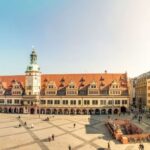
You’ll also check out the Old Town Hall, which dates back to the Renaissance period. The bonus of seeing it by bike is the angle. From the street, you notice proportions and details you’d likely miss if you only saw it from one photo-friendly corner.
A practical thought: in the center, you’ll likely be focused on facades and squares. If you want to make the most of stops here, keep your phone handy and look up at the upper details when you pause—these buildings reward that habit.
Rosenthal Park: giraffes, zebras, and a zoo-adjacent feel
This is one of the most fun breaks on the route. You’ll cruise past the zoo in Rosenthal Park, and it’s known for animals like giraffes, zebras, and gazelles.
Even if you’re not doing a full zoo visit, getting close to it changes how the day feels. Parks soften the city rhythm. You get greenery and open space after dense streets, and it’s a nice reminder that Leipzig isn’t only about architecture and monuments.
A small planning tip: the tour includes time to see and pass key areas, but it isn’t marketed as a long, ticketed animal-exhibit marathon. So if your main goal is spending hours inside the zoo, you may still want a separate visit later. For a 3-hour overview tour, this stop works best as a “taste” of the Rosenthal Park atmosphere.
Waldstraßenviertel Jugendstil: leaves, flowers, and women on the facades
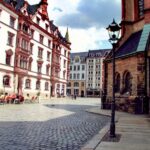
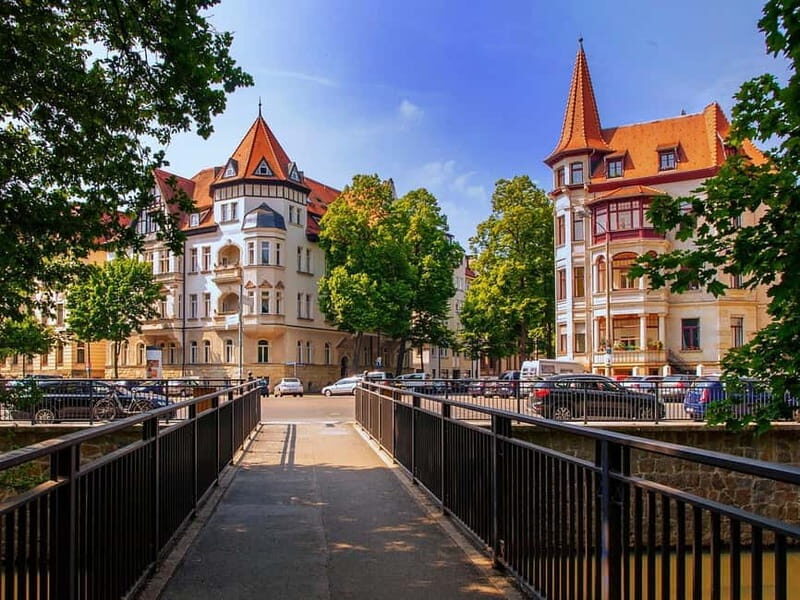
Now for the part that makes you slow down without meaning to. In the Forest Street Quarter (Waldstraßenviertel), the buildings wear decorative Jugendstil motifs—leaf and flower patterns, plus women-themed elements on the stately facades.
This is where bike travel shines. You move along the street and the ornamentation reveals itself gradually. If you tried to do this on foot with limited time, you’d end up focusing on the nearest facade only. On a bike, you glide past enough different sections that you start to see the style as a whole—like walking through a long gallery instead of stopping at one frame.
It also helps that the guide tells you what you’re looking at. People often see decorative styles and file them under pretty, but the explanation turns it into context: the era, the design intent, and the way the neighborhood’s character came together.
If you’re the type who likes photo details (faces in carvings, ornamental edges, balcony shapes), this is likely your favorite stretch. Bring a charged phone and don’t be shy about taking a couple of slow-motion looks before you roll onward.
A few more Leipzig tours and experiences worth a look

Augustusplatz and the Monument to the Battle of the Nations
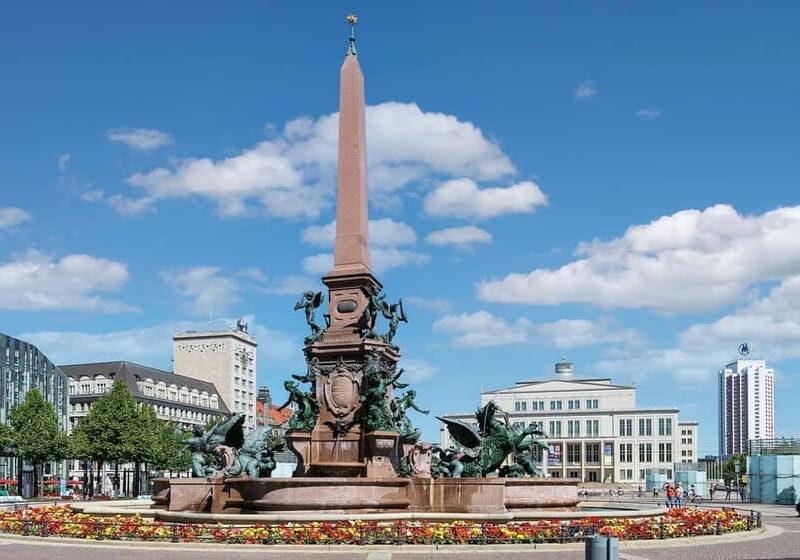
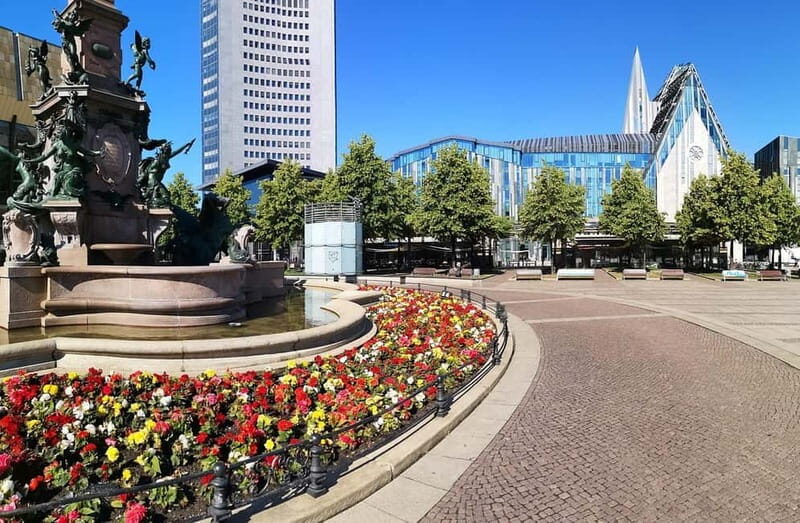
Leipzig has a big memorial presence, and this tour includes the Monument to the Battle of the Nations area, plus Augustusplatz.
These stops are different in scale. Augustusplatz feels like a civic centerpiece—open, structured, and built for public life. The Battle of the Nations monument is the opposite kind of experience. It’s imposing, and seeing it from a bike route gives you a sense of how you approach it in real city time: you’re riding toward it, not just arriving at it.
Why this matters: monuments like this are easier to understand when you know what they represent, and a guided bike tour gives you that context on the move. You don’t have to “figure it out” with half-interpreted signs.
Practical tip: at monument-type stops, weather can matter. If the day is windy or cold, wear something comfortable for standing and looking upward.
Plagwitz and Buntgarnwerke: Leipzig’s industrial story in motion
After the more polished, monumental parts, the tour shifts into a more industrial—and frankly more interesting—chapter. You’ll ride toward Plagwitz and the Buntgarnwerke industrial architecture.
Here’s the key idea you’ll want to hold onto: Plagwitz was once where much of Leipzig’s yarn was spun and dyed. That industrial background still hangs around in the buildings and the neighborhood texture, even if the original textile work is long gone.
The tour frames Plagwitz as a buzzing part of a hip university city today. That contrast is what makes it rewarding. You get to see Leipzig as not just a museum of styles, but as a city that reuses space. Old industrial structures don’t just sit there; they now belong to students, creative energy, and everyday life.
If you like cities that still look like work used to happen there, this segment is a highlight. And because you’re cycling, you can feel how the neighborhood changes as you move—industrial blocks, newer street life, and the rhythm that comes with a university presence.
Price and bike rental: is it good value for $25?
The tour price is listed at $25 per person for a 3-hour guided ride with a map included. That’s strong value, especially because you’re paying for more than scenery—you’re paying for someone to explain what you’re seeing and to route you through the right mix of neighborhoods in a tight timeframe.
What’s not included is the bicycle itself. The info you’ll see says bikes can be rented at the meeting point for 14 EUR. Another part of the info also lists 15 EUR for bike rental. Either way, plan on roughly that range so you’re not surprised when you arrive.
Here’s the simple way to decide value:
- If you bring your own bike, you keep the cost down and get the full benefit of the guided route.
- If you need to rent, the total cost is still reasonable because the rental buys you access to a guided way of seeing Leipzig that would be much harder to organize solo in a short time.
Also note: some small comfort items aren’t listed as included. One practical suggestion from a past participant was that a bottle of water for everyone would be a nice touch. So I’d bring your own water bottle if you run hot or the day is warm.
Who this Leipzig bike tour is best for
This is a great fit if you want:
- A guided overview of Leipzig that goes beyond the obvious central sights
- Architecture fans who like details, especially Jugendstil
- People who enjoy parks and “edge-of-attraction” stops, like the quick Rosenthal Park look
- Travelers who prefer learning while moving instead of reading every sign
It’s less ideal if:
- You need an English-speaking guide (the tour guide is German)
- You’re not comfortable cycling for a steady 3-hour chunk of city riding
- You’re expecting a long, sit-down museum-style experience at every stop
If you’re traveling with friends and you’re the group member who likes structure, this tour also helps. You’re together, the pace is set, and you’ll cover multiple districts without negotiating plans for each one.
Should you book this bike tour in Leipzig?
If your goal is a smart, time-saving way to understand Leipzig’s look and layers, I’d book it. The combination of Rosenthal Park, the Waldstraßenviertel Jugendstil streets, and the industrial history around Plagwitz/Buntgarnwerke is a strong mix that doesn’t feel random. And the repeated praise for guides like Christian and Tom points to what matters most in a tour like this: clear explanations and the kind of energy that makes you care about what you’re seeing.
The decision comes down to two things for me: your comfort cycling in a city, and whether German is workable for you. If both are fine, this is a high-value way to get a real sense of Leipzig in just a few hours.
FAQ
How long is the Leipzig bike tour?
It runs for 3 hours.
What’s the price per person?
The price is listed as $25 per person.
Is a bike included, or do I need to bring my own?
You need your own bike, or you can rent one at the meeting point for 14 EUR (the info also shows 15 EUR on another line).
Where is the meeting point?
Meet at Mobilitätszentrum der Leipziger Verkehrsbetriebe, opposite Hauptbahnhof-West.
What’s included in the tour price?
You get a guide accompanied throughout the city tour and a map.
What language is the live guide?
The live tour guide is German.