REVIEW · BERLIN
Kreuzberg Walking Tour: Immigrants, Artists & Hipsters
Book on Viator →Operated by Insight Cities · Bookable on Viator
Kreuzberg tells stories in every corner. This Kreuzberg walking tour traces how the area went from a Cold War-era no-go zone to a post-1989 hangout for artists and hipsters. I love how the guide frames what you see with real context, and I also love the small-group size that keeps it conversational. My only watch-out is that you’ll want decent flexibility: there are short stretches on foot plus a few public transport hops, so it is not a purely strolling tour.
The tour lasts about 3 hours, and it can be done on foot or by bike (bike rental is optional). You start right by one of Berlin’s best photo moments, the Oberbaumbrücke, then you move through neighborhoods where street art, abandoned space, and everyday markets sit side by side.
You’ll also end with the kind of discussion Berlin is known for: change, development, and what gets protected. One rainy day review praised how the guide kept everyone moving and informed, which tells me this tour holds up even when the weather is not cooperating.
In This Review
- Key things to know before you go
- Kreuzberg After the Cold War: What You’ll Really Get Out of 3 Hours
- Meeting at Schlesische Str. 18 and Opening with Oberbaumbrücke
- SO36, Wall Remnants, and Why Street Art Is More Than Decoration
- Creative Reuse of Abandoned Spaces (and What It Means for the Present)
- Görlitzer Park and Markthalle 9: A Market and Park Break That Makes Sense
- Turkish Culture, Colorful Markets, and the Gözleme Sampling
- Bike Tour vs Walking: Picking the Right Way to See the District
- Price and Logistics: Is $153.85 Good Value?
- When the Weather Turns: How This Tour Holds Up
- Who This Kreuzberg Tour Is For (and Who Should Skip It)
- Should you book this Kreuzberg Walking Tour?
- FAQ
- How long is the Kreuzberg Walking Tour?
- How big is the group?
- Is the tour offered in English?
- Does the tour include a bike option?
- Where do I meet the guide?
- What stops are included?
- Is food included?
- Do I need to use public transport?
- Is hotel pickup or drop-off included?
- Can I cancel for free?
Key things to know before you go
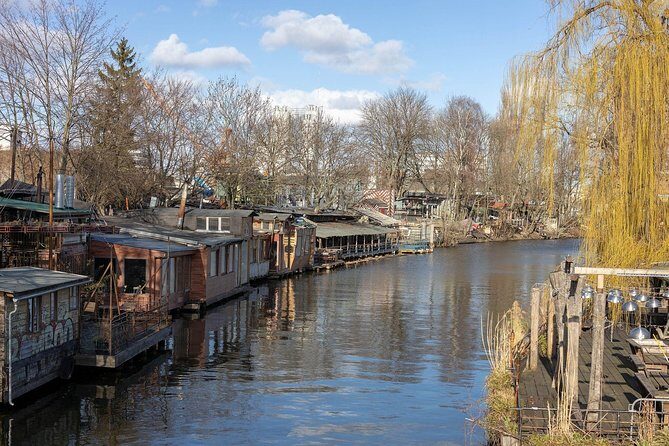
- Small group feel (max 6) with plenty of chances to ask questions
- Professional art historian guide focused on what art and graffiti mean here
- Oberbaumbrücke first, setting the tone fast with history and views
- Wall remnants and creative reuse of abandoned buildings and plots
- Markthalle 9 and Görlitzer Park as a calm counterweight to the street energy
- Turkish markets plus Gözleme sampling (deep-fried spinach and cheese)
Kreuzberg After the Cold War: What You’ll Really Get Out of 3 Hours
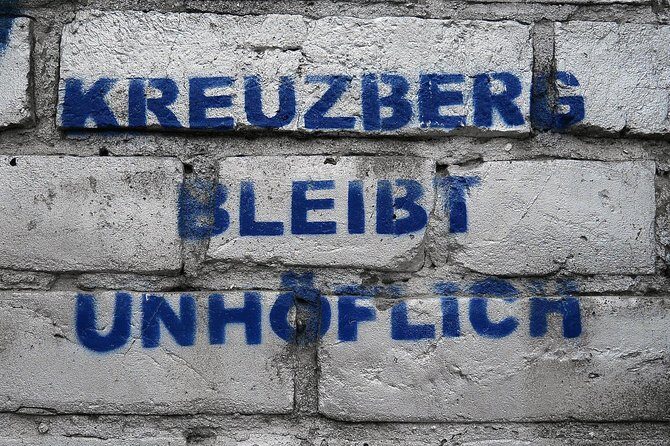
Kreuzberg is one of those Berlin districts where the past is not locked behind museum glass. It is in the street layout, in the buildings people built into their lives, and in the way walls and slogans are treated like part of the landscape. This tour gives you a way to read that landscape. You will leave with a clearer sense of why Kreuzberg attracts artists, immigrants, and people who like their city less tidy.
What makes this experience work is the balance. You are not only looking at trendy storefronts or street murals. You are also learning what the neighborhood was when it was restricted, and how those conditions shaped the identity it carries today. That context matters because Kreuzberg is often misunderstood if you only see the present-day vibe.
The guide you get can also make a big difference. Reviews highlight guides named Peter and Ronan, and both are described as patient, conversational, and genuinely into the neighborhood. If that sounds like your style, you’ll likely enjoy the way the tour moves.
You can also read our reviews of more walking tours in Berlin



Meeting at Schlesische Str. 18 and Opening with Oberbaumbrücke
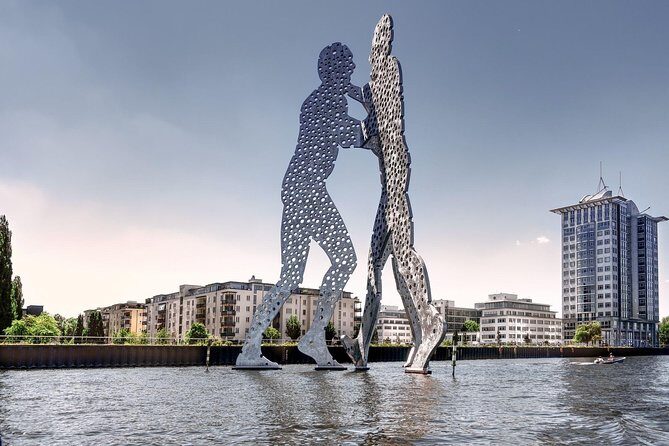
You meet at Schlesische Str. 18, 10997 Berlin. It is a good launch point because you start with a landmark instead of a random street corner. The first big stop is the Oberbaumbrücke, one of the city’s most beautiful bridges, and it is a great place to get your bearings.
From there, the tour’s rhythm starts: a short visual moment, then explanation, then movement. You’ll likely stand back for a minute, take in the bridge views, and then get a sense of where the district fits into Berlin’s larger story. Even if you’ve seen photos of this bridge already, starting here helps you feel oriented before the tour turns into Kreuzberg itself.
SO36, Wall Remnants, and Why Street Art Is More Than Decoration
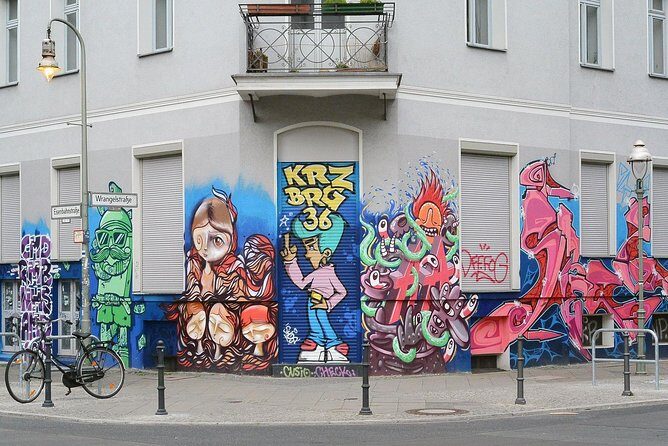
One of the tour’s central themes is how art shows up where people live. You pass key areas near SO36 as your guide explains the neighborhood’s rougher past and the quick-moving changes shaping its future. The point is not to scare you with history. It is to show you why certain visuals show up on buildings, walls, and corners the way they do.
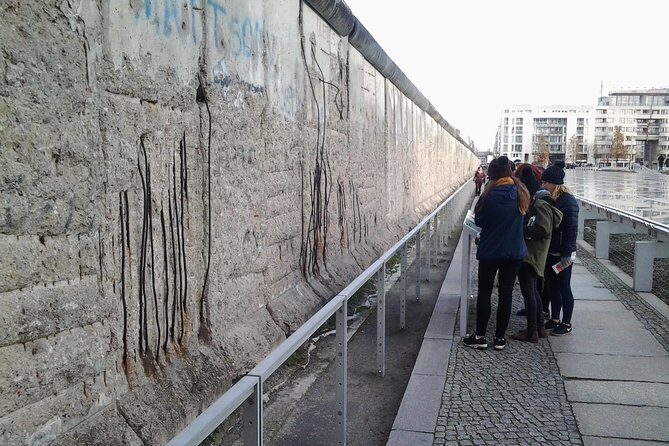
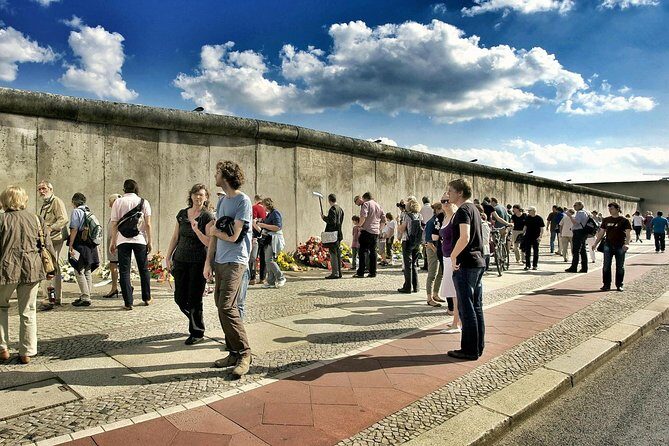
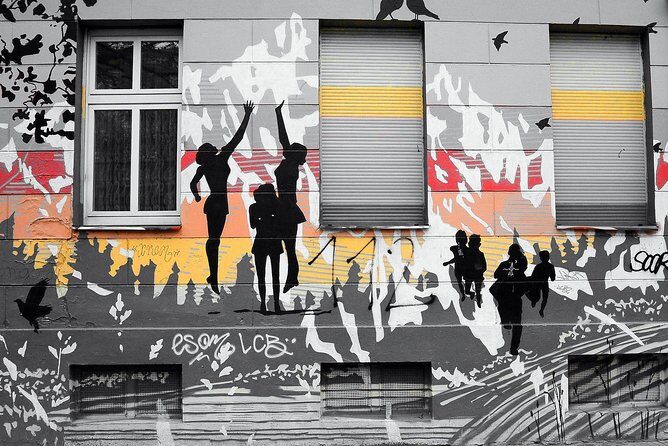
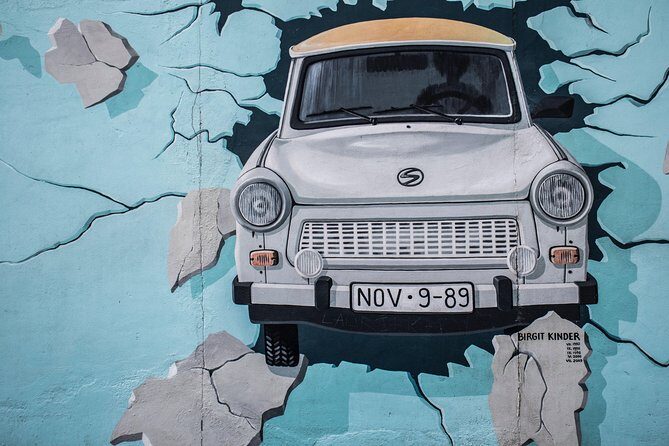
Then you start spotting the physical reminders of Berlin’s divided era. You’ll observe remains of the Berlin Wall, and the guide connects those remains to what Kreuzberg became afterward. This is where the tour’s art-historian approach helps. You’re not just told facts. You learn what to look for: how graffiti communicates, how murals behave like local commentary, and why the street art scene matters to Kreuzberg’s look and feel.
A practical plus here: because it is a small group (max 6), the guide can slow down when you want to stop and look closer. If you love murals, tags, and the stories behind street visuals, you’ll appreciate that attention.
Creative Reuse of Abandoned Spaces (and What It Means for the Present)

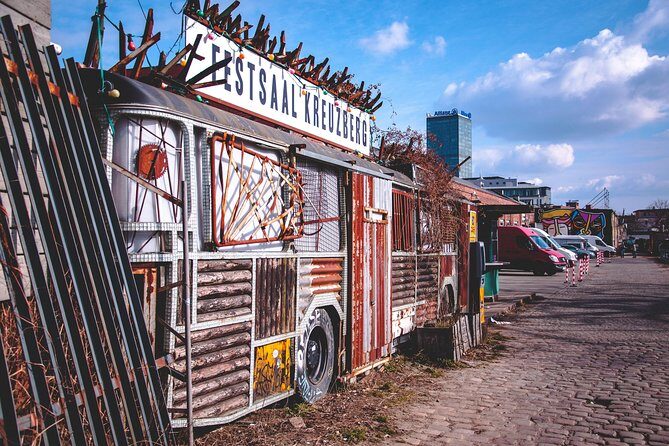
A big chunk of the tour focuses on creative uses of abandoned buildings and plots of land. This is one of those Kreuzberg ideas that sounds abstract until you see it. Berlin has plenty of historic buildings, but Kreuzberg’s story is also about how spaces get repurposed when official systems move slowly—or not at all.
As you walk through these areas, the guide ties it back to the neighborhood identity that formed when the district was cut off and then later pulled into a new era. You start noticing patterns: where people gather, what kinds of spaces invite community use, and how certain buildings become canvases for new life.
This part also helps you understand the “hip” reputation without treating it as a marketing term. The creativity is not just aesthetic. It is functional. It is part of how Kreuzberg keeps evolving.
Görlitzer Park and Markthalle 9: A Market and Park Break That Makes Sense
After the street-art and wall context, the tour shifts into places that feel more human-scale and relaxed. Görlitzer Park is a graceful stop where you can take a breath and watch neighborhood life flow. If your legs need a reset, this is a good moment for it.
Next comes Markthalle 9, the 120-year-old market hall. This is the kind of place where history is built into daily movement—vendors, shoppers, and food culture running in the same space for generations. If you only associate Berlin markets with quick snacks, this hall shows you a more grounded side of the city.
The market stop is also useful because it sets you up for what comes next: the Turkish food and shopping culture that is a major Kreuzberg signature.




Turkish Culture, Colorful Markets, and the Gözleme Sampling
Kreuzberg’s Turkish influence is easy to see once you know what to look for: shops, markets, and the day-to-day energy around food. The tour spends time here, pointing out how common Turkish culture is in everyday life rather than in a one-time performance.
You’ll pass colorful markets full of flowers, spices, and take-away foods you can sample. One specific highlight is Gözleme—deep-fried spinach and cheese. This is a strong choice because it is easy to eat on the move and it feels connected to the neighborhood, not staged for tourists.
Just note the tour details you should plan for: food and drinks are not included unless specified. The tour includes sampling opportunities as described, but you should still budget for extra snacks if you get hungry.
Bike Tour vs Walking: Picking the Right Way to See the District
This tour can be done on foot or by bicycle. The bike option covers more ground while still staying within the district. That matters because Kreuzberg is big in attitude—and a few key sites are far enough apart that you will use public transport at times anyway.
If you choose walking, you’ll get more micro-moments: a closer look at street art, doorways, and the texture of streets. If you choose the bike option, you’ll likely cover more stops with less time spent between areas.
Bike rental is optional at 10EUR per person, so you can decide based on your comfort level and how you feel about cycling in an urban environment. Either way, the guide keeps the tour focused on meaning, not just motion.
Price and Logistics: Is $153.85 Good Value?
At $153.85 per person for about 3 hours, this tour sits in the mid-to-higher range. The question is what you get for it. Here’s the value case I see:
- Max 6 small-group size, which usually means less crowd noise and more direct guide attention.
- A professional art historian guide, not just a general city storyteller.
- A route that combines history (Wall remnants), visual culture (street art), and daily life (markets and food culture).
The one consideration is the format: you’re not guaranteed a purely walkable, park-and-castle style route. Public transport is used a few times because distances between key sites can be too far to walk. If you like hopping on and off transit, that’s fine. If you hate it, you’ll feel the difference.
Also, the tour duration is set to keep things tight. You will cover a lot, but you won’t linger in a single museum room. This is a street-level neighborhood education.
When the Weather Turns: How This Tour Holds Up
Berlin weather can change fast. One review specifically called out bad weather and said it did not slow things down, with the guide keeping the story flowing. That lines up with how the tour is designed: even if it is cold or rainy, there are enough short segments and indoor-ish moments (like the market hall) to keep you moving.
My practical advice: wear layers and bring something for rain. You will be outside for parts of the experience, and the comfort factor matters because you’ll be standing to look at walls, art, and views.
Who This Kreuzberg Tour Is For (and Who Should Skip It)
This is a great fit if you want more than surface-level Berlin sightseeing. You’ll enjoy it if you care about street art with context, neighborhood history without the heavy lecture vibe, and food culture that is part of daily life.
It is also ideal for:
- first-time Berlin visitors who want an authentic break from the central tourist circuit
- Berlin repeaters who want to see Kreuzberg with new eyes
- anyone who likes walking plus occasional transit without getting stuck in one spot
You might prefer something else if you want a fully accessible, fully sedentary experience with no walking and no transit segments. The tour says most travelers can participate, but the overall design is still active.
Should you book this Kreuzberg Walking Tour?
I’d book this if your idea of a great Berlin day is street art with history attached, markets where local culture is obvious, and a guide who can make the district feel logical instead of chaotic. The combination of small-group size, an art historian guide, and the route that includes Oberbaumbrücke, Wall remnants, Görlitzer Park, Markthalle 9, and Turkish markets is exactly the kind of value that makes a neighborhood tour worth the price.
Skip it if you hate public transport hops or you only want a slow, purely walking route. But if you’re flexible and curious, this is one of the better ways to understand Kreuzberg in a short afternoon.
FAQ
How long is the Kreuzberg Walking Tour?
The tour lasts about 3 hours.
How big is the group?
It is a small-group tour with a maximum of 6 people. The overall activity has a maximum of 10 travelers, and the listing notes up to 8 per booking.
Is the tour offered in English?
Yes, it is offered in English.
Does the tour include a bike option?
Yes. The experience can be done on foot, and it is also offered as a bicycle tour. Optional bike rental is 10EUR per person.
Where do I meet the guide?
You meet at Schlesische Str. 18, 10997 Berlin.
What stops are included?
You start over Oberbaumbrücke, see remains of the Berlin Wall, explore creative uses of abandoned spaces, learn about graffiti and street art, visit Görlitzer Park and Markthalle 9, and then move through Turkish markets and shops. The tour also discusses controversial riverside development plans.
Is food included?
Food and drinks are not included unless specified. The tour describes sampling take-away foods such as Gözleme, but you should still plan on spending extra if you want more.
Do I need to use public transport?
You will need to use public transport a few times, because some distances between key sites would be too far to walk.
Is hotel pickup or drop-off included?
No, hotel pickup and drop-off are not included.
Can I cancel for free?
Yes. You can cancel up to 24 hours in advance for a full refund.