REVIEW · BERLIN
Historical city tour in the African Quarter in Berlin
Book on Viator →Operated by Dekoloniale Stadtführung · Bookable on Viator
Street names can rewrite your worldview. On this African Quarter walk in north Berlin, you’ll connect 22 oddly specific streets to Germany’s colonial-era links with Africa, and why those names still spark questions today. It’s a small-group tour that uses real places and clear explanations to make a usually neglected chapter feel immediate.
What I like most is the focus on street naming as a living history lesson. You’ll walk from Swakopmunder Straße to Anna-Mungunda-Allee, Manga-Bell-Platz, and Kongostraße, with the guide turning each name into a specific topic: Namibia, renaming debates, and the Berlin events of 1884. The second win: the tour uses maps and big-picture connections, including a before-and-after look at Africa around the Berlin conference.
One thing to consider is that this isn’t a fast, casual sightseeing loop. It’s built around colonial context and discussion-level questions, so if you prefer purely architectural facts or light storytelling, you might find it a bit heavy.
In This Review
- Key Things to Know Before You Walk
- Before You Go: What This 2-Hour Walk Really Covers
- African Quarter Basics: 22 Streets and the Naming Code
- Swakopmunder Straße: Namibia, Germany, and a Street Name’s Real Link
- Anna-Mungunda-Allee and the Petersallee Renaming Debate
- Manga-Bell-Platz: Gustav Nachtigal and Whose Story Wins Space
- Kongostraße and Berlin 1884: The Congo Conference Without African Presence
- The Guide’s Style: Questions, Short Stops, and Strong Focus
- Price and Value: Is $33.57 Worth Two Hours of Colonial-Era Learning?
- Meeting Point to Finish: Practical Route Tips
- Who Should Book This African Quarter Tour?
- Should You Book Dekoloniale Stadtführung’s African Quarter Tour?
- FAQ
- How long is the African Quarter historical city tour?
- How much does the tour cost?
- Where does the tour start?
- Where does the tour end?
- Is the ticket mobile?
- What stops are included on the route?
- How big is the group?
- Do I get confirmation after booking?
- Is the tour dependent on weather?
- What is the cancellation policy?
Key Things to Know Before You Walk
- A focused 2-hour route through the African Quarter, using four short stop points instead of a long, exhausting detour.
- 22 streets, one theme: street names tied to African countries, European cities, and colonial-era officials.
- Colonial-era questions that get straight to the point, including what happened in Berlin in 1884 and who was (not) present.
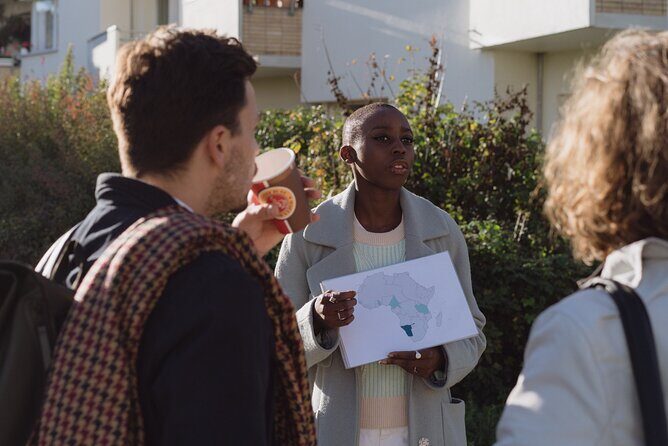
- Map work at the end of the tour, with an Africa view before and after the Berlin conference.
- Small group size (max 20), which helps keep the discussion from turning into background noise.
Before You Go: What This 2-Hour Walk Really Covers
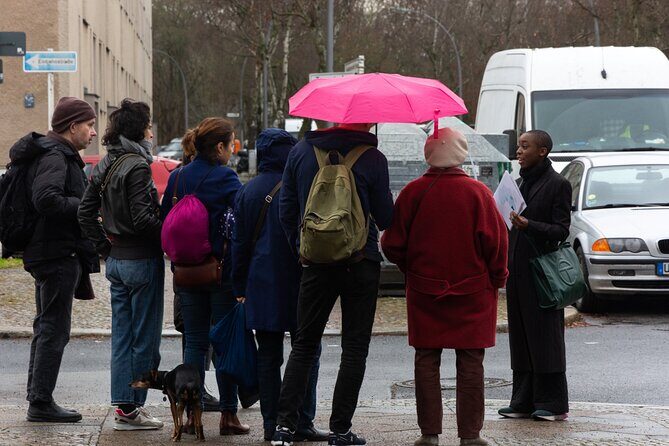
This is a compact historical walking tour—about 2 hours—built for people who want meaning, not just dates. You’ll cover Berlin’s African Quarter in the north of the city, where the streets function like a set of clues. The core idea is simple: why are these streets named the way they are, and what does that tell you about Germany’s past?
The tour is run by Dekoloniale Stadtführung, and you’ll start at Swakopmunder Str. 44 and finish near Rehberge (13349 Berlin). It’s priced at $33.57 per person, and it’s set up as a mobile ticket experience, so you’re not juggling paper.
Weather matters here. The tour requires good weather, and if it’s canceled due to poor conditions you’ll be offered a different date or a full refund. Also, the route is designed for walking—most people can join, but it helps to be comfortable on a city stroll.
You can also read our reviews of more city tours in Berlin


African Quarter Basics: 22 Streets and the Naming Code
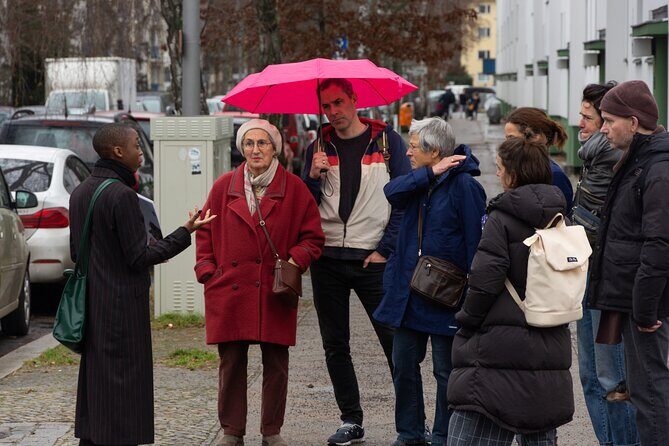
The African Quarter is described as an area monument made up of 22 streets. The striking part is the naming scheme: streets are named after African countries, European cities, and former imperial commissars of the colonial era. That mix is your first clue that the neighborhood is more than a themed set—it’s a record of how colonial thinking got built into everyday life.
On the tour, the guide doesn’t just list names. You’ll get the connection between Germany and specific places—especially German colonial involvement in Namibia—and you’ll also hear about the colonial period of the early 20th century. The tour’s pitch is a “change of perspective,” and you can feel that in how each stop is framed as a question, not a statement.
For you, this matters because street names are the kind of history you walk past daily. The tour turns those passive labels into an active path through German-African history—exactly the kind of context you don’t usually pick up from a quick postcard pass.
Swakopmunder Straße: Namibia, Germany, and a Street Name’s Real Link
Your first stop is Swakopmunder Straße, and the guide immediately asks the big question: what does Swakopmund have to do with Berlin? The tour uses this as the entry point into the way German colonial ties reached beyond Europe. You’re not just learning that a name exists—you’re learning why that name is sitting here in the first place.
You’ll also hear what role Germany played in Namibia. The format is short—about 5 minutes at the stop—but it’s meant to give you a handle you can carry forward. If you remember only one thing from Stop 1, make it this: in this neighborhood, street names work like evidence. They point to political and economic relationships that were real, not symbolic.
Potential drawback at this stage: if you’re expecting a slow buildup with lots of scenic breaks, this one starts with questions. But that’s also why it works—your brain gets trained early to read the street signs as history.
Anna-Mungunda-Allee and the Petersallee Renaming Debate
The tour’s second stop is Anna-Mungunda-Allee. Here the focus shifts from one-country connection to the politics of memory—specifically, how street names can change, and why that matters. You’ll hear about who Petersallee was named after, and then the guide poses the uncomfortable question: should the street be renamed, and why?
That renaming debate isn’t presented as a trivia item. It’s framed as a real-world issue: names can honor some people and erase others, and the choice says something about what a society decides is worth preserving.
Because the stop is also around 5 minutes, you shouldn’t expect a long lecture. But you should expect your thinking to shift. Instead of asking only who Germany connected to, you’ll start asking who got memorialized—and whether that still holds today.
If you’re the kind of traveler who likes to leave tours with a clear takeaway, this stop is one of the most useful. It’s the point where you realize the tour isn’t only about the past. It’s also about how the past stays present.
Manga-Bell-Platz: Gustav Nachtigal and Whose Story Wins Space
Stop 3 is Manga-Bell-Platz, and the topic is Gustav Nachtigal. The tour asks two tightly linked questions: who was he, and why is the central square of the African Quarter named after him?
This is where the tour’s “perspective change” becomes more than marketing language. You’ll see a major public space—something you’d likely treat as just another square—then you’ll get the historical reason for the name. That turns the space into an argument about commemoration: what happens when colonial figures become local landmarks?
You’ll also hear information about the colonial era in general through this lens, which is helpful if you’ve never seen the German side of African colonialism described this directly. The stop is short again (around 5 minutes), but because it’s about a central plaza name, it tends to stick.
One consideration: if you prefer tours that avoid moral discomfort, this may feel pointed. But it’s also exactly why it earns its “must-do” reputation for people who want historical honesty, not sanitized sightseeing.
You can also read our reviews of more historical tours in Berlin




Kongostraße and Berlin 1884: The Congo Conference Without African Presence
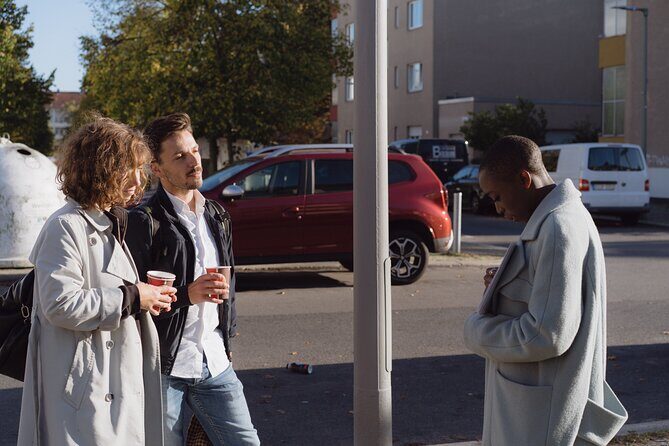
Stop 4 is Kongostraße, and the guide zooms out to the international decision-making that shaped Africa. You’ll tackle what happened in Berlin in 1884, and the tour explains what the Congo Conference was and why no one from Africa was present.
That last detail is crucial. It changes the meaning of everything you saw earlier about street names. Instead of viewing the neighborhood as a collection of odd labels, you start seeing the bigger mechanism: colonial powers deciding borders and futures without meaningful African representation.
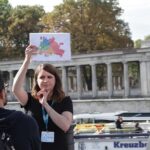
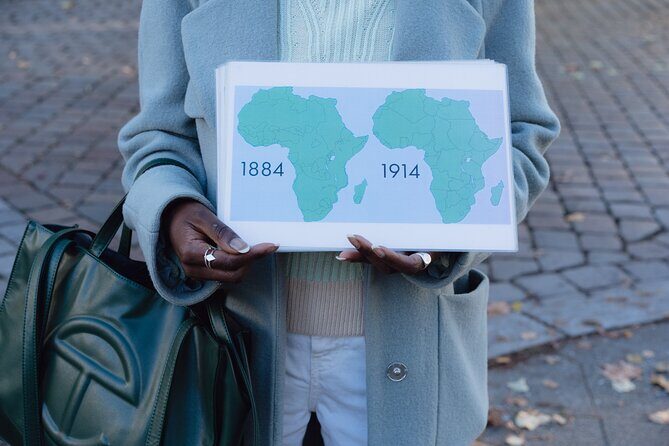
The tour also includes something very practical and memorable: you’ll be shown a map of Africa before and after the Berlin conference. Map moments can make a tour feel real because you can visualize the change, not just hear it.
As a travel tip: when a guide shows maps, try to keep your eyes on the visual rather than only on the narration. This is one of the best parts of the tour for understanding the scale of what was done and how it echoes forward into how places get remembered.
The Guide’s Style: Questions, Short Stops, and Strong Focus
The tour format is built around short, structured stops—each one about 5 minutes—with a clear set of prompts at every location. That matters because it keeps the walk from dragging. You’re not stuck in a single spot while the guide covers ten unrelated topics. Instead, each street name becomes its own mini lesson.
You’ll also feel the guide’s ability to make a hard subject understandable. The tour is repeatedly praised for being engaging and for giving you information that lands, not just facts that float by. For you, that’s the difference between “I learned something” and “I can actually use what I learned while I’m here.”
One small trade-off: because the stops are short, you’ll likely want to ask your own follow-up questions. If you’re the type who thinks in questions mid-walk, great. If you’re hoping for extended discussion time at each point, this one might feel a touch brisk.
Price and Value: Is $33.57 Worth Two Hours of Colonial-Era Learning?
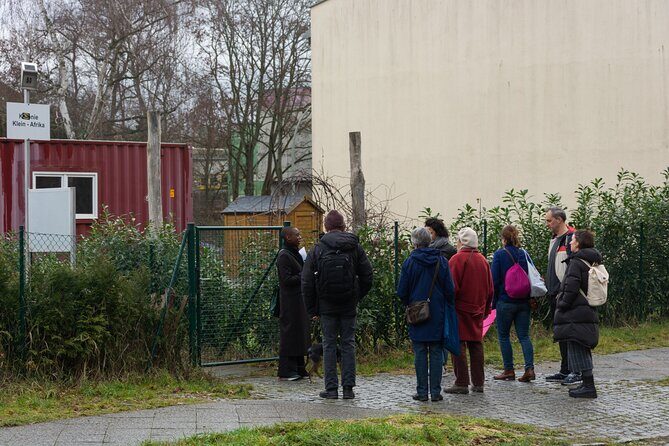
At $33.57 per person for about 2 hours, the price lands in the “very reasonable” zone for a walking tour that’s focused and small-group. The tour’s value comes from structure: you get a clear route, a limited group size (max 20), and four meaningful stops instead of a scatter of vague highlights.
Also, the topic isn’t the kind of “standard Berlin history” you can read from a single plaque. The tour is built around German-African history that’s described as rarely discussed, and that alone is a strong reason to book if you want your Berlin to feel more specific than generic city facts.
One more practical value point: a mobile ticket makes it easy on the day. If you’re traveling light or juggling multiple booked activities, small logistics matter more than they sound.
And if you’re wondering when to book, note that this tour is typically booked about 21 days in advance on average. That’s a sign it’s not usually a last-minute product, especially with a group cap.
Meeting Point to Finish: Practical Route Tips
You start at Swakopmunder Str. 44, 13351 Berlin. The finish is near Rehberge, 13349 Berlin. Both are in Berlin’s north, and the tour notes that it’s near public transportation, which is a big help if you’re pairing it with other parts of your day.
Because the itinerary is short-stop by short-stop, you won’t need long breaks. Still, wear shoes that can handle city sidewalks—this is a walking tour through multiple streets of an area monument.
If you want to get the most out of the experience, arrive a few minutes early so you can settle in before the guide starts tying street names to the bigger story. And once you’re walking, keep an eye on the street signs. In this neighborhood, the signs are half the lesson.
Who Should Book This African Quarter Tour?
This is a good fit if you want Berlin beyond the postcard basics. You’ll enjoy it most if you like walking tours that explain the why behind what you see—especially when the “what” is something as ordinary as a street name.
It’s also a strong match for travelers who like discussion-level historical context. The tour doesn’t just ask questions; it uses those questions to get you to think about how colonial power worked and how it still shows up in public space today.
It might be less ideal if you want a purely visual tour or if you dislike heavier political topics. The subject matter is not light, and the guide’s approach is clearly geared toward perspective change.
On the plus side, most travelers can participate, and service animals are allowed. If you need to work around mobility issues, it’s worth checking with the provider directly before you go, since the only specifics given are that it’s a walking tour and requires good weather.
Should You Book Dekoloniale Stadtführung’s African Quarter Tour?
I’d book it if you’re the kind of traveler who reads the city like a document. This tour gives you tools: how street names reflect colonial history, what the Berlin event of 1884 was, and why map-making and conference decisions mattered—especially when African voices were absent.
I’d skip it if you want a gentle, general-audience overview with zero discomfort and minimal context. The pacing is tight, the stops are short, and the questions are direct. But if that sounds like your style, this is a smart value use of time.
If you’re deciding between multiple Berlin experiences, this one stands out because it’s not trying to compete on famous monuments. It turns the streets themselves into a lesson you can’t get from a quick glance.
FAQ
How long is the African Quarter historical city tour?
It’s approximately 2 hours.
How much does the tour cost?
The price is $33.57 per person.
Where does the tour start?
The meeting point is Swakopmunder Str. 44, 13351 Berlin.
Where does the tour end?
The tour ends near Rehberge, 13349 Berlin.
Is the ticket mobile?
Yes, it includes a mobile ticket.
What stops are included on the route?
The tour covers Swakopmunder Straße, Anna-Mungunda-Allee, Manga-Bell-Platz, and Kongostraße.
How big is the group?
The tour has a maximum of 20 travelers.
Do I get confirmation after booking?
Yes, confirmation will be received at time of booking.
Is the tour dependent on weather?
Yes. The experience requires good weather. If it’s canceled due to poor weather, you’ll be offered a different date or a full refund.
What is the cancellation policy?
You can cancel for a full refund up to 24 hours in advance. If you cancel less than 24 hours before the start time, the amount paid is not refunded.