REVIEW · HAMBURG
Hamburg: UNESCO-World Heritage Sites Tour
Book on GetYourGuide →Operated by Stattreisen Hamburg e.V. · Bookable on GetYourGuide
Hamburg’s UNESCO core is compact and smart. In just two hours, you get a walking route that links the Hanseatic City story to the Kontorhäuser office life and the Speicherstadt warehouse world, plus a peek into how the port works. I especially like the contrast: red-brick storehouses and canals next to modern dock areas, and you’re not stuck with just photos on a screen. One thing to keep in mind: the short ferry ride only happens on Saturdays, so don’t count on it if your dates fall midweek.
The tour also keeps the pace practical. It’s built as a guided circuit through major stops like Sprinkenhof, Chile House, Meßberg, and then the Speicherstadt district before finishing at Magdeburg Harbour. The biggest drawback for some people is simple: it’s German-language only, so you’ll get the most out of it if you’re comfortable following a lively guide.
If you’re the kind of traveler who likes architecture, trade, and “how the city actually worked,” this is a solid value use of a short day in Northern Germany.
In This Review
- Quick take: what you’ll notice on the route
- Hamburg’s UNESCO core in 2 hours: the value of a tight walking loop
- Meeting at Jakobikirche: start location and how to get your bearings fast
- Sprinkenhof and the Kontorhäuser mindset: offices that powered global trade
- Chile House: learning the famous landmark through a guided story
- Meßberg to Speicherstadt: switching from paperwork to storage
- Speicherstadt walking focus: red-brick storehouses, canals, rope winches, and views
- Dar es Salaam Square: port life explained with pictures and spice samples
- Magdeburg Harbour finish: International Maritime Museum and Überseequartier area
- Saturday-only ferry: the short water change of pace
- Weather, pace, and German-language guidance: plan for a smooth 2 hours
- Who should book this UNESCO-World Heritage Sites Tour?
- Should you book this UNESCO-World Heritage Sites Tour?
- FAQ
- How long is the Hamburg UNESCO World Heritage Sites walking tour?
- What language is the guided tour in?
- Where do I meet the guide?
- Where does the tour end?
- Is the ferry ride included?
- Does the tour run in bad weather?
- What’s the cancellation policy?
Quick take: what you’ll notice on the route
- Kontorhäuser office buildings explained as business engines, not just pretty facades
- Sprinkenhof and Chile House as key signposts in Hamburg’s story
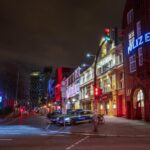
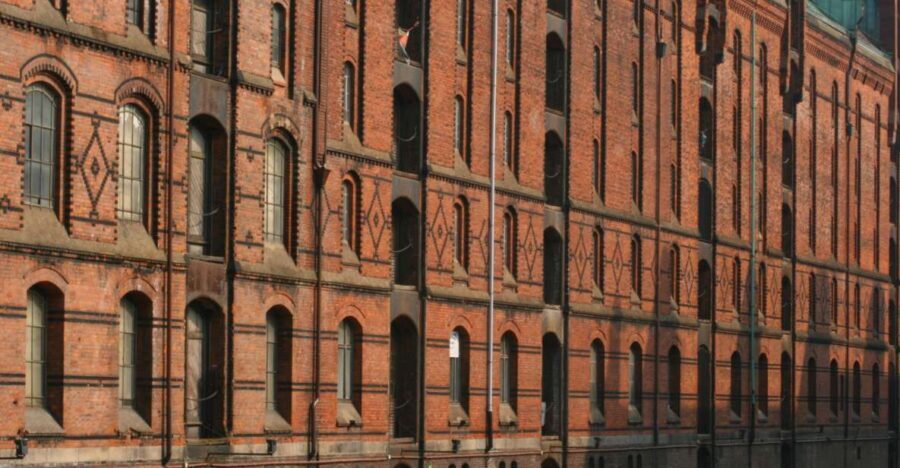
- Speicherstadt red-brick storehouses with canals, dock promenades, and big views over the Elbe
- Old rope winches and carpet storage that turn warehouses into real, human details
- Port behind-the-scenes moments with pictures and samples of spices
- Saturday-only ferry for a quick change of pace
Hamburg’s UNESCO core in 2 hours: the value of a tight walking loop
This tour works because it’s designed for people who want meaning without a whole day commitment. You’re not just checking off famous names. You’re getting a guided storyline that connects two sides of Hamburg’s development: the world of offices and the world of warehouses.
That matters because Hamburg’s “old and new” feeling can otherwise confuse you. In a short time, you’ll see why the city’s trade power wasn’t accidental. It was built—piece by piece—through business spaces like the Kontorhäuser, and then through the storage and logistics infrastructure of the Speicherstadt.
And at $18 per person for a two-hour live guided walk, the value is mainly in the time compression. You get a full route with multiple guided stops, instead of trying to stitch the same sights together on your own while figuring out what each place is supposed to mean.
You can also read our reviews of more historical tours in Hamburg
Meeting at Jakobikirche: start location and how to get your bearings fast
You’ll meet at Jacobikirche, at the corner of Bugenhagenstraße and Barkhof. From there, the tour begins at Jakobikirchhof and starts moving right away.
Why this helps you: it reduces the “where do we go first?” stress. You get a clear starting point and a route that flows naturally toward Sprinkenhof, then Chile House, then Meßberg, and finally through Speicherstadt toward Magdeburg Harbour.
If you’re doing this as part of a packed Hamburg day, plan to arrive a bit early. Two hours goes quickly when you’re walking and listening.
Sprinkenhof and the Kontorhäuser mindset: offices that powered global trade
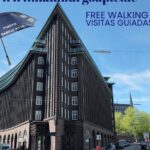
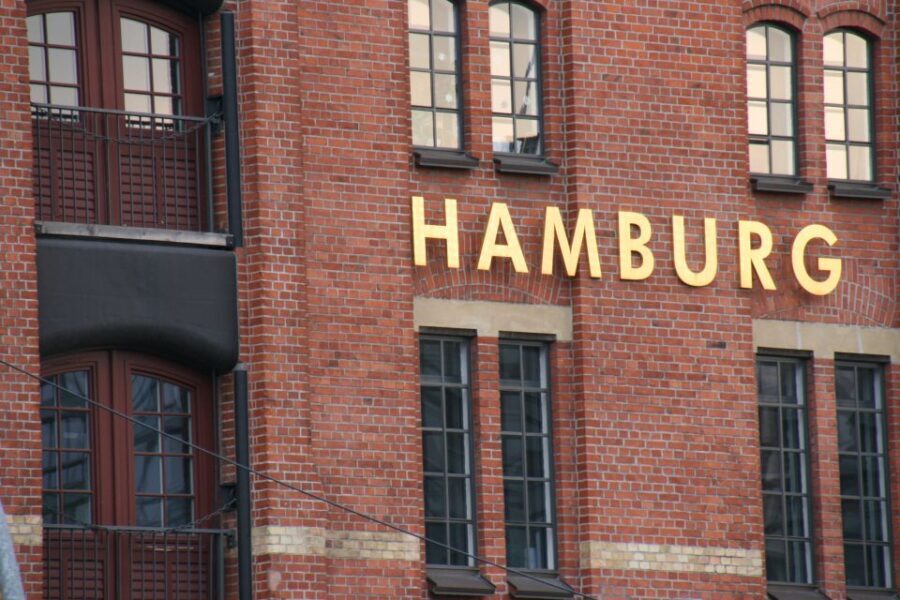
Sprinkenhof is your first guided stop, and it sets the tone for the Kontorhäuser section. These aren’t introduced as distant history. They’re framed as working spaces tied to growth and international influence.
What I like about this approach is that it gives you a mental checklist for looking. You’re encouraged to notice these office buildings as systems for trade administration—places where clerks worked and where money counting tables were part of daily business.
That’s a more practical way to understand architecture. Instead of asking only “what does it look like?”, you start asking “what did it do?” Once you think that way, the buildings stop being static landmarks and start reading like documents.
Possible drawback: because this part focuses on business life and development, it may feel more conceptual if you’re only interested in street-level scenery. But if you like stories behind buildings, it’s a strong start.
Chile House: learning the famous landmark through a guided story
Next up is Chile House for a guided visit. Even if you’ve heard the name before, the value here is the context you get while you’re standing there.
The tour treats Chile House as a key marker in Hamburg’s changing identity—moving you from early trade “infrastructure thinking” into a more recognizable city icon zone. It’s also a useful moment for pacing. By the time you reach Chile House, you’ve warmed up and you’re ready to connect names to meaning.
What to do: during the guide’s explanation, look for contrasts in the surrounding streetscape—because later you’ll see that old and new isn’t just a vibe in Hamburg. It’s built into how the city expanded.
Meßberg to Speicherstadt: switching from paperwork to storage
The tour then goes to Meßberg for another guided segment, and this is where the experience starts feeling like a journey between functions.
You’re moving from the office-building world into the warehouse district logic. You’ll feel the shift in your eyes too. Offices push you to think about people who handled information and money. Warehouses push you to think about what needed to be stored, protected, and moved efficiently.
This part is also helpful if you’re trying to connect the dots for yourself later. When you leave Meßberg, you’ll already understand why storage wasn’t a side detail—it was essential to trade.



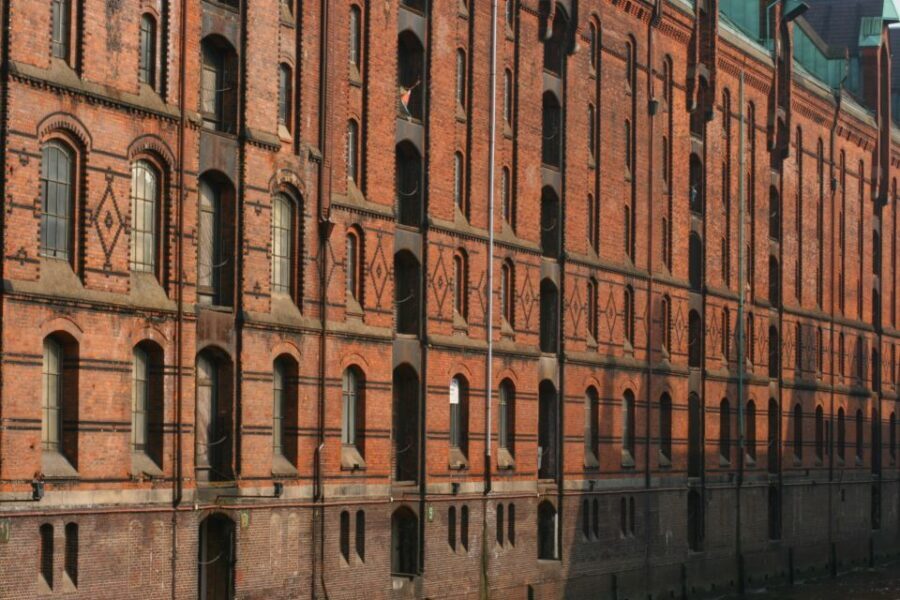
Speicherstadt walking focus: red-brick storehouses, canals, rope winches, and views
Then you reach the heart of the experience: Speicherstadt. This is where the “UNESCO on foot” part really earns its keep.
Expect:
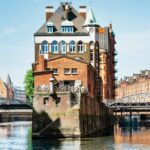
- Historic red-brick storehouses you can visually track as a district
- Canals that shape how you move and how the buildings read from different angles
- Old dock promenade areas with views that look out toward the river Elbe
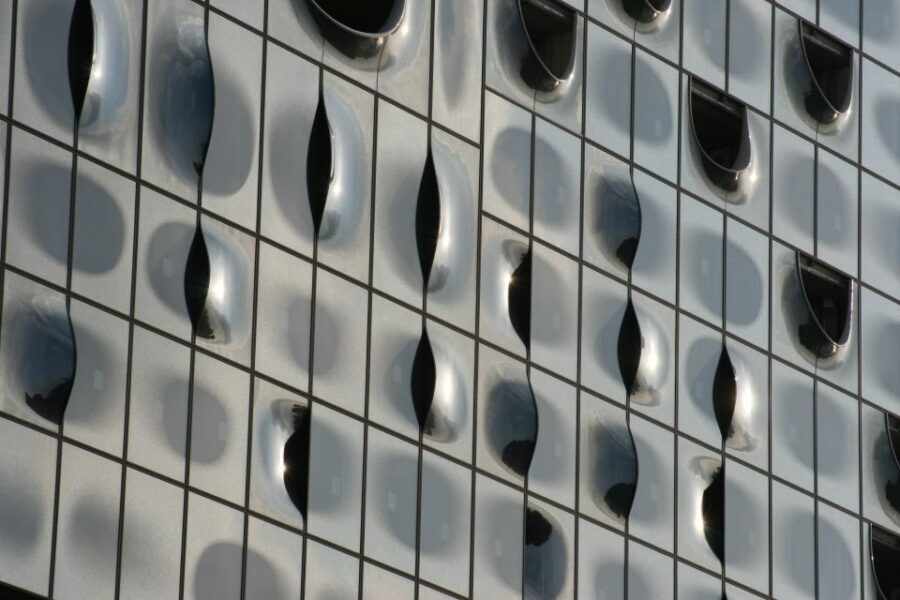
- Modern architecture in the mix, so you see contrast instead of pretending Hamburg is only old-world
One of the most distinctive touches is the attention to objects: you’ll hear about old rope winches and carpet storage. Those details do something important. They turn a warehouse district into a place with specific tools and specific cargo needs, instead of generic brick-and-mortar.
If you’re the type who loves architecture but gets bored by “this is old,” these are the kinds of details that keep the tour interesting. You can almost picture how work happened in the spaces you’re walking through.
Small consideration: Speicherstadt is a large walking area inside a historic district. Even though the whole tour is only two hours, you’ll still want comfortable shoes. The tour is described as happening in all weather, so plan for slippery or damp conditions too.
Dar es Salaam Square: port life explained with pictures and spice samples
After Speicherstadt, you’ll head to Dar es Salaam Square for a guided stop. This is where the tour shifts toward the working port.
You’ll hear about the workings of the port, and the guide uses pictures and samples of spices as part of the explanation. That combination matters more than it sounds. Visuals help you understand logistics. Samples help you connect trade with real-world goods.
For practical travel value, this is one of the best stops to fully lean in. It’s not just architectural education—it’s trade education. You’ll start seeing the city as a system: storage, transport, and the kinds of commodities that moved through Hamburg.
If you’re traveling with someone who usually tunes out history talks, this is likely the moment that keeps them engaged, because it’s sensory and concrete.
Magdeburg Harbour finish: International Maritime Museum and Überseequartier area
The tour ends at Magdeburg Harbour. It’s not just an “and we’re done” endpoint. You’ll specifically learn about the International Maritime Museum and the Überseequartier area.
That ending works because it ties the story back to today. After spending time with Kontorhäuser offices and Speicherstadt warehouses, you’re guided toward the port and maritime-adjacent modern zone, so the city’s trade identity continues rather than stopping at the museum door.
If you want to keep the momentum after the tour, this is a good finishing location. You’re in an area connected to the harbor theme, which makes it easier to continue exploring on your own without feeling lost.
Saturday-only ferry: the short water change of pace
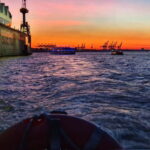
There’s a short ferry trip included, but only on Saturdays.
This matters for planning. If you’re there on a Saturday, you’ll get a quick change of perspective without adding much time. If you’re not there on a Saturday, you’ll still do the same core route, just without that extra water moment.
Practical tip: if your schedule is flexible and the ferry matters to you, consider choosing a Saturday for this tour. Otherwise, treat the ferry as a bonus, not the main event.
Weather, pace, and German-language guidance: plan for a smooth 2 hours
The tour takes place in all weather conditions. Dress for what Hamburg will throw at you that day. Light rain is one thing; wind and cold are another. Bring something that lets you stay comfortable for a walking-and-listening experience.
On pacing: the duration is two hours, and the route includes multiple guided stops. That means you’re moving fairly continuously, and the guide is expected to keep the story flowing without dragging.
Language is another key point. The tour is a German live guided experience. If your German is basic, you may catch the architecture and place names, but the full value—especially the port explanation with context—will depend on your ability to follow the guide.
One extra quality signal from a guide named Albert: his communication was praised for being detailed, with a voice that carried well and a tempo that felt manageable. That’s not a guarantee of every guide, but it’s a strong indicator that the experience is built around clear, listenable guidance.
Who should book this UNESCO-World Heritage Sites Tour?
You’ll probably love this tour if:
- You want a short, guided way to see Hamburg’s UNESCO-linked trading districts
- You like architecture with a job story (offices, storage, port logistics)
- You enjoy walking and want a route that includes both old brick and modern harbor-area contrasts
- You’re interested in trade and commodities, especially because of the spice samples and port visuals
You might want to skip it (or choose another format) if:
- You need an English-only tour
- You’re expecting a mostly scenic photo walk with minimal explanation
- You want the ferry ride and you’re visiting on a non-Saturday date
Should you book this UNESCO-World Heritage Sites Tour?
Yes, I’d book it if you want a focused, high-value route through Hamburg’s trade heritage. The best reason is the structure: it connects Kontorhäuser offices to Speicherstadt warehouses, then brings you to a harbor-focused ending at Magdeburg Harbour with real context, not just place names.
At $18 for two hours with a live German-speaking guide, you’re paying for meaningful guidance across multiple major stops—Sprinkenhof, Chile House, Meßberg, Speicherstadt, Dar es Salaam Square, and then Magdeburg Harbour. That’s the kind of value that’s hard to replicate solo unless you already know what to look for.
If your dates include a Saturday and you’d enjoy a brief water break, it becomes even more attractive.
FAQ
How long is the Hamburg UNESCO World Heritage Sites walking tour?
It lasts about 2 hours.
What language is the guided tour in?
The tour is led by a live German-speaking guide.
Where do I meet the guide?
You meet at Jacobikirche, on the corner of Bugenhagenstraße and Barkhof.
Where does the tour end?
The tour finishes at Magdeburg Harbour.
Is the ferry ride included?
A short ferry trip is included only on Saturdays.
Does the tour run in bad weather?
Yes. The tour takes place in all weather conditions, so you’ll want appropriate clothing.
What’s the cancellation policy?
You can cancel up to 24 hours in advance for a full refund.