REVIEW · HAMBURG
Dialog im Stillen (Dialogue in Silence)
Book on GetYourGuide →Operated by Dialoghaus Hamburg (Dialogue Impact gGmbH) · Bookable on GetYourGuide
Silent communication changes how you pay attention.
At Dialogue in Silence in Hamburg, you spend an hour in a no-audio learning space with noise-cancelling headphones, guided by people who communicate fluently through hands, eyes, and expression.
I especially love two parts. First, the tour turns sign language into an active skill, not a lecture. You’ll practice in small, creative stations where you learn by doing, including basic signing and then using the body and face to carry meaning. Second, the guides set the tone in a friendly, human way, which makes it easier to drop your fear of doing it wrong.
One possible drawback: the experience is quiet by design. Until the final station, you won’t rely on spoken language at all, so if you get anxious in sound-restricted settings, it might take a minute to settle.
In This Review
- Key takeaways before you go
- Dialogue House Check-In: Headphones and a Silent Setup in Hamburg
- Learning to Talk With Hands and Eyes: How the Non-Verbal Stations Work
- Facial Expressions and Body Language: The Part Most People Miss
- Bilingual Finale With English or German: What the Quiet Helps You Understand
- Price and Value for a 1-Hour Hamburg Experience
- What to Wear and How to Prepare So You Don’t Get Stuck
- Who Should Book This Silent Sign-Language Tour
- Should You Book Dialogue in Silence?
- FAQ
- Where does Dialogue in Silence start?
- How long is the tour?
- How much does it cost?
- Is the tour silent the whole time?
- What languages are available?
- What’s included in the price?
- What should I bring?
- What are the payment and cancellation options?
Key takeaways before you go
- Headphones on, sound off for most of the experience, so you focus on hands and facial cues
- Interactive stations that train you to “think with your body,” not just watch
- Guidance from deaf signers who model communication as real conversation, not performance
- You learn sign plus expression, including how meaning changes with posture and face
- A bilingual wrap-up in English or German where you can ask questions and reflect
- Built for barrier-free connection, aiming to reduce misconceptions and apprehension
Dialogue House Check-In: Headphones and a Silent Setup in Hamburg
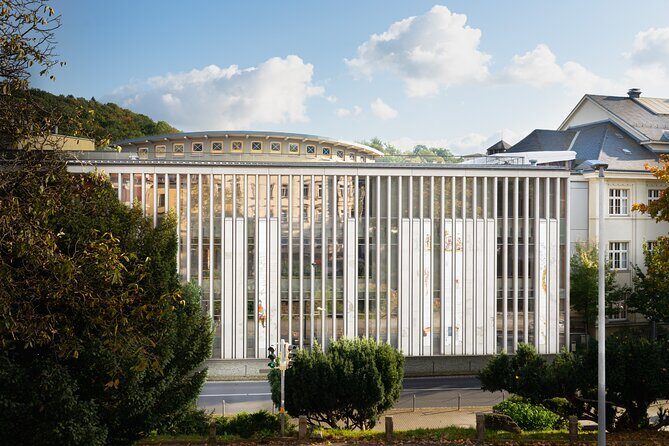
Start at Dialoghaus Hamburg gGmbH, inside Dialogue House. This is the point where the whole experience shifts from normal life into a controlled learning environment, and that change matters more than you’d expect.
You’ll be welcomed by your guide, an expert in non-verbal communication, and then you’ll put on noise-cancelling headphones. With the outside world cut down, you can’t default to listening for hints. Instead, you learn to watch—hands, eye contact, timing, and the small signals people normally miss.
If you’ve ever tried learning sign language from a book or a quick video, you’ll appreciate what the setting does. It forces attention to the right place. It also makes the room feel safe, because everyone is learning together inside the same silence.
You can also read our reviews of more tours and experiences in Hamburg.



Learning to Talk With Hands and Eyes: How the Non-Verbal Stations Work
The tour is structured like a series of immersive stations, and each one pushes a slightly different communication challenge. The goal isn’t to make you fluent in an hour. It’s to show you how communication works when sound is removed.
Early on, you’ll work on basic sign language. That’s your foundation, but the real lesson comes from the next steps: you’re not just memorizing gestures. You’re practicing how meaning is built through movement, placement, and pace.
As you move through the stations, the exercises gradually ask for more. You’ll express ideas, not just isolated signs, and you’ll use your whole body to help your message land. This is where many people surprise themselves. Even if your signing is clumsy, your intent and body language can still make the communication clearer.
One thing I value in this style of training is the built-in feedback loop. You’re actively thinking during the activity, and you’re doing it in front of a guide who can see what you’re trying to do. In other words, you don’t just sit back and hope you understood.
Facial Expressions and Body Language: The Part Most People Miss
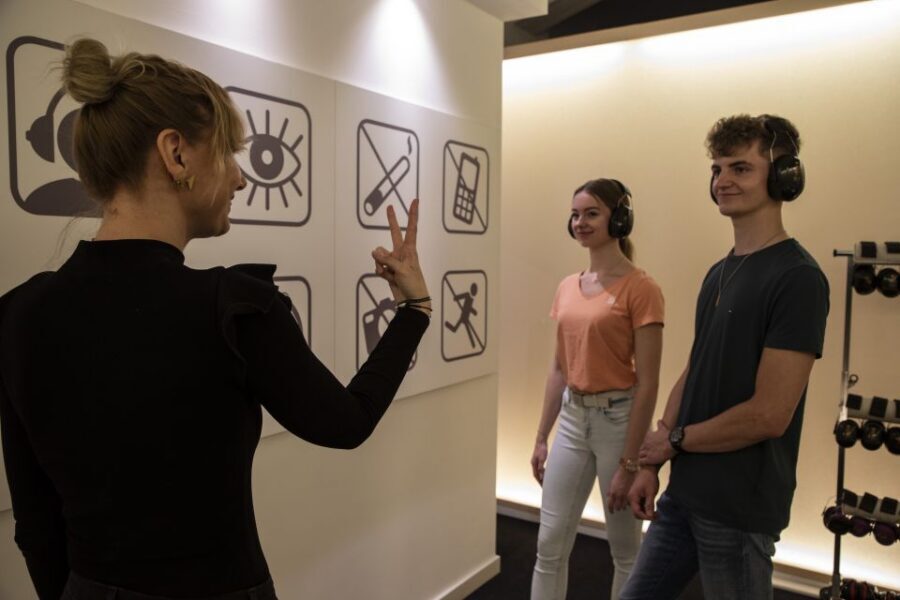
If you’ve only seen sign language as hand shapes, this tour corrects that quickly. Meaning isn’t carried by hands alone. Facial expressions and body language are part of the message.
During the stations, you’ll practice expressing more complex thoughts by pairing signing with posture and face. That’s a big deal for two reasons.
First, it gives you a concrete way to understand deaf and hearing-impaired communication as expressive and precise—not a simplified version of spoken language. Second, it helps you notice how much your own spoken communication depends on tone, emphasis, and reaction. When sound is gone, those signals get replaced with visible ones.
This is also why the experience has lasting impact. Once you start watching faces and body cues like signals (not background), you’ll keep doing it after the hour ends. You’ll realize how much “the conversation” is happening even when you think you’re just hearing words.
Bilingual Finale With English or German: What the Quiet Helps You Understand
The tour stays without audio until the final station. Then you get a shift: the finale is in a bilingual format with English or German, and this is the moment to process what you experienced.
This ending matters because it turns the exercise into understanding. You can ask questions, reflect, and connect the silent work you did earlier to real-world communication.
You might notice something unexpected here: spoken language can feel harder after you’ve spent an hour relying on eyes and hands. One person found it easier to follow through signs earlier, and then understood less during the spoken part when it moved to German. That doesn’t mean you failed. It’s a sign your brain actually adapted to the new rules.
I like that the finale doesn’t pretend it can replace silence-learning with words. It uses words as a bridge back to normal life, so you leave with both practical awareness and room to ask follow-ups.
Price and Value for a 1-Hour Hamburg Experience
It costs $26 per person for about 1 hour. That price is less about luxury and more about training time with expert guidance.
For me, the value comes from the format. A lot of “cultural” activities are passive. Here, you’re practicing communication under constraints—silence, headphones, and a structured series of tasks. You’re not just learning about deaf culture from the outside. You’re experiencing what it feels like to rely on visible signals and to have meaning shaped by body and face.
Also, the tour includes the guide and entry fees, so you’re not piecing together extra costs just to participate. The only real “cost” is your willingness to act a little awkward for a short time. If you can accept that, the hour feels focused and worth it.






What to Wear and How to Prepare So You Don’t Get Stuck
Plan for comfortable movement. You’ll want comfortable shoes and comfortable clothes, because you’re doing expressive body work and signing with your arms and upper body.
Beyond clothing, prepare mentally for the fact that silence changes pacing. Without sound, you’ll rely on what your eyes catch. That means you may feel slow at first, like you’re late to pick up cues. Give yourself a minute.
A useful trick: focus on clarity, not perfection. The stations reward your intent and your willingness to keep trying. The guide can see your effort, and the exercises are designed to build understanding rather than grade you.
If you’re worried about feeling self-conscious, remember that everyone in the room is in the same situation. You’re not the only one thinking, What am I doing with my hands?
Who Should Book This Silent Sign-Language Tour
You’ll love this if you want a hands-on way to understand communication across hearing differences. It’s a smart choice for anyone who likes interactive workshops, small learning challenges, and experiences that make you pay attention differently.
It also suits curious travelers who want something more grounded than a typical museum stop. The training here is about real human interaction: how people connect when speech isn’t available or relied on.
You may want to think twice if you strongly dislike sound-restricted environments. Since the experience uses headphones and stays without audio until the end, your comfort matters. Even then, consider going anyway if you’re open-minded; just go in expecting that the first few minutes can feel strange.
Should You Book Dialogue in Silence?
Yes, I’d book it if you want a short, high-impact experience in Hamburg that teaches you how non-verbal communication works in practice. The interactive stations, guided support, and the bilingual wrap-up make it more than an interesting demo.
I’d skip it only if you’re uncomfortable with silence as a learning tool. Otherwise, this is one of those rare activities that helps you understand another way of communicating by training your attention, not by asking you to guess.
If you want a meaningful cultural experience that’s also practical and memorable, this is a strong pick.
FAQ
Where does Dialogue in Silence start?
It starts at Dialoghaus Hamburg gGmbH (Dialogue House).
How long is the tour?
The tour lasts 1 hour.
How much does it cost?
The price is $26 per person.
Is the tour silent the whole time?
Most of it is without audio. Communication is silent until the final station, where it shifts to a bilingual format.
What languages are available?
The tour is offered in German and English, and the final station includes a bilingual option in English or German.
What’s included in the price?
Included are the guide and entry fees. Hotel pickup and drop-off are not included.
What should I bring?
Wear comfortable shoes and comfortable clothes.
What are the payment and cancellation options?
You can reserve now and pay later, and you can cancel up to 24 hours in advance for a full refund.