REVIEW · NUREMBERG
Get to know Nuremberg. Highlights in the old town
Book on Viator →Operated by Geschichte Für Alle e.V. · Bookable on Viator
Nuremberg has more than markets. This 90-minute old-town walk threads together famous monuments with the stories behind them, from the Hangman’s House to the medieval craft streets. You’ll follow the Pegnitz and hit postcard spots without feeling rushed, guided by someone who can explain how the city worked back then.
I especially like two things: first, the route is tight and walkable, built around major sights you’d otherwise need multiple trips to piece together. Second, the stop selection blends big architecture (churches, town hall) with the smaller human stuff (legal history, water supply, tanning crafts), which makes the city feel understandable, not just photographed.
One thing to keep in mind: this is a German-speaking tour. If you don’t follow German well, you’ll still get the visuals, but you may miss a lot of the explanations.
In This Review
- Key highlights worth showing up for
- A 90-Minute Highlights Walk That Starts at the Henkerhaus
- The Pegnitz River Route: How the City’s Layout Gets Explained
- Henkerhaus: Executioner’s House Meets Legal History
- Main Market: Frauenkirche, the Beautiful Fountain, and Civic Power
- Historic Town Hall Stops: Seeing Power in Everyday Stone
- St. Sebaldus Church: The Oldest Parish Church and Saint Sebald
- Weißgerbergasse: Crafts Street That Survived the Worst
- Kettensteg: An 1824 Metal Chain Bridge with Real Engineering Charm
- Price and Value: What You Get for $16.20
- Is This Tour Right for You?
- FAQ
- How long is the Nuremberg highlights walk?
- How much does the tour cost?
- Is the tour in German?
- Where does the tour start?
- Does the price include admission tickets?
- What are the main stops on the route?
- How big is the group?
- What is the cancellation policy?
Key highlights worth showing up for
- Henkerhaus (executioner’s house) built directly over the Pegnitz with legal and criminal history inside
- Der Schöne Brunnen, a 19-meter fountain with 40 painted figures tied to medieval worldview and water supply
- St. Sebaldus Church, the city’s oldest parish church, with Saint Sebald’s grave still in the building
- Weißgerbergasse, a street with late-medieval character largely spared from WWII air raids and linked to white tanning
- Kettensteg, an 1824 metal chain bridge and the oldest surviving metal suspension bridge in the German-speaking world
A 90-Minute Highlights Walk That Starts at the Henkerhaus
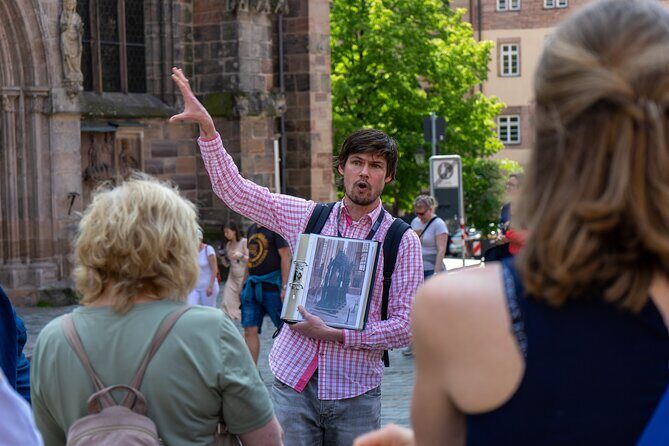
If you want a clean way to get your bearings in Nuremberg, this tour is built for that. It’s short enough to keep momentum, but structured enough that you don’t just wander from one famous place to the next. You start at the Henkerhaus Museum, right in the heart of the old town, and you begin with a story that immediately sets the tone: law, punishment, and how a city actually ran.
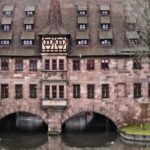
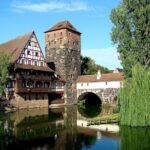
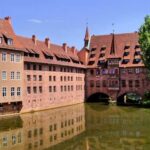
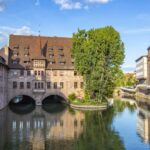
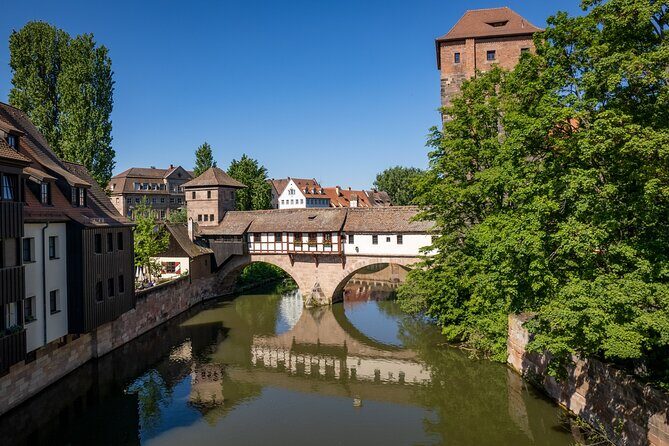
The executioner’s house matters because it’s not some random “cool building.” It’s 500 years old, built directly over the Pegnitz River, and for centuries it was the official residence of the Nuremberg executioners and their families. That gives you a different angle on the city—less postcard, more daily reality. And yes, you get time inside: the Henkerhaus admission ticket is included.
Timing is practical here. At about 90 minutes, you’ll move between key sights, with brief stops that help you absorb what you’re seeing. You won’t get stuck standing forever at any one corner, and that makes it a smart option even on a day when you’re trying to fit in other plans.
You can also read our reviews of more tours and experiences in Nuremberg.

The Pegnitz River Route: How the City’s Layout Gets Explained
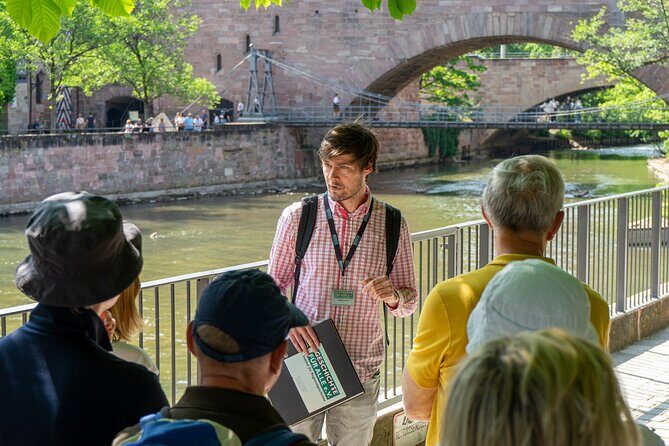
Nuremberg often looks like it’s all stone and towers, but the tour uses one thread to stitch it together: the Pegnitz. Starting right over the river sets up a simple idea you can carry through the rest of your visit. Water wasn’t just scenery—it shaped where buildings went, how people worked, and how the city survived.
As the walk continues, you’ll see how the river connects to the old-town rhythm. The tour leads from the Henkerhaus along the Pegnitz to the main market area, then onward to major landmarks like the Frauenkirche and the historic town hall. That is valuable because these aren’t isolated stops; they’re linked by the city’s geography.
A practical tip for how to enjoy this part: slow down just a little at the river views, even if you’re tempted to keep moving. The explanations on why certain places are where they are make your photos better too. You’ll come away understanding not only what’s there, but why it ended up there.
Henkerhaus: Executioner’s House Meets Legal History
This is one of those stops that changes how you see the rest of the walk. The Henkerhaus is built right over the Pegnitz, and that alone is a strong hook—old architecture that’s tied to a working city. But the real payoff is the exhibition on legal and criminal history inside the historic building.
What I like about starting with this kind of topic is that it’s grounded. Executioners weren’t just characters in a story. They were part of the system—people with roles, households, and rules around what they did. The tour’s framing helps you connect punishment and law to the wider idea of medieval life: order had a structure, and cities had specialized jobs.
There’s also something refreshingly different here versus tours that jump straight from church to church. This one gives you a “human” angle: the city had people who handled the harsh side of order, not just the ceremonial side of power. If you enjoy history that feels connected to real roles and real places, you’ll appreciate this.
Main Market: Frauenkirche, the Beautiful Fountain, and Civic Power
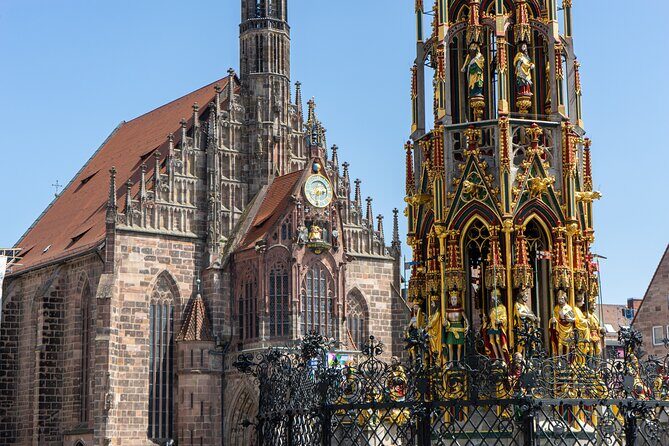
After the river lead-in, the tour lands in the main market area, where you can feel the civic center shift into view. This is where the famous names show up, but the tour’s value is how it ties them to how people lived.
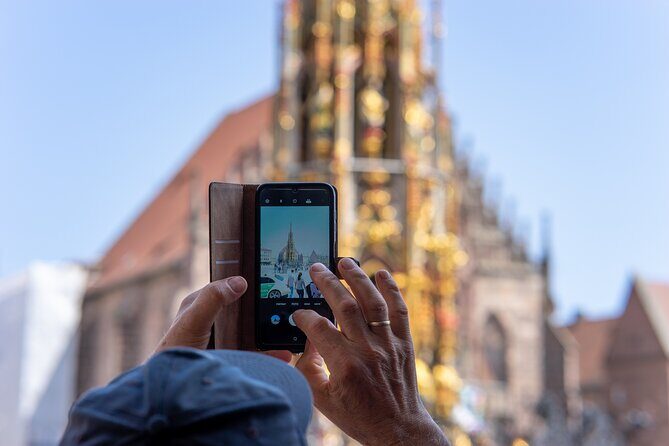
You’ll pass the Frauenkirche and then spend time at Der Schöne Brunnen (the Beautiful Fountain). This fountain is around 19 meters high, built between 1385 and 1396, and it’s decorated with 40 brightly painted figures. Those figures represent a medieval worldview—history, politics, church, and education—so it’s not just decoration. It’s a lesson in what people believed mattered.
Even better: the fountain wasn’t only for looks. In the Middle Ages, it was mainly used for water supply. The tube well was fed by a specially installed water pipe known as the Schönbrunn pipe. That detail turns the fountain from a “pretty landmark” into something functional and clever.
What’s a potential drawback? The main market is a busy place in most seasons. If you’re sensitive to crowds, expect some jostling around the most photographed corners. The fix is simple: let the guide point out the exact spot to look from, then grab your picture and keep rolling.
Historic Town Hall Stops: Seeing Power in Everyday Stone
The tour continues through the main landmarks, including the historic town hall. This is a smart segment because you’re no longer looking at religious sites only. You’re seeing the civic architecture that represented authority, decisions, and city administration.
Here’s why this matters for your visit: once you understand how to spot civic versus religious “messages” in architecture, you start reading the city faster. Churches tell one kind of story. Town halls tell another. The best part is that the walk doesn’t treat these as separate facts—it builds a chain so you can connect what you’re seeing.
If you like having context before you wander on your own afterward, this is where you’ll benefit most. You’ll likely leave with a short mental map: river to market to governance to church to crafts streets. That makes later self-guided exploring feel easier.

St. Sebaldus Church: The Oldest Parish Church and Saint Sebald
One of the tour’s key religious stops is St. Sebaldus Church, which is described as the oldest parish church in Nuremberg. It was built around 1230 in the form of a late Romanesque pillar basilica and is dedicated to Saint Sebald.
The guide’s framing around Saint Sebald is a major part of why this stop lands well. Even though you may not catch every legend, you’ll learn that the saint is still tied to blessings and stories, and that his grave is still located in the church. So you’re not only looking at architecture. You’re looking at a living connection between belief and place.
The practical value here is balance. This church stop is long enough to matter, but it doesn’t drag. It fits the tour’s pace: you get meaningful context, then you move on before your feet get sore and your attention fades.
Weißgerbergasse: Crafts Street That Survived the Worst
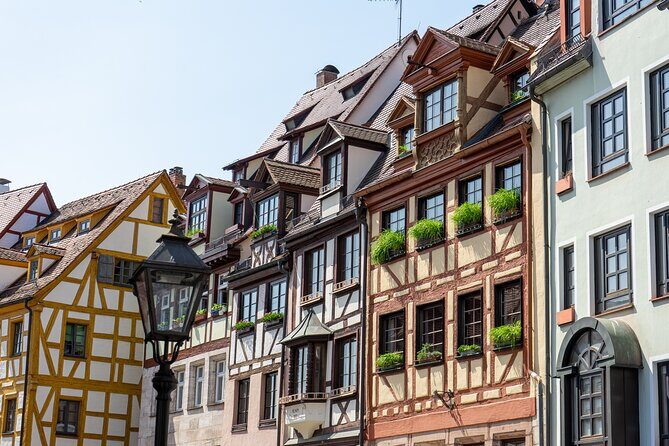
Then you hit one of the most interesting “texture” changes on the route: Weißgerbergasse. This is a street known for having houses that survived World War II air raids largely unscathed. That means you can still feel late-medieval character in the structure and layout.
Why you should care: so many European old towns have gaps where history was literally erased. Here, that continuity helps you understand what the city was like for everyday working people. The tour adds a craft angle that makes the street make sense. The street name points to the tanners—specifically white tanners—who once worked with wild, lamb, and goat skins to produce especially fine leather.
That’s the kind of detail that turns a street view into an explanation you can carry. You’ll start noticing how close everything is, how work and living likely fit together, and why a city would develop certain corridors for trades. If you’re the type who likes to watch for traces of how cities functioned, this part will feel satisfying.
A small consideration: this street segment is still part of a walk, so if you’re tired, it may feel a bit slower than the more open plaza areas. But it’s worth the pace because it’s where the tour becomes less about monument photos and more about understanding a working neighborhood.
Kettensteg: An 1824 Metal Chain Bridge with Real Engineering Charm
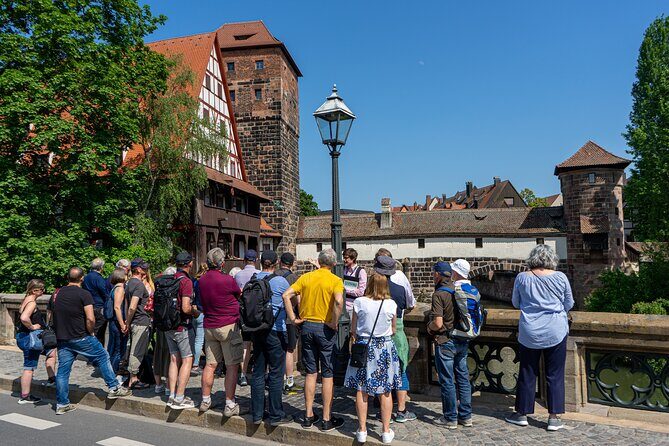
The tour ends by featuring Kettensteg, the chain bridge made in 1824 by the Nuremberg mechanic designed by Georg Kuppler. This is technical history, but it’s presented as a visual and practical landmark, not as a textbook.
The key detail is impressive: it’s described as the oldest surviving suspension bridge made entirely of metal in the German-speaking world. That alone is enough to earn a stop in your itinerary, but what the tour helps you do is notice the bridge as part of the city’s evolution—from medieval layout to early industrial engineering.
When you’re crossing a bridge, it’s easy to treat it like a connector. Here, the tour asks you to treat it like a piece of history. Stand for a minute, look at how it hangs, and connect it to what you’ve seen in the city before. It gives your Nuremberg story a time leap.
You’ll also pass back through the old-town route over Maxbrücke to return to the meeting point area, closing the loop on the city center.
Price and Value: What You Get for $16.20
At about $16.20 per person for roughly 90 minutes, this tour is priced for people who want a structured overview without paying monument-by-monument admission. The biggest value lever is that Henkerhaus admission is included while several other stops are free.
That makes a real difference in your budget. You’re paying for the guide and the organization, not for a pile of entrance fees. On top of that, the tour keeps group size reasonable: a maximum of 25 travelers, which usually helps with crowd control and keeping the narrative coherent.
You’ll also get a mobile ticket, which is handy if you’re moving quickly and don’t want to keep track of paper. And if you’re traveling with a service animal, the tour notes that service animals are allowed. It’s also stated to be near public transportation, so you can slot it into a day without adding complicated logistics.
My final value note: this is a strong choice when you’re early in your trip. It gives you enough context to explore the rest of the city with better questions, not just better photos.
Is This Tour Right for You?
This “Nuremberg Highlights in the Old Town” walk is best for you if you want a compact overview that connects monuments to how the city actually functioned—law and punishment, water supply, craft work, and civic power. It’s also ideal if you’re the type who likes photo-friendly routes with just enough time at each stop to understand what you’re looking at.
Book it if:
- You want a structured old-town orientation in about 1.5 hours
- You’re interested in details like executioner history, medieval water systems, and historic crafts
- You prefer walking with a guide who explains the connections between places
Skip or adjust plans if:
- You don’t follow German well, since this is a German-speaking tour
- You need long, slow time inside each site. This is a highlights walk, not a deep standalone museum day
If you’re visiting Nuremberg for the Christmas markets and want a second side of the city, this tour is a practical way to do it without turning your day into a sprint.
FAQ
How long is the Nuremberg highlights walk?
It’s approximately 1 hour 30 minutes.
How much does the tour cost?
The price is $16.20 per person.
Is the tour in German?
Yes. This is a German-speaking tour.
Where does the tour start?
The tour starts at Henkerhaus Museum, Trödelmarkt 58, 90403 Nürnberg, Germany.
Does the price include admission tickets?
The Henkerhaus admission ticket is included. The Beautiful Fountain (Der Schöne Brunnen), St. Sebaldus Church, Weißgerbergasse, and Kettensteg are described as free.
What are the main stops on the route?
The tour includes Henkerhaus, Der Schöne Brunnen, St. Sebaldus Church, Weißgerbergasse, and Kettensteg, with additional landmarks such as the Frauenkirche, historic town hall, and Maxbrücke along the way.
How big is the group?
The tour has a maximum of 25 travelers.
What is the cancellation policy?
You can cancel for a full refund up to 24 hours before the experience’s start time. If you cancel less than 24 hours before, the amount paid is not refunded.