REVIEW · MUNICH
Munich: National Socialism Historical Tour in GERMAN
Book on GetYourGuide →Operated by Weis(s)er Stadtvogel GmbH · Bookable on GetYourGuide
Munich’s streets explain how power was seized. I love that this tour sticks to the big, specific turning points around Königsplatz and the November 9, 1923 events, rather than staying vague. I also like the way your guide uses black-and-white photos to make the 1920s and 1930s feel concrete as you walk. The one thing to consider: it’s a 2-hour walking tour, so you’ll want comfortable shoes and a pace that works for you.
If you’re looking for an easy stroll with minimal history talk, this isn’t it. The focus is serious and direct, covering the rise of the NSDAP and what Germany looked like during National Socialism. Go in ready for facts, not just atmosphere.
In This Review
- Key highlights worth your attention
- A 2-hour walking tour of Munich’s Nazi origins
- Where it starts: Staatliche Antikensammlungen and the blue-bag guide
- Königsplatz: the early stage-set of a political movement
- From the Führerbau to the Munich Documentation Centre
- Briennerstraße: walking the links between space and messaging
- Gestapo headquarters area: what control looked like
- Odeonsplatz and Feldherrnhalle: Beer Hall Putsch on November 9
- The black-and-white photos: a quick way to “see” the 1920s and 1930s
- How your German guide shapes the story
- Price and what you get for $34
- Private or group tour: choose the right vibe
- Practical tips for a rain-or-shine, 2-hour walk
- Who should book this tour—and who should skip it
- Should you book this National Socialism historical tour in German?
- FAQ
- What language is the tour?
- How long is the tour?
- Where do I meet the guide?
- Is the tour offered in private or group format?
- What should I bring?
- Is the tour indoor or outdoor, and does it run in bad weather?
Key highlights worth your attention
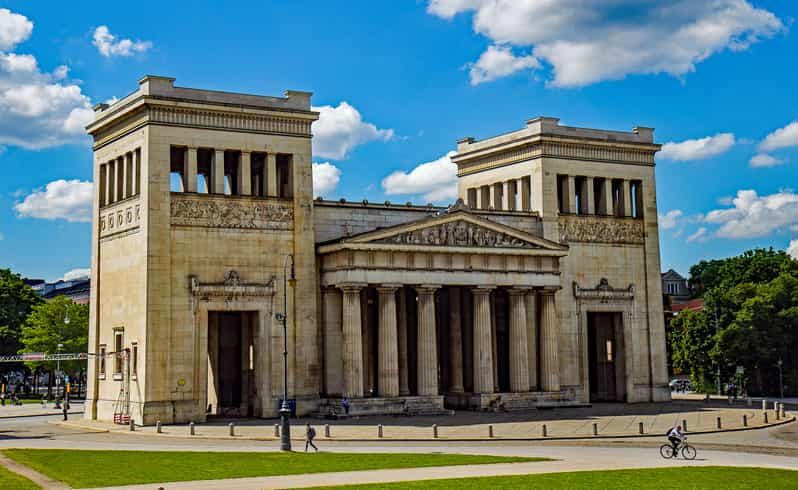
- Königsplatz as the starting point for understanding Munich’s role in the early Nazi movement
- Führerbau and the Munich Agreement (1938), tied to what’s here today at the Documentation Centre
- Briennerstraße walking context, linking streets to events and propaganda-era thinking
- Black-and-white historical photos used at key moments for quick visual orientation
- Gestapo headquarters area to Feldherrnhalle, connecting intimidation to the Beer Hall Putsch on November 9, 1933
- Private or group tour, so you can choose the tone and pace you prefer
A 2-hour walking tour of Munich’s Nazi origins
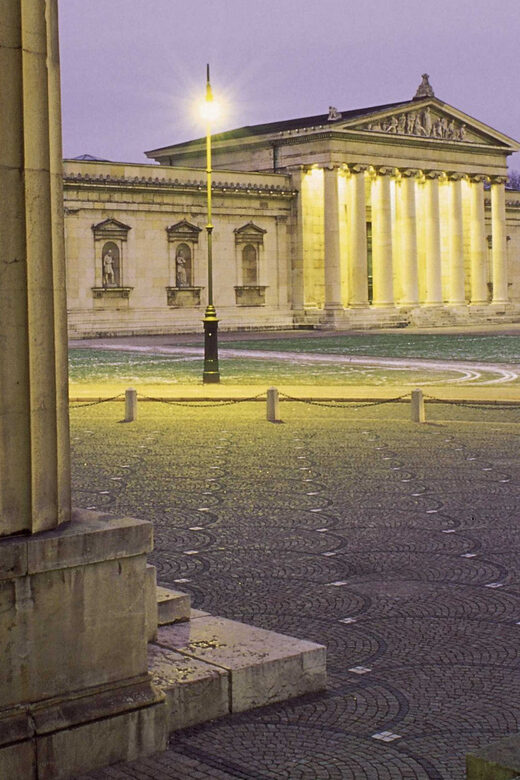
This is a focused 2-hour walking experience that concentrates on Munich’s role in the rise of National Socialism in the 1920s and 1930s. Instead of scattering across the city, it moves you between major sites that mattered, then explains why those places mattered.
You’ll hear how the NSDAP gained ground and how the situation in Germany changed under National Socialism. The tour doesn’t treat it like an abstract topic. It connects events to buildings and streets, so the story has a physical map.
You can also read our reviews of more historical tours in Munich

Where it starts: Staatliche Antikensammlungen and the blue-bag guide
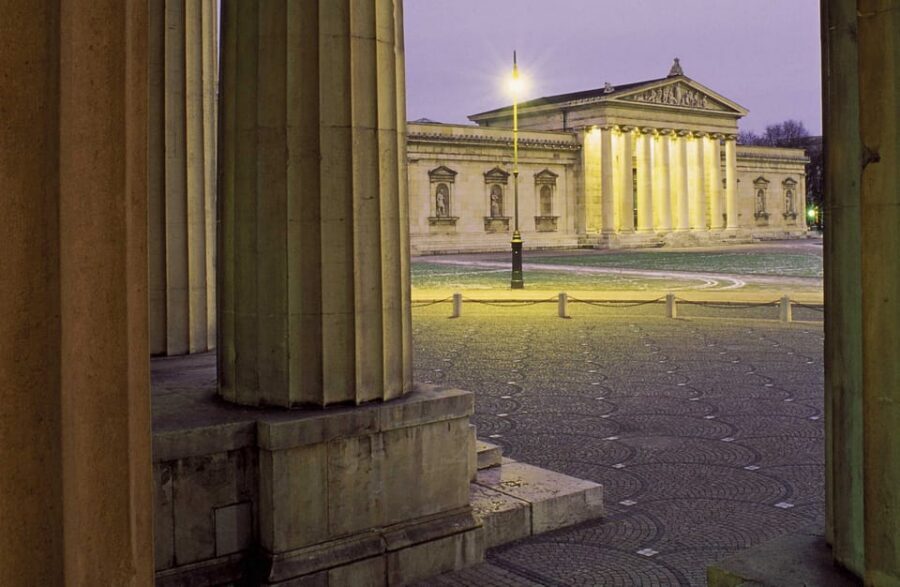
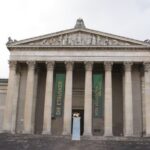
Your meeting point is the main entrance of the Staatliche Antikensammlungen. That’s helpful because you’re not hunting for a random corner or a hidden booth. The guide is also easy to spot: they’ll be carrying a BIG BLUE BAG with the white words Weis(s)er Stadtvogel written on it.
If you’re traveling with a tight schedule, this kind of clear meeting setup makes a difference. It cuts the stress before you even begin.
Königsplatz: the early stage-set of a political movement
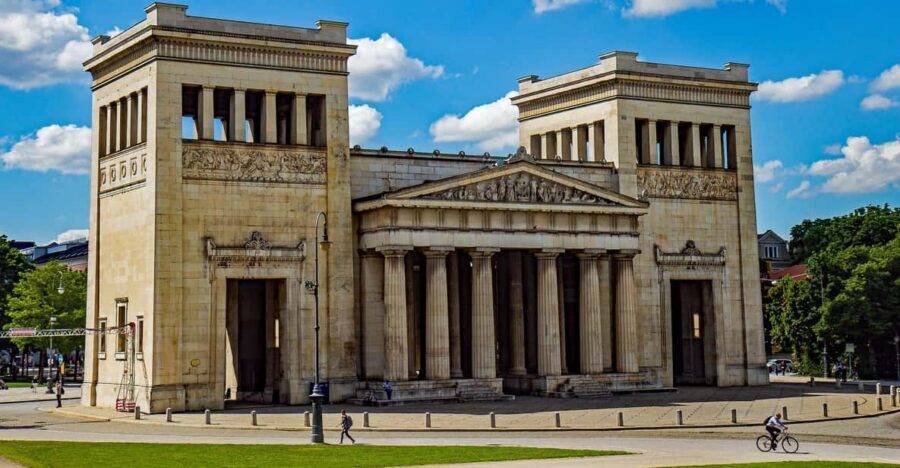
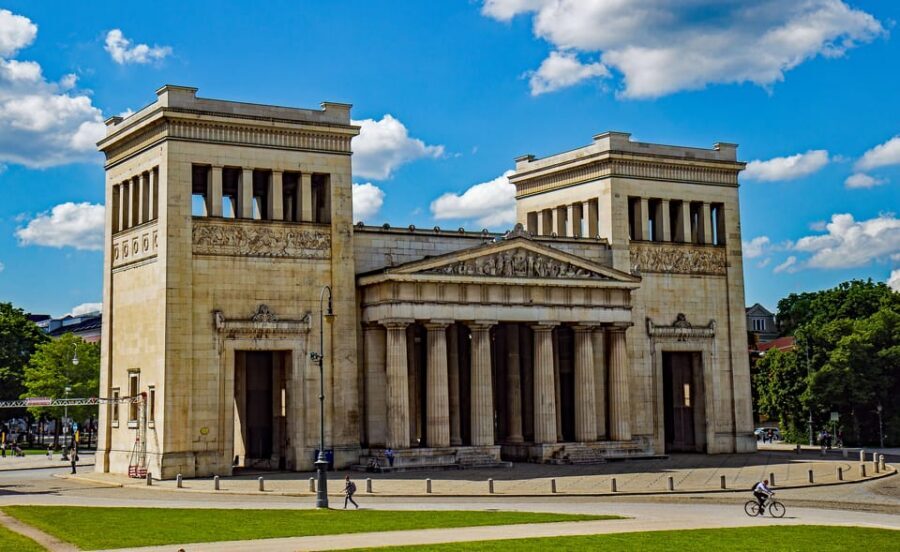
The tour begins at Königsplatz, which is a powerful place to start because it sets a public, monumental tone before the darker details arrive. From here, you’re walking into the part of Munich where the movement got traction—long before the world associated it with the final form of the regime.
This stop matters because it frames the early years. You’re not just learning about later wartime events. You’re learning about how the movement took shape, gained followers, and learned how to use public space.
From the Führerbau to the Munich Documentation Centre
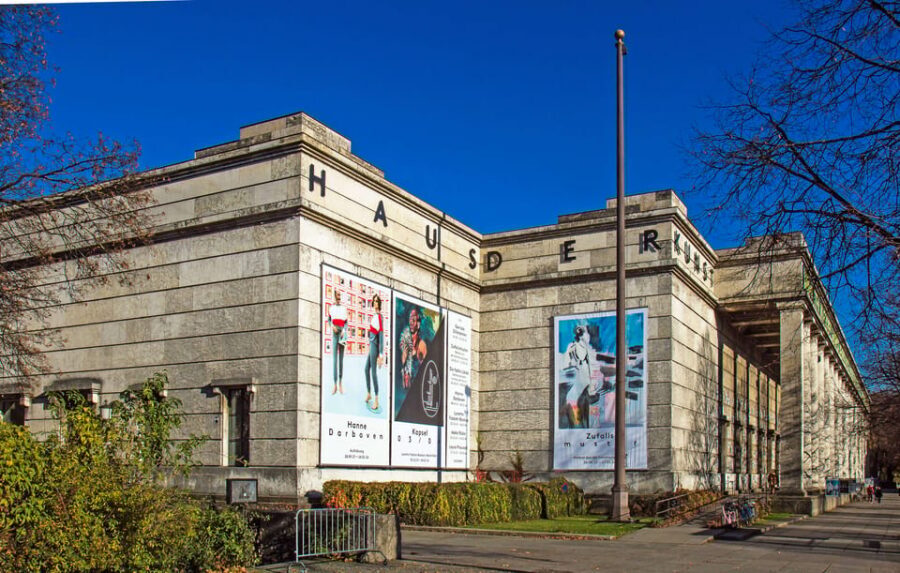
Next you’ll walk to the former Führerbau, the Führer’s building. This is tied to the Munich Agreement (1938), and today the area connects to the Munich Documentation Centre for the History of National Socialism.
That combination—historic purpose then modern interpretation—gives you a clear sense of time. It’s not only a building. It’s a marker of how decisions were made and how they reverberated.
A practical note: this is where you may find the tour’s tone is at its most intense. Don’t rush your questions here. If German is your comfortable language level, you’ll get more from the discussion.
Briennerstraße: walking the links between space and messaging
After the Führerbau, you’ll continue along Briennerstrasse. This part can feel a bit like “the in-between,” but that’s actually the point. The tour uses the walk to connect the dots between major nodes, so you understand the urban setting behind political theatrics.
If you like learning through orientation—figuring out where things sit relative to each other—this section helps you build that mental map. You’ll also get the sense of how ideas moved through public spaces.


Gestapo headquarters area: what control looked like
The tour then has you pass the former Gestapo headquarters area. The goal here isn’t to shock you. It’s to show you the reality behind the political story—how repression sat alongside propaganda.
Even if you’ve read about the Gestapo before, seeing the location in Munich’s street context gives it a different weight. It’s one thing to learn the name. It’s another to understand that this power was housed locally, right in the city fabric.
Odeonsplatz and Feldherrnhalle: Beer Hall Putsch on November 9
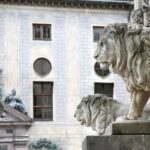
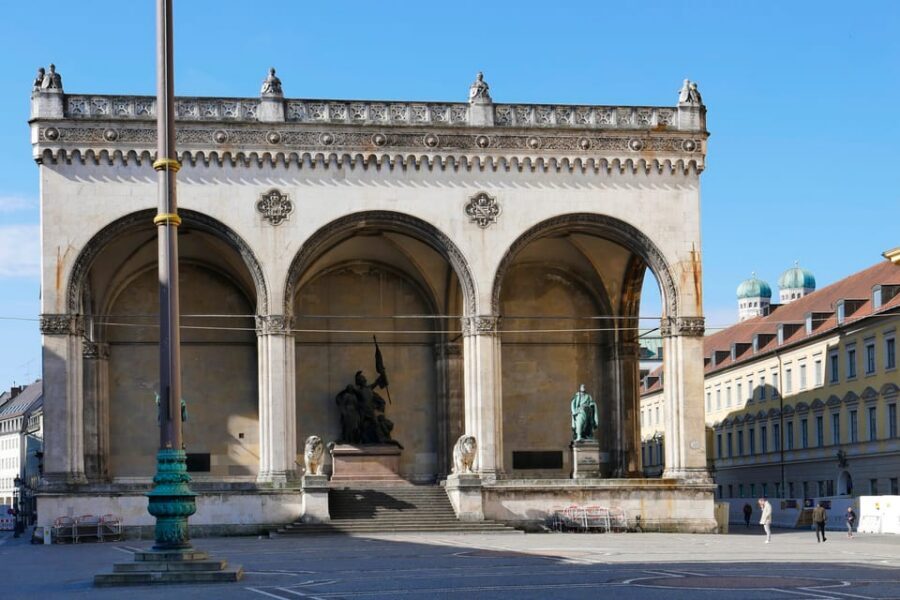
You’ll reach Feldherrnhalle at Odeonsplatz, one of the tour’s most critical stops. This is where Hitler’s Beer Hall Putsch took place on November 9, 1933.
The tour also ties back to November 9, 1923 earlier in the narrative, so you can see how dates become political symbols. That’s why your guide emphasizes the events of November 9, 1923—it’s a thread that helps explain continuity in strategy and messaging.
If you’re the kind of traveler who likes to know what happened, not just where it happened, this is the moment to pay close attention. The site is dramatic, but the meaning is precise.
The black-and-white photos: a quick way to “see” the 1920s and 1930s
One of the most valued parts of this tour is that your guide brings historic black-and-white photographs. You’ll use them to illustrate specific events and topics at the right moments along the walk.
These photos do two useful things for you:
1) They anchor what you’re hearing to what Munich looked like then.
2) They help your brain switch from modern streets to historical context fast.
This is especially helpful if you’re not traveling with a thick book of background notes. The photos act like a visual checkpoint.
How your German guide shapes the story
The tour runs with a live guide in German, and that affects the experience in a real way. If your German is solid, you’ll likely pick up more nuance in explanations about how the NSDAP rose to power and how Germany functioned under National Socialism.
If your German is only basic, you can still follow the main outline, because the landmarks and key dates do a lot of the work. Still, you might find it harder to catch details that the guide adds while referencing the photos.
Price and what you get for $34
At $34 per person for a 2-hour walking tour, the price feels reasonable for three reasons tied to value, not just cost.
First, you’re getting a professional guide who covers a lot of key ground: the events around November 9, 1923, how the NSDAP rose to power, and what Germany during National Socialism meant in real terms. Second, the tour isn’t just “look at buildings.” It uses historical photos and specific locations with clear connections to events like the Munich Agreement and the Beer Hall Putsch.
Third, it’s priced like a short, efficient experience. You’re not buying a full day of time, but you’re still getting structured context instead of hoping you’ll piece it together alone.
If you like guided learning that’s direct and to the point, you’ll likely feel like you paid for clarity.
Private or group tour: choose the right vibe
You can choose between a private or group tour, and that choice can change how you experience the subject.
- If you want more control over pacing, private can help you stop for questions without worrying about the group’s tempo.
- If you’re comfortable sharing a walk with others and prefer the energy of a group setting, the group option can be fine too.
Either way, the central structure stays the same: a walking route through the most meaningful sites, with the guide’s explanations and photo support.
Practical tips for a rain-or-shine, 2-hour walk
This tour runs rain or shine, and it lasts about 2 hours. So plan like it’s a short walk you can’t easily swap out for museums or cafés mid-way.
Bring comfortable shoes. The best time to wear your most supportive walking pair is on a tour like this, because you’ll likely spend more time standing still to process photos and explanations than you expect.
Also, the tour is described as wheelchair accessible, but it’s also listed as not suitable for people with mobility impairments. If you fall into that category, don’t guess—check with the provider directly before booking so you get an honest yes or no for your needs.
Who should book this tour—and who should skip it
You should book if you:
- Want a guided, landmark-based way to understand Munich’s connection to the rise of National Socialism
- Like learning with dates and locations instead of only reading afterward
- Prefer a tour in German and feel comfortable following a live guide
You might skip it if you:
- Can’t manage a 2-hour outdoor walking format
- Are looking for a lighter, entertainment-style city tour
This is a serious topic, and the tour treats it with that seriousness. If you can handle straight facts and a direct tone, you’ll get a lot out of it.
Should you book this National Socialism historical tour in German?
If your goal is understanding—not just sightseeing—this tour is a good call. The route is built around major sites tied to key events like the Munich Agreement and the Beer Hall Putsch, and the guide’s black-and-white photos help you connect story to place quickly. The $34 price also feels fair for a professional, structured 2-hour explanation.
My simple decision rule: book it if you want clarity in a short time and you’re comfortable with German narration. Skip it if walking time or language is a challenge you can’t work around.
FAQ
What language is the tour?
The live tour guide provides the tour in German.
How long is the tour?
The tour duration is 2 hours.
Where do I meet the guide?
Meet in front of the main entrance of the Staatliche Antikensammlungen. The guide wears a BIG BLUE BAG with white words Weis(s)er Stadtvogel.
Is the tour offered in private or group format?
Yes. You can choose between a private or group tour.
What should I bring?
You should bring comfortable shoes, since it involves walking.
Is the tour indoor or outdoor, and does it run in bad weather?
It takes place rain or shine, so plan for outdoor walking.