REVIEW · FRANKFURT
Discover the Heart of Frankfurt – City Tour in German
Book on Viator →Operated by Erlebnis-Frankfurt · Bookable on Viator
Frankfurt can feel like a quick stop until you walk it. This 2-hour Old Town city tour in German turns big landmarks and quiet side streets into a clear story, with humor and real local love from Dimitri. You’ll also pick up practical tips for the rest of your day, not just photos of famous buildings.
I especially like the way the tour mixes major sights with off-the-main-path moments. Highlights include Paulskirche (the German democracy symbol) and the story-rich streets around the Römerberg and Römer complex. One small caution: it’s mostly outside viewing, so if you want lots of indoor time, plan a follow-up stop on your own.
The route is a steady walk with a few short stops, so come with comfortable shoes and good weather clothing. Also note the group limit is max 25, so booking ahead helps, and pets are not allowed (assistance dogs are fine).
In This Review
- Key things to know before you go
- A two-hour walk that makes central Frankfurt make sense
- Start at Paulskirche: the democracy stop that people often miss
- Römer and Römerberg: the “town hall story” heart of the city
- A stroll along the Mainkai and the Iron Footbridge
- Haus Wertheym: sweet treats with a half-timbered backbone
- A quick look at Frankfurt’s museum story (without slowing down)
- Outside viewing: Alte Nikolaikirche, Schirn, and the cathedral approach
- The New Old Town (Dom-Römer-Quartier): why the rebuild matters
- Price, timing, and who this tour fits best
- Should you book the Frankfurt City Tour with Dimitri?
- FAQ
- What is the duration of the tour?
- Is the tour conducted in German?
- Where does the tour start and end?
- Are you allowed inside St. Paul’s Church during the guided part?
- Will we enter the Römer building and its Kaisersaal?
- Is food or drink included?
- Is there a mobile ticket?
- Are pets allowed on the tour?
- FAQ (booking and practical)
- Is free cancellation available?
- How many people are in a group?
Key things to know before you go
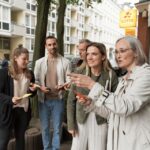
- Dimitri’s guide style: lots of energy, humor, and group-friendly pacing, with printed pictures showing how the Old Town looked before rebuilding
- Old Town focus: the heart of Frankfurt, centered on Römerberg, the Main bridges, churches, and the Dom-Römer area
- Mostly exterior sights: many stops are viewed from the outside, with quick looks rather than long museum time
- New Old Town included: the Dom-Römer-Quartier project completed 2012–2018, including faithful reconstructions like Haus zur Goldenen Waage
- Your walking day stays simple: it’s a 2-hour loop, using a mobile ticket and ending right at Römerberg
- Good value for the area: at about $21.97 per person, you’re paying for guided context more than transportation or admissions
A two-hour walk that makes central Frankfurt make sense
This tour is built for people who want Frankfurt to click fast. In two hours, you connect the dots between politics, architecture, the Main River’s role in daily life, and the city’s postwar rebuilding choices. Dimitri has lived in Frankfurt for 35 years and clearly enjoys talking about the city in plain language—funny when it fits, specific when details matter.
You’ll cover a classic “Old Town core” route, but the approach is what makes it work: quick orientation moments, then small stories that explain why certain buildings look the way they do. That means even if you’ve been to Frankfurt before, this kind of guided rhythm can help you see what you normally walk past without noticing.
And yes, it’s a German-language tour, so it’s ideal if you’re comfortable following conversation. The payoff is that you won’t just get labels—you’ll get the why.
You can also read our reviews of more city tours in Frankfurt

Start at Paulskirche: the democracy stop that people often miss
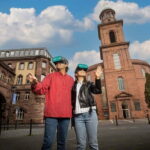
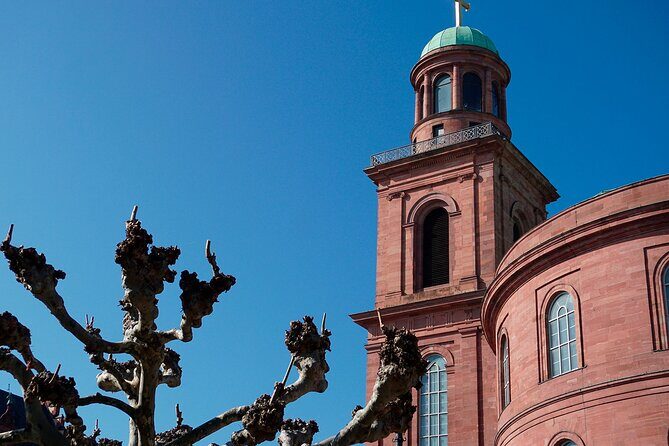
Your tour begins at St. Paul’s Church (Paulskirche), at Paulsplatz 11. During the guided portion, you mainly see it from the outside. That’s common for this building, because the real magic is in knowing what happened here—then deciding if you want to go inside afterward on your own.
Paulskirche was built between 1789 and 1833 and served as the main church of the Evangelical Lutheran community. The big turning point is 1848, when it became the meeting place of the Frankfurt National Assembly, described here as the first freely elected parliament in Germany. After destruction in World War II, it was rebuilt in 1948 as Frankfurt’s first historic building—now used as an exhibition, memorial, and meeting place. It’s also tied to the annual Peace Prize of the German Book Trade.
Why this matters for your trip: if you walk through Frankfurt only as a modern-business city, this stop gives you the political and cultural backbone. Even when you’re viewing from outside, the story changes the way you look at the building’s role in German history.
Practical tip: if you’re the type who likes to go deeper, plan an extra visit after the tour. The tour itself is efficient, but it even encourages you to do a follow-up interior visit if you care about context.
Römer and Römerberg: the “town hall story” heart of the city
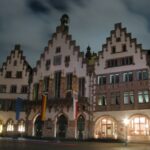
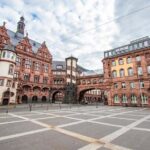
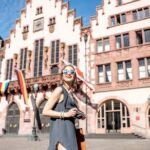
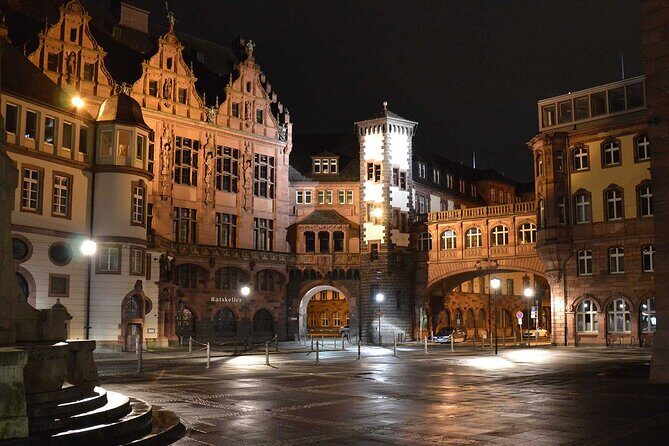
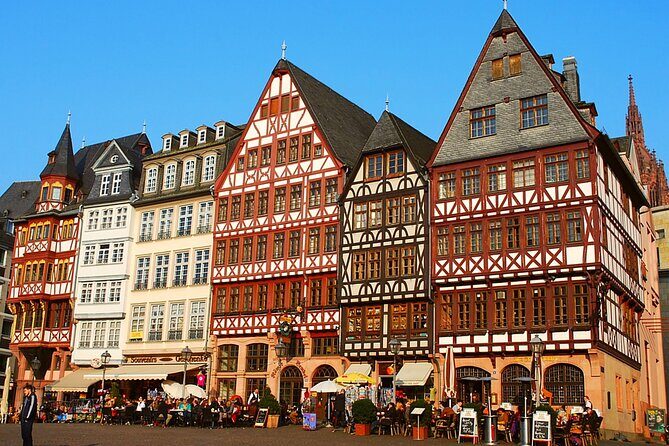
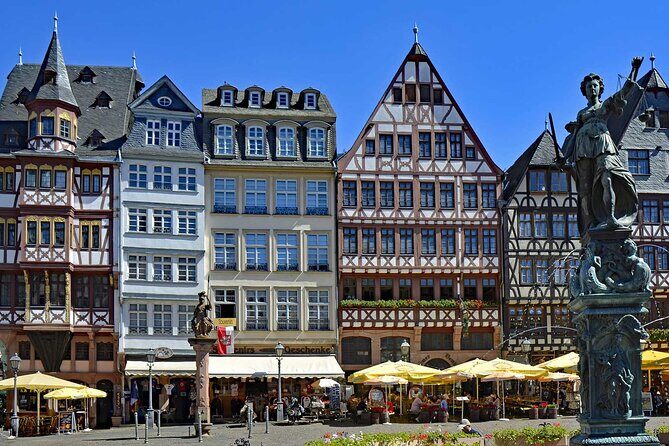
Next you move into the Römer area, which is Frankfurt’s famous town hall complex. The key landmark here is the Römerberg—the historic market square and a place tied to major public events. You’ll get a guided look around the area, including the stepped-gable façade that defines the skyline view people associate with Frankfurt’s Old Town.
The Römer has been the town hall since 1405 and is made up of interconnected buildings added and extended across centuries. The building includes the Kaisersaal inside, described as the ceremonial hall for important receptions and events. During your tour, you get a short focus on the Kaisersaal (and the imperial-hall/palatinate portion is included when those areas are open). That’s a smart approach: you get the highlight without turning the tour into a museum marathon.
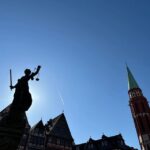
Why you’ll like this section: the Römerberg isn’t just pretty facades. It’s the physical stage for stories of coronations and public speeches, then later the heavy reality of how badly the Old Town was damaged in World War II. The square was rebuilt afterward, so what you see today is partly history and partly a decision about how the city wanted to remember itself.
One small consideration: parts of this area are used for official events and receptions. If something is closed or not accessible during your visit, don’t stress—this tour is designed to keep you moving and still gives meaningful viewing and explanations.
A stroll along the Mainkai and the Iron Footbridge
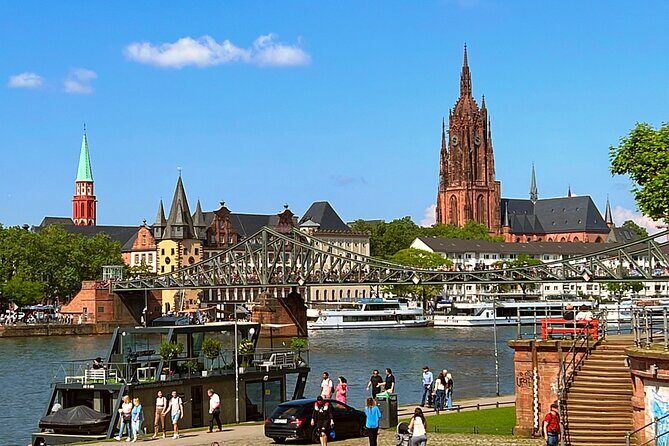
From the Römer core, you shift toward the river. The Mainkai is a promenade on the right bank of the Main, stretching between the Old Bridge and the Untermainbrücke. Historically it served as a mooring/landing area, and it was transformed into a modern street from 1826 by filling in and widening. Today it’s where you feel Frankfurt’s “real-life” rhythm—people walking, cycling, and using the river edge as a daily shortcut and hangout.
You’ll also pass sights connected to the area, including the historic Saalhof and the Rententurm (you get an overview rather than long stops). There’s a practical advantage here: you’re breaking up the heavy Old Town stone-and-church stretch with a more open view, and it helps you rest your eyes and feet.
Then comes the Iron Footbridge (Eiserner Steg), an iconic pedestrian crossing that opened in 1869. It was financed by a citizens’ initiative because the older bridge could no longer handle traffic. Like so much of Frankfurt’s built environment, it was damaged in World War II and rebuilt in 1946, then renovated in 1993 to raise it slightly for modern needs.
Why this is a great photo stop: you’re not just photographing metal and arches. You’re photographing the point where civic action shaped infrastructure. The bridge is described as both practical and a symbol of the energy of Frankfurt’s citizens.
If you like good timing, stand here for a minute and let the river views reset you. It’s a small moment that makes the second half of the tour easier.
Haus Wertheym: sweet treats with a half-timbered backbone

One of the most charming stops is Haus Wertheym. You tour the exterior and the guide connects the architecture to Frankfurt’s food identity, including short stories tied to sweet specialties such as Frankfurter Kranz and Bethmännchen.
The building itself is a half-timbered structure built around 1600 and described as the only half-timbered house in the Old Town that survived the air raids of World War II almost unscathed. Originally it served as a customs house and accommodation for the city guard. After a renovation in 1926, the first floor housed a café and restaurant. Today it’s a listed building and a popular place to experience historic architecture up close.
Why it works for you: this is the kind of stop that stops feeling like checklist tourism. You’re learning how Frankfurt marks identity—through buildings, but also through food names that sound like insider jokes until someone explains what they mean.
If you have a sweet tooth, plan a tasting later. This stop is set up to push you in that direction without hard-selling.

A quick look at Frankfurt’s museum story (without slowing down)

You get a brief look at the Historisches Museum Frankfurt area, specifically a look at the Staufer wharf and the Stauferhafen, described as a spectacular archaeological find displayed in the museum foyer. The tour does not involve a full interior museum visit here—just a stop long enough to point out what the museum area represents.
This is a good design choice if you want context without losing time. It also signals something important about Frankfurt: even within the city center, the past can be literally under your feet, and archaeologists still pull meaningful discoveries out of the urban ground.
If you’re museum-curious, you now know what to look for if you later decide to go inside. If you’re not museum-curious, you still leave with one clear “aha” about the depth of what’s happening beneath the streets.
Outside viewing: Alte Nikolaikirche, Schirn, and the cathedral approach
The tour keeps you moving with several short exterior-focused moments in the cathedral and church zone.
First is the Old Nicholas Church (Alte Nikolaikirche), viewed from the outside. It’s described as late Gothic, originally built in the 12th century as a court chapel. It served as a place of worship for the Hohenstaufen emperors and later became the city council chapel in the 15th century. It remained largely undamaged during World War II while much of the surrounding old town was destroyed, and it was restored after the war. You’ll also hear about the carillon with 51 bells, heard regularly.
Then you walk past the Schirn Kunsthalle Frankfurt (visit from the outside only during your tour). The Schirn opened in 1986 and is presented as one of Europe’s leading contemporary art exhibition halls, with changing shows. Even if contemporary art isn’t your thing, this is still useful to know because it helps you understand what Frankfurt built alongside its restoration work.
You also pass through Saalgasse, a historic street parallel to the Main that was redesigned after the war as part of the reconstruction. It’s known for colorful postmodern house facades, which creates a contrast: medieval-market-square gravity nearby, then modern architectural statements close by.
Finally, you approach the cathedral zone with the Cathedral of St. Bartholomew (Dom St. Bartholomaus) as part of the walking sequence. This is an efficient way to get bearings in the area without turning the tour into a climb-and-stand-long session.
If you’re the type who likes to photograph architecture, keep an eye on sightlines here. This is exactly the kind of neighborhood where one corner can teach you how Frankfurt rebuilds and re-uses space.
The New Old Town (Dom-Römer-Quartier): why the rebuild matters
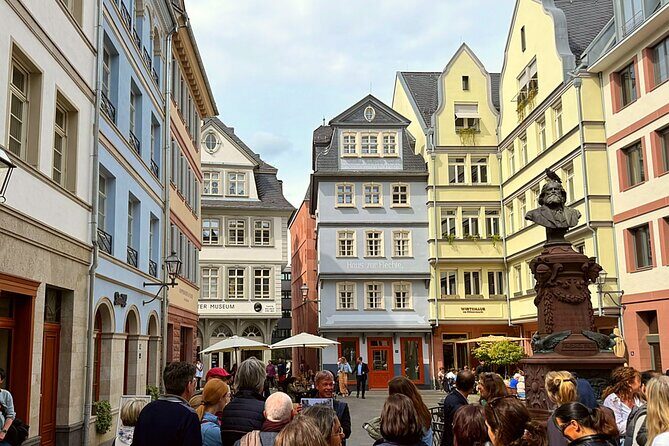
Your last major chunk is Neue Altstadt, also known as the Dom-Römer-Quartier. The project was completed between 2012 and 2018 across about 7,000 square meters between the Römer and the cathedral. The description says 35 buildings were erected: 15 faithful reconstructions of historic houses and 20 modern new buildings.
This is one of the most practical and interesting parts of the tour because it shows how Frankfurt decided to handle the question: rebuild, reinterpret, or move on?
You get attention on specific showpieces, including Haus zur Goldenen Waage, described as a standout of the project, along with the Rote Haus and Goldene Lämmchen. The New Old Town today mixes apartments, stores, and cafés—so it’s not just a visual set piece. It’s a lived-in part of the city center, which is what makes it feel different from a museum façade.
Why you’ll remember this section: it gives you a clear example of how the city uses design to communicate identity after disruption. If you only saw the rebuilt Old Town as pretty pictures, this is where you learn to see the choices behind the facades.
Price, timing, and who this tour fits best
At $21.97 per person for about 2 hours, this is good value if you want direction and context more than deep museum time. You’re paying for a certified German-speaking guide, a small-group feel (max 25), and the story threading through the most important center points.
It’s also helpful that you can use a mobile ticket, and it’s near public transportation. The meeting point is straightforward: Paul’s Church (Paulsplatz 11, 60311 Frankfurt am Main). The tour ends at Römerberg in the city center, which makes it easy to keep exploring afterward without backtracking.
You should especially consider this tour if:
- You want an Old Town overview with human stories, not just facts on plaques
- You like architecture and civic history
- You want tips for the rest of your stay and you enjoy asking questions
- You’re visiting as a pair or small group and prefer a guided pace over self-wandering
A caution for planners: it is not a sit-down long-duration experience. You’ll walk and stand outside, with some short inside glimpses only if areas are open.
Also, pets are not allowed except assistance/medical assistance dogs. Walking aids like a walking stick are permitted if you bring them.
Should you book the Frankfurt City Tour with Dimitri?
I’d book this tour if you want to understand Frankfurt’s center without turning your day into a long itinerary. The route hits major landmarks—Paulskirche, Römerberg, the Iron Footbridge, the New Old Town—and it does it in a way that explains the “why,” not just the “what.”
Skip it only if you’re specifically hunting for extended interior museum time. This tour is designed for outside viewing and short looks, so you’d likely need additional independent visits if you want deep indoor time.
If you’re even a little curious about how Frankfurt got from historic eras to postwar rebuilding—and how it looks today because of those choices—this is one of the easiest ways to get there fast, in German, with a guide who clearly cares.
FAQ
What is the duration of the tour?
The tour lasts about 2 hours.
Is the tour conducted in German?
Yes. The tour is a guided walking tour in German, with a certified German-speaking guide.
Where does the tour start and end?
It starts at St. Paul’s Church, Paulsplatz 11, 60311 Frankfurt am Main. It ends at Römerberg, 60311 Frankfurt am Main-Innenstadt I.
Are you allowed inside St. Paul’s Church during the guided part?
St. Paul’s Church is usually visited from the outside during the tour. An independent visit inside is recommended after the guided tour.
Will we enter the Römer building and its Kaisersaal?
There are short tours connected to the Römer area, including the Kaisersaal. The Imperial Hall and Palatinate Franconofurd are included only if they are open.
Is food or drink included?
No. Food and drinks are not included.
Is there a mobile ticket?
Yes. The tour uses a mobile ticket.
Are pets allowed on the tour?
No pets are allowed, except assistance dogs or medical assistance dogs.
FAQ (booking and practical)
Is free cancellation available?
Yes. You can cancel for a full refund up to 24 hours before the experience start time.
How many people are in a group?
The tour has a maximum of 25 travelers.