REVIEW · BERLIN
Day trip through multicultural city landscapes & photo highlights
Book on Viator →Operated by Rikscha & Bier Bike & Party Beer Bike - Leo Rickshaw Tours · Bookable on Viator
Berlin can feel like a novel.
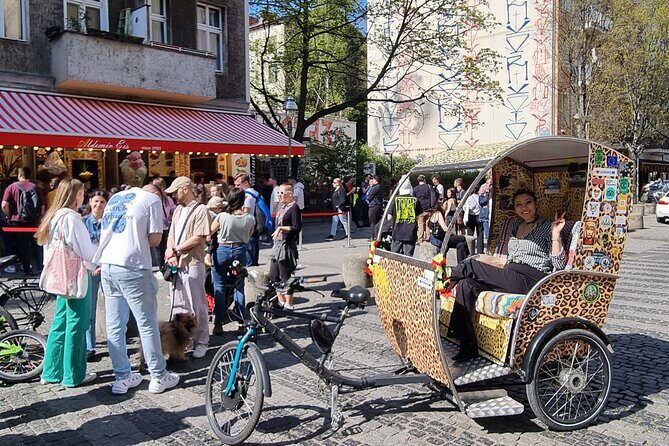
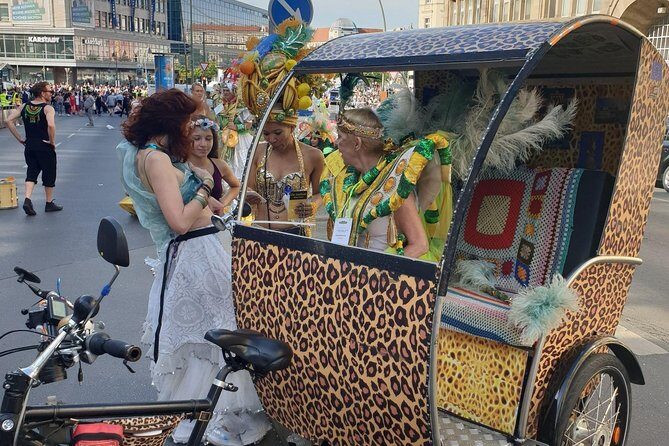
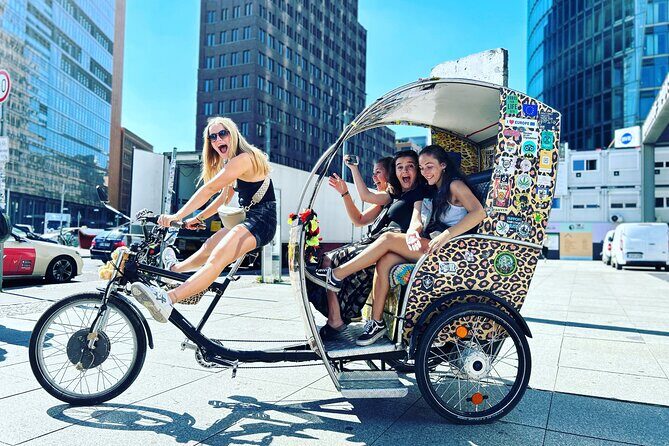
This private rickshaw-style day stitches together big icons and everyday Berlin scenes in 3 to 6 hours, with Leo guiding you and a photographer handling the picture moments. I love how fast you can cover ground without wearing out your legs, and I love the variety: monuments and memorials, then stylish squares, parks, canals, and street life. One thing to consider: several of the major buildings and museum-adjacent spots note that the admission ticket is not included, so you’ll want to plan for outside viewing versus entering.
If you want a trip that mixes meaning with momentum, this is a solid way to do it. The route favors high-impact stops and photogenic angles, and pickup from central spots makes it easier to start smoothly.
In This Review
- Key Highlights You Can Count On
- How the Private Rickshaw Style Changes Your Berlin Day
- Price and Value: What $140.77 Covers (and Why It Adds Up)
- Starting Smooth: Pickup, English Guide, and the Route Feel
- Brandenburg Gate: The Classic Start That Sets the Tone
- Reichstag/Bundestag and the Chancellery: Big Power, Big Aftermath
- Soviet War Memorial in Tiergarten: Quiet Space, Specific Names
- Tiergarten Park Stroll: From Hunting Ground to English Garden Style
- Potsdamer Platz: Modern Berlin in a Carefully Planned Slice
- Topography of Terror: Where the Nazi Terror Machine Was Planned
- Gropius Bau and Museum Culture: Art Stops Without the Pressure to Enter
- Berlin Wall Memorial and Checkpoint Charlie: Borders as a Story You Can Walk Through
- Friedrichstraße, Gendarmenmarkt, and the Big-Square Feeling
- Bebelplatz and Museum Island: Where Culture Meets Consequence
- Berliner Dom, Alexanderplatz, and Nikolaiviertel: Big Scale to Old Streets
- Neptunbrunnen and the East Side Gallery: Symbols in Plain Sight
- Kreuzberg Flavor: Bergmannstraße, Görlitzer Park Area, and Everyday Multicultural Berlin
- Landwehrkanal and Admiralbrücke: The City Slows Down Here
- Oranienstraße: Food, Bars, and International Street Energy
- Tempelhofer Feld and Park am Gleisdreieck: Open Space With a Future
- Practical Timing Tip: How to Handle Ticketed Stops on a Short Day
- Should You Book This Berlin Highlights Rickshaw Tour?
- FAQ
- How long is the tour in Berlin?
- Is pickup available, and where does it start?
- Is the tour in English?
- Are admission tickets included for the main sites?
- What’s included in the price?
- What if the weather is bad, or I need to cancel?
Key Highlights You Can Count On
- Private group pacing: You won’t be stuck with the slowest or fastest crowd.
- Photo-forward stops: A photographer is included so you can focus on seeing, not posing.
- Car-free access advantages: You can often reach tighter pedestrian areas and park edges that buses can’t.
- History plus modern Berlin: You’ll move from gates and government buildings to wall sites and newer districts.
- Built-in comfort perks: Coffee or tea and alcoholic drinks are included, plus music on request.
- Lots of free viewing moments: Many stops are marked admission free, helping the day feel good value.
How the Private Rickshaw Style Changes Your Berlin Day
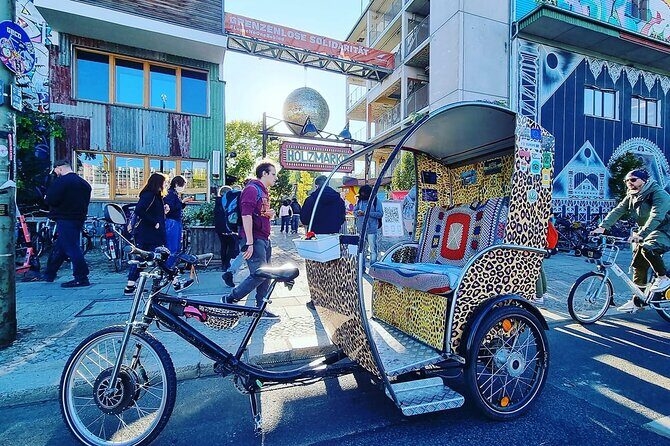
A standard walking day can turn into a leg test. This tour flips the script by using private transportation so you still see a lot, but you don’t spend every minute shuffling between distant points.
That matters in Berlin, where blocks can feel longer than they look on a map. With rickshaw-style movement, you get frequent short stops, quick context from your guide, and just enough time to look up, frame photos, and move on.
It’s also a nice choice if you travel in a small group. This is a private tour/activity, so the timing feels more flexible than a fixed group schedule.
You can also read our reviews of more city tours in Berlin
Price and Value: What $140.77 Covers (and Why It Adds Up)
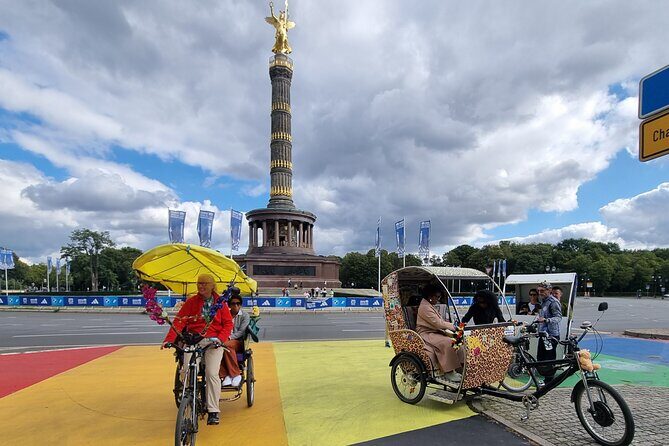
At $140.77 per person for a 3 to 6-hour outing, the real value isn’t just the sights. It’s the bundle: travel guide, photographer, private transportation, coffee/tea, and alcoholic beverages, plus music on request.
If you were to pay separately for a guide and a formal photo session, plus transportation, the numbers can add up quickly. Here, you’re paying for efficiency and someone to translate what you’re seeing, not just drive you past it.
One practical note: because some entrances are marked as ticket-not-included, the tour is best seen as a “see and understand” day. If you’re set on going inside several sites, you may want to add tickets separately.
Starting Smooth: Pickup, English Guide, and the Route Feel
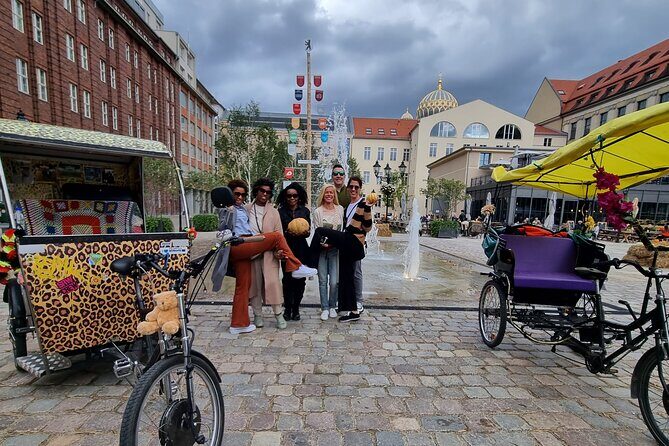
Pickup is offered from hotels, the central station, and cafes, and you return to the meeting point at the end. That reduces friction, especially if you don’t want to plan transit while juggling camera and time.
The tour runs in English, and most people can participate. Near public transportation, it’s also easy to hop off or get back on later if you’re combining this with other plans.
Weather matters here. The experience notes that good weather is required, so if Berlin is gloomy, plan a backup day or be ready for a date change.
Brandenburg Gate: The Classic Start That Sets the Tone
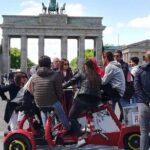
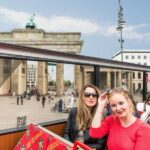
You’ll begin at the Brandenburg Gate, one of Berlin’s most recognizable stone landmarks. It’s built from sandstone and designed in the years 1788 to 1791, with Carl Gotthard Langhans the Elder behind the design ideas.
This stop is free for admission, but the key value is your guide’s context. The gate isn’t just a pretty postcard structure; it was ordered by King Friedrich Wilhelm II as an architectural conclusion to Unter den Linden.
If you’re doing photos right away, this is a great anchor point. The structure reads well even if you only have a few minutes.
Reichstag/Bundestag and the Chancellery: Big Power, Big Aftermath
From the gate, the route moves into the orbit of German parliamentary history.
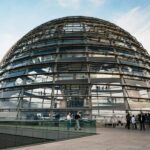
At the Reichstag/Bundestag, the story is heavy and specific: Philipp Scheidemann announcing the Republic from the west portal in 1918, the Reichstag fire in 1933, and then Soviet soldiers raising a red flag on April 30, 1945. You’ll get the meaning even if you’re not going inside.
Admission here is not included, so treat this as an outside-orientation stop unless you’ve secured tickets separately.
Next comes the German Chancellery. The architecture is the message: a tall central “administration building” sits between two wings, and the design aims for transparency and lightness through large glass surfaces and atriums.
Again, tickets are not included, so expect to appreciate form, scale, and the visual idea of openness from the exterior and immediate viewing areas.
A few more Berlin tours and experiences worth a look
Soviet War Memorial in Tiergarten: Quiet Space, Specific Names
In Tiergarten, you’ll pause at the Soviet War Memorial. You’ll see two T 34 tanks and a bronze figure of a Red Army soldier carrying his rifle.
Behind the memorial are texts listing names of fallen Soviet soldiers, and there are graves in the rear area of the memorial complex (around 2,500 soldiers). This stop is free for admission, and it’s worth giving your brain a minute to slow down.
Even in a fast-paced city day, moments like this can recalibrate the whole trip. The guide’s context helps you understand it as a deliberate place of remembrance, not just another monument photo.
Tiergarten Park Stroll: From Hunting Ground to English Garden Style
Tiergarten isn’t only trees. It’s a long-running mix of recreation and design.
The tour connects the dots from the end of the 17th century, when Friedrich III created a pleasure park on former hunting grounds, to later redesigns. In the 1833–1838 period, Peter Joseph Lenné transformed parts of the zoo into an English public park style.
This is admission free, and it’s one of the best “reset” stretches in the itinerary. After the heavier sites, the park’s paths and open areas give you a break without leaving the sightseeing loop.
Potsdamer Platz: Modern Berlin in a Carefully Planned Slice

At Potsdamer Platz, you’ll see Berlin’s newer urban planning story. It was developed as an entire district by architects, and it’s used by locals as well as visitors through cafes, cinemas, and shops.
One reason this stop works on a short day: it shows the city’s ability to reinvent itself. You’ll get the contrasts in quick succession, from memorials and government buildings to a place designed around commerce and movement.
Topography of Terror: Where the Nazi Terror Machine Was Planned
The Topography of Terror site focuses on planning and control of Nazi crimes between 1933 and 1945. Several key institutions of the SS and police were located there, including the Secret State Police Office and the Reich Security Main Office.
Admission is free, and even with limited time, you’ll leave with a clearer understanding of what this area represents. It’s not a casual stop, so if you’re the type who likes to read at your own pace, build in a bit more attention here.
Gropius Bau and Museum Culture: Art Stops Without the Pressure to Enter
The route includes Gropius Bau, a cultural space devoted to art, cultural history, and photography. Admission is not included, so you’ll likely focus on the exterior and surrounding area rather than an interior visit.
That said, it’s still a useful stop. It adds a layer beyond monuments, reminding you Berlin also lives in galleries and exhibitions, not only history plaques.
Berlin Wall Memorial and Checkpoint Charlie: Borders as a Story You Can Walk Through
You’ll then hit the Memorial of the Berlin Wall (admission not included), and later Checkpoint Charlie, one of the best-known former border crossings.
Checkpoint Charlie matters because it was tied to the American-controlled border point during Berlin’s division. Your guide will also reference that there were other border controls (Checkpoint Alpha and Bravo), and that crossings were limited to foreigners, certain employees, and officials.
Admission at Checkpoint Charlie is marked free, which is a plus when you’ve got a ticket budget. It’s also one of the easiest places to get quick visuals and context without needing timed entry.
Friedrichstraße, Gendarmenmarkt, and the Big-Square Feeling
As you move along Friedrichstraße, you’ll trace a north-south axis and see how the shopping mile developed after the fall of the Wall.
Then comes Gendarmenmarkt, created at the end of the 17th century with French immigrants (Huguenots) in the area. The square changed names over time before becoming known as Gendarmenmarkt in 1799, linked to the guard and stables of the Gens d’armes regiment.
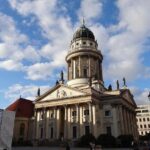
The tour also includes Deutscher Dom and Konzerthaus on the Gendarmenmarkt side of the city. Both note that admission is not included, so think of these stops as architecture-and-streetscape moments, not a formal museum hour.
The Konzerthaus in particular is a classicist architecture highlight, connected to Karl Friedrich Schinkel and the area’s theatrical roots.
Bebelplatz and Museum Island: Where Culture Meets Consequence
At Bebelplatz, the story is stark. The Nazis burned books here on May 10, 1933, with more than 20,000 books collected as what they called non-German spirit.
Admission is free, and the memorial aspect turns this into a place where you feel the cost of propaganda. If you like history that has a human consequence, this stop lands.
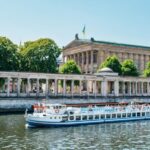
Next: Museum Island, recognized as a UNESCO site and built as an ensemble through a long development process. Admission is marked free.
Even if you don’t enter museums, Museum Island is a strong “Berlin identity” stop. It tells you the city invests in culture like it’s part of the infrastructure.
Berliner Dom, Alexanderplatz, and Nikolaiviertel: Big Scale to Old Streets
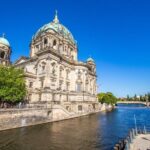
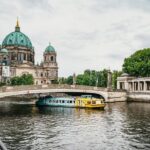
You’ll reach Berlin Cathedral (Berliner Dom), with its striking dome and a rebuild timeline from 1894 to 1905. Admission is not included, so you’ll likely view it from outside.
Then it’s Alexanderplatz, a central square and major transport hub known as Alex. Admission is not included, but it’s useful here as a time-check point: Berlin’s modern rhythm starts to show up clearly.
Finally, Nikolaiviertel on the Spreeinsel gives you a version of old Berlin in its current form, created for the city’s 750th anniversary in 1987.
Again, not an entry-and-exhibit stop, but a strong change of texture from the cathedral and square scale.
Neptunbrunnen and the East Side Gallery: Symbols in Plain Sight
In front of the Red City Hall, the Neptun Fountain is known by locals as Forckenbecken. Neptune stands in the basin with his trident, and four female figures symbolize the Elbe, Rhine, Oder, and Vistula rivers.
Admission is marked not included, but it’s a quick photogenic break that makes the city feel playful.
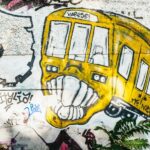
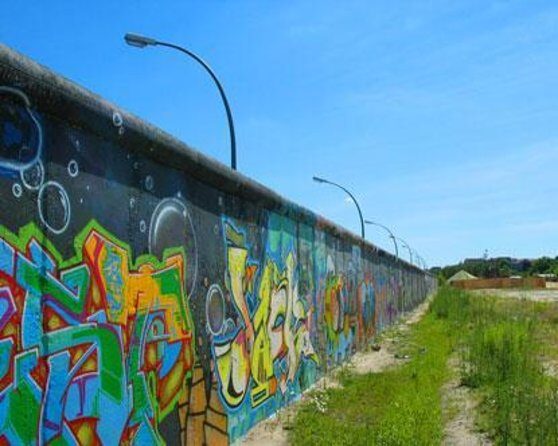
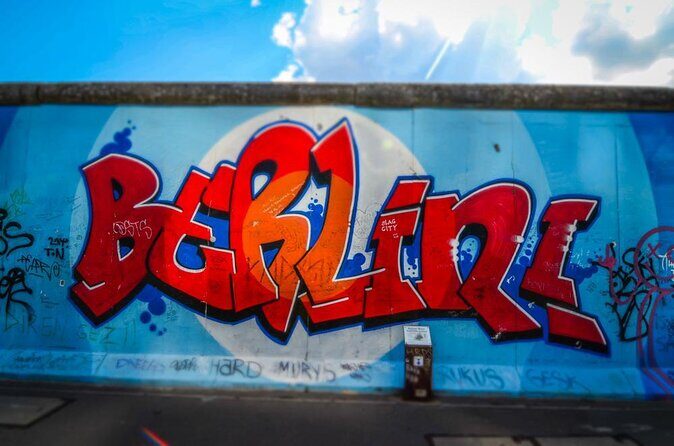
Then you’ll reach the East Side Gallery, a painted section of the former Berlin Wall along the Spree. It runs about 1.3 kilometers and is described as the longest open-air gallery in the world, with over a hundred original wall paintings.
If you like street-level art and political messaging side by side, this is one of the day’s easiest “stop and absorb” moments.
Kreuzberg Flavor: Bergmannstraße, Görlitzer Park Area, and Everyday Multicultural Berlin
Next, you’ll move into Kreuzberg-style streets, starting with Bergmannstraße. This area offers a glimpse into old buildings and day-to-day life, calmer than parts of the more club-heavy scene, but still lively and multicultural.
Admission is free, and it’s a good place to look at how Berlin neighborhoods feel when the sightseeing machine steps back.
Then it’s toward the Görlitzer Park area connected to the old Görlitz train station site. The tour notes that the park was created in the early 1990s, with lawns, sports fields, playgrounds, and a children’s farm near Glogauer Straße.
Admission is free. Even if you don’t linger, it’s a nice contrast to the wall and memorial stops.
Landwehrkanal and Admiralbrücke: The City Slows Down Here
Landwehrkanal runs through multiple districts and traces back to the 19th century. The tour highlights that King Friedrich Wilhelm IV commissioned the canal design, with construction beginning in 1845 and ending in 1850.
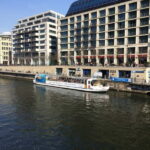
Admission is free, and it’s a great “Berlin is a water city too” moment that keeps the day from feeling like only monuments.
Then comes Admiralbrücke, described as a popular meeting place in summer. After local residents complained about nightly volume, the bridge was cleared peacefully every evening at 10 p.m. with police support.
If you’re there near evening light, you’ll understand why people like it here: cobblestones, old gas lantern vibes, and sunset over the canal.
Oranienstraße: Food, Bars, and International Street Energy
The itinerary continues with Oranienstraße, where gastronomy and nightlife scene dominate. The tour description points to 100 small shops, bars, and restaurants with international flair, especially associated with SO 36.
Admission is free here, so this becomes a low-pressure stop where you can snack, grab coffee, or just watch street life roll by.
Tempelhofer Feld and Park am Gleisdreieck: Open Space With a Future
Berlin’s open spaces can be historic in function, not just scenic.
At Tempelhofer Feld, the former Tempelhof Airport and its airfield reopened to the public in May 2010 after flight operations ended. After a successful referendum in May 2014, the Tempelhof Field Law came into force in June 2014, guiding redesign into a citizen-involved park.
Admission is free, and it’s the right kind of stop to finish with: a place that feels forward-looking, not only retrospective.
Finally, Park am Gleisdreieck in Kreuzberg shows how urban nature can grow from leftover space. The tour notes that railway areas lay fallow after World War II, and citizens later worked to green the area permanently.
Admission is free, and it’s a calm ending point if you still want fresh air without a museum ticket.
Practical Timing Tip: How to Handle Ticketed Stops on a Short Day
Because some sites specify admission tickets not included, I suggest you decide early what you want from each stop:
- If your goal is photos and context, you’re set for many stops that are admission free.
- If you want to enter a building, plan to treat those as add-ons with separate tickets, since several key landmarks like Reichstag/Bundestag and the church/cultural buildings are marked not included.
This matters most when your tour duration is closer to 3 hours instead of 6. The tour’s strength is the route coverage, but ticketed entries can steal time.
Should You Book This Berlin Highlights Rickshaw Tour?
Book it if you want maximum Berlin feeling per hour: major monuments, Wall-related stops, and neighborhood texture, all guided in English with a photographer and included drinks/coffee. It’s especially good for a first-time Berlin visit or anyone who wants to see a lot without a long walking slog.
Skip or adjust expectations if you want a deep, inside-only museum day. This tour is best as a fast-moving, meaningful overview with optional tickets for certain interiors, plus plenty of time to look, photograph, and understand what you’re seeing from the street.
If you’re the type who likes a day with both heavy history and real-city scenes, this one is a strong fit.
FAQ
How long is the tour in Berlin?
The experience runs about 3 to 6 hours.
Is pickup available, and where does it start?
Yes. Pickup is offered from hotels, the central station, and cafes. The tour ends back at the meeting point.
Is the tour in English?
Yes, it’s offered in English.
Are admission tickets included for the main sites?
Some stops are listed as free admission, while others note admission ticket not included. For the ticket-not-included stops, you should expect to view the sights from outside or arrange entry separately if you want to go in.
What’s included in the price?
The tour includes private transportation, a photographer, a travel guide, music on request, alcoholic beverages, and coffee and/or tea.
What if the weather is bad, or I need to cancel?
The experience requires good weather. You can cancel for a full refund if you cancel at least 24 hours in advance, and if it’s canceled due to poor weather, you’ll be offered a different date or a full refund.