REVIEW · BERLIN
Best of Berlin E-Bike Tour
Book on Viator →Operated by Fat Tire Tours - Berlin · Bookable on Viator
Berlin by electric bike feels like time travel. You cover the big turning points of 20th-century Berlin on easy electric bikes, with a guide who ties the sights to Cold War context as you glide from Alexanderplatz toward Checkpoint Charlie, the Holocaust Memorial, and the Brandenburg Gate. If you end up with guides like Sam or Thor, you’re likely to get calm pacing, clear explanations, and plenty of chances to ask questions.
One thing to consider: this is a real cycling tour. You’ll need to ride a bike on your own for about three hours, Berlin traffic is a thing, and there are no child seats or tag-alongs, plus the ride is outdoors when weather allows.
In This Review
- Key highlights before you go
- Why an e-bike is the smart way to see Berlin’s 20th-century markers
- Price and value: what $65.90 buys you (and what it doesn’t)
- Meeting at Alexanderplatz: the easy start and the ride rhythm
- Reichstag stop: the Nazi era explained through how Berlin talks about it
- Brandenburg Gate and Gendarmenmarkt: symbols, survival, and rebuilding
- Alexanderplatz and Bebelplatz: Berlin’s “everything at once” center
- Holocaust Memorial: plan for emotion, not just photos
- Checkpoint Charlie: the East-West split in a single crossroads
- Easy riding and safety: how to stay comfortable on Berlin roads
- Who should book this Best of Berlin e-bike tour
- Should you book this Berlin e-bike tour or pick something else?
- FAQ
- How long is the Best of Berlin e-bike tour?
- Where do I meet for the tour?
- Where does the tour end?
- Is the tour offered in English?
- What’s included in the price?
- Do I need to bring anything?
- Do I need prior biking experience?
- What if the weather is bad or I need to cancel?
- How big is the group?
Key highlights before you go
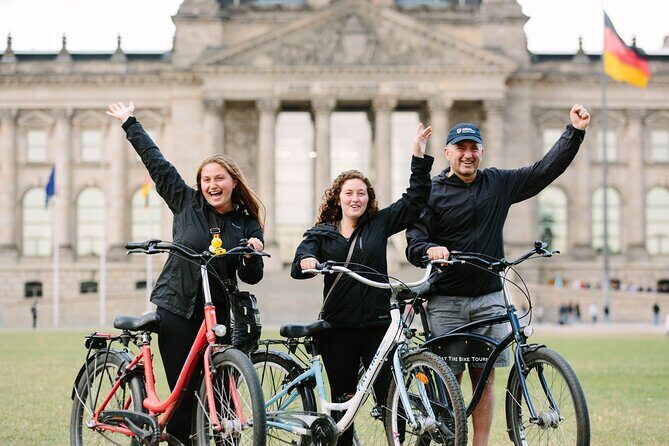
- Max 15 people keeps the group small and the pace flexible
- Electric bikes plus helmets included means you get to focus on the route, not the gear
- English commentary built around the Cold War gives the landmarks real meaning
- Fast coverage of top sites like the Reichstag, Brandenburg Gate, Bebelplatz, Holocaust Memorial, and Checkpoint Charlie
- Short stops with purposeful context so you’re not just snapping photos and moving on
Why an e-bike is the smart way to see Berlin’s 20th-century markers
Berlin spreads out more than many first-time visitors expect. Walking is great, but it can turn into a long grind between major sights. Here, the electric bike helps you keep momentum, so you can spend your time learning and looking, not negotiating long distances on foot.
You’ll also get a practical kind of history. Instead of reading dates from a plaque, you get guided connections between the buildings and what happened around them: Nazi-era power, postwar division, and the Cold War landmarks that shaped daily life. The best part is that the route includes both famous postcard sites and the places where memory is handled with care.
And yes, you’ll still pedal. One thing I like about this format is that it’s not a motor-chair experience. You get help when you need it, and that makes it feel normal instead of powered-by-sci-fi.
You can also read our reviews of more cycling tours in Berlin

Price and value: what $65.90 buys you (and what it doesn’t)
At $65.90 per person for about three hours, this tour is priced like a serious city orientation with included equipment. You’re getting the e-bike, helmet, and a professional guide, and that’s the main value math. Paying for transit plus renting a bike plus hiring a guide separately would add up quickly.
You’re also buying time. The stop plan is built around efficient coverage of major Berlin sites in one morning. If your schedule is tight and you want a guided “spine” for the rest of the trip, the cost starts to make sense fast.
What’s not included is also clear. There’s no food or drinks, and no hotel pickup or drop-off. So plan on bringing a bottle of water (the tour suggests it) and saving lunch for after, when your stomach finally catches up to your brain.
Meeting at Alexanderplatz: the easy start and the ride rhythm
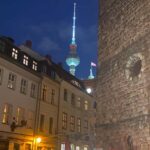
You meet at the shop at Alexanderplatz, right by the TV Tower (Panoramastraße 1A). It’s a straightforward location to reach, and the tour ends right back where it starts.
The ride rhythm is built around short photo-and-context stops. Many stops are around five minutes, then a couple run closer to ten. That means you should come in ready to absorb key points quickly, not expecting long museum-style time at every location. The upside is that you cover more ground in less time than a classic walking route.
Small-group size matters here. With a maximum of 15 people, the guide can keep the group together without turning it into a shuffle-through-a-crowd experience. It also helps if you’re a first-timer on an e-bike and want a little reassurance while you find your balance.
Reichstag stop: the Nazi era explained through how Berlin talks about it
Your first major stop is the Reichstag Building. You’ll spend only a few minutes here, but the focus is pointed: you learn about Hitler’s rise to power and how the Nazi era is discussed in modern Berlin.
This is a smart opener because it sets the mental frame before you hit the Cold War sites. You’re not starting with sightseeing alone; you’re starting with cause and consequence. Even with limited time at the stop, the guided context can make the later landmarks hit harder.
One practical consideration: a short stop means you’ll want to ask questions early if something lands differently than you expected. Don’t hold it for later when the group is moving on.
Brandenburg Gate and Gendarmenmarkt: symbols, survival, and rebuilding
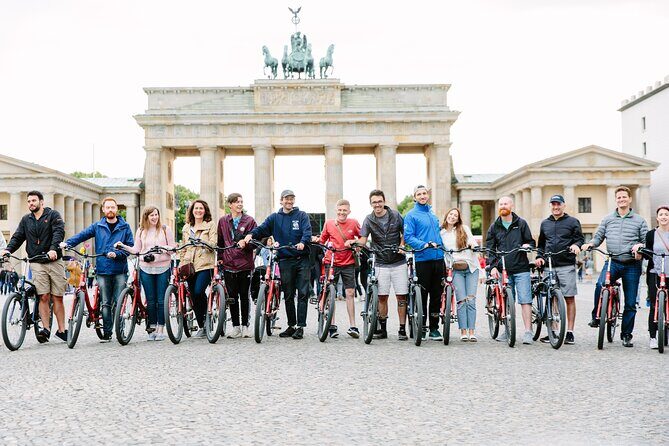
Next comes the Brandenburg Gate, Berlin’s most recognizable symbol. The stop is brief, but the commentary is built around meaning: it’s more than a monument pose. You’ll hear the story of the gate as a sign of Berlin’s resilience, including the detail that it’s topped with a representation of Victoria.
After that, you’ll roll into Gendarmenmarkt, a gorgeous square with a backstory that’s easy to forget when you’re just admiring the architecture. The context here connects postwar recovery to people: after the Thirty Years’ War left Berlin’s population decimated, Protestant Huguenot refugees from France were invited to rebuild the community.
Both stops are good for different reasons. Brandenburg Gate gives you the big, instant icon. Gendarmenmarkt slows the lens down just enough to show how history was also lived through migration and rebuilding.
A few more Berlin tours and experiences worth a look
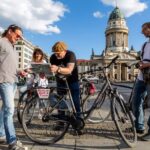


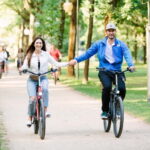
Alexanderplatz and Bebelplatz: Berlin’s “everything at once” center
You’ll spend time at Alexanderplatz, described as the heartbeat of Berlin and the center of Mitte. This is one of those places where you can see different eras layered together, which makes it a useful waypoint during a short tour. Even if you’ve only arrived recently, the guide’s framing helps you notice the past without feeling like you need to memorize a timeline.
Then comes Bebelplatz, and this stop has weight. It’s originally tied to Frederick the Great, and the square is home to a university and one of Berlin’s opera houses. The story also includes a stark reminder of how the Nazis used propaganda to damage minds and public life.
Because Bebelplatz is listed for around ten minutes, it’s one of the stops where you can slow down a bit. Still, it’s not a long sit-and-read experience. If you’re the type who likes to stand back and absorb quietly, you may want to take a breath, then let the guide’s explanation fill in what you’re seeing.
Holocaust Memorial: plan for emotion, not just photos
The Holocaust Memorial – Memorial to the Murdered Jews of Europe is one of the most impactful stops on the ride, scheduled for about ten minutes. The guide discusses not only the Holocaust itself, but also the ways Berlin and Germany remember this atrocity into the 21st century.
This is not a quick “look and move” stop in spirit, even if the time is limited. The place asks for respect and silence. Bring your water, keep your voice low around others, and focus on the meaning rather than trying to turn it into a checklist photo stop.
If you’re sensitive to heavy topics, this is still doable on an e-bike tour. Just know that the tour’s structure gives it proper attention rather than treating it like another stop on a highlight list.
Checkpoint Charlie: the East-West split in a single crossroads
Next you reach Checkpoint Charlie, the former checkpoint between Soviet-occupied and American-occupied sectors. You’ll get the Cold War story tied directly to geography: where East meets West, how the city divided, and why this particular crossing became so famous.
This stop is usually around ten minutes, which is enough for the guide to explain what made the checkpoint symbolic without dragging the group into a long lecture. It’s also one of the most visually immediate locations, so it tends to work well for mixed group energy levels: some people want to listen, some want to look around, and the guide can bridge both.
A practical note: it’s a popular area, so keep your attention on the guide and the group meeting points. Berlin’s cycling network and pedestrian traffic can shift quickly around major hotspots.
Easy riding and safety: how to stay comfortable on Berlin roads
This tour includes an e-bike and helmet, and the reviews you’ll see about this company focus hard on safety and control. Guides like Thor are praised for managing Berlin traffic and keeping everyone together, even when conditions are less than perfect.
Here’s what you should do to have the easiest time:
- Wear weather-appropriate layers and bring a light rain layer if conditions look questionable
- Keep your speed steady and follow the guide’s cues for turns and stop points
- Remember that e-bikes still require pedaling, so treat it like an assisted cycle, not a push-button ride
Also, you don’t want to show up stressed about your bike skills. The tour requires you to ride alone, and there are no extra setups like child seats or tag-alongs. If you’ve never ridden before, consider practicing briefly before the tour or arriving early so you can get comfortable.
The good news: the route is designed for bike access and uses the fact that Berlin is a city where cycling is part of daily life. That means you’re not just fighting a bike system for three hours.
Who should book this Best of Berlin e-bike tour
This is a great match if:
- You’re short on time and want a structured overview of major sights
- You want guided Cold War context, not just photos
- You prefer moving through the city over long blocks of walking
It also works well for people who are new to e-bikes, as long as you can ride independently. The pacing is guided, and the route structure keeps breaks built in.
If you’re a hardcore history researcher, you might still find it too short for deep dives at each location. But for getting your bearings fast and learning how Berlin’s different eras connect, this style hits the sweet spot.
Should you book this Berlin e-bike tour or pick something else?
Book this tour if you want a single morning plan that stitches together Berlin’s biggest landmarks with clear Cold War storytelling, all while you cover real distance with less physical strain. At $65.90 with the bike and helmet included, it’s strong value when you compare it to renting a bike plus paying for guided interpretation.
Skip it or consider an alternative if:
- You’re not comfortable riding a bike on your own
- You’re sensitive to crowds around famous sights and want longer, quieter time at fewer locations
- You’re expecting a museum-level visit at every stop, because the time at each highlight is intentionally short
If you want a practical first visit to Berlin that helps you understand what you’re seeing, this is one of the most efficient ways to do it.
FAQ
How long is the Best of Berlin e-bike tour?
It’s about three hours.
Where do I meet for the tour?
You meet at the Unlimited Biking shop at Panoramastraße 1A, 10178 Berlin, Germany, near Alexanderplatz and the TV Tower.
Where does the tour end?
It ends back at the same meeting point.
Is the tour offered in English?
Yes, it’s offered in English.
What’s included in the price?
The price includes use of an electric bike and a helmet, plus a professional guide.
Do I need to bring anything?
The tour advises bringing a bottle of water.
Do I need prior biking experience?
Most people can participate, but all participants must be able to ride a bike alone.
What if the weather is bad or I need to cancel?
The experience requires good weather. It also offers free cancellation up to 24 hours in advance for a full refund.
How big is the group?
The tour has a maximum of 15 travelers.