REVIEW · BERLIN
Berlin: Private Guided Tour of the Main Sights
Book on GetYourGuide →Operated by Kaibel & Erdmann Stadtrundfahrten OHG · Bookable on GetYourGuide
Berlin can feel huge, fast. This private, door-to-door tour uses a tight loop to help you get oriented and understand what you’re seeing. You’ll cover big-name sights like the Brandenburg Gate and the Reichstag, but with enough history of WWII and the Cold War to make the buildings mean something, not just look good.
I especially like that it’s truly flexible for photos and longer looks, since your guide can stop whenever you want. I also like the comfort factor: business-class vehicles with air-conditioning and microphones make a 3-hour drive feel relaxed, even when it’s rainy. One thing to consider is that it’s still only 3 hours, so you’ll need to choose what matters most if you want more time at specific stops.
In This Review
- Key tour takeaways
- What a 3-Hour Main Sights Tour Covers (and What It Doesn’t)
- Picking Up Where You Are: Door-to-Door Comfort in Berlin
- Berlin Wall to Government Quarter: The Story Behind the Sights
- Reichstag, Government Quarter, and Main Train Station: Power and Movement
- A practical note
- Brandenburg Gate and Unter den Linden: The Classic Berlin Stroll, by Van
- Museum Island and the Cathedral-of-Names Feel
- TV Tower, Nikolaiviertel, and City Corners That Feel Human
- Gendarmenmarkt, Philharmonie, and the Stops You Can Stretch
- Charlottenburg Palace, Memorial Church, and KaDeWe: Royal Past Meets City Life
- Bellevue Palace and Kongresshalle: Where History and Modern Politics Meet
- Potsdam Square and Berlin Wall Remains: The Cold War That Still Shows
- Price and Value: When $471 Makes Sense (and When It Doesn’t)
- Who This Tour Suits Best in Berlin
- Should You Book This Private Berlin Main Sights Tour?
- FAQ
- How long is the Berlin main sights private tour?
- How many people are in the group?
- What vehicles are used?
- Where does the tour pick up and drop off?
- What languages are available for the live guide?
- Are entrance fees included?
- Can I customize the stops during the tour?
- Can I combine this with a Potsdam tour or add more hours?
Key tour takeaways
- Business-class van with microphones means you can hear the story clearly while moving between sights
- Private small group (up to 8) keeps the pace calmer than most big coach tours
- Flexible stopping lets you linger for photos and viewpoints without feeling rushed
- WWII and Cold War context helps you connect the Berlin Wall sites to today’s city layout
- Optional Potsdam add-on works well if you want more than just Berlin’s main sights
What a 3-Hour Main Sights Tour Covers (and What It Doesn’t)

A 3-hour private tour is built for a specific job: giving you the main landmarks plus the key historical thread that explains why Berlin looks the way it does. You’ll ride in a private sedan or minivan with a driver-guide, so you’re not stuck hopping between transit stops or waiting on other groups. And because it’s private, the route and timing can bend around what you care about most.
You’ll also get that practical advantage: pick-up and drop-off in Berlin city centre. In real terms, that means you spend less time figuring out logistics and more time seeing things you’d otherwise miss or misunderstand. The trade-off is you’re moving. This is not a slow walking tour, so if you want long, in-depth museum time or deep interior visits, you’ll likely need separate plans.
You can also read our reviews of more guided tours in Berlin



Picking Up Where You Are: Door-to-Door Comfort in Berlin
One of the best parts of this experience is the start: your driver meets you at your hotel reception or at another Berlin city centre location you suggest. The driver will hold a sign with your last name, so you can find them quickly and avoid that awkward scramble outside.
The vehicles are business-class with air-conditioning and microphones, which matters more than it sounds. Berlin sightseeing often mixes short viewing stops with traffic delays, and the microphone helps keep the guide’s commentary clear while you’re rolling between neighborhoods. Reviews also point out the van feeling spacious and very clean, which is exactly what you want when you’re paying for a private setup.
If you’re staying outside Berlin city centre, there may be an extra fee. That’s normal for private transfers, but it’s worth checking up front so there are no surprises.
Berlin Wall to Government Quarter: The Story Behind the Sights

This tour is sold as more than a highlight reel, and the structure is meant to help you understand how Berlin moved from the WWII era into the Cold War—and then into reunified Berlin. You’ll see places tied to that long political arc, including Berlin Wall remains and government-era landmarks, and the guide ties it all together so the geography clicks.
A good example of why this works: the city layout around the government quarter and the central sights makes more sense when you know what was contested and why certain areas became symbols. Even if you don’t visit every building inside, you still walk away with a coherent mental map: where power used to sit, where borders used to feel real, and where modern Berlin is trying to look forward.
Reichstag, Government Quarter, and Main Train Station: Power and Movement
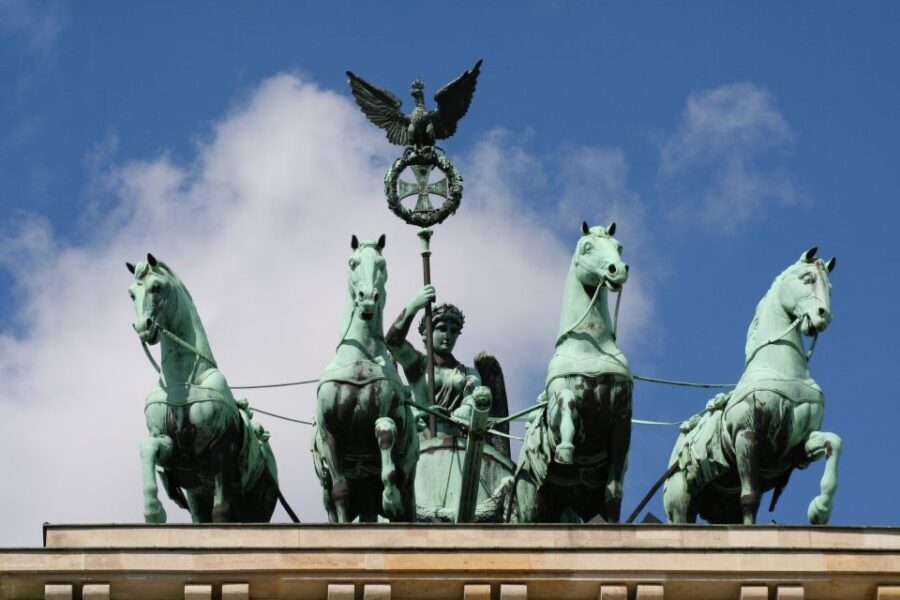
You’ll get a strong core lineup in central Berlin, starting with the Reichstag and the new buildings in the government quarter. The Reichstag is one of those places that looks important even before you know why. With a guide, you get the context that turns it from just a photo stop into a landmark connected to Germany’s changing eras.
From there, you’ll head toward the main train station (the tour lists the Main Train Station explicitly). This is a smart inclusion because modern Berlin doesn’t just live in historic facades. The train station area shows how the city organizes itself today—how people flow in and out, and how Berlin acts like a working capital rather than an open-air museum.
A practical note
There’s no guarantee you’ll spend much time getting out at every single spot because the tour is designed around a drive-by rhythm plus 1–2 stops at sights of your choice. If you strongly prefer one location over the rest, tell your guide early so your stops match your priorities.
You can also read our reviews of more private tours in Berlin



Brandenburg Gate and Unter den Linden: The Classic Berlin Stroll, by Van
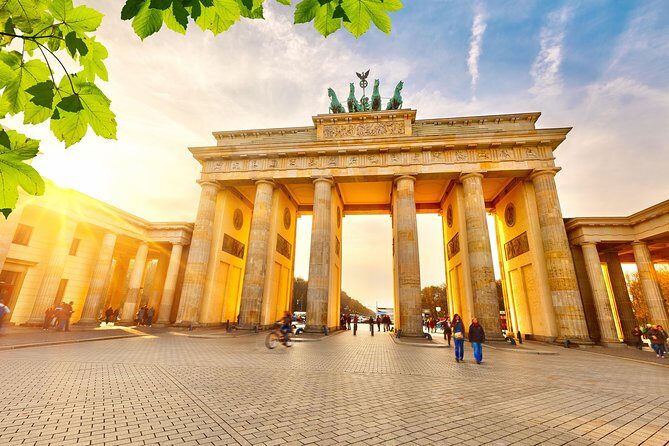
A central highlight is the Brandenburg Gate, followed by time along Unter den Linden. This is the part of Berlin that instantly feels “Berlin,” with grand streetscapes and big, recognizable landmarks. But the value here comes from what you learn while you’re there—especially when the guide connects these sights to the WWII and Cold War backdrop.
Unter den Linden is a long, ceremonial street, so you get the sense of how Berlin used to present itself. Even short stops help you understand the scale. And because this is private, you can ask for the best viewpoints for photos rather than being stuck at the most obvious curbside spot.
The tour also lists stops around major cultural institutions and architecture in this corridor, including the Staatsoper and Museum Island. That’s helpful if you want your sightseeing to reflect how Berlin thinks of itself—art, governance, and public space all in one radius.
Museum Island and the Cathedral-of-Names Feel
Museum Island is one of those places where the “you should see it” list usually stops at the basics. With a guide, you’re more likely to understand what makes it important and what kinds of collections or institutions shaped Berlin’s public identity—without needing an extra museum ticket for your orientation tour.
TV Tower, Nikolaiviertel, and City Corners That Feel Human
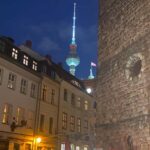
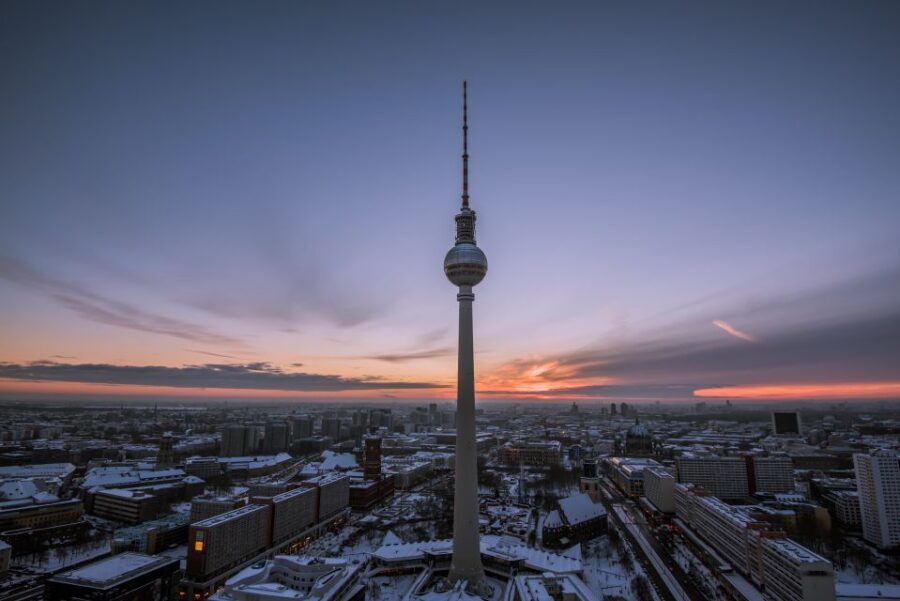
Next up, the itinerary includes the TV Tower and the Nikolaiviertel. These aren’t just random attractions. They represent two different ways Berlin expresses itself: one through skyline visibility and one through neighborhood atmosphere.
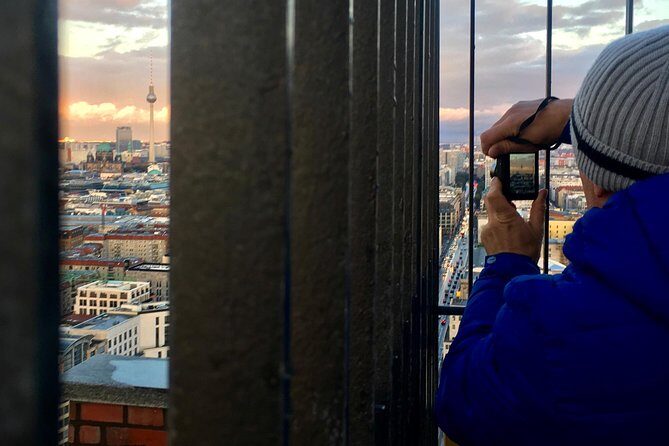
The TV Tower is about perspective. You see it and you understand that Berlin’s identity isn’t frozen in the past—it towers over the city as it remakes itself. Nikolaiviertel is different. It tends to feel more intimate and older-feeling, and it helps balance the big monumental sights with something you can look at and imagine walking through.
If you want a tour that doesn’t leave you only with cold government symbolism, this kind of contrast is valuable. It makes Berlin feel like a real place where people live, not a staged set.
Gendarmenmarkt, Philharmonie, and the Stops You Can Stretch
Gendarmenmarkt is on the list, and it’s a classic Berlin square area that rewards even short visits. It’s also a good place for photo stops because you can frame architecture without constant moving.
The tour also references the Philharmonie and a synagoge. That matters because it signals the guide isn’t only focused on political landmarks. You’re seeing the broader cultural and community side of Berlin too.
Then there’s the flexibility piece. The tour explicitly says you can stop wherever you want. In practice, that means if one spot grabs your attention—an angle, a view, a particular building façade—you can spend a few extra minutes there. Reviews highlight how guide Christine was flexible about stopping for photos and longer looks, and that kind of responsiveness is exactly what you’re paying for with a private tour.
Charlottenburg Palace, Memorial Church, and KaDeWe: Royal Past Meets City Life
Not far from central sights, the tour includes Charlottenburg Palace and the Memorial Church. The palace adds a royal European feel, which contrasts neatly with the WWII/Cold War story you’re already tracking. It’s a useful pivot: it shows that Berlin’s layers aren’t just political and wartime—they’re also about status, architecture, and how elites shaped the city.
The Memorial Church is also a significant inclusion, since memorial sites carry different emotional weight than landmark photos. Even if you only do an exterior stop, a guide can help you read what the memorial represents in the broader story of Berlin’s 20th-century history.
Then you’ll cover KaDeWe and the Victory Column. These are practical, city-life landmarks as much as they are tourist magnets. KaDeWe is connected to shopping and daily urban culture, while the Victory Column adds a monument-scale element that helps you understand how Berlin marks achievements and national narratives.
Bellevue Palace and Kongresshalle: Where History and Modern Politics Meet
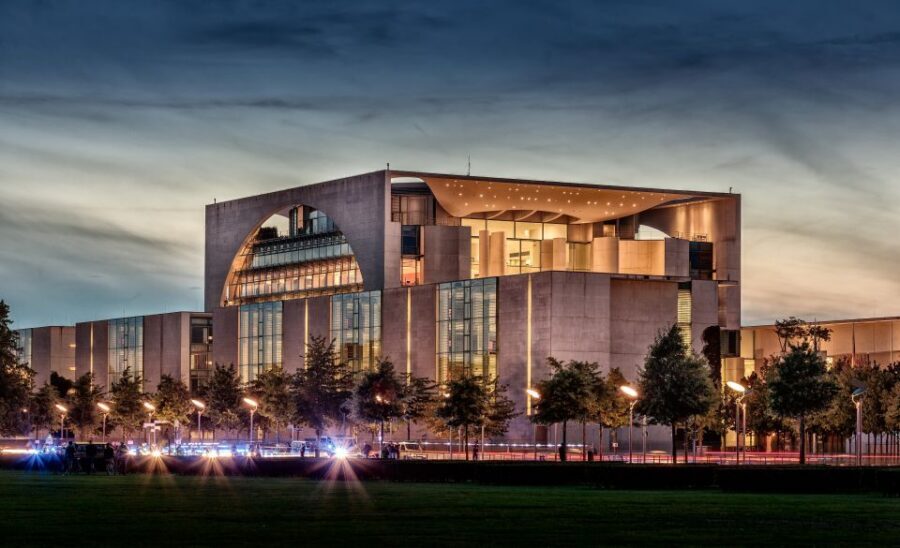
The tour lists Bellevue Palace and the Kongresshalle. Bellevue Palace is tied to Germany’s current political life, so it’s a natural follow-up after the Reichstag and government quarter stops. The guide’s commentary is key here because it helps you see these buildings not as isolated sights, but as part of how modern Germany represents authority.
Kongresshalle rounds out the loop with a different kind of historical presence. You get the chance to connect architecture with political messaging and the long shadow of earlier eras. This is the kind of stop that can feel flat if you don’t know what to look for, but it can land well when the guide provides context as you pass through the area.
Potsdam Square and Berlin Wall Remains: The Cold War That Still Shows
The tour includes Potsdam Square and the remaining parts of the Berlin Wall. This is one of the most emotionally charged segments, and it’s also one of the most important for “meaning,” not just “sight.”
What makes these stops valuable is that they ground the story in physical reality. The wall remains are a reminder that the conflict wasn’t only in textbooks. It shaped daily life, movement, and the way neighborhoods developed. Potsdam Square helps you see how the city reorganized itself after those divisions ended.
If you care about WWII and Cold War history, this part is a strong reason to book. It’s the segment that takes Berlin from a list of landmarks into a narrative you can carry with you while exploring on your own afterward.
Price and Value: When $471 Makes Sense (and When It Doesn’t)
The price is $471 per group up to 8 people for a 3-hour private tour. That sounds steep at first until you break it down. At full capacity (8 people), you’re looking at roughly $59 per person, which is in the realm where a private car with a guide is genuinely good value. If you’re traveling as a couple or solo, the cost per person is higher, and you should only book if you value privacy, flexibility, and the guide’s ability to connect dots quickly.
This tour is especially good value if:
- You’re a small group and want one efficient orientation outing
- You hate wasting time on complicated transit between major sights
- You want history context without booking multiple museums
It’s less of a slam-dunk if:
- You plan to do long interior visits during the tour window
- You’re happy with a self-guided walking plan and don’t need the storytelling
Also remember: entrance fees are not included, so budget separately if you decide you want to add any ticketed stops on the side.
Who This Tour Suits Best in Berlin
This is ideal for first-timers who want a fast, clear map of central Berlin with a guide tying the political history to the city’s layout. It’s also a good match for mixed groups—people who love architecture plus people who want real context—because the stop list spans government, culture, monuments, and memorials.
If you’re short on time, the 3-hour format is a plus. If you have more time and interest in history, you can also add more hours or combine it with a Potsdam tour, which is the natural next step after seeing the Wall-related story.
Should You Book This Private Berlin Main Sights Tour?
I’d book it if you want a private orientation that actually explains what you’re looking at, not just what to photograph. The combination of a small private group, comfortable business-class vehicle, and the ability to stop where you want makes it feel worth it—especially once you factor in how quickly Berlin landmarks can overwhelm you without a guide.
I’d skip or rethink if you’re the type who only wants ticketed interiors, because this experience is built around seeing and understanding from the outside and from vantage points while driving between stops. And if your must-see list is very long, you’ll need more time than 3 hours—or you’ll need to be very decisive about where your 1–2 chosen stops should go.
Bottom line: if you want Berlin’s main sights with WWII and Cold War context, in a relaxed private format, this is a solid way to start your trip.
FAQ
How long is the Berlin main sights private tour?
It runs for 3 hours.
How many people are in the group?
It’s a private group with up to 8 people.
What vehicles are used?
You travel in a private sedan or minivan that’s business-class, with air-conditioning and microphones.
Where does the tour pick up and drop off?
Pick-up is included in Berlin city centre, meeting you at your hotel reception or another Berlin city centre location you suggest. The tour also ends in Berlin city centre.
What languages are available for the live guide?
The guide is available in English and German.
Are entrance fees included?
No, entrance fees are not included. Food and beverages are also not included.
Can I customize the stops during the tour?
Yes. You can stop wherever you want, and the tour typically includes 1–2 stops at sights of your choice.
Can I combine this with a Potsdam tour or add more hours?
Yes. You can book additional hours or combine with a Potsdam tour.