REVIEW · BERLIN
Berlin: Private Bike Tour of the Berlin Wall and Third Reich
Book on Viator →Operated by FREE BERLIN Bike Tours · Bookable on Viator
The Berlin Wall tells its story on two wheels. This private, 3-hour bike tour links Wall-era checkpoints, Nazi-era plans, and Holocaust memorial sites into one ride you can actually manage in a single afternoon. You’ll cover major landmarks like Checkpoint Charlie and the East Side Gallery feel, plus you get an itinerary that a real guide can tweak to your group.
I especially love the time-saving part. On a bike, you zip between emotionally heavy sites without losing half your day to transfers, and the pace feels made for seeing the “why” behind Berlin’s changes. I also like how smoothly it runs: the guide’s clear English makes the Cold War and Third Reich context easy to follow, even when the subject matter is brutal.
One consideration: this route packs a lot in, so stops are mostly short. You’ll get strong orientation and interpretation, but you won’t have long, slow time in every place, and some locations are viewed externally (like the Reichstag). Also, it’s not a light ride—plan for serious themes.
In This Review
- Key takeaways before you book
- Berlin Wall and Third Reich by bike: what this tour gets right
- Price and value: is $107.42 worth it?
- How the route feels: pacing, group size, and comfort
- Where you start and where you end
- Stop-by-stop: the Wall, Nazi-era planning, and the memorial sites
- Nikolaiviertel: the old town question (and the war context)
- Stiftung Neue Synagoge Berlin – Centrum Judaicum: civil courage after broken glass
- A GDR-era deportation/Holocaust memorial contrast
- Memorial of the Berlin Wall: where the Wall feels real
- Mauerpark: border logic turned into everyday space
- Humboldthain Flak Tower: Nazi architecture meets a panoramic view
- Günter Litfin Memorial: the first shot at the Wall
- Invalidenfriedhof: a cemetery cut by the border
- Spreebogenpark: Hitler’s architect and the Great Hall idea
- Reichstag building: power grabs and democratic history (from outside)
- Another memorial: one of three major Holocaust victim-group memorials
- The Holocaust Memorial (Memorial to the Murdered Jews of Europe)
- Fuhrerbunker: today it’s a parking lot
- Checkpoint Charlie: the Cold War pressure point (English version)
- The best parts for different travelers
- Small things that matter on a ride like this
- So, should you book it?
- FAQ
- How long is the Berlin Wall and Third Reich private bike tour?
- How much does it cost per person?
- Is this a private tour?
- What languages are available?
- Is Checkpoint Charlie included in all versions of the tour?
- What’s included with the tour?
- Is the tour family friendly?
- Does the tour run in bad weather?
- Where do I meet, and where does the tour end?
- What is the cancellation policy?
Key takeaways before you book
- Private means your group sets the pace: your route stays focused and only your party rides, so you’re not stuck behind a crowd.
- Guides design the route under the Free-Berlin concept: you’re not getting a generic checklist; the guide builds a unique route for that day.
- 3 hours is a sweet spot: enough time to connect the Wall story to the Third Reich era without turning into a full-day marathon.
- Major Cold War sites are included: you’ll hit the kind of locations that shaped daily life and international tension, including Checkpoint Charlie (English version).
- Bikes and helmets are provided: you can travel light and still feel safe and comfortable.
- Weather-ready operation: it runs in all weather conditions, so you’ll want to dress for Berlin reality.
Berlin Wall and Third Reich by bike: what this tour gets right
Berlin can feel like a set of separate chapters: Nazi rule, wartime destruction, postwar division, then reunification. This bike tour’s value is how it stitches those chapters together without making you memorize dates. You’re moving through space while the guide connects the dots on what the places meant—politically, socially, and emotionally.
Because it’s private, the guide can slow down for your questions and speed up when your group is ready. That matters on a topic like the Berlin Wall, where a few extra seconds of context can change how you read a site. And yes, it’s fun in the practical way too: you get the city’s layout in your legs. You start to feel where borders cut through neighborhoods, not just where lines appear on a map.
You can also read our reviews of more cycling tours in Berlin

Price and value: is $107.42 worth it?
At $107.42 per person for about 3 hours, you’re paying for three things that matter in Berlin:
- A professional guide who can interpret sites beyond signage.
- Bike + helmet included, so you’re not adding rental hassles or guessing about equipment.
- Route design flexibility under the Free-Berlin concept, meaning your guide can shape the ride for your group.
If you tried to do this solo by walking and public transit, you’d likely spend a lot of time figuring out logistics and repositioning between scattered memorials and architectural landmarks. The bike format helps you do more meaningfully in less time. And since it’s booked about 43 days in advance on average, it’s clearly a popular way to cover this material efficiently—so booking earlier can help you lock in your preferred departure.
How the route feels: pacing, group size, and comfort
This operates with a minimum of 4 persons and runs private for your group. That’s a nice middle ground: you’re not taking a huge group tour, but you also aren’t stuck waiting forever for a tour to “fill.” It’s also described as suitable for most travelers, and it’s offered in English and German (other languages may be possible on request).
You’ll want comfortable shoes and normal bike-day clothing. Since it operates in all weather conditions, dress appropriately. Berlin can go from bright to damp fast, and you’ll still be riding. The helmet is included, and that’s one less thing you have to think about.
Also, keep expectations aligned with the format: you’ll get quick orientation at each stop, then move on. It’s not a slow museum crawl. It’s more like a guided ride with stop-and-sense moments.
Where you start and where you end
You’ll meet at Free Berlin Bike Tours & Rental, Poststraße 11, 10178 Berlin. The tour ends back at the same meeting point. That simple “back to base” finish is practical when you’re planning dinner, because you don’t have to solve the last-mile problem after the ride.
Stop-by-stop: the Wall, Nazi-era planning, and the memorial sites
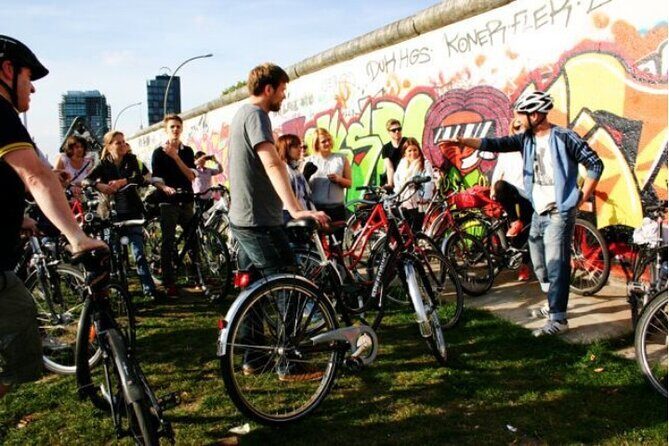
Below is the heart of what you’ll see and why each stop matters.
You can also read our reviews of more private tours in Berlin


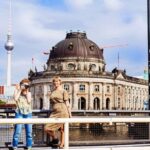
Nikolaiviertel: the old town question (and the war context)
Your ride begins in Nikolaiviertel, described as Berlin’s only “real” old town. The guide’s job here is to push you to think beyond the postcard idea of old streets. With the background of Berlin’s bombing in mind, you’ll hear how old can be complicated—what you’re seeing today isn’t just an untouched time capsule. You’re not just admiring buildings; you’re learning how history survives, changes, or gets rebuilt.
Why it’s worth it: it sets a tone. Berlin isn’t one layer—it’s stacked layers.
Possible drawback: if you’re hoping for a deep architectural lecture right at the start, this is more of a quick framing stop.
Stiftung Neue Synagoge Berlin – Centrum Judaicum: civil courage after broken glass
Next is Stiftung Neue Synagoge Berlin – Centrum Judaicum. The story here centers on civil courage—specifically a police officer who saved the building during the night of broken glass. This stop doesn’t just name atrocities. It adds a human-scale moment: people made choices, and those choices mattered.
Why it’s worth it: it reminds you that resistance and protection weren’t abstract. They were actions.
Watch your time: this is brief, so if you want details, that’s a good moment to ask questions while you’re there.
A GDR-era deportation/Holocaust memorial contrast
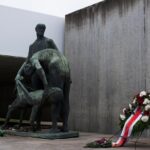
Mid-ride, you’ll pause at a memorial for victims of deportation and the Holocaust. The key point for interpretation is the design: it was created in GDR times and contrasts sharply with a more widely known memorial near Brandenburg Gate. This matters because Berlin’s memorial culture isn’t one single voice. It changes with politics.
Why it’s worth it: you see how even remembrance is shaped by who is in power.
Possible drawback: memorials can feel similar at first glance. Your guide’s explanation is what makes the difference land.
Memorial of the Berlin Wall: where the Wall feels real
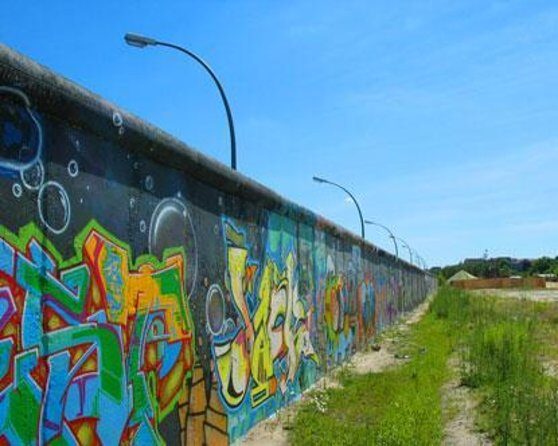
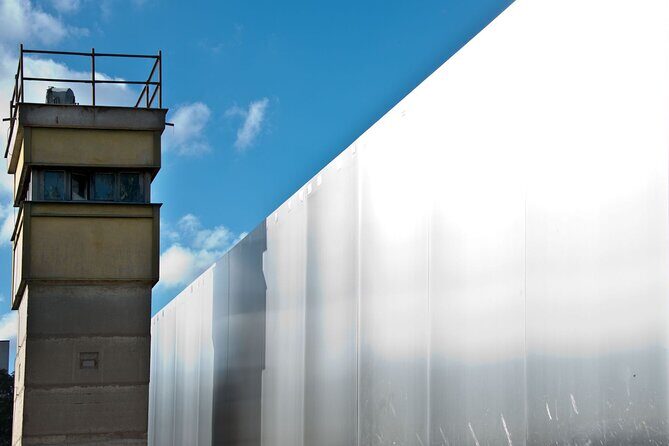
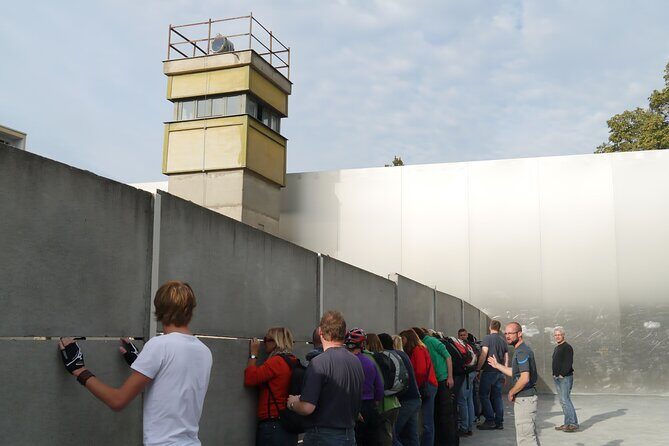
You’ll stop at a Berlin Wall memorial spot where the Wall is still present, and the tour emphasizes that it’s one of the places that helps you actually understand what the Wall meant and did to Berlin. This is one of those “photos help, but context matters more” moments.
Why it’s worth it: the tour is basically training your eye—so you can read the Wall as a force, not a landmark.
Realistic expectation: the Wall remains are limited, and you’re stopping briefly, but the guide’s interpretation is the point.
Mauerpark: border logic turned into everyday space
At Mauerpark, you’ll see the site in a modern, slightly ironic light. Today it’s known for its Sunday flea market, but the stop is framed around the East German rulers’ attempts to create the perfect border. So you’re watching how rigid control structures become ordinary life over time.
Why it’s worth it: it’s one of the more hopeful-feeling stops without erasing the harm.
Humboldthain Flak Tower: Nazi architecture meets a panoramic view
Next is the Humboldthain Flak Tower, once described as a giant fortress and air-raid shelter. You’ll get a chance for panoramic views and also see how Nazi-era architecture and planning weren’t just about ideology. They were about buildings meant to control, protect, and dominate.
Why it’s worth it: you get the city’s scale plus a clear explanation of how power shows up in stone and concrete.
Possible drawback: if you hate heights or windy viewpoints, dress accordingly and keep your focus on the guide’s points.
Günter Litfin Memorial: the first shot at the Wall
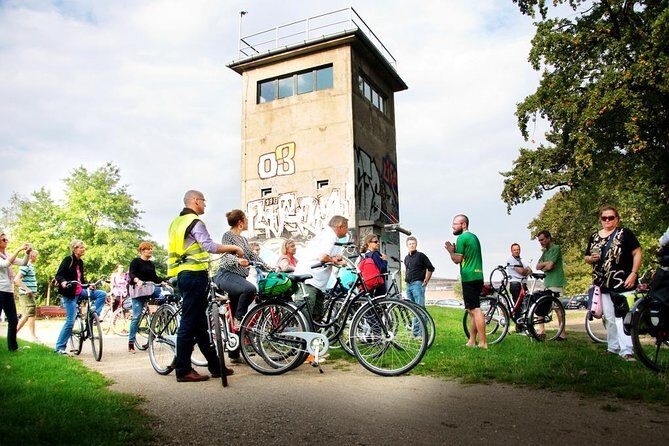
You’ll also visit the Günter Litfin Memorial. This one is personal and specific: the original tower remains preserved to remember Günter Litfin, described as the first person shot at the Wall. This is the kind of stop where you can feel the difference between political talk and consequences.
Why it’s worth it: it names a person, not just a system.
Invalidenfriedhof: a cemetery cut by the border
At Invalidenfriedhof, the Wall cuts through the burial ground. The tour frames the cemetery as a place created for military “heroes,” and also notes that some names raise uncomfortable questions about how Germany should remember versus honor.
Why it’s worth it: borders aren’t only political. They slice into memory and ritual spaces too.
How to make the most of it: use this moment to reflect, then ask how the guide thinks about commemoration choices.
Spreebogenpark: Hitler’s architect and the Great Hall idea
At Spreebogenpark, you get an overview of Germany’s governing district and you’ll also hear about plans by Hitler’s architect Albert Speer—including the vision for a Great Hall that would have fit 180,000 people. Even if you know the name Speer, the “what if” scale can still surprise you.
Why it’s worth it: it ties urban planning to ideology and shows how propaganda can be architectural.
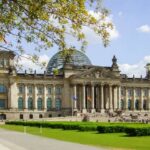
Reichstag building: power grabs and democratic history (from outside)
You’ll stop near the Reichstag Building to talk about Hitler’s grab of power and Germany’s democratic history. You won’t have time to go inside, but the exterior viewpoint can still work if the guide keeps it tied to the story rather than just pointing out facades.
Possible drawback: if you really want interior access or long time inside the building, this format won’t satisfy that craving.
Another memorial: one of three major Holocaust victim-group memorials
The route also includes an additional pause at one of three memorials for major Holocaust victim groups. This is another reminder that Holocaust remembrance isn’t one single monument. The tour gives you a chance to see the set and understand that the “whole story” is made from multiple parts.
Why it’s worth it: it prevents the common mistake of treating remembrance as one flat symbol.
The Holocaust Memorial (Memorial to the Murdered Jews of Europe)
Then you reach the Holocaust Memorial – Memorial to the Murdered Jews of Europe, described as the biggest genocide memorial in the world. The guide emphasizes its size and importance and also notes that it was created by those responsible for the killing. Even if you already know about the site, the guided framing affects how the space lands in your mind—especially when you’ve been walking/rolling through other layers of Berlin’s political past.
Why it’s worth it: it’s the emotional center of the ride. You’ll feel how the tour’s earlier stops point toward this moment.
Fuhrerbunker: today it’s a parking lot
Next is Fuhrerbunker, where Hitler hid during the last weeks of the war and died by suicide. Today, the only visible remains are described as a parking lot, and the guide explains why you’re seeing what you’re seeing.
Why it’s worth it: this stop teaches you how history can disappear physically while still being traceable through narrative and evidence.
Possible drawback: the lack of physical remains can feel anticlimactic if you’re expecting a preserved bunker scene.
Checkpoint Charlie: the Cold War pressure point (English version)
Finally, the tour’s Checkpoint Charlie stop is flagged as only in the English version. This is Berlin’s most famous border station in the Cold War story, and it’s highlighted as the only shared one between the USA and USSR. The tour also frames it as a place where the Third World War almost started.
Why it’s worth it: this is the “this could have gone nuclear” kind of context that makes Cold War tension real.
Timing tip: since it’s a short stop, listen closely when the guide explains what made this checkpoint different from other crossings.
The best parts for different travelers
If you’re a history buff, you’ll appreciate how the tour connects the Wall’s daily impact to the Third Reich’s ideology and planning. If you like structure, the guide’s route keeps the narrative moving. If you want value, the bike format is the key: you’re not paying just for transport; you’re paying for guided interpretation plus efficient sight coverage.
It’s also family-friendly. Children are welcome, and infant seats can be provided on request. That said, the topic matter is heavy, so it can work best for families who are comfortable talking about difficult history in an age-appropriate way.
Small things that matter on a ride like this
- Ask questions at the stops, not while you’re rolling. The guide can tailor explanations to what your group wants.
- Dress for weather. The tour runs in all conditions, so plan like you’ll ride.
- Don’t expect building entry every time. Some sites are external viewpoints, and that’s part of the format.
So, should you book it?
I’d book this tour if you want a private Berlin Wall and Third Reich walkthrough that’s efficient, guided, and easy to follow. At a bit over a hundred dollars for about three hours, it’s not “cheap,” but the bike-and-guide combo is where the value comes from. You get major landmarks, sharp context, and a pacing that fits Berlin’s layout.
Skip it (or adjust expectations) if you need long time inside major sites like the Reichstag, or if you’re looking for a casual, light sightseeing spin. This is a history-focused ride, and the emotions are part of the experience.
If you want, tell me your travel dates and whether you prefer English or German. I can help you pick a departure that fits your day and avoid scheduling overlaps with other Berlin must-dos.
FAQ
How long is the Berlin Wall and Third Reich private bike tour?
The tour lasts about 3 hours.
How much does it cost per person?
The price is $107.42 per person.
Is this a private tour?
Yes. It’s a private tour, so only your group participates.
What languages are available?
It’s offered in English and German. Other languages are listed as possible on request.
Is Checkpoint Charlie included in all versions of the tour?
Checkpoint Charlie is marked as only in the English version.
What’s included with the tour?
Included items are the professional guide, use of bicycle, use of helmet, and the private tour structure. It also includes the Free-Berlin route concept, plus family-friendly options like infant seats on request.
Is the tour family friendly?
Yes. Children are welcome, and infant seats can be provided on request. Children must be accompanied by an adult.
Does the tour run in bad weather?
It operates in all weather conditions, and you’re advised to dress appropriately.
Where do I meet, and where does the tour end?
You meet at Free Berlin Bike Tours & Rental, Poststraße 11, 10178 Berlin and the tour ends back at the same meeting point.
What is the cancellation policy?
You can cancel for free up to 24 hours in advance for a full refund. If you cancel less than 24 hours before the start time, the amount you paid won’t be refunded.