REVIEW · BERLIN
Berlin: Jewish Walking Tour including World War II
Book on GetYourGuide →Operated by Talternative · Bookable on GetYourGuide
Berlin’s Jewish story is never small. This 3.5-hour walk in Mitte traces the community’s re-establishment, its soaring cultural moments, and its brutal collapse, all anchored by real places around Hackescher Markt. I especially liked how Tal connects street-level details to big themes, and I loved the Otto Weidt Museum stop that brings rescue stories into focus.
One thing to consider: this is a walking tour with several cemetery and memorial stops, and it covers WWII-era tragedy directly. If you need low-impact options, double-check the fit, since the info lists both wheelchair accessibility and notes it is not suitable for wheelchair users or people with mobility impairments.
In This Review
- Key Things That Make This Tour Worth Your Time
- Meeting Tal in Mitte: where the walk starts and how it feels
- Hackescher Markt and the Mendelssohn-era revival you can picture
- The Block of Women and the 1943 protest story on a Berlin street
- Otto Weidt Workshop for the Blind: courage, protection, and a name you’ll remember
- Synagogues in Mitte: from old foundations to the New Synagogue’s visible change
- Schools, institutions, and the meaning of community space
- The Old Jewish Cemetery: memory you can walk through
- Optional add-ons: cemeteries, Kindertransport, and deportation memorials
- Price, pace, and what $318 buys you in real terms
- Who should book this Berlin Jewish walking tour with Tal
- Should you book it
- FAQ
- How long is the Berlin Jewish walking tour including World War II?
- Where is the meeting point?
- What sites will I see during the tour?
- Is the tour private?
- What languages are available?
- Is Otto Weidt Museum entry included?
- Is Old Jewish Cemetery entry included?
- What about Centrum Judaicum tickets?
- Can I customize the tour or add extra stops?
- What should I bring, and are there any rules?
Key Things That Make This Tour Worth Your Time
- Tal guides in English and Hebrew, and the small-group format keeps the pace thoughtful
- Mitte focus: you’ll see major Jewish landmarks clustered around Hackescher Markt
- Otto Weidt Workshop for the Blind with paid entry included on most days
- Women’s protest memorial connection via the Block of Women site tied to 1943
- Synagogue highlights including the New Synagogue (Jewish Centre) and historic synagogue sites
- Choose-your-own additions with optional stops like Grunewald deportation and Kindertransport memorials
Meeting Tal in Mitte: where the walk starts and how it feels
You begin in Mitte, at Starbucks, near Hackescher Markt. It’s a practical meeting point that makes it easy to get oriented fast once you step outside. From there, the tour moves on foot through one of the most important areas for Berlin’s Jewish story, because so many institutions clustered here at different points in time.
What I like about this setup is how it avoids the museum-only approach. You don’t just read about history. You see how it sits in the city: streets, corners, and landmarks that still carry meaning even after rebuilding, relocation, and war. Tal is the one doing the heavy lifting, and the tour leans on a guide who can connect historical shifts to what you can actually see in front of you.
There’s also a built-in short break. That matters on a 3.5–4 hour walk in Berlin, especially when you’re processing heavy subject matter. If you’re coming from a long travel day, plan to arrive early enough to settle your brain before you start walking.
You can also read our reviews of more walking tours in Berlin



Hackescher Markt and the Mendelssohn-era revival you can picture
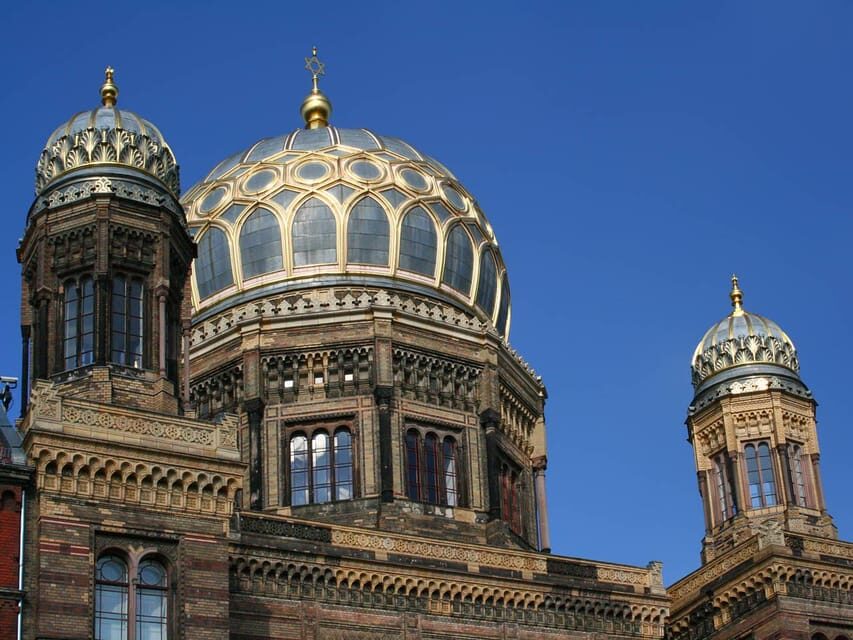
Hackescher Markt is more than a busy square. It becomes your first clue that Jewish life in Berlin didn’t just happen in one era. It re-formed, re-organized, and argued over identity—sometimes within living memory.
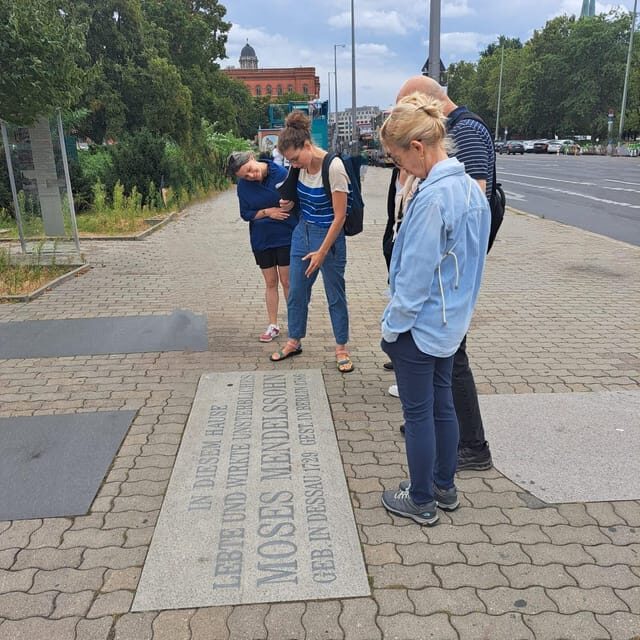
Tal starts you with the idea of re-establishment in the second half of the 17th century, beginning with Moses Mendelssohn. This is the period when Berlin’s Jewish community gained structure and visibility again after earlier limits and disruptions. The tour helps you understand why that “restart” mattered: it wasn’t just a return to religious practice, it was a push toward education, communal institutions, and public life.
Then you move forward through time. You’ll hear how the community reached different peaks, and how those highs were followed by catastrophic decline. That arc is what makes this tour feel different from a basic walking loop. You’re not stacking dates. You’re tracing how a community’s social position changed over generations.
A nice touch here: Tal doesn’t treat the subject like a single straight line. You’ll learn about internal splits too—like disagreements tied to the introduction of an organ in services. You also hear about the embarrassment some German Jews felt when Eastern European Jews arrived, arriving from pogroms and hardship. Those details can feel uncomfortable, but that discomfort is part of being honest about history.
The Block of Women and the 1943 protest story on a Berlin street
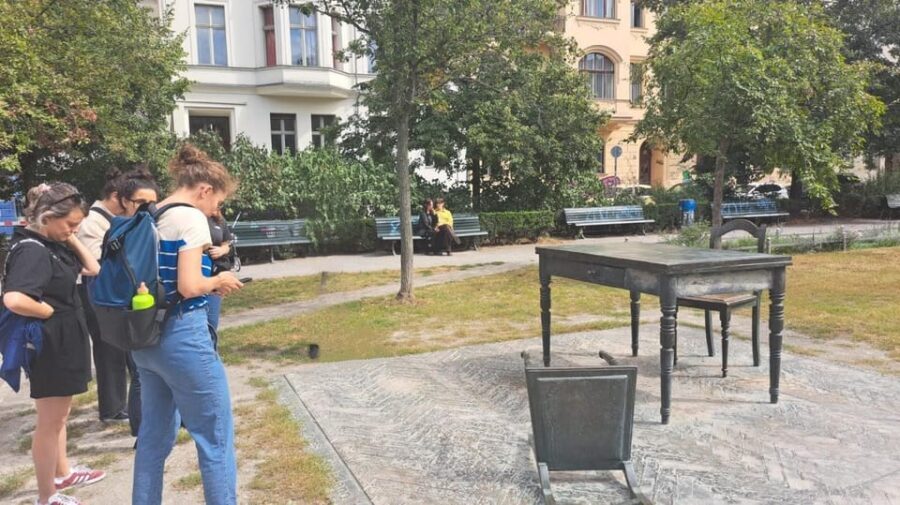
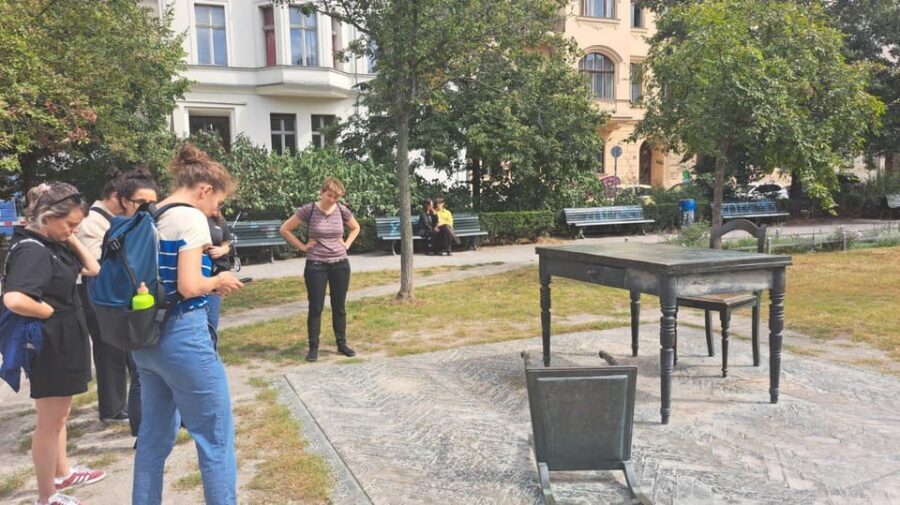
One of the most moving stops is the Block of Women. This site is tied to the women’s protest of 1943, linked to the reality that persecution wasn’t only carried out with paperwork and decrees. It was met with people trying to resist in the ways they could.
This isn’t presented as abstract tragedy. The tour frames the protest as something happening within the lived world of Berlin’s Jewish community, in the middle of war, fear, and shrinking options. When you stand near a memorial tied to that moment, it hits differently than reading about it later at night in your hotel room.
If you’re someone who likes to understand both the timeline and the emotional weight, this is the stop. Tal’s approach—built from both professional and academic grounding in Jewish history—keeps the narrative human and grounded. You also get a sense of why memorials like this matter today: they challenge the idea that victims only endured. People also acted, protested, and tried to hold onto dignity.
Tip: wear a hat or head covering, and keep a water bottle in your bag. Even if the emotional content is heavy, you’ll still be walking and learning for several more stops after this one.
Otto Weidt Workshop for the Blind: courage, protection, and a name you’ll remember
The Otto Weidt Workshop for the Blind is the kind of stop that makes a walking tour feel personal. You get the story of Otto Weidt and his efforts to save lives during the Holocaust. And yes, the tour includes the entry ticket to the Otto Weidt Museum on days when it’s open.
This stop works on two levels. First, it shows a specific human response inside one dark chapter. Second, it gives you a deeper sense of how survival could involve small decisions, networks of help, and everyday courage.
Tal’s style is often praised for being passionate and for tying history to real personal stakes. You can feel that energy here, because the message is not just that atrocities happened. It’s also that people tried to protect others—sometimes in ways that were risky, hidden, and hard to pull off.
When you’re done, you’ll likely look at other parts of the walk differently. You’ll start asking how institutions functioned under pressure, and how rescue depended on more than luck.
One practical note: bring your patience. Museum time adds weight to the schedule, but it’s also the part that turns the tour from information into a story you remember.
Synagogues in Mitte: from old foundations to the New Synagogue’s visible change
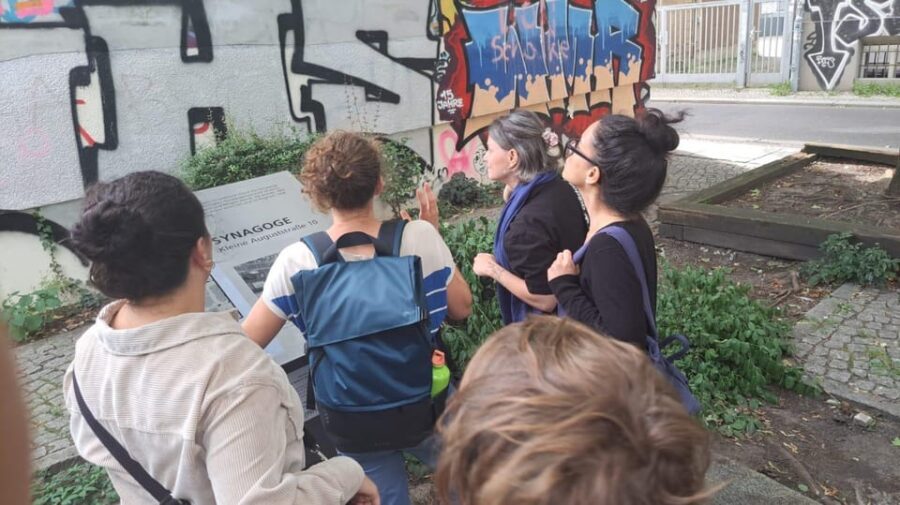
Berlin’s Jewish landmarks aren’t all the same kind of site. Some are about worship and community building. Others represent loss, displacement, or rebuilding after rupture. That mix is exactly why the synagogue stops matter.
In the Mitte area, you’ll see the New Synagogue Berlin – Jewish Centre, with a guided visit that helps explain what the building represents today. From the outside, you’ll also hear about the glorious era that the synagogue marked—and the fall that followed. Even hearing that before you look closely at the area helps you interpret the architecture with more than surface admiration.
You’ll also encounter historic synagogue sites in the walk, including the site of the community’s first synagogue (Old Synagogue). Standing near places like this is a reminder that the community wasn’t only religious. It was cultural, educational, and social—organized enough to build spaces that reflected their hopes.
And you’ll spend time with the Great Synagogue area too. The tour uses these buildings to explain how Jewish life changed with time: growth, shifting neighborhoods, and the way the city itself shaped where people lived and gathered.
If you care about how religion, culture, and community institutions overlap, this part is a strong match. It’s also where the tour does a good job of linking the golden era with what came after, instead of treating WWII as a sudden lightning strike.





Schools, institutions, and the meaning of community space
This tour doesn’t keep everything at the synagogue level. Tal also brings in institutions like the Mendelssohn School and a girls’ school, plus other communal structures in the Mitte area. That matters because schools are how a community plans for continuity.
In practical terms, these stops show you the places where values were taught, where children’s futures were discussed, and where community identity was built for the next generation. In historical terms, they help you understand that Jewish life in Berlin wasn’t limited to worship services. It was education, social organization, and public presence.
Tal also covers the move to the west of the city and the arrival of the Ostjuden—Eastern European Jews seeking refuge from pogroms. That shift isn’t just a geographic fact. It connects to the social tensions within the community as well as the larger pressures of the era.
There’s also room for the guide to connect themes that many people don’t expect in a walking tour: you’ll hear about the community splits tied to religious practice changes, plus how some German Jews felt embarrassment with the arrival of Eastern European Jews. That kind of detail can challenge simplistic stories, and it makes the tour feel more real.
If your goal is to understand why Jewish Berlin changed the way it did, these institution stops help you answer that question with specifics.
The Old Jewish Cemetery: memory you can walk through
The tour finishes at the memorial Jewish cemetery area, and the old cemetery is one of the included highlights. You’ll learn about the community’s first cemetery, and you’ll hear about Moses Mendelssohn’s burial there.
This is a quiet portion of the walk, but it isn’t a time filler. Cemeteries make you confront time. They compress generations into one space, and they turn abstract loss into something physical.
There are some access details to know: entry to the old cemetery is included except on Jewish holidays and on Saturday. So if your dates fall on those days, you might need to adjust expectations for what’s covered.
Also note: cemeteries and memorial areas tend to mean more standing and slower walking. If you’re planning photos, remember flash photography isn’t allowed. Comfortable shoes aren’t optional on this kind of route.
If you want a tour that ends on reflection instead of a quick photo moment, this is the way to do it.
Optional add-ons: cemeteries, Kindertransport, and deportation memorials
If you want to build the tour into a bigger WWII-focused day, you can add extra stops for additional time and cost. These are great choices when you’re trying to connect Berlin’s Jewish story to specific historical mechanisms.
Three popular extensions are available:
- Schönhauser Allee Cemetery, the final resting place of famous members from the Jewish community’s golden era
- Kindertransport Memorial at Friedrichstraße Station, tied to the children’s rescue effort
- Grunewald Deportation Memorial, commemorating the deportation of Berlin’s Jews
These extensions work best if you already feel engaged by what you’re learning and you want the story to go further. If you only have one evening and you’re tired, the core tour may be enough. But if you want the full scale of “how it happened,” adding at least one memorial stop makes the narrative connect more tightly.
Tal can also customize your tour by interest. That’s useful because people come with different goals—WWII emphasis, synagogue architecture, memorial focus, or the longer development story that starts back in the 1600s.
Price, pace, and what $318 buys you in real terms
At $318 per person for about 3.5–4 hours, this isn’t a budget activity. But you are paying for a few specific things that add real value.
First, it’s a private group format. That usually means you spend less time waiting for the group to catch up and more time getting answers to the questions that come up naturally while you walk.
Second, the tour includes entry tickets for key sites: the Otto Weidt Museum (except when closed) and entry to the old cemetery (except Saturdays and Jewish holidays). Those admissions matter because they reduce hassle and cost on your own.
Third, you’re paying for Tal’s specialized perspective. She’s certified by the Berlin Guides Association, and she also brings an academic background connected to how Berlin institutions, including Charité Hospital staff, dealt with the hospital’s past in the 1930s and 1940s. Even if you never see that topic on a poster, it tends to show up as sharper context and better framing.
What you’re not buying here: meals and drinks. Plan on grabbing something before or after, and keep water on hand. Also, the tour includes a lot of walking. It’s not a ride-around-the-city plan.
Is it worth it? If you want a guided, emotionally grounded, place-based Berlin Jewish story that goes beyond general facts, the value is strong. If you want a light overview with quick stops, a shorter or less focused tour might fit better.
Who should book this Berlin Jewish walking tour with Tal
This tour is a smart fit if you want three things at once:
1) Jewish Berlin’s story across time, from the re-establishment era
2) WWII-era history tied to specific Berlin memorial sites
3) A guide who can connect personal stories and institutional change, not just recite dates
It’s especially good for people who like walking tours with clear structure—start in Mitte, hit major landmarks in sequence, then end at a cemetery memory space.
It’s also a good choice if you care about detail. The tour touches many topics: Mendelssohn-era community foundations, the move west and Ostjuden arrival, religious communal debates like the organ issue, and the rescue story tied to Otto Weidt.
Before booking, be honest about your physical needs. Even though the info mentions wheelchair accessibility, it also states it is not suitable for wheelchair users or people with mobility impairments. If you fall into that category, contact the provider directly so you don’t get surprised on the day.
Should you book it
Book this Berlin Jewish walking tour if you want a guided, place-based account of Jewish Berlin that treats both the golden era and the WWII tragedy as inseparable from the streets you walk. The Otto Weidt stop and the Block of Women memorial connection are the kinds of moments that make the tour stick with you.
Skip it or at least consider a different option if you need minimal walking, if you’re looking for only broad headlines, or if mobility limitations make the route difficult. And if your visit falls on Saturday or a Jewish holiday, double-check how cemetery entry works for your dates.
If you’re ready to trade convenience for meaning, this is a solid, thoughtful way to understand Berlin’s Jewish story in the real places where it happened.
FAQ
How long is the Berlin Jewish walking tour including World War II?
It runs about 3.5 hours, with schedules showing that the total time can be around 3.5–4 hours. A short break is included.
Where is the meeting point?
You meet in front of Starbucks in Mitte. The tour information also notes it ends back at the meeting point, while the itinerary notes finishing at the memorial Jewish cemetery area, so it’s smart to confirm the exact end location with the provider.
What sites will I see during the tour?
You’ll see places in Mitte tied to Berlin’s Jewish history, including Hackescher Markt, the Block of Women memorial area, the Otto Weidt Museum, the Old Jewish Cemetery, and synagogue-related sites including the New Synagogue Berlin – Jewish Centre and historic synagogue locations.
Is the tour private?
Yes, it’s listed as a private group.
What languages are available?
The live guide is available in English and Hebrew.
Is Otto Weidt Museum entry included?
Yes, the tour includes an entry ticket to the Otto Weidt Museum, except on days the museum is closed.
Is Old Jewish Cemetery entry included?
Yes, entry to the old cemetery is included except on Jewish holiday and Saturday.
What about Centrum Judaicum tickets?
Centrum Judaicum is not included, and you need a separate ticket for the museum connected to the New Synagogue.
Can I customize the tour or add extra stops?
Yes. You can customize by interest, and there’s an optional extension that can add stops such as Schönhauser Allee Cemetery, the Kindertransport Memorial at Friedrichstraße Station, and the Grunewald Deportation Memorial.
What should I bring, and are there any rules?
Wear comfortable shoes and bring water. You’re advised to bring a hat and head covering or a kippah, plus sunscreen. Smoking is not allowed, and flash photography is not allowed.