REVIEW · BERLIN
Berlin: Guided Walking Tour in English
Book on GetYourGuide →Operated by Walkative Tours · Bookable on GetYourGuide
Berlin clicks into place on this history walk. You’ll get a chronological narrative from old Berlin to Germany’s modern identity, and the open-space moments around Museum Island make the landmarks feel connected instead of random. One consideration: this is a real walking tour with no built-in food stop, so dress for the weather and keep your expectations focused on seeing, not snacking.
What makes it work is the guide quality. The route is led by an experienced local English speaker, and you can see the same pattern in guides like J.R., Jule, Ru, and Will: they keep the story moving, handle cold weather thoughtfully, and share practical tips for getting the most out of the rest of your trip.
At about $31 per person for 2.5 hours, it’s a strong value if you want orientation fast. Still, there isn’t food included, and the tour doesn’t promise time to stop for a drink or restroom along the way.
In This Review
- Key highlights you should care about
- Getting Oriented: Rotes Rathaus and the walk’s starting rhythm
- Alexanderplatz to medieval Berlin: TV Tower first, then the old remnants
- The Hohenzollern Royal Palace reconstruction: a controversial stop with context
- Museum Island’s open space and the cathedral view
- Humboldt University and the center-city maze
- Gendarmenmarkt: a beautiful square with a story attached
- Checkpoint Charlie and tracing the Wall where it mattered
- Hitler’s former bunker site: the weight of history, handled on foot
- Brandenburg Gate to close: unity in stone and symbolism
- Price and value: what $31 buys you in real Berlin time
- What to bring and how to pace yourself during the walk
- Who this tour fits best (and who might skip it)
- Should you book this Berlin walking tour?
- FAQ
- Where is the meeting point?
- How long is the tour?
- Is the tour in English?
- Is food or drinks included?
- Is hotel pick-up included?
- Is the tour wheelchair accessible?
- What should I bring?
- Do I need to arrive early?
- What’s the cancellation and payment flexibility?
Key highlights you should care about
- A timeline you can follow from early Berlin through division and reunification
- Museum Island’s open views, including a strong look toward Berlin Cathedral
- Gendarmenmarkt as a pretty, meaningful pause in the middle of the walk
- Checkpoint Charlie and the Berlin Wall, explained through where you stand
- A careful stop at the former Hitler bunker site tied to the country’s dark past
- Brandenburg Gate finished as a symbol of unity for Germany and Europe
Getting Oriented: Rotes Rathaus and the walk’s starting rhythm

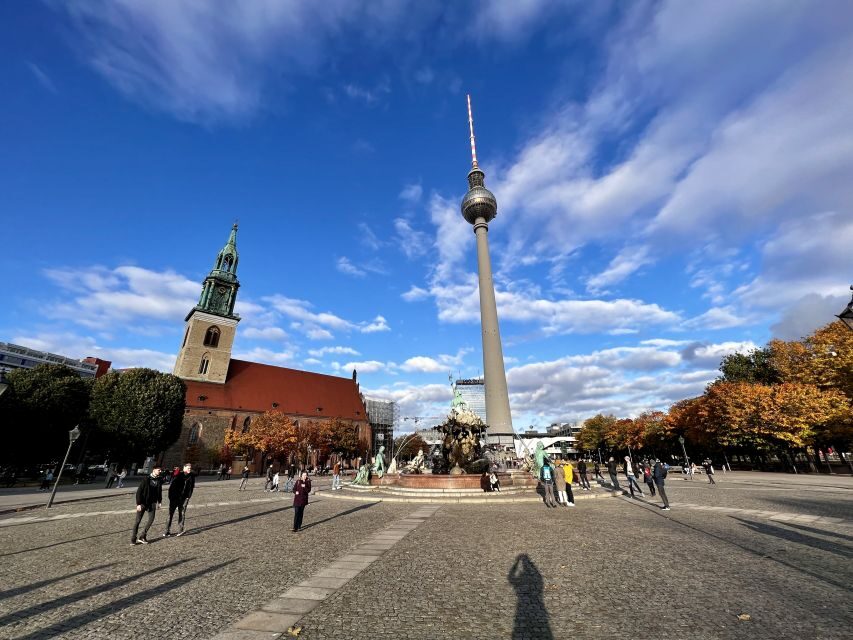
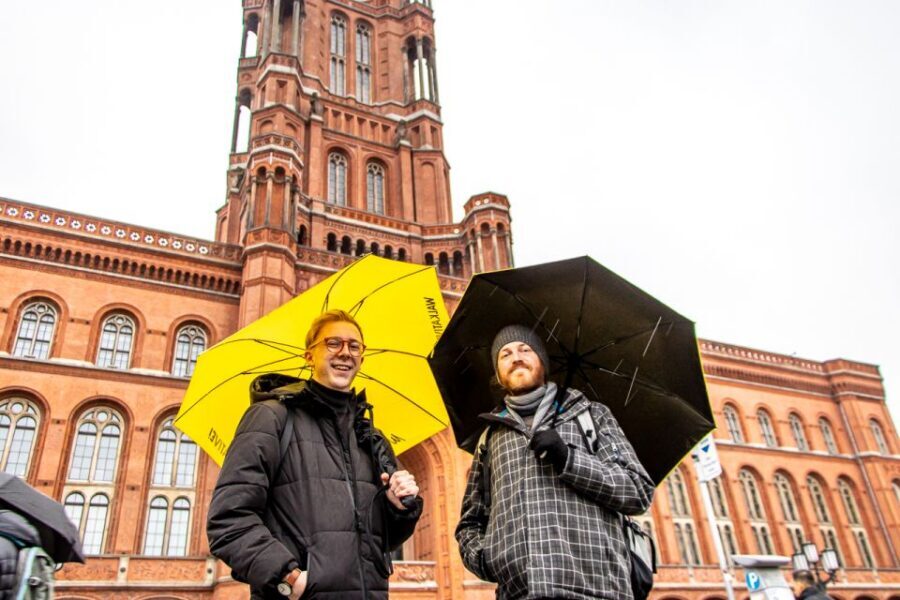
You meet at the front of the Rotes Rathaus, close to the TV Tower and the Neptune Fountain. It’s a good starting point because it puts you near the city’s showpiece modern skyline without ignoring the older layers just beyond it.
From the start, the tour aims for an easy flow: you’re not only “collecting sights.” You’re building a mental map in order, which is how Berlin makes the most sense, especially if it’s your first day.
Also, arrive about 10 minutes early. You’ll want a little buffer to spot your group and get set before the guide launches into the timeline.
You can also read our reviews of more walking tours in Berlin



Alexanderplatz to medieval Berlin: TV Tower first, then the old remnants
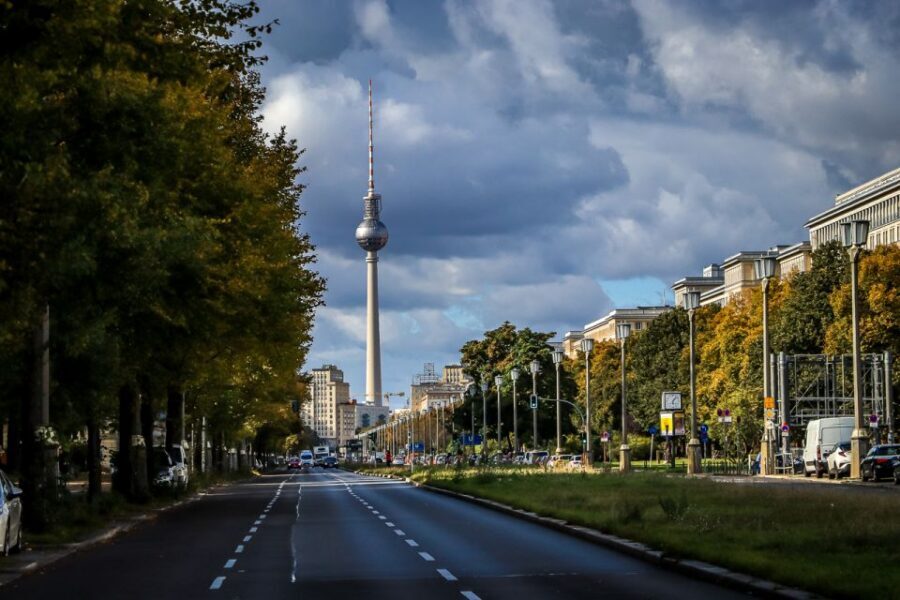
The walk begins near Alexanderplatz, where you’ll see the TV Tower up close. It’s a classic Berlin landmark, and it works as a handy reference point: once you’ve seen it, you start feeling where the center sits.
From there, the tour moves into the story of Berlin as a smaller town for much of its earlier history. You’ll pass by original, medieval remnants, which changes the usual Berlin experience. Instead of jumping straight to big modern monuments, you start with the older fabric of the city and how it shaped what came later.
If you’re prone to getting bored by “dates on a sidewalk,” this portion helps. The medieval pieces are the kind you can overlook on your own, and the guide’s job is to point out what to notice.
The Hohenzollern Royal Palace reconstruction: a controversial stop with context
Next comes a building that’s been debated for years: the reconstructed former Royal Palace of the Hohenzollern. The tour doesn’t treat it like an easy photo op; it frames why rebuilding something from the past can stir strong feelings.
For you, that’s the practical value. Berlin has multiple ways of telling history at street level. This is one of those spots where you learn how politics, memory, and architecture can collide.
One note: if you expect a tour that stays neutral on every topic, this might still feel a bit pointed. But that’s also the point—this is a city where you can’t fully understand the present without acknowledging the arguments behind the past.
Museum Island’s open space and the cathedral view
Then you hit one of the most enjoyable stretches of the tour: the space around Museum Island. The area gives you those wide, open sight lines where the city feels readable—less crowds packed into narrow streets, more “look around and take it in.”
A highlight here is the view toward Berlin Cathedral as you move through the Museum Island area. This isn’t only scenery. It’s a “why this location matters” moment, because Museum Island has long been treated as a cultural anchor for Berlin.
If you like tours that slow down at the moments that make photos useful, this is one. You’ll get a strong sense of how the cathedral, museum buildings, and surrounding streets relate.
Humboldt University and the center-city maze
After Museum Island, the route heads toward Humboldt University and then through the maze of central streets. The “maze” part is real: you’ll be walking through the kind of dense, interconnected central Berlin streets that look confusing until someone gives you a route with a purpose.
This section is valuable for two reasons. First, it teaches you how to move through the center without feeling lost. Second, it sets up the next big emotional shift of the tour: the arrival at one of Berlin’s prettiest squares.
Wear shoes you can trust. This part is where the walking adds up, even though the tour stays only 2.5 hours.
You can also read our reviews of more guided tours in Berlin





Gendarmenmarkt: a beautiful square with a story attached
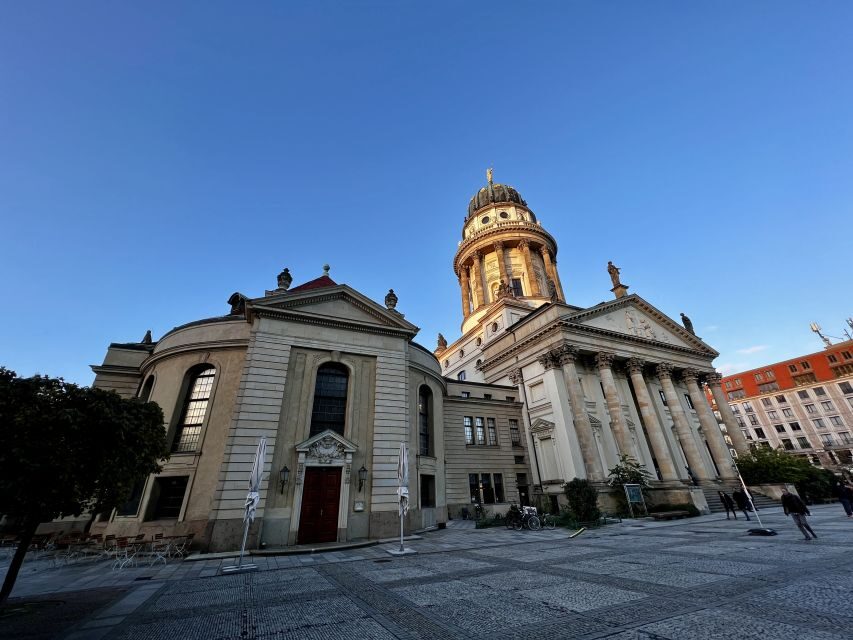
When you reach Gendarmenmarkt, you’ll see why it’s often called one of the most beautiful squares in the German capital. The buildings around the square create a sense of order and symmetry, and it’s easy to see how this spot became a favorite stage for Berlin’s public life.
But the tour’s approach matters here. The guide doesn’t just let you admire the architecture. You’ll learn the background that makes the square feel more like a turning page than a random stop.
This is also a good moment to steady yourself. Midway through the walk, you get a reset point where you can pause, look up, and take photos without feeling rushed.
Checkpoint Charlie and tracing the Wall where it mattered
Then comes the stop that gives Berlin its sharpest edges: the Berlin Wall at Checkpoint Charlie. You’ll learn the history of the Wall at this location, and you’ll see how a single crossing point became loaded with meaning during the Cold War era.
For you, the value is not only understanding the facts, but connecting them to a place. Berlin’s division wasn’t an abstract concept—it showed up in streets, borders, and checkpoints. Standing near a place like this helps the story stick.
Checkpoint Charlie can be touristy in general, so the difference here is the guide’s direction. You get a narrative in order, which keeps it from turning into a loud photo line.
Hitler’s former bunker site: the weight of history, handled on foot
Later, you’ll pass by the location where Hitler’s bunker formerly stood. This stop shifts the tone from monuments to memory, and the tour explains the country’s dark past tied to that site.
The best tours in Berlin handle this carefully: clear context, no sensationalism, and a focus on what happened and why it matters. Based on how guides have been described on this route—especially the way they keep the narrative steady—this is presented as part of the timeline rather than a shock-value detour.
If you tend to prefer a more reflective pace, this is still worth it. The sidewalk route forces you to slow down and absorb the significance, even if you’re moving with the group.
Brandenburg Gate to close: unity in stone and symbolism
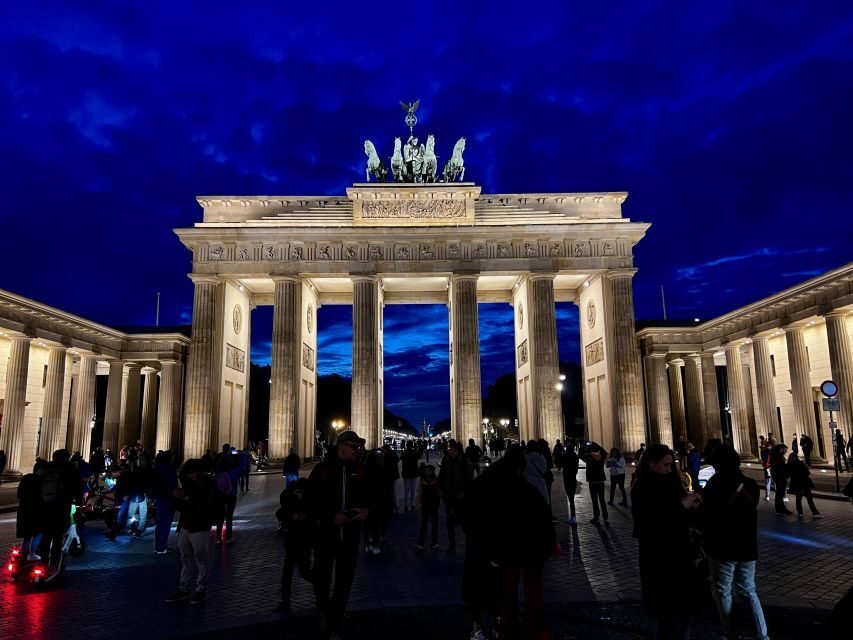
The final symbolic stop is the Brandenburg Gate, with its classic archways. The tour frames it as a symbol of unity for both Germany and Europe, which helps you understand why this monument keeps showing up in major moments and modern storytelling.
Finishing here works well because it answers the earlier stops. You started with Berlin’s older layers, then moved through power, conflict, and division. The Gate lands as the visual conclusion: a point that’s easy to understand, even if you’re still learning Berlin’s details.
If you want to keep the momentum after the tour, this area is also a great springboard for your next walk. You’ll be in a central zone with plenty of options.
Price and value: what $31 buys you in real Berlin time
For $31 per person you get 2.5 hours with an expert English-speaking local guide and a chronological narrative. That’s the key word for value: the tour is designed to help your brain organize Berlin quickly.
Without a guide, you can absolutely wander and see monuments. But Berlin is famous for being layered—politics, architecture, and memory all overlap. Paying for a guide here is what turns “a bunch of stops” into a usable story you can carry into museums, conversations, and your next neighborhood.
Also, the payment structure is worth knowing: booking this tour puts you into a general pay-what-you-wish style framework, where what you pay covers the reservation fee and the guide’s payment. In other words, if your guide did a great job (and guides like J.R. have been praised for being entertaining and informative), you’re in a position to reward that directly.
What to bring and how to pace yourself during the walk
The tour is weather-dependent, so bring weather-appropriate clothing. Berlin can change quickly, and a 2.5-hour walking block means you’ll feel it.
Plan for the walking rhythm rather than hoping for frequent breaks. Food and drinks aren’t included, and the tour doesn’t mention a dedicated restroom or refreshment stop, so it’s smart to handle basics before you start.
If you’re traveling with kids or someone who needs frequent pauses, you might find the pace a bit steady. For most adults who like history and can walk comfortably, it’s a very doable length.
Who this tour fits best (and who might skip it)
This works best if you want a first-day orientation that doesn’t just list landmarks. If you like the idea of walking with a guided timeline—from medieval remnants through Berlin’s 20th-century turning points to Brandenburg Gate—you’ll get more out of Berlin faster.
It’s also a good fit if you like learning directly in the streets, not only inside museums. The tour uses open spaces like Museum Island and the big symbolic ends like Brandenburg Gate to help ideas land.
If you prefer a very slow, long-stay museum day, or you need lots of built-in breaks for eating, you might feel constrained. In that case, you could consider pairing Berlin monuments with a separate break-focused plan.
Should you book this Berlin walking tour?
I’d book it if your goal is understanding Berlin in order without spending your first day reading a stack of guidebooks. The route hits the major anchors—Museum Island, Gendarmenmarkt, Checkpoint Charlie, the former bunker site, and Brandenburg Gate—in a way that helps your mental map click.
Skip it only if walking 2.5 hours with no included food sounds like a mismatch, or if you’d rather do Berlin at your own pace with no structured timeline. For a lot of people, this is exactly the kind of guided start that makes the rest of the city easier.
FAQ
Where is the meeting point?
You meet in front of the Rotes Rathaus, close to the TV Tower and Neptune Fountain.
How long is the tour?
The tour lasts 2.5 hours.
Is the tour in English?
Yes, the live tour guide speaks English.
Is food or drinks included?
No. Food and drinks are not included.
Is hotel pick-up included?
No. Hotel pick-up is not included.
Is the tour wheelchair accessible?
Yes, the tour is wheelchair accessible.
What should I bring?
Bring weather-appropriate clothing since it’s a walking tour outdoors.
Do I need to arrive early?
Yes. Please arrive at the meeting point 10 minutes before the tour starts.
What’s the cancellation and payment flexibility?
You can cancel up to 24 hours in advance for a full refund. There’s also an option to reserve now and pay later, depending on availability.