REVIEW · BERLIN
Berlin: Guided Walking Tour around the Reichstag
Book on GetYourGuide →Operated by Paaßens & Kniestedt Berlin kompakt GmbH · Bookable on GetYourGuide
Berlin politics is closer than you think. This guided walking tour threads you through the government district right by the Spree and the old Wall strip, turning landmarks into a clear, human explanation of how decisions get made. I like the outdoor format: you still learn the meaning behind the architecture, the power layout, and the political messaging without needing an interior visit.
I also appreciate the way the guide connects place to memory. One guide, Stefan, brings in a personal East Berlin perspective from before the wall came down, and he keeps the group engaged with humor that makes the serious stuff easier to follow.
One heads-up: there is no interior tour of the Reichstag or the Chancellery. If your main goal is to see inside those iconic buildings, this is more about views, context, and storytelling than interior exploration.
In This Review
- Key highlights to look for
- Why this walk works: politics, explained in the open air
- Where you start at Paul-Löbe-Allee and what to notice right away
- German Chancellery: more than a building façade
- Swiss Embassy stop: a reminder that diplomacy sits beside power
- Paul Löbe House and the “how the system works” layer
- White Crosses and the Wall strip: the story behind the street
- Marshall-Brücke: views that help politics feel real
- ARD Hauptstadtstudio: where government and media overlap
- Verwaltung des Deutschen Bundestages: the practical side of parliamentary life
- Jakob-Kaiser-Haus: architecture and the idea of representation
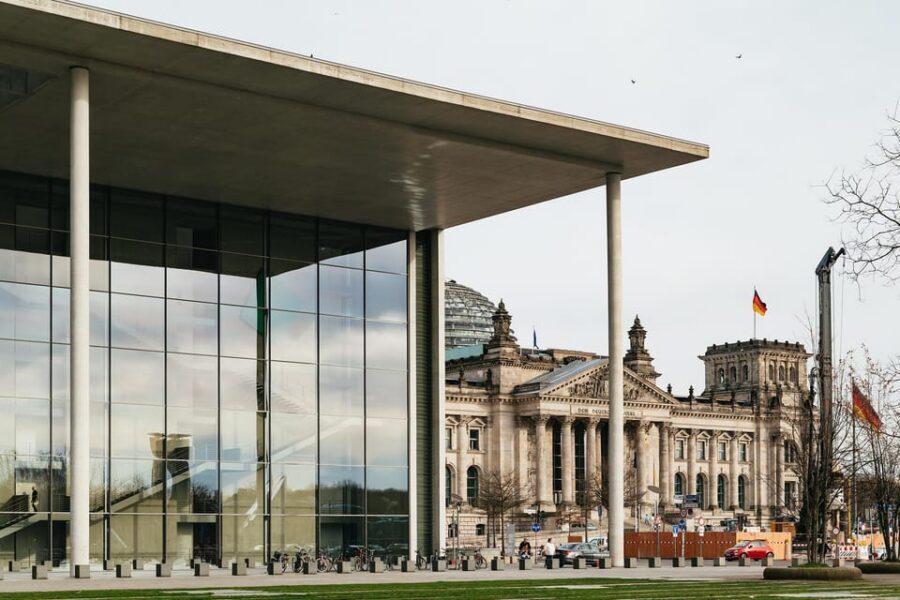
- Reichstag from outside: what you learn without entering
- Price and value: $234 per group, up to 30 people
- Pacing, language, and what to bring
- Who this tour is best for
- Should you book this Reichstag government district walking tour?
- FAQ
- What is the duration of the guided walking tour?
- Will I be able to go inside the Reichstag or the Chancellery?
- Where exactly is the meeting point?
- What languages are available?
- Is the tour wheelchair accessible?
- What’s the cancellation policy?
Key highlights to look for
- Government district route built around the Reichstag area, not random sightseeing
- Spree + Wall strip walking segments that help the political story make sense
- Stop-by-stop explanations of how the Bundestag works and how the Chancellor meets guests
- Architecture and art explained through what the design is trying to communicate
- Media and parliamentary workflow cues via the ARD Hauptstadtstudio area
- A guide with real-life context, including Stefan’s East Berlin viewpoint
Why this walk works: politics, explained in the open air
A lot of Berlin tours throw facts at you. This one works differently. You’re walking in the space where modern German politics happens, so the guide can explain the system using the buildings as props. You get to see how government structures cluster, where key institutions sit, and how the district’s layout supports both work and public visibility.
I like that it’s built around a simple promise: you’ll understand how politics is made and communicated. The guide isn’t only pointing at walls and statues. You’re listening for the story behind each location, from the chancellery side to parliamentary buildings near the Reichstag.
And because you’re near the Spree and the former Wall strip, the tour naturally connects today’s institutions to the city’s divided past. That’s not abstract. It’s right there in the geometry of the area.
You should expect an easy-to-manage pace. It’s a 2-hour loop, with frequent short stops. That structure helps if you’re the kind of person who likes to ask questions, since you’re not stuck hearing everything at once.
You can also read our reviews of more walking tours in Berlin


Where you start at Paul-Löbe-Allee and what to notice right away
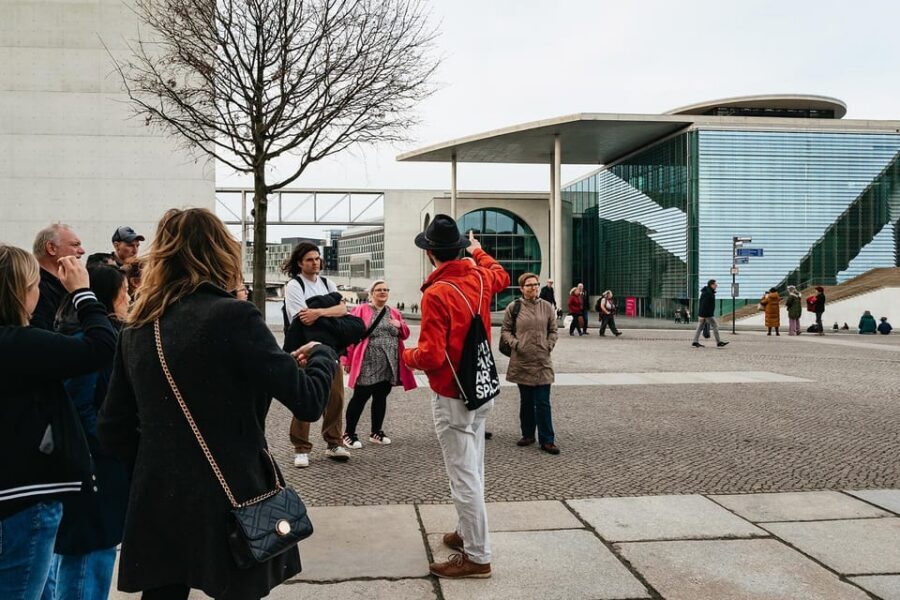
You’ll meet at the intersection of Paul-Löbe-Allee and Konrad-Adenauer-Straße, next to the subway entrance for Bundestag (U5), exit D, in front of the elevator. It’s a solid start point because it’s not hidden away in a residential street. You’re already at the edge of the government quarter.
This matters because the first few minutes set the tone. From there, the walk is designed to give you orientation fast. You start by learning which parts belong to the chancellery sphere, which relate to parliamentary administration, and how the Reichstag fits into the whole picture.
Practical note: if you’re arriving early, give yourself a little buffer. On one real-world outing, the group waited around 10 minutes before the guide began. I’d plan for a short hold while everyone checks in and regroups.
German Chancellery: more than a building façade
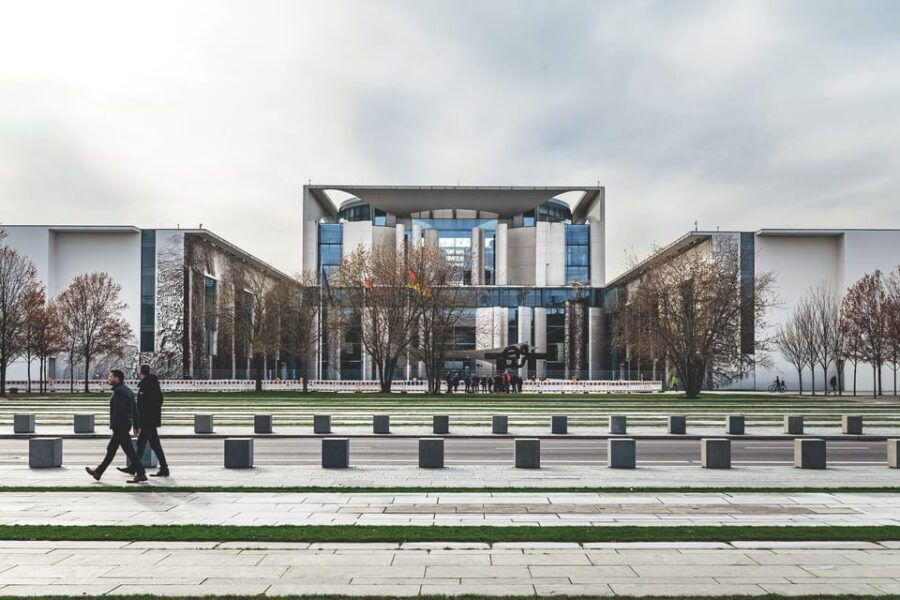
One stop is the German Chancellery area, where you’ll get a guided overview (about 10 minutes). The guide’s job here is to explain what the chancellery is for in practical terms, including how the Chancellor meets guests. You’re not just learning architecture slogans. You’re learning the workflow behind the symbolism.
What I like about starting here is that it gives you a “center of gravity.” Once you know roughly how the chancellery functions, the next stops make more sense. The district stops feeling like a cluster of big-name buildings and starts feeling like a coordinated system.
There’s also a good chance the guide will reference how politics is communicated in this area—what gets seen, what stays behind, and how buildings signal authority even from the street.
Swiss Embassy stop: a reminder that diplomacy sits beside power
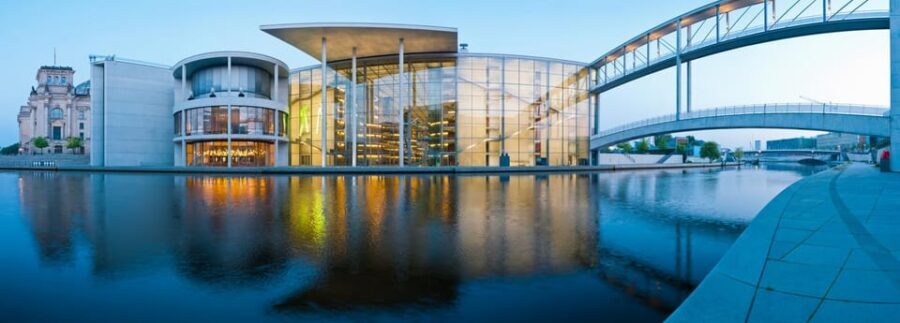
You’ll also pause at the Swiss Embassy for a brief guided segment. This part can feel less dramatic from a distance, but it’s useful. Embassies are part of the wider ecosystem of governance and international relationships. So even a short stop can reinforce the theme that state power doesn’t operate in isolation.
If you like pattern recognition, watch how the district changes around different institutions. You’ll notice how security, access, and official presence vary as you move from chancellery-style space toward the parliamentary cluster near the Reichstag.
Paul Löbe House and the “how the system works” layer
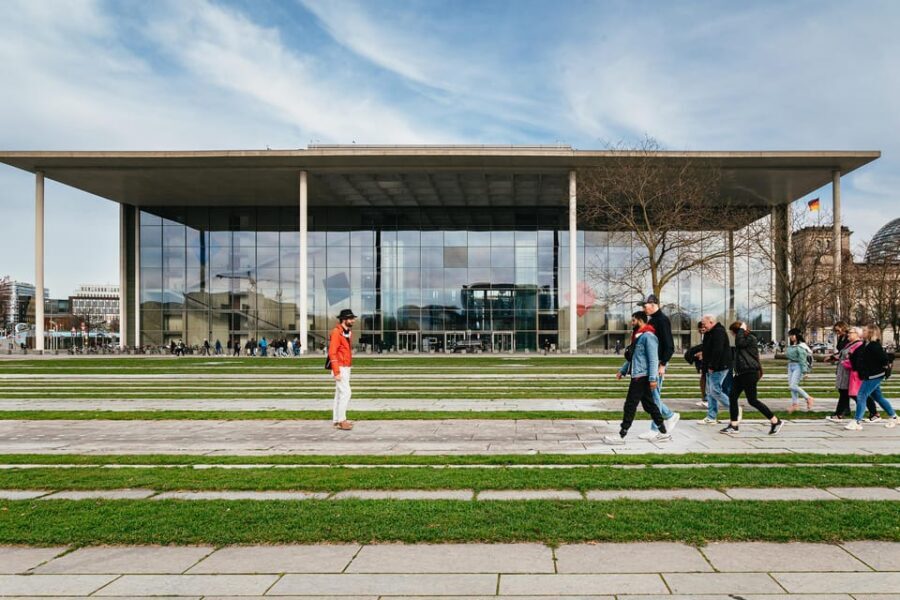
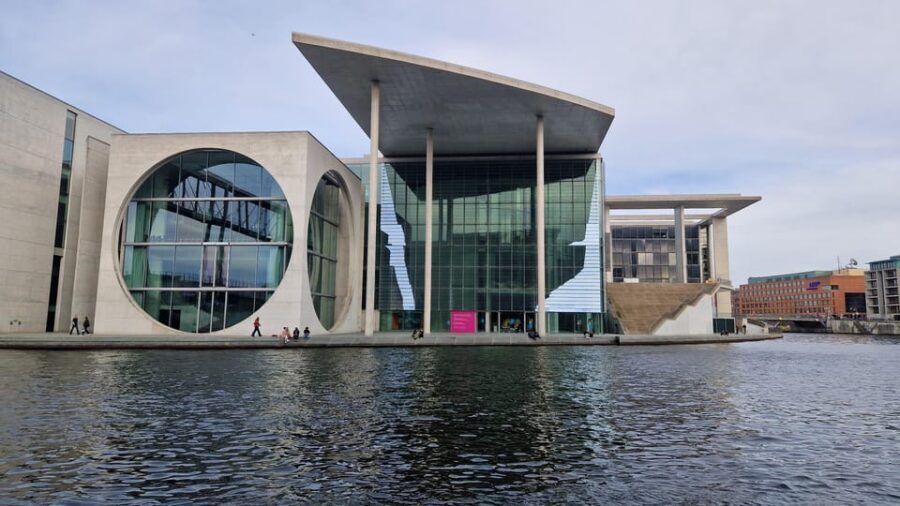
Another key stop is Paul Löbe House (with guided time around 10 minutes). The guide uses this area to explain how the Bundestag functions and where different roles and processes fit in. It’s the sort of place where a few minutes of interpretation can change what you think you’re seeing.
The tour leans into questions like where MPs go to eat and how people move through the system. Those details might sound small, but they help you picture day-to-day parliamentary life rather than treating government as a distant concept.
Also, this stop keeps you grounded in Berlin’s physical geography. You’re still in the government district, but you’re also learning the rhythm of work: meetings, administration, and the daily logistics of politics.
You can also read our reviews of more guided tours in Berlin




White Crosses and the Wall strip: the story behind the street
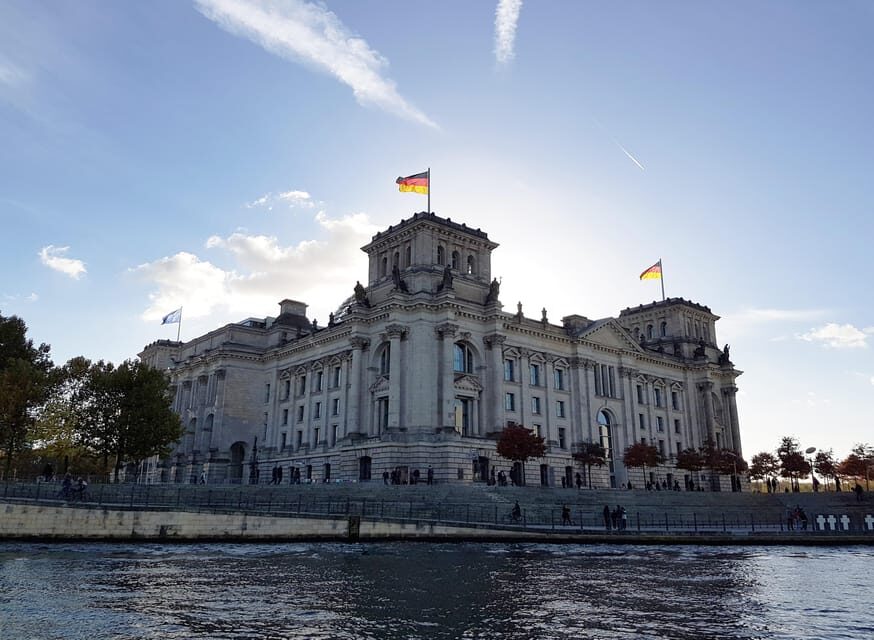
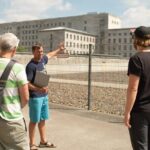
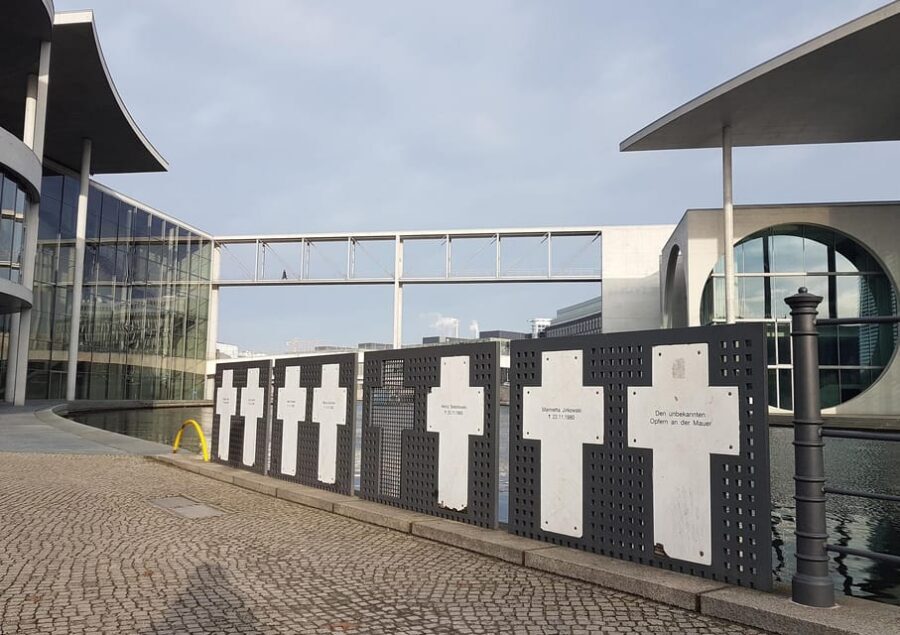
One of the most emotionally important stops is the White Crosses (also guided for about 10 minutes). This is where the tour’s historical framing becomes less theoretical.
Because the route includes the Wall strip walking elements and you’re guided right in the government district, you don’t just hear about division as a timeline. You see it embedded into the city’s layout and symbolism.
This section is especially worth paying attention to if you like understanding how history influences modern design choices. The guide connects the past to what Germany chose to build and represent later—how a working parliament can be visible without pretending the past never happened.
Marshall-Brücke: views that help politics feel real
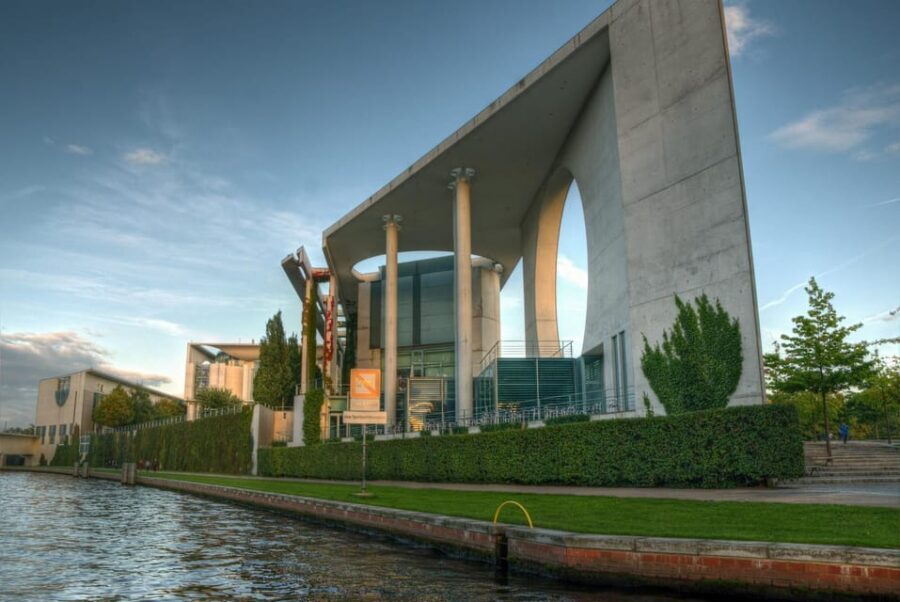
You’ll cross past Marshall-Brücke (guided time around 10 minutes). Bridges are useful stops on walking tours because they force you to think in directions: water, movement, approach routes, and how people navigate between zones.
Here, the guide uses the setting along the Spree and the nearby institutional buildings to help you read the district like a map. You get a better sense of how the government quarter faces different kinds of public space.
If you like photos, this is one of your best opportunities. Even without interior access, you can capture the relationship between the water, the bridges, and the official architecture.
ARD Hauptstadtstudio: where government and media overlap
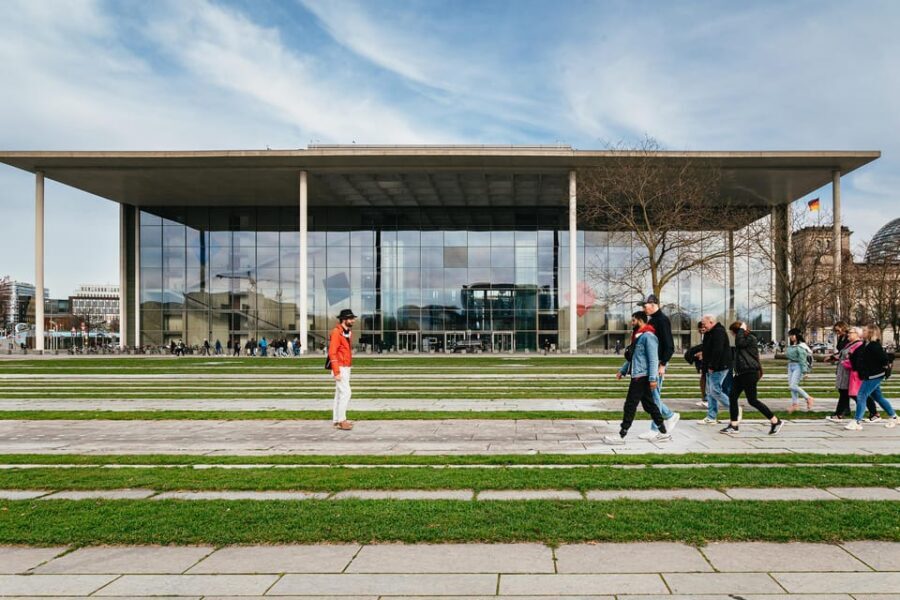
Next comes a stop at ARD Hauptstadtstudio Berlin (again, about 10 minutes guided time). This is a smart inclusion. Media isn’t just a separate world happening somewhere else. It’s one of the main ways politics becomes public.
The guide’s broader theme is about communication—how politics is presented and discussed. Having ARD’s presence near the parliamentary zone helps you understand that the government district is built not only for decision-making but also for being watched, explained, and reported.
This stop also works well for people who want to understand modern governance in one step. You learn that institutions are designed with public interpretation in mind, not only internal workflow.
Verwaltung des Deutschen Bundestages: the practical side of parliamentary life
You’ll pass by or pause at Verwaltung des Deutschen Bundestages for a short guided explanation. This is a place where interpretation can make things feel more human.
A lot of visitors focus on headline buildings. But administration is where a lot of the actual work happens. The guide’s comments (including questions like how the district supports communication and movement) can help you understand that parliaments run on systems, not just speeches.
If you’re the kind of traveler who loves organization, this stop tends to satisfy you. It’s where you start thinking about parliamentary operations as a machine with rooms, routes, and schedules—even if you can’t go inside.
Jakob-Kaiser-Haus: architecture and the idea of representation
Another guided stop is Jakob-Kaiser-Haus (about 10 minutes). This is where the tour discusses the typical architecture of a working parliament and whether it has to be representative.
That’s an important theme. A government district has to balance two jobs:
1) look credible to citizens and international observers
2) still function as a workplace with real constraints
Your guide will likely point out how the buildings communicate authority while still serving everyday institutional needs. It’s a useful lens for understanding Germany’s approach to transparency and public presence after the Cold War era.
Also, this stop fits well if you care about design. The tour doesn’t treat architecture as decoration. It treats design as political language.
Reichstag from outside: what you learn without entering
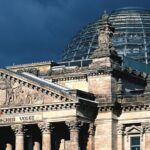
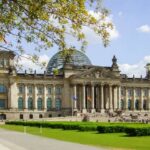
The final big landmark is the Reichstag, with guided time around 10 minutes, ending at Platz d. Republik (10557 Berlin-Mitte). You’ll get the key context for the Reichstag building and learn what the guide wants you to notice from the outside: its role in the parliamentary system and how its image fits Germany’s political story.
Important: you do not do an interior tour of the Reichstag here. So you won’t be walking through the famous interior spaces on this experience. What you will get is a guided explanation focused on symbolism, architecture, and function as seen from the outside.
Still, the exterior works. When the guide talks about art in the district and what the works of art suggest, you can start seeing the whole government quarter as an intentional narrative. You’ll also hear the kind of practical questions that make this area feel less like a monument and more like a living institution, such as whether there are tunnels and what art and design communicate to the public.
One interesting real-world note: on a democracy celebration day, Stefan was able to lead a group through multiple areas inside the Reichstag. That’s not something you should treat as guaranteed on any normal day, but it’s a good reminder that special occasions can change access and the feel of the visit.
Price and value: $234 per group, up to 30 people
This costs $234 per group for up to 30 people, and it’s a private group. That pricing makes a difference in who gets the best value.
If you’re traveling as a group and you want a guide instead of sharing a busload schedule with strangers, this can be a strong deal. In practical terms, you’re buying interpretation: someone to connect the dots between buildings, history, and how politics works.
If you’re a solo traveler, the value depends on whether you can join a group at the same price point, because private-group pricing usually spreads cost across people. For smaller parties, it may be less of a bargain than a classic per-person public group tour.
But if you want control over pacing, a quieter learning environment, and a guide who can keep the focus tight on the Reichstag government district, the format fits.
Pacing, language, and what to bring
The tour runs about 2 hours. Stops are short (roughly 10 minutes each), so you’ll move steadily without feeling rushed between major landmarks.
Language options are English and German. You should be able to follow well if you’re comfortable listening to guided explanations in either of those languages.
You’ll want comfortable walking shoes. Even though it’s designed to be manageable, you’re doing multiple stops along a district built for institutional movement, not casual wandering.
Weather matters here too. Since there’s no interior time planned, bring layers or rain protection so you don’t end up thinking about discomfort instead of the story.
If you’re sensitive to crowding, remember this is a private group format. It’s usually a calmer way to experience this area than trying to stitch together individual stops on your own.
Who this tour is best for
This is a great fit if:
- you want a guided explanation of how German governance is arranged in physical space
- you like political history connected to real places, especially the Wall strip setting
- you’re curious about how media and parliament overlap near ARD Hauptstadtstudio
- you care about architecture and symbolism more than you care about museum-style room tours
It’s less ideal if your top priority is getting inside the Reichstag or the Chancellery. Since the tour is explicitly outside, you won’t get the interior view that many people imagine when they hear these famous names.
Should you book this Reichstag government district walking tour?
I’d book it if you’re the type of person who likes turning a city’s big landmarks into a clearer understanding of how the system works. This walk gives you context in the exact place where that context matters.
Skip it only if interior access is your must-have. For exterior views and focused storytelling, this tour is well designed, and the guide’s personal storytelling style—like Stefan’s East Berlin perspective—can turn a short 2-hour walk into something you’ll remember when you look back at the map.
FAQ
What is the duration of the guided walking tour?
The tour lasts about 2 hours.
Will I be able to go inside the Reichstag or the Chancellery?
No. There is no interior tour of the Reichstag or the Chancellery on this experience.
Where exactly is the meeting point?
Meet at the intersection of Paul-Löbe-Allee and Konrad-Adenauer-Straße, next to the subway exit Bundestag (U5) exit D, in front of the elevator.
What languages are available?
The live guide offers the tour in English and German.
Is the tour wheelchair accessible?
Yes, the tour is wheelchair accessible.
What’s the cancellation policy?
Free cancellation is available up to 24 hours in advance for a full refund.