REVIEW · BERLIN
Albert Einstein in Berlin Private Guided Tour
Book on GetYourGuide →Operated by Rosotravel Germany · Bookable on GetYourGuide
Einstein in Berlin can feel like a history shortcut. This private tour connects the streets to the ideas, the people, and the political pressure that pushed him out. I like the expert guide who makes science human, and I love the focus on concrete stops like Humboldt University and the New Synagogue. One thing to consider: the exact stops depend on which time option you pick, and the synagogue has closure days.
You start with a 5-star, fluent guide (English, Russian, Italian, German, French, Spanish, Polish), in a private group setup. That matters here because Einstein’s story is layered—love, work, and the rise of anti-Semitism—and it’s easier to keep it straight when your guide can answer questions in real time.
The route comes in 2-, 3-, or 7-hour versions. The shortest walk highlights Berlin traces from his years there, while the longer options add synagogue context and, for the 7-hour plan, a Potsdam rail trip for the Einstein Tower area and the Einstein Science Park.
In This Review
- Key Highlights Worth Your Time
- Starting at Hotel Adlon: A Clean Berlin Intro to Einstein
- The 2-Hour Berlin Walk: From Brandenburg Gate to Bebelplatz
- Humboldt University: Where Einstein Shared the Field Equations
- New Synagogue – Centrum Judaicum: Einstein’s Jewish Roots (3- and 7-Hour Options)
- Potsdam in the 7-Hour Option: Train Tickets, Einstein Tower, and the Science Park
- Tickets, Timing, and the Stuff That Can Trip You Up
- Price and Value: Is $181 Fair for This Tour?
- The Guide Makes It: Sylvia’s Style and What to Look For
- Who Should Book This Tour (and Who Might Skip It)
- Should You Book This Albert Einstein Tour?
- FAQ
- What does the 2-hour option include?
- Is the New Synagogue ticket included?
- What happens if the New Synagogue is closed?
- Does the 7-hour option include Potsdam train tickets?
- Is admission to the Einstein Tower included?
- How hard is the Potsdam walking part?
- What languages are available for the live guide?
Key Highlights Worth Your Time

- Brandenburg Gate to Bebelplatz: a route that ties symbolism to the reality of Nazi persecution
- Humboldt University connection: the location tied to Einstein presenting general relativity field equations (25 Nov 1915)
- New Synagogue – Centrum Judaicum: built mid-19th century, reconstructed after Kristallnacht, and linked to Einstein’s Jewish roots
- Einstein lived here (1914–1932): then left just months before the May 10, 1933 Nazi book burning
- Potsdam by train (7-hour option): includes round-trip tickets and free admission to the Einstein Science Park
- Einstein Tower area: you’ll see the modernist landmark associated with Erich Mendelsohn and relativity
Starting at Hotel Adlon: A Clean Berlin Intro to Einstein

Meet your guide at the front of Hotel Adlon Kempinski Berlin (Unter den Linden 77). It’s a simple meet point—don’t go into the hotel. Think of it as a quick jump onto the right street grid for the story that follows.
From there, you’ll walk on Unter den Linden toward central Berlin. This is the part I like: it’s not museum-only. You’re watching how the city’s layout frames ideas—government, universities, public squares—and then you get the human backstory that makes the places feel less like photos and more like decisions.
With a private group and a guide fluent in your language, you can keep up without feeling rushed through names, dates, and shifting historical context. That’s especially useful with Einstein, because the tour isn’t just about the theory. It’s about why theory became dangerous.
You can also read our reviews of more guided tours in Berlin



The 2-Hour Berlin Walk: From Brandenburg Gate to Bebelplatz

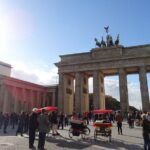
Choose the 2-hour option if you want the key Berlin stops without extra ticket stops. You’ll begin in front of the Brandenburg Gate, a symbol of peace and freedom. The tour uses that symbolism intentionally because it contrasts what Berlin looked like when Einstein was present versus what was about to happen.
As you head down Unter den Linden, you’ll pass landmarks tied to Einstein’s presence in the city. There’s even a quick stop involving an Einstein coffee shop branch—small, but it’s a fun way to understand how his name stuck to modern Berlin culture.
Then comes a major pivot point: Memorial to May 10, 1933 Nazi Book Burning at Bebelplatz. This is where the timeline matters. Einstein left Berlin only a few months before this event. Your guide connects that timing to the rising Nazi persecution of Jewish people. It’s not just tragic; it helps explain the urgency behind his departure.
You also get the “Berlin traces” focus: the tour is built around the idea that Einstein didn’t appear from nowhere. He lived here, worked here, taught here, and then had to leave as anti-Semitism accelerated. In a short time, you get that arc—without drowning in details.
Humboldt University: Where Einstein Shared the Field Equations
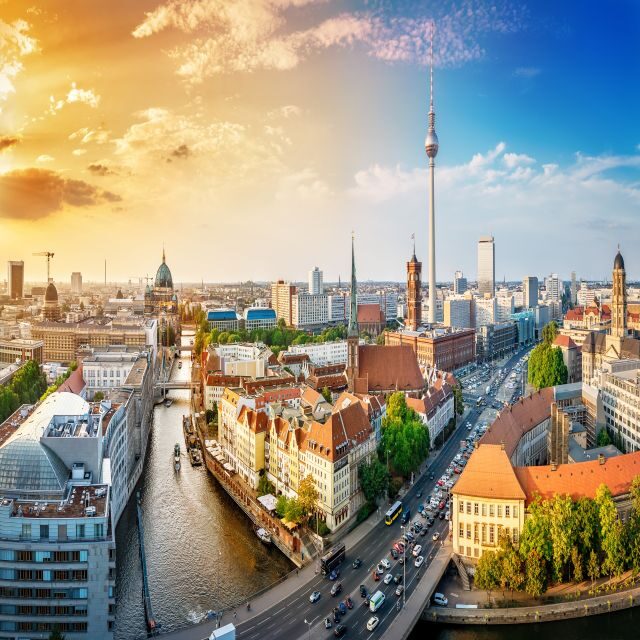
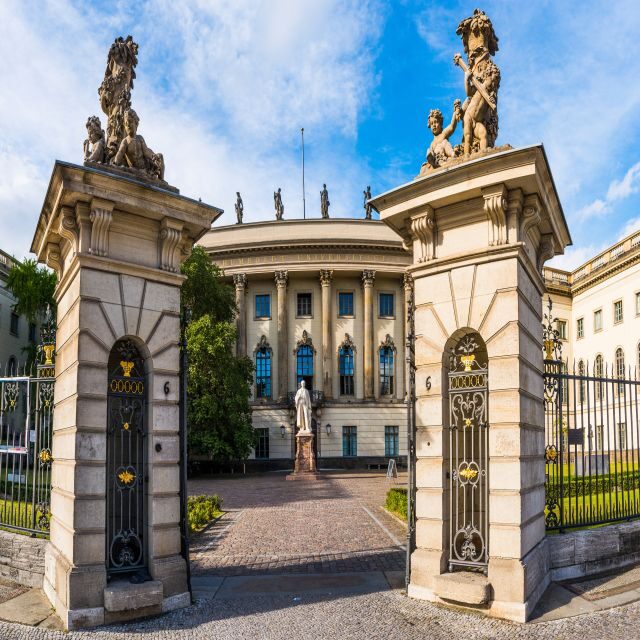
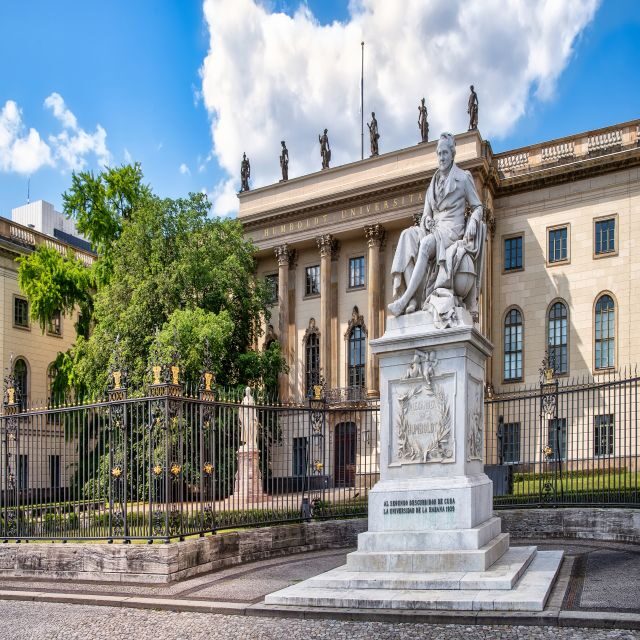
One of the strongest moments on the walk is Humboldt University. During Einstein’s era, the institution was known as the Royal Prussian Academy of Sciences. Your guide anchors you in a specific historical moment: on 25 November 1915, Einstein presented his field equations of general relativity there.
This stop is valuable because it turns a big scientific concept into a tangible place. You’re standing near the setting where Einstein explained ideas that changed how people thought about gravity and space-time.
A small practical tip: keep an eye on your guide’s pacing. This is the sort of stop where questions pop up—how the public received the ideas, what Einstein was doing at the time, how Berlin fit into his career. With a private group, you can usually ask and get straight answers rather than waiting in a crowd.
New Synagogue – Centrum Judaicum: Einstein’s Jewish Roots (3- and 7-Hour Options)
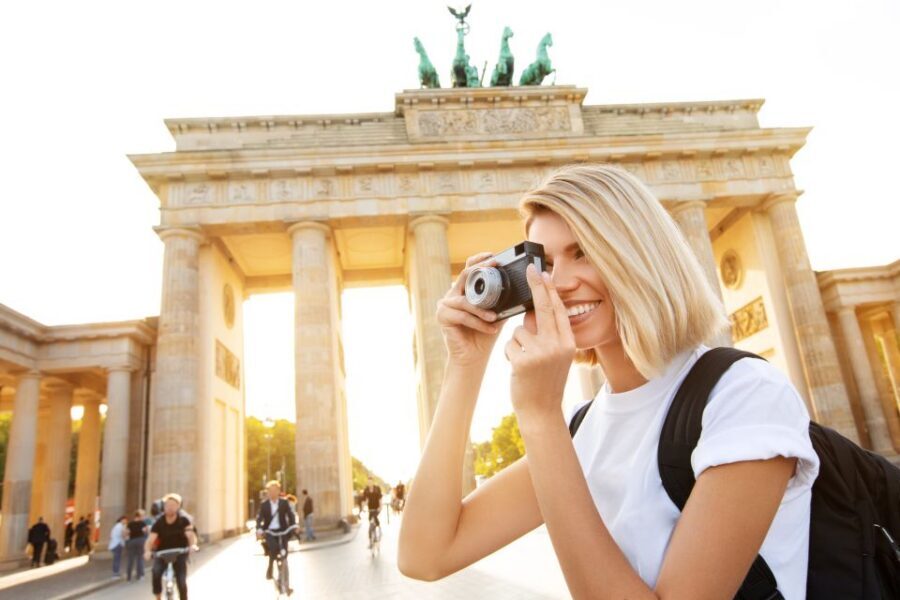
If you pick the 3-hour or 7-hour option, you’ll visit the New Synagogue – Centrum Judaicum. This is the part of the tour that explains Einstein through identity and community, not only through science.
The synagogue was built in the mid-19th century as the main place of worship for Berlin’s Jewish community. It was then reconstructed after Kristallnacht, which gives the site a layered meaning: faith, disruption, rebuilding, and what it cost to survive.
Your guide also ties Einstein to the synagogue in a specific way. Einstein was the first violin of the Jewish orchestra there. That detail helps a lot. It shows Jewish life as lived culture—music, community, routine—not just a headline about persecution.
Important logistics to know: the tour includes tickets that cover museum admission. The dome is closed for viewing, and the synagogue is closed on Saturdays and some public and Jewish holidays. If the synagogue is closed on your day, your 7-hour itinerary may shift toward extended sightseeing in Potsdam.
That flexibility matters. The tour is built around context, so you don’t want to arrive on a closure day expecting everything to be open.
Potsdam in the 7-Hour Option: Train Tickets, Einstein Tower, and the Science Park
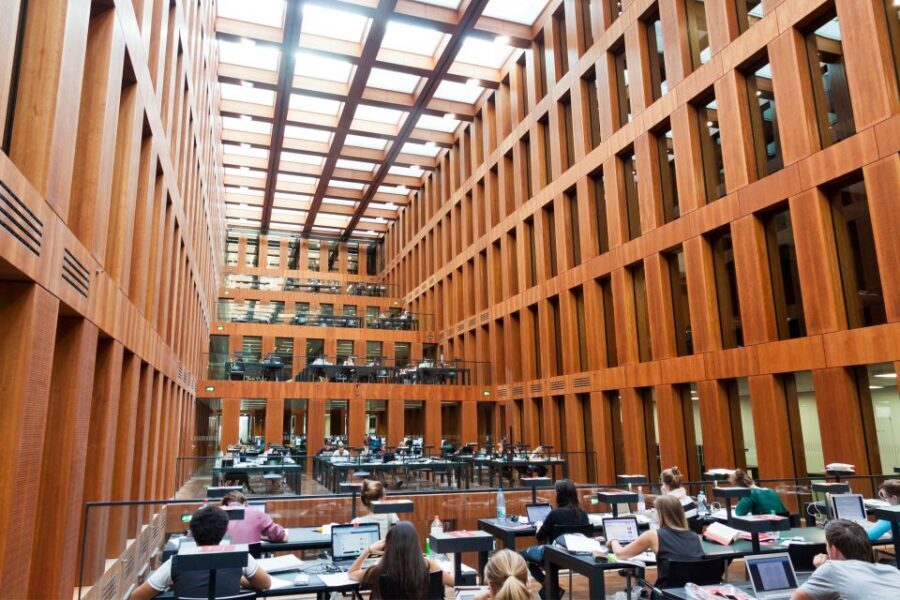
If you have a full day and want the “Einstein beyond Berlin” angle, the 7-hour option is the one. It includes round-trip train tickets from Berlin to Potsdam, with trains running every 20–30 minutes.
Once in Potsdam, you’ll walk from Potsdam Train Station to the Albert Einstein Science Park—about a 10-minute uphill walk. Wear comfortable shoes. Even if you’re fit, uphill cobblestones can turn a scenic day into a shuffle.
At the park, you’ll have free admission included, and the stop is designed as a learning layer. It’s there to help you connect Einstein’s life and work to modern explanations you can actually see.
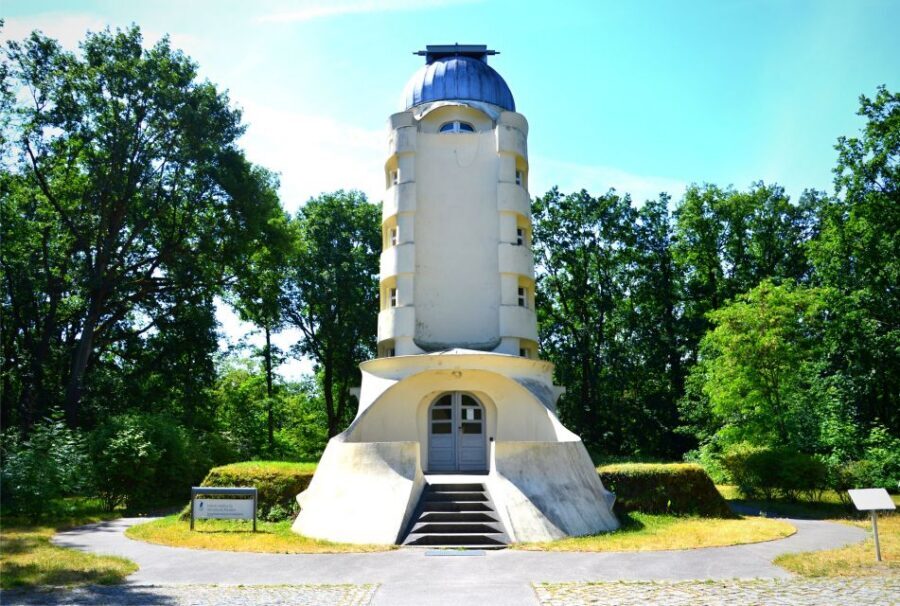
Then there’s the big architectural draw: the Einstein Tower (Einsteinturm). You’ll see the famous modernist landmark associated with Erich Mendelsohn. It was built to help prove Einstein’s theory of relativity, and your guide notes that Einstein visited once.
One note: admission to the Einstein Tower itself is not included. So you’re likely viewing the tower area as a landmark moment, not as a fully ticketed interior experience. If you’re hoping for inside-the-tower time, factor that into your expectations.
If time permits, you may also see Einstein’s Forum and other highlights in Potsdam before returning by train.
You can also read our reviews of more private tours in Berlin




Tickets, Timing, and the Stuff That Can Trip You Up
This tour is well structured, but a few details can change your day. Here’s the practical checklist I’d use before you go.
- New Synagogue access depends on the day: closed on Saturdays and some public and Jewish holidays. The tour may replace it with extra Potsdam sightseeing, especially on the 7-hour option.
- Synagogue dome is closed: you still get museum admission with the ticket, but not dome views.
- Potsdam bus option isn’t always running: the park can be reached by bus, but bus tickets aren’t included and the bus doesn’t run on Saturdays, Sundays, and public holidays.
- Einstein Tower entry isn’t included: you should expect to see the landmark, not necessarily go inside.
- Duration changes what’s included: the 2-hour option does not include synagogue tickets, and the 3- and 7-hour options handle synagogue entry differently based on closure days.
Also, the tour is wheelchair accessible. Still, do note the Potsdam uphill walk in the 7-hour option, since comfort on a grade matters even with accessibility overall.
Price and Value: Is $181 Fair for This Tour?
At $181 per person, you’re paying for a lot more than “a walk with a map.” This is a private, guided experience with a 5-star expert guide, and the value shifts depending on your selected duration.
For the 2-hour option, you’re mostly buying the expertise and the tightly connected Berlin route: Brandenburg Gate, Unter den Linden, Humboldt University, and the May 10, 1933 book burning memorial at Bebelplatz.
For the 3-hour option, you’re also getting tickets to the New Synagogue (including museum admission). That’s a meaningful addition because it turns Einstein’s story into a lived social history, not just a scientist’s résumé.
For the 7-hour option, the value jumps again: round-trip train tickets to Potsdam and free admission to the Einstein Science Park are included. Considering the extra travel time and ticket inclusions, this can be one of the better ways to cover both cities without piecing everything together yourself.
There’s one pricing-related reality check: the Einstein Tower itself is not included for admission. So if the main goal is tower interior access, you may want to plan additional tickets separately.
The Guide Makes It: Sylvia’s Style and What to Look For
The strongest praise here centers on how the guide brings the story to life. One example from the guide roster: Sylvia has been described as wonderful, with history explained in a way that feels lived rather than memorized. That matches what you’re doing on this route—Einstein’s life isn’t just dates; it’s the pressure of the era.
So when you book, pay attention to the language you select and the private format. In Berlin, you’ll be walking through places that people use for photos and headlines. A good guide helps you read the setting like a story.
If you’re taking this tour because you care about science but also want the human context—this is the kind of guiding that makes both fit.
Who Should Book This Tour (and Who Might Skip It)
This tour is a great fit if you want Einstein in context. You’ll like it if you:
- want a structured route through Berlin traces from 1914–1932
- care about the link between science and the places where Einstein taught and spoke
- want the Jewish roots angle through the New Synagogue – Centrum Judaicum
- have the time to add Potsdam for the 7-hour plan
You might skip or adjust your expectations if:
- you mainly want inside access to the Einstein Tower (admission isn’t included)
- you’re visiting on a day the synagogue is closed and you strongly want that exact interior time
- you prefer a slow, self-guided museum day rather than walking focus
The private group format helps either way, because you can usually tailor how much time you spend at key stops.
Should You Book This Albert Einstein Tour?
If you’re trying to understand Einstein as a person shaped by Berlin—his teaching, his public life, and the way Nazi persecution forced him out—this tour is worth serious consideration. The route is practical, not random. The stops are chosen for meaning, from Humboldt University’s general relativity connection to the May 10, 1933 book burning memorial at Bebelplatz.
I’d book it if you want a guided story that’s both thoughtful and efficient. Pick the 2-hour option for the best Berlin overview. Pick 3 hours if the synagogue context matters to you. Pick 7 hours if you want Potsdam added with the Science Park and an Einstein Tower landmark moment.
Just go in knowing what’s included—and what isn’t—so the day matches your expectations.
FAQ
What does the 2-hour option include?
The 2-hour option is a walking tour of Albert Einstein’s Berlin traces, including stops such as Humboldt University and the Memorial to May 10, 1933 Nazi Book Burning at Bebelplatz. Tickets to the New Synagogue are not included in the 2-hour option.
Is the New Synagogue ticket included?
Yes for the 3-hour and 7-hour options. The ticket includes admission to the museum, but the dome is closed for viewing. The synagogue is closed on Saturdays and some public and Jewish holidays.
What happens if the New Synagogue is closed?
If the synagogue is closed on your day, it may be replaced with extended sightseeing in Potsdam during the 7-hour tour. The synagogue closure timing is part of the tour planning.
Does the 7-hour option include Potsdam train tickets?
Yes. The 7-hour option includes round-trip train tickets from Berlin to Potsdam, and trains run every 20–30 minutes.
Is admission to the Einstein Tower included?
No. Admission to the Einstein Tower is not included. The tour includes time to see the tower area as part of the Potsdam portion.
How hard is the Potsdam walking part?
From Potsdam Train Station to the Albert Einstein Science Park, you’ll walk about 10 minutes uphill. Comfortable shoes are recommended.
What languages are available for the live guide?
The live guide is available in English, Russian, Italian, German, French, Spanish, and Polish.