REVIEW · BERLIN
Where It All Began: Berlin’s Queer & Trans History Tour
Book on Viator →Operated by BerlinGuide.de · Bookable on Viator
Berlin rewrites queer history street by street. This 3.5-hour guided walk pairs a small-group cap (10 people) with iPad AR so you see major LGBTQIA+ moments in the exact places they happened. Led by a queer activist and gender scholar, it’s designed to tell stories you’ll miss if you wander solo.
I like that the route moves through time in a clear way, from early decriminalization arguments to Nazi persecution, then on to post-war organizing, AIDS-era activism, and today’s club and Pride energy. One thing to consider: it’s weather-dependent and it’s a straight walking experience, so plan on being on your feet for the full duration (and note coffee/tea isn’t included).
10-person groups with a specialist guide: intimate enough for questions, focused enough to keep the pace.
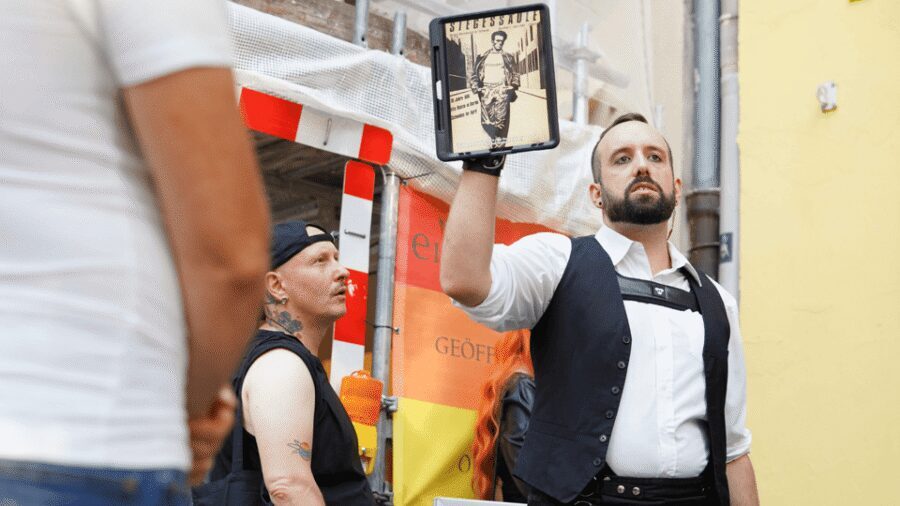
iPad AR at real locations: historical photos and scenes appear where they belong.
Mixies AR photo keepsakes: you take home fun, personalized group shots.
200+ archival images and videos: you leave with way more context than just what you heard.
A full timeline, not a random photo tour: early activism to AIDS crisis to present-day nightlife.
In This Review
- Why Berlin’s LGBTQIA+ Story Works Best on Foot
- Timing, Start/End, and the Pace You Should Expect
- Small-Group Value: Why Max 10 People Matters
- AR on an iPad: How You See History in the Same Spot
- Stop-by-Stop: What You Learn Along the Route
- Karl-Heinrich-Ulrichs-Straße 1: Early Public Gay Rights Advocacy
- Nollendorfplatz: Nazi Persecution and the Pink Triangle
- Schwerinstraße 13: Toppkeller, Claire Waldoff, and Lesbian Community
- Nollendorfstraße 17: Police, Christopher Isherwood, and Cabaret’s Roots
- Magnus-Apotheke: Hirschfeld, Scientific Activism, and Paragraph 175
- Denns BioMarkt (Eldorado Site): Drag Culture and Contradictions
- Prinz Eisenherz: West-Berlin Organizing and Charlotte von Mahlsdorf
- Connection: Chez Romy Haag and Trans-Led Nightlife
- Internationale Stele GEGEN DAS VERGESSEN: AIDS Crisis Under Division
- Metropol: Pride, Techno, Fetish Culture, and the Fight Against Gentrification
- Price and Value: What $83.13 Buys You in Real Terms
- Who This Tour Fits Best
- Should You Book Where It All Began: Berlin’s Queer & Trans History Tour?
- FAQ
- Is the tour offered in English?
- How long is the Berlin tour, and what’s the typical ending point?
- What size is the group?
- Do I need to bring anything for the augmented reality part?
- Are admission tickets included for the stops?
- Is coffee or tea included?
Why Berlin’s LGBTQIA+ Story Works Best on Foot
Berlin has plenty of plaques and memorials, but this tour is different because it’s built around where each turning point happened. You start in the southwest of the city and steadily connect political ideas, social spaces, and cultural life through one coherent thread: how queer and trans people fought for safety, rights, and recognition.
What I like most is that it doesn’t treat LGBTQIA+ history as a side note. It places it in the middle of major political eras, from early reform arguments to the Nazi crackdown and the later post-war rights movement.
You’ll also get a guide who can explain the why behind the headlines. The format matters here: walking from stop to stop keeps you oriented, and the AR elements make the past feel tied to the street—not floating in a museum.
Timing, Start/End, and the Pace You Should Expect
This is a 3 hours 30 minutes walking tour. It starts at 2:00 pm at Alnatura Super Natur Markt, Else-Lasker-Schüler-Straße 18, 10783 Berlin, and it ends at Metropol, Nollendorfpl. 5, 10777 Berlin.
That end point is useful. Metropol sits right in the same neighborhood as a lot of queer nightlife energy, so after the tour you can keep exploring without needing to “travel to travel” again. It also means you’re not stuck on a long transit loop at the end.
Because the tour runs in good weather only, I’d treat it like an outdoor plan: wear shoes you can stand in comfortably and expect steady walking rather than lots of indoor stops. And since coffee/tea isn’t included, plan for a snack or café stop before you start, if you want one.
You can also read our reviews of more historical tours in Berlin

Small-Group Value: Why Max 10 People Matters
A cap of 10 travelers sounds like a marketing detail until you feel it. With fewer people, the guide can slow down for questions and explain context without rushing. You’re also more likely to catch smaller details—names, dates, and the human stories behind them—because the group stays manageable.
At $83.13 per person, you’re paying for more than movement and storytelling. The price reflects a guided route plus technology and extra materials that aren’t typical of basic city walks.
To put it plainly: if you want a tour that feels personal rather than theatrical, the small size helps a lot.
AR on an iPad: How You See History in the Same Spot
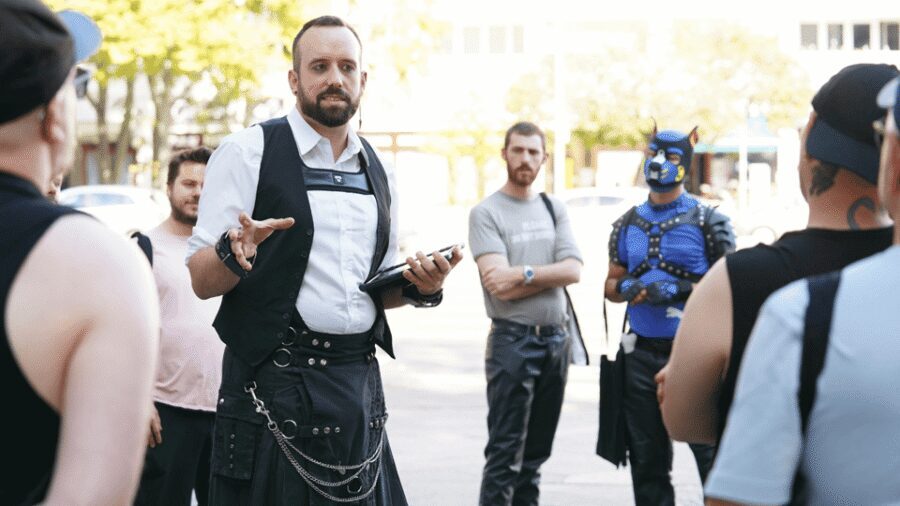
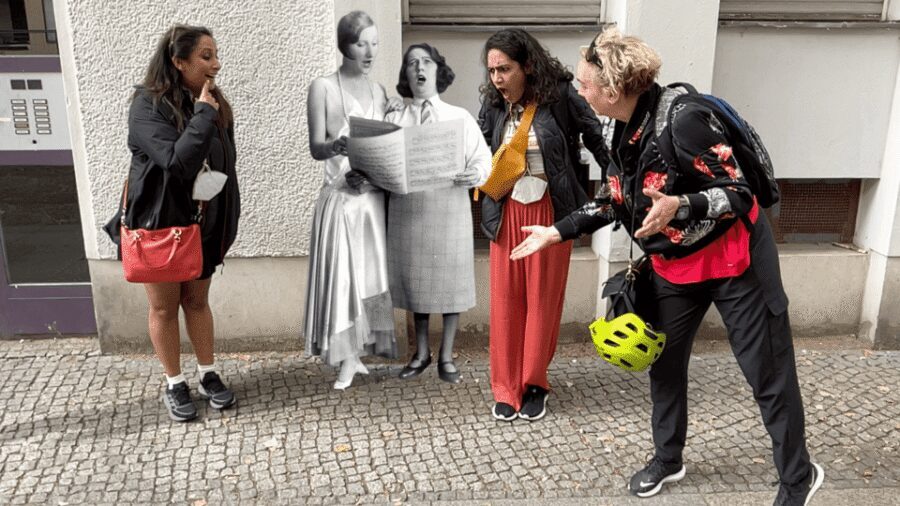
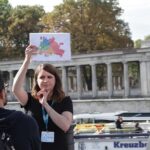
One of the standout parts is the hassle-free iPad augmented reality setup. The goal isn’t sci-fi effects—it’s practical. The guide uses AR to pair historical photos, videos, and archival materials with the modern street view, so you understand what you’re looking at now and what was there before.
It also helps with memory. When your brain can match the street corner in front of you with a past image from the same location, the story sticks. This is especially valuable in Berlin, where buildings and blocks can look similar and you might otherwise miss the significance.
Then there’s the fun extra: Mixies, which creates personalized AR photos with your group. That means you don’t just leave with facts—you leave with visual souvenirs that connect your faces to the places you learned about.
Stop-by-Stop: What You Learn Along the Route
The tour is built as a timeline you can walk. Each stop is short (usually around 15–20 minutes, with a couple briefer ones), but the guide packs in specific people and events so the overall picture stays coherent.
Karl-Heinrich-Ulrichs-Straße 1: Early Public Gay Rights Advocacy
You start at Karl-Heinrich-Ulrichs-Straße 1, named for Karl Heinrich Ulrichs, often called one of the world’s first gay rights activists. The key takeaway here is how early he argued publicly for decriminalizing homosexuality—long before many modern terms existed.
This stop sets the tone: Berlin isn’t just remembered for nightlife. It also became a place where public debate about queer identity and law could happen early on.

Nollendorfplatz: Nazi Persecution and the Pink Triangle
At Nollendorfplatz, the story sharpens with the realities of Nazi persecution. You’ll hear about Adolf Brand and right-wing gay activists, and also how figures like Ernst Röhm fit into a wider, complicated picture of openly gay men inside Nazi structures.
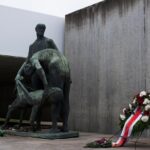
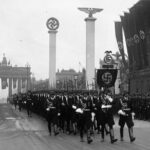
Then you connect that to the violence of state power: Hitler’s stance on homosexuality helped drive mass persecution, and the Night of the Long Knives led to executions that included Röhm and others queer people within the regime. The tour doesn’t shy away from what that meant in concentration camps, including the pink triangle symbol and the resilience of those who resisted oppression.
This is one of the most emotionally heavy segments. If you prefer light topics only, know this section focuses on survival and brutality.
Schwerinstraße 13: Toppkeller, Claire Waldoff, and Lesbian Community
Next is Schwerinstraße 13, focused on lesbian life in 1920s Berlin. You visit the site connected with Toppkeller, a famous lesbian bar, and you get the sense of how physical spaces mattered for safety and community.
The tour also highlights cultural impact through names you might not automatically associate with queer history. Claire Waldoff, a lesbian cabaret singer, is discussed for how her songs became anthems of defiance. Josephine Baker, described here as bisexual, shows up as a performer whose fame crossed gender expectations.
This stop balances politics with culture—helpful because it shows queer life wasn’t only reactive. It was creating art, social worlds, and meaning.
Nollendorfstraße 17: Police, Christopher Isherwood, and Cabaret’s Roots
At Nollendorfstraße 17, the tour takes a surprising turn: the homosexual department of the Berlin police force. It’s a reminder that state systems didn’t just ignore queer people; they actively categorized and controlled them.
The guide then brings in gay male life in 1920s Berlin and the story of Christopher Isherwood. His Berlin writings are explained as inspiration for Cabaret (the famous musical and film), and you connect this to his relationship with Heinz Neddermeyer and their escape from Nazi Germany as queer refugees.
This stop is useful if you like how art gets its raw material from real life. You’ll likely leave seeing Cabaret’s Berlin mythology with new context.
Magnus-Apotheke: Hirschfeld, Scientific Activism, and Paragraph 175
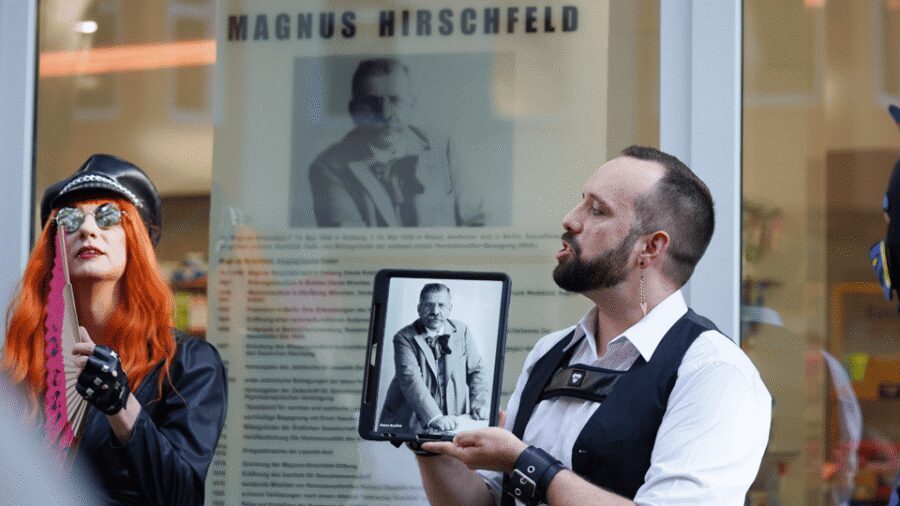
Then you reach Magnus-Apotheke, and the tour centers on Magnus Hirschfeld and the world around his activism. You learn about the Institute for Sexual Science and the Scientific-Humanitarian Committee, described as the world’s first organization dedicated to queer rights and gender studies.
Here the guide connects ideas to real-world outcomes. You hear about theories on sexual intermediaries, the concept of Berlin’s third gender, and groundbreaking surgeries linked to people including Dora Richter, Lili Elbe, and Karl M. Baer.
It also makes the law visible through the discussion of the fight against Paragraph 175, the criminalization of homosexuality. The Institute’s destruction by Nazis is another painful note, and it matters because it explains why physical records and institutions were deliberately erased.
Denns BioMarkt (Eldorado Site): Drag Culture and Contradictions
At Denns BioMarkt, you’re at the former site of Eldorado, one of Berlin’s most famous drag bars of the 1920s. The tour frames Eldorado as a hotspot for gender-nonconforming people and queer performers, a place where the social rules could bend.
The twist—and it’s an important one—is that the venue is also linked to high-profile Nazis like Ernst Röhm, who paradoxically frequented the club while later becoming part of the machinery of persecution.
This stop is valuable because it refuses simple stories. It shows how complicated real lives were under shifting politics, and how queer spaces could exist in tension with surrounding power.
Prinz Eisenherz: West-Berlin Organizing and Charlotte von Mahlsdorf
At Prinz Eisenherz, the tour moves into post-war activism. You hear about Homosexuelle Aktion West-Berlin, described as one of the first queer rights organizations after WWII, and the founding of SchwuZ, one of Berlin’s iconic queer clubs.
Then the tour introduces a trans icon: Charlotte von Mahlsdorf. You learn how she preserved Berlin’s queer history and helped create safe spaces in East Berlin. For me, this part matters because it shows memory work as activism too—keeping stories from vanishing.
Connection: Chez Romy Haag and Trans-Led Nightlife
At Connection, the focus becomes the trans community in West Berlin during the 1970s and 1980s. You hear about the impact of Chez Romy Haag, described as a legendary trans-led nightclub that revolutionized Berlin’s nightlife.
This stop makes a clear point: nightlife wasn’t just entertainment. It was a place where gender-diverse people could exist more freely, and it helped set the stage for the city’s later queer club culture.
Internationale Stele GEGEN DAS VERGESSEN: AIDS Crisis Under Division
At Internationale Stele GEGEN DAS VERGESSEN, the tour turns to the AIDS crisis and how it affected a divided city. You learn how the queer community organized to fight for survival, and you also hear about activism connected to Rita Süssmuth and AIDS awareness.
The tour also uses a memorable metaphor: the Berlin Wall was referred to as the condom of the GDR, highlighting stark differences in how East and West Berlin handled the crisis.
This stop gives you the human scale of public health history. It’s not just about the disease. It’s about response, stigma, and what community action can do.
Metropol: Pride, Techno, Fetish Culture, and the Fight Against Gentrification
The tour ends at Metropol, bringing the story into today’s scene. You learn about Metropol’s role in the early gay community and techno culture, and the tour connects it to what later became bigger institutions like Berghain and Lab.Oratory.
Then you hear about other queer spaces and events, including SO36 nights, Folsom Europe (described here as Europe’s biggest fetish festival), Kreuzberg Pride, and the Dyke March. The tour finishes with an urban-rights angle too: an ongoing fight for an affordable city led by the radical Tuntenhaus squat.
It’s a strong closer because it links history to current tensions—space, money, and who gets to belong where.
Price and Value: What $83.13 Buys You in Real Terms
At $83.13 per person for about 3.5 hours, you’re paying for several things that add up fast:
- A guided walking tour led by a queer activist and gender scholar
- iPad AR elements that place historical images in the real street scene
- Mixies personalized AR photos for keepsakes
- Access to 200+ rare historical photos, videos, and archival materials
- Insider tips on modern queer nightlife and events
If you compare this to a basic walking tour that mostly relies on spoken narration, the AR plus the archive bundle is a meaningful difference. You leave with both the story you heard and the visual proof of it—plus photos that tie your group to specific places.
Also, the group size helps justify the price. With fewer people, you get better attention and clearer explanations.
Who This Tour Fits Best
This is a great choice if you want more than landmarks. You want context: names, politics, and the real human impact of laws and violence.
It’s especially good if you enjoy combining history with Berlin’s living culture. The ending isn’t random—it points you toward Pride and club references that feel connected to what you just learned.
If your group is sensitive to heavy topics, I’d still call it worthwhile, but I’d go in knowing that the route covers Nazi persecution and the AIDS crisis. The tone shifts at those stops, and that’s part of the point.
Should You Book Where It All Began: Berlin’s Queer & Trans History Tour?
I’d book it if you want a guided timeline that connects queer and trans rights activism, community spaces, and modern nightlife without treating it as a single-themed slideshow. The small group, the AR iPad experience, and the Mixies photo souvenir make it feel like more than a standard walking tour.
Skip it (or at least think twice) if you can’t do a solid 3.5 hours of walking or if weather would likely ruin your plan, since the tour requires good conditions. And if you hate emotionally heavy history, be aware the route includes Nazi-era persecution and AIDS-era suffering.
If that all sounds like your kind of Berlin day, this is a strong value: you get a specialist guide, location-specific visuals, and a finish right where Berlin’s queer culture is still active—at Metropol.
FAQ
Is the tour offered in English?
Yes. This experience is offered in English.
How long is the Berlin tour, and what’s the typical ending point?
The tour lasts about 3 hours 30 minutes and ends at Metropol, Nollendorfpl. 5, 10777 Berlin.
What size is the group?
The tour caps at 10 travelers, which keeps it small-group.
Do I need to bring anything for the augmented reality part?
You don’t need to bring your own device. The tour provides an iPad for the augmented reality experience, plus Mixies AR photos are included.
Are admission tickets included for the stops?
Yes. The stops listed show free admission ticket entries.
Is coffee or tea included?
No. Coffee and/or tea is not included, though the tour includes time on the route where you might take a break.