REVIEW · WEIMAR
Weimar: Express Walk with a Local in 60 minutes
Book on GetYourGuide →Operated by LocalBini AG (EU) · Bookable on GetYourGuide
Weimar can be a lot in an hour. This express walk with a local is built to help you get your bearings fast, while still hitting the places that define the city. You’ll move through major literary and classical-architecture spots, then get practical pointers for where to eat and where to linger afterward.
What I like most is the way the guide turns famous names into actual people. You’ll get a clear, story-driven take on the Goethe–Schiller legacy, and how it shaped Weimar’s vibe. I also like the small-group feel, with a maximum of 8 people, so the pace stays human and the recommendations feel personal.
The main drawback to consider: it’s a walking tour, and it’s not designed for mobility impairments. Also, because it’s an express format (about 1–2 hours), you may want more time later if you plan to go deep inside museums or want longer stays at any one stop.
In This Review
- Key points worth planning for
- Markt 10 to Neptune fountain: start smart in Weimar
- Goethe–Schiller Monument and Schillerstraße: the rivalry at street level
- Market Square Weimar: where city life and literature meet
- Duchess Anna Amalia Library: learning culture, not just architecture
- City Church of Saints Peter and Paul: history you can spot, if you know what to watch for
- Goethe’s House: putting a writer’s life into the city map
- How the 1–2 hour pace actually helps you
- Local tips for bars and cafes: the part that pays off later
- Price and value: is $93 per person worth it?
- Who should book this walk, and who might not
- Final call: should you book the Weimar Express Walk with a Local?
- FAQ
- FAQ
- How long is the Weimar Express Walk with a Local?
- How much does the tour cost?
- What is the maximum group size?
- Where do we meet the guide?
- Where does the tour finish?
- What sights are included on the walk?
- What languages are the tour guide available in?
- Is there a live guide?
- Are entry tickets included?
- What should I bring?
Key points worth planning for

- Neptune fountain meet-up, then straight into core landmarks for an efficient start
- Goethe–Schiller focus with story details that make the rivalry click
- Duchess Anna Amalia Library stop that connects architecture to a culture of learning
- Local food-and-drink guidance on where to eat and where to sip afterward
- Small group (up to 8) so questions and pace adjustments actually matter
- Stops adapt to your interests and walking speed, with weather able to shift timing
Markt 10 to Neptune fountain: start smart in Weimar

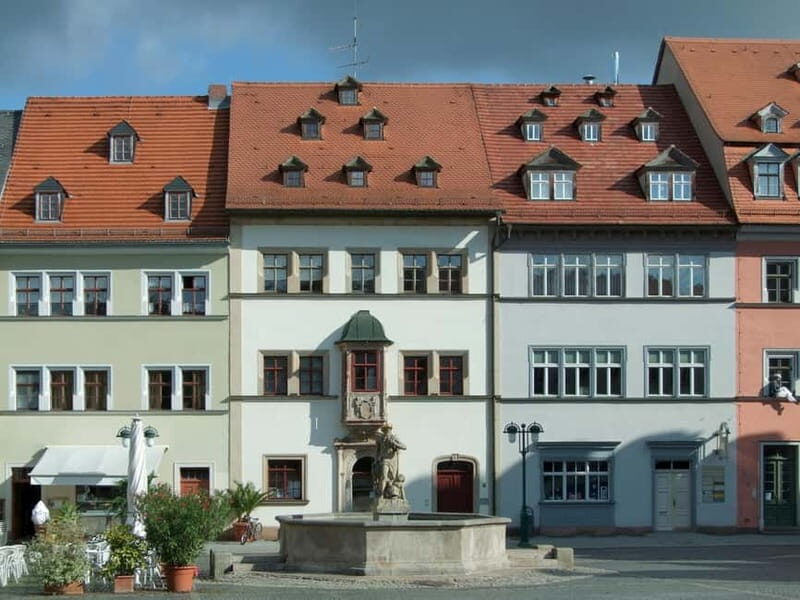
Your tour begins at Markt 10, but the real meetup point is by the Neptune fountain. That matters because Weimar’s center can feel compact on a map, yet confusing in real life once you start zigzagging streets. Meeting at a known landmark keeps you from burning time hunting for the group.
From the first minute, the guide’s goal is clear: help you understand what you’re looking at. Instead of listing dates, you’ll get a sense of how the city’s layout and key buildings connect to the people who made Weimar famous. In a short tour, that approach is the difference between seeing pretty facades and actually understanding why they matter.
Bring comfortable shoes and water. A one-hour walk can still add up quickly when you factor in pauses for stories and photos, especially if you hit any cooler or wetter weather.
You can also read our reviews of more walking tours in Weimar


Goethe–Schiller Monument and Schillerstraße: the rivalry at street level
One of the first big stops is the Goethe–Schiller Monument, followed by Schillerstraße. This is where the walk becomes more than sightseeing. The guide frames Goethe and Schiller as contrasting personalities, not just two names from a literature class.
You’ll also get cultural context that helps the city click into place. Weimar is often described through literature, but the best part here is learning how those literary figures influenced how the city thought about art, ideas, and public life. When your guide explains the dynamic between them, you start noticing how the city treats ideas as something visible in stone and streets.
And yes, the guide doesn’t keep it vague. Based on an English-language review of the experience, Marion’s storytelling can include surprising details connected to Schiller’s life and even his autopsy, woven into the broader theme of Germany’s past and present. That’s the kind of specificity that makes a short tour feel like it has depth.
A practical tip: at this stage, take a slow look around rather than rushing for the next photo. If you read the guide’s story cues, the monument and surrounding streets become easier to interpret later when you’re walking on your own.
Market Square Weimar: where city life and literature meet
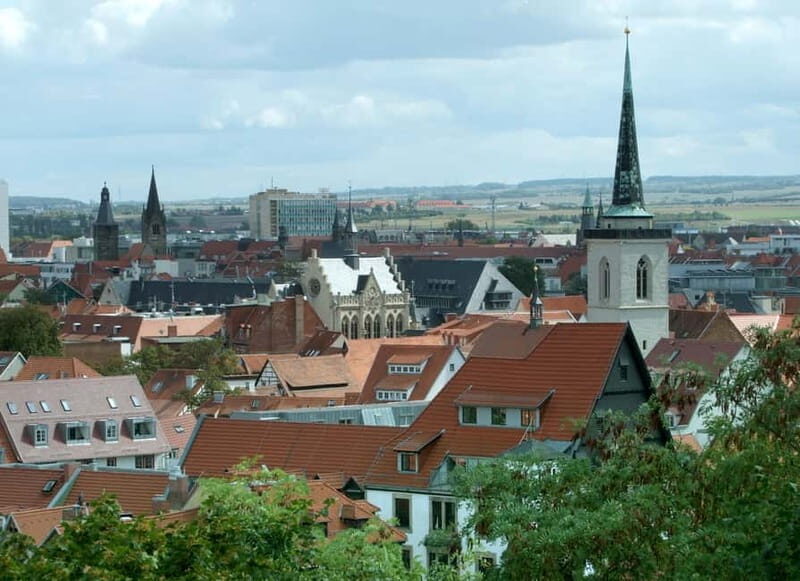
Next up is Market Square (Marktplatz). This stop is valuable because it reminds you that these authors weren’t writing in a vacuum. A market square is where schedules collide: people pass through, decisions happen, and daily life moves on. The guide’s job is to link that everyday rhythm to the city’s more famous intellectual reputation.
In a short express walk, the market stop works like a palate cleanser. You get to shift from monuments and libraries back to the human scale of Weimar. If you’re the kind of person who likes to know where locals would actually sit with a coffee, this is the moment where your guide usually starts steering you toward future stops.
Keep an eye on what feels central and practical. Even if you don’t remember every fact, you’ll leave with a better sense of where the city’s “spine” runs. That helps a lot when you build the rest of your day after the tour ends.
Duchess Anna Amalia Library: learning culture, not just architecture
The tour then heads to the Duchess Anna Amalia Library. This is one of those stops where it’s easy to think, I’m just seeing a building. But the real value is how the guide ties the library to a way of life: reading, patronage, and the public face of learning.
You’ll likely get a guided sense of what makes the library meaningful in the Weimar story. Even if you don’t enter or go inside (entry tickets for monuments and museums are not included), the exterior and immediate context still give you something tangible: a landmark that proves Weimar took culture seriously.
Why this works in an express walk: it provides a “lesson” stop. Earlier, you’re mostly getting narrative history through figures like Goethe and Schiller. Here, you shift into the infrastructure of culture, which helps everything you learned feel less like trivia and more like a system.
City Church of Saints Peter and Paul: history you can spot, if you know what to watch for
Another defined stop is the City Church of Saints Peter and Paul. Church exteriors can blend together when you’re moving fast, so this stop is mostly about interpretation—learning what to look for and why it appears in the story of Weimar.
In a one-to-two-hour tour, the church serves a useful purpose: it broadens the history beyond literature into civic identity. You’re not just learning about writers; you’re seeing how faith, community, and town life shaped the environment those writers lived in.
If the weather turns, churches can be a relief too, since you can pause and get your bearings without needing long indoor museum time. Just note that this experience is described as a walking tour, so your guide may still keep things moving depending on conditions.






Goethe’s House: putting a writer’s life into the city map
A highlight on this walk is Goethe’s House. This is the point where your brain makes a natural connection: the literature you’ve heard about becomes geographic. When you see where someone lived or worked, you start to understand why certain places in a city attract attention.
This stop tends to land well because it feels personal. You’re not just reading about Goethe; you’re standing near a physical anchor of his presence in Weimar. A guide who tells stories well helps you “stay oriented,” meaning you remember what you saw and why it matters, instead of treating it like a checklist.
One thing to watch for: don’t rush through the moment. Even if you can’t spend long here, a focused stop with context makes the time count. If you want more time inside, you’ll need to plan that separately since entry tickets are not included.
How the 1–2 hour pace actually helps you
This tour is designed for speed with purpose: about 1–2 hours, small-group format, and an itinerary that adapts to walking pace and interests. Stops may vary with weather, which is a blessing in places where the day can shift quickly.
Small group size (up to 8 people) is the practical reason the express format works. With fewer people, the guide can slow down when someone needs a question answered or when the group wants a bit more time at a landmark. That’s hard to do on larger tours that must keep a strict conveyor-belt pace.
At the end, you’ll finish at Beethovenpl. 3, 99423 Weimar, which lines up with where the guide often ends near the bronze statues of Goethe and Schiller. That ending matters: it gives you a symbolic full circle. You start with the pairing in stone and end back at another Goethe–Schiller visual, now with more context in your head.
Local tips for bars and cafes: the part that pays off later
A lot of walking tours stop at history. This one also points you toward actual life in Weimar. The guide is set up to share top local tips for bars, cafes, and restaurants, and to direct you toward lively places where you can sip and relax in true Weimar style.
Why this is valuable: it saves you the hardest part of travel decision-making. Without a local’s guidance, you often pick places based on menu photos or street visibility. A guide’s recommendations help you choose based on how the city tends to spend its evenings and where you’ll likely feel at home as a visitor.
So treat the tour as two parts: first, you get the story and the landmarks. Second, you get your next 2–4 hours of free time organized in a smarter way.
Price and value: is $93 per person worth it?
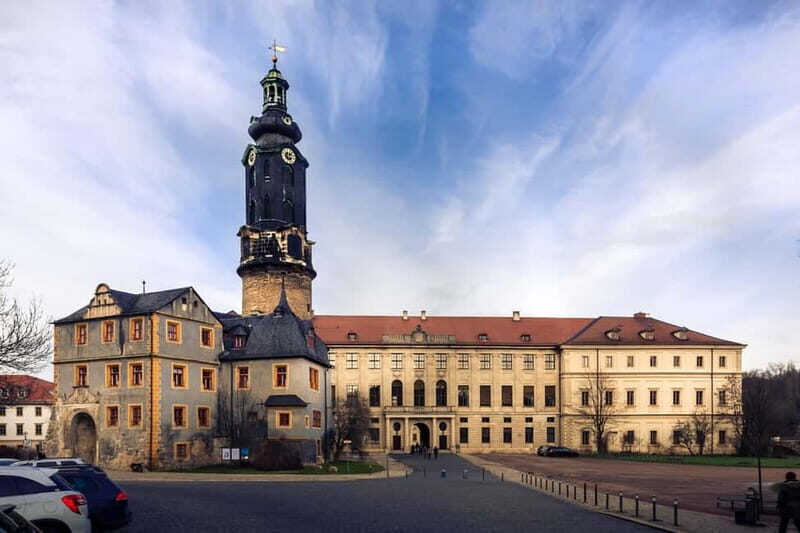
At $93 per person for 1–2 hours, you’re paying for three things the city can’t always deliver on your own: expert interpretation, time efficiency, and small-group attention.
Here’s the value equation I’d use:
- If you’re the type of person who likes to understand why a place matters, the guide’s storytelling turns the walk into a “high information per minute” experience.
- If you only have a day or two in Weimar, express timing is a real advantage. You’ll cover major sites without needing to plan a mini self-guided route.
- If you want recommendations that match your interests, the personalized tips can easily make the cost feel more practical—especially if you end up eating or drinking in a place you’d never find.
But it’s not “worth it” if your goal is purely photos and wandering with no structured context. In that case, a self-guided walk through the same central landmarks could work, especially if you already know the Goethe–Schiller story.
Who should book this walk, and who might not
This experience fits best if you:
- Want a fast way to grasp Weimar’s classical architecture and literary legacy
- Like story-led guiding rather than dry facts
- Prefer smaller groups (up to 8) with a guide who can adjust pace
- Appreciate practical advice for where to eat and where to relax afterward
You may want to skip it (or add time elsewhere) if:
- You need a longer, slower day per site, especially for museum time
- You require an accessibility-friendly route, since it’s not suitable for people with mobility impairments
- You’re hoping for guaranteed indoor entry experiences, since entry tickets are not included
Final call: should you book the Weimar Express Walk with a Local?
If you’re planning a short visit to Weimar and you want the city to make sense quickly, this is a strong booking. The express format is the point, and the guide’s style (with detailed storytelling like the Goethe–Schiller dynamic and even pointed life details such as Schiller’s autopsy) helps the time feel earned instead of rushed.
I’d book it if you enjoy learning through human stories and want local food and drink guidance that follows naturally from the tour. If you have extra days and you love museum-going at your own pace, you can still book it—but treat it as the setup for the rest of your Weimar day, not the whole experience.
FAQ
FAQ
How long is the Weimar Express Walk with a Local?
The walk typically lasts 1–2 hours.
How much does the tour cost?
It is priced at $93 per person.
What is the maximum group size?
The small group has a maximum of 8 travellers.
Where do we meet the guide?
You meet by the Neptune fountain to start.
Where does the tour finish?
The tour finishes at Beethovenpl. 3, 99423 Weimar, Germany.
What sights are included on the walk?
You’ll visit or stop near the Goethe–Schiller Monument, Schillerstraße, Market Square, Duchess Anna Amalia Library, the City Church of Saints Peter and Paul, and Goethe’s House.
What languages are the tour guide available in?
The tour is offered in English and German.
Is there a live guide?
Yes, it’s a live tour guide.
Are entry tickets included?
No. Entry tickets for transportation, museums, and monuments are excluded.
What should I bring?
Wear comfortable shoes, bring water, and dress for the weather.