REVIEW · WEIMAR
Historical tour of Weimar, Goethe’s city in French
Book on GetYourGuide →Operated by Aurélien Croenne-Ambroise · Bookable on GetYourGuide
Weimar hits you fast: Goethe, then the 20th century. What makes this tour interesting is how it uses real street corners to connect Goethe and Schiller culture with the Bauhaus and the hard turns of German history, all in just two hours. I especially like the guide’s history and art history training, and I like that he sets a pace that actually works for people, not just a timetable. One drawback: you focus on what’s outside, and you do not enter the houses and museums, so plan at least one extra stop if you want interiors.
This is a French live tour guided by Aurélien Croenne-Ambroise, a local who has lived in Weimar for several years. The route is walkable, with stops at Theaterplatz and Market Square before finishing back at Theaterplatz, so you’ll get your bearings quickly and leave knowing where to go next. Come ready for weather too, because you’ll be outside for most of the experience.
Lastly, this is not the right choice if you’re pregnant. Also, it’s a classic walking tour style: no bikes, no alcohol or drugs, and sensible footwear matters.
In This Review
- Key points you’ll remember
- Why Weimar works so well on foot
- Meeting at Maison de Goethe: get your bearings fast
- Go to Theaterplatz for Goethe and Schiller’s lasting impact
- Goethe House (outside) and the cultural role of the writer
- Schiller House and the friendship angle
- Theater Square and the Goethe-Schiller statue
- Market Square and the Weimar makers’ side
- Bauhaus and the Weimar Republic: design meets politics
- Bauhaus School: how architecture shaped modern life
- Signing of the Weimar Constitution: consequences, not just a date
- Nazism and the former GDR: what to listen for
- Rise of Nazism and Buchenwald context
- Life in Weimar under the GDR
- Old town streets and Weimar Park: the calmer ending
- Historic streets, main squares, and architecture
- Weimar Park and the Goethe connection
- Price and value for $23 in two hours
- Who should book this tour, and who might skip it
- What you’ll get at the end: questions and a next-day plan
- Should you book this Weimar history tour?
- FAQ
- How long is the tour?
- What language is the tour guide?
- Where do I meet the guide?
- Are entry tickets to museums and the houses of Goethe and Schiller included?
- What should I bring?
- Is the tour suitable for everyone?
Key points you’ll remember
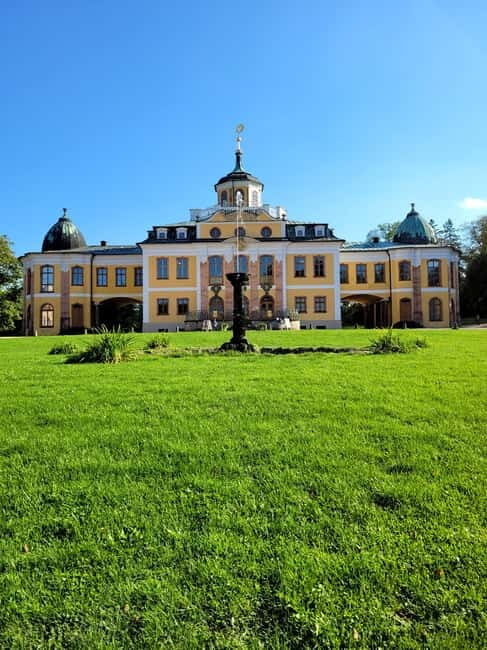
- Outside-first sightseeing that still feels detailed, because the explanations tie directly to what you see
- French guidance with clear, idea-to-street connections
- Three big eras in one loop: Goethe/Schiller, Bauhaus & Weimar Republic, then Nazism and the GDR
- Buchenwald included in context, so you get the history without wandering blindly
- Practical help for the rest of your Weimar days, so you don’t leave with only facts
- Local perspective from Aurélien Croenne-Ambroise, who knows the city on a day-to-day level
Why Weimar works so well on foot
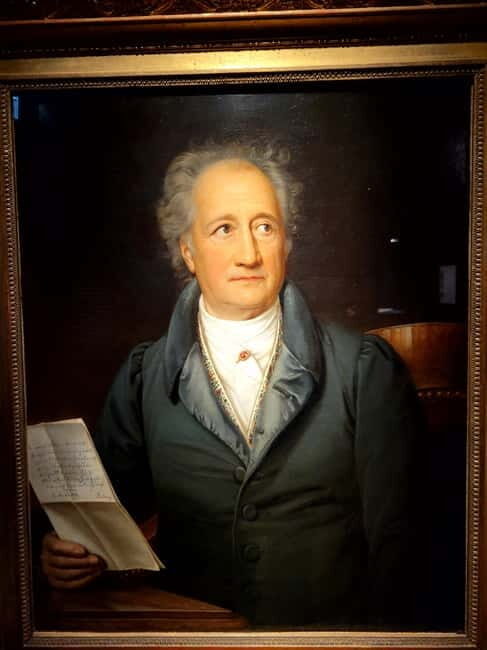
Weimar is one of those places where ideas became architecture, statues, squares, and even the layout of daily life. This tour is built for that. Instead of treating history like a lecture, you move from point to point and the guide explains why each place mattered.
You start with the city as a cultural engine: poets and thinkers, the German classicism associated with Goethe and Schiller, and the broader idea of how Weimar shaped taste and thought. Then the tour pivots to the 20th century, where modern design and political upheaval walk right alongside the same landmarks. If you like history that has consequences, not just dates, this format is satisfying.
The best part is that the tour doesn’t stop at one theme. You’ll cover art and design, governance and ideology, and the lived experience under dictatorship. That’s a lot for two hours, but the guide keeps it organized so you can follow.
You can also read our reviews of more tours and experiences in Weimar.



Meeting at Maison de Goethe: get your bearings fast
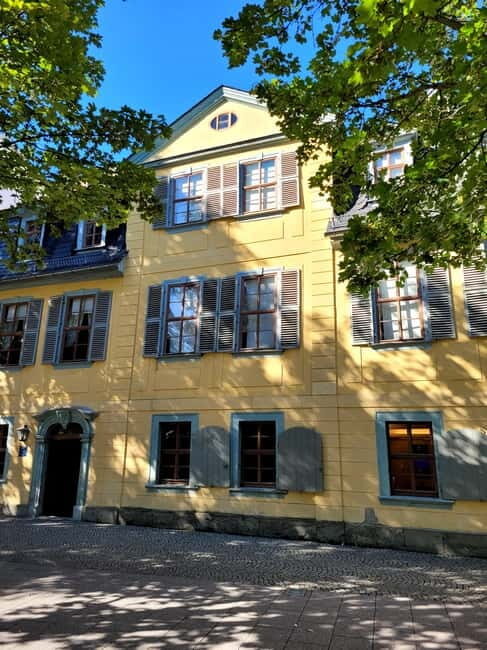
Your starting point is the small staircase in the middle of the facade of Goethe’s former home, identified by the yellow facade. It’s a clear meeting spot, and it helps because your first minutes are already anchored to the main character of the story: Goethe.
After the welcome and introduction, the guide gives a brief history of Weimar—city of poets and thinkers, cradle of German classicism, and a connection to the Bauhaus. Even if you don’t know the names yet, you’ll understand the map of the tour quickly: culture first, then modern design, then the political storms that changed everything.
Practical note: in summer, plan for heat and sun. The tour strongly encourages bringing a sun hat, umbrella, and water, and that’s not just generic advice. You’ll be outside through multiple segments.
Go to Theaterplatz for Goethe and Schiller’s lasting impact
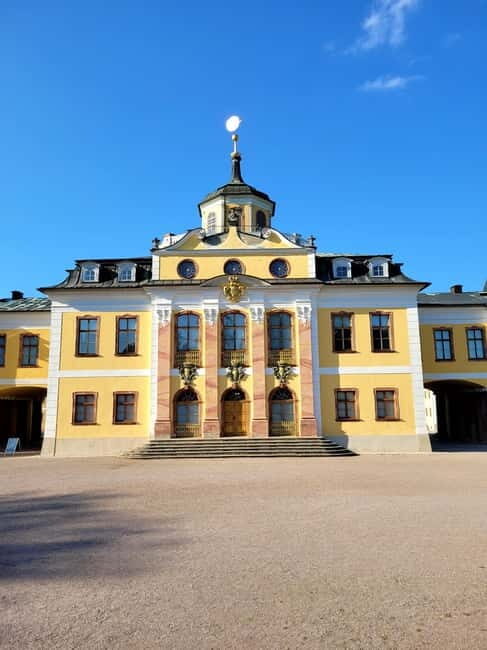
The heart of the early portion is time in the footsteps of Goethe and Schiller. You’ll spend about 30 minutes on this theme, and it’s structured around three kinds of learning: the role of the houses, the role of friendship and writing, and the role of public monuments.
Goethe House (outside) and the cultural role of the writer
You get an exterior tour of Goethe House, with explanation of its role in German culture. Since you’re not going inside, the guide’s job is to make the exterior meaningful. That works best when you listen for what the building symbolizes: the idea of Goethe not as a distant figure, but as a cultural force rooted in specific places.
Schiller House and the friendship angle
Next is Schiller House and how it ties to Schiller’s role as a writer and his friendship with Goethe. This part matters because the connection between them is not just romantic trivia. It’s a window into why Weimar became a place where literature shaped broader thinking.




Theater Square and the Goethe-Schiller statue
Then you reach Theaterplatz, where you’ll see the Goethe-Schiller statue and hear why these two figures are so important to German literature and culture. Standing at a monument does two things for you: it gives the story a physical reference, and it lets the guide explain what Germans have chosen to commemorate publicly.
If you want a smooth intro to German classicism without getting lost in details, this first segment delivers. You’ll come away understanding the logic of why those names are everywhere in Weimar.
Market Square and the Weimar makers’ side
Before the big 20th-century turn, you pass through the Market Square area for a guided tour (about 10 minutes). Even though this is short, it’s a smart bridge. Culture isn’t only theaters and houses; it’s also markets, daily movement, and how people lived around the thinkers.
When a guide includes a market square stop, it’s usually to keep history grounded. You’ll get that here: the tour helps you connect the literary Weimar to real town rhythms, so the later politics don’t feel like an abrupt switch.
Bauhaus and the Weimar Republic: design meets politics
The second 30-minute segment takes on the Bauhaus and the Weimar Republic. This is where the tour becomes especially useful if you like modern design but don’t want to treat it as a style only.
Bauhaus School: how architecture shaped modern life
You’ll have a presentation on the Bauhaus School, focusing on the architecture and the impact of the Bauhaus movement on modern art and design. The value here is the framing. You’re not just hearing what Bauhaus is—you’re learning why its ideas mattered, and how a place like Weimar could connect classicism and avant-garde thinking within the same city identity.
If you’ve seen Bauhaus works elsewhere, you’ll recognize the style instincts quickly. What you may not know is the political and social environment that helped those ideas move from studios into the broader world. That’s part of what this tour tries to give you.
Signing of the Weimar Constitution: consequences, not just a date
Then you’ll cover the signing of the Weimar Constitution and its historical context, including the consequences. This matters because it shows how cultural progress and political instability can exist side by side in the same era.
You’ll likely notice the guide keeps the storyline coherent: government shifts change what people can do, what institutions survive, and what daily life feels like. That’s the kind of context that makes the rest of Germany’s 20th-century story easier to follow later.
Nazism and the former GDR: what to listen for
The third 30-minute section is the hardest, and it’s handled through two linked threads: the rise of Nazism and the presence of Buchenwald concentration camp, then life under the communist regime in Weimar and the former GDR.
This segment is valuable because it doesn’t isolate tragedy as separate facts. It ties the political rise of Nazism to real locations in the region and to what followed.
Rise of Nazism and Buchenwald context
You’ll hear about the rise of Nazism and the presence of the Buchenwald concentration camp. Even though you’re not told to do anything specific beyond listening and absorbing, your attention matters here. I recommend you take mental notes: what the guide emphasizes about the shift in power, and how he connects ideology to consequences for real people.
A good history guide helps you avoid two extremes: turning it into background noise or turning it into a list of horrors without meaning. Based on how this tour is taught, you should get more of the first kind of clarity, the kind that helps you understand how societies crack.
Life in Weimar under the GDR
Next comes the impact of the communist regime and daily life in Weimar under the GDR. This is where the tour becomes more human. Instead of only saying what governments did, you’ll hear how that regime shaped everyday reality—what it felt like to live there.
Even if you know Germany broadly, this part can surprise you because it shifts your attention away from the usual headline story. You’ll start to think about East Germany not as a footnote, but as a functioning political and social world with its own rhythms.
Old town streets and Weimar Park: the calmer ending
After the heavier material, the last walking chunk becomes a reset. You’ll spend about 20 minutes walking through the old town and Weimar Park, then wrap up with conclusion and questions (around 10 minutes).
Historic streets, main squares, and architecture
The old town walk is a practical way to lock in what you learned. You’ll see historic streets, main squares, and remarkable architecture, and the guide helps you connect details back to earlier themes: classicism, later modern design, and political history.
This is also where you notice the tour’s pacing. Reviews mention the guide adapting to the group’s rhythm, and in a walking-heavy city like Weimar, that makes a huge difference. You can actually look around instead of just moving through.
Weimar Park and the Goethe connection
Weimar Park is included for a specific reason: its connection to Goethe and the city’s history. Park time can sound like a break, but it’s doing work in the narrative. It reinforces the idea that Goethe’s world wasn’t only buildings—it was also the experience of space, walking, and public life.
It’s a fitting place to slow down after politics and design. You’ll end with your mind less crowded and your route mentally organized for later self-guided visits.
Price and value for $23 in two hours
At about $23 per person for a 2-hour guided tour, this is priced like a straightforward walking experience. The value comes from how much the guide covers and how trained the approach seems.
You get:
- a structured timeline from Goethe and Schiller through Bauhaus and the Weimar Republic
- a guided explanation that includes Nazism, Buchenwald context, and daily life under the GDR
- help organizing your individual visits in Weimar and across the Thuringia region
That last part is underrated. A guide who lives in Weimar and answers questions at the end can save you time the next day. Instead of guessing which museum or house to prioritize, you’ll have a plan.
If you book, you also have some flexibility options like reserve and pay later and free cancellation up to 24 hours in advance, which makes it easier to fit into your itinerary without stress.
Who should book this tour, and who might skip it
This tour is a strong fit if you:
- want a guided overview of Weimar that goes beyond poets and monuments
- like art and design context, not just buildings in photos
- prefer learning history with location-based explanations
- speak French and want a live guide (French is the tour language)
You might skip it if:
- you expect to go inside Goethe House or Schiller House during the tour (entry tickets are not included)
- you don’t want heavier political history in the middle of your trip
- you’re pregnant, since the tour is listed as not suitable for that
If you’re traveling with limited time in Weimar, this route is efficient. If you have a full day, it’s still useful as the first step—so you can return later to the places you found most compelling.
What you’ll get at the end: questions and a next-day plan
The tour finishes back at Theaterplatz. The final minutes are for conclusion and summary, then questions and answers plus recommendations for further exploration in Weimar.
That Q&A time is where the tour becomes personal. Ask what you want most: more on Bauhaus design? more on the Weimar Republic? more on the GDR years? If you’ve taken photos, you can also point out what you’re curious about so the guide can respond with targeted suggestions.
Should you book this Weimar history tour?
I’d book it if you want a two-hour guided introduction that connects literature, design, and Germany’s difficult 20th-century story in a way that still makes sense on the ground. The guide Aurélien Croenne-Ambroise brings a local feel, and the teaching style you’ll get is clear and responsive—exactly what you want when history topics can get heavy.
Skip it only if you’re mainly chasing museum interiors, or if you don’t want your walk to include Nazism and GDR life in the same itinerary. Otherwise, this is a solid way to understand why Weimar matters, and it sets you up for smart follow-up visits.
FAQ
How long is the tour?
It lasts about 2 hours.
What language is the tour guide?
The live tour guide speaks French.
Where do I meet the guide?
Meet at the small staircase in the middle of the facade of Goethe’s former home, identified by the yellow facade.
Are entry tickets to museums and the houses of Goethe and Schiller included?
No. Entry tickets are not included, and the tour does not include visiting the interiors.
What should I bring?
Bring a sun hat, an umbrella, and water.
Is the tour suitable for everyone?
It is not suitable for pregnant women. Bikes, alcohol, and drugs are not allowed.