REVIEW · FUSSEN
Füssen: Old Town Guided Walking Tour in German
Book on GetYourGuide →Operated by Füssen Tourismus und Marketing · Bookable on GetYourGuide
Füssen’s history fits in 1.5 hours. This German-guided walking tour strings together the city’s story from Roman times to today, using real corners of the Old Town instead of museum talk. I love how the route hits big visual anchors like Sebastian Cemetery and the High Castle courtyard, and I also like the small-group pace that keeps things interactive. The one catch: it’s short, so if you want to linger, this is more of a highlights-and-context walk than a deep, slow crawl.
What makes it especially good value is the human factor. With a group capped at 10, the guide can answer questions without rushing you. People are quick to praise guides by name, including Ella and Frau Schulz, for explaining clearly and staying open to questions. Also, it’s priced at $9, which is almost suspiciously affordable for a live guide in a tourist-heavy town.
In This Review
- Key Highlights You’ll Actually Notice
- Why Füssen’s Old Town Works So Well on Foot
- Starting Point: Kaiser-Maximilian-Platz, 10 Minutes Early
- Sebastian Cemetery: The Medieval City Wall Moment
- Walking Toward Franciscan Monastery, Bleichertörle, and Lechuferweg
- Holy Spirit Hospital Church: When You Can See the Interior Properly
- St. Mang Basilica and the High Castle Courtyard Paintings
- How the German-Speaking Guide Changes Everything
- Small Group (Max 10): The Real Value of a Short Tour
- Price and Time: Why $9 Feels Like a Deal
- What This Tour Is Best For (and When to Skip It)
- Should You Book This Füssen Old Town Walking Tour?
- FAQ
- Where does the Füssen Old Town walking tour meet?
- How long is the tour?
- Is the tour in German?
- How big is the group?
- What sights are included on the route?
- Is food or drinks included?
- Is the tour wheelchair accessible?
- FAQ
- Is there a cancellation option?
- Can I reserve without paying right away?
- What’s included in the price?
- Is transfer included?
- What should I bring for a 1.5-hour walking tour?
- What time should I arrive at the meeting point?
Key Highlights You’ll Actually Notice
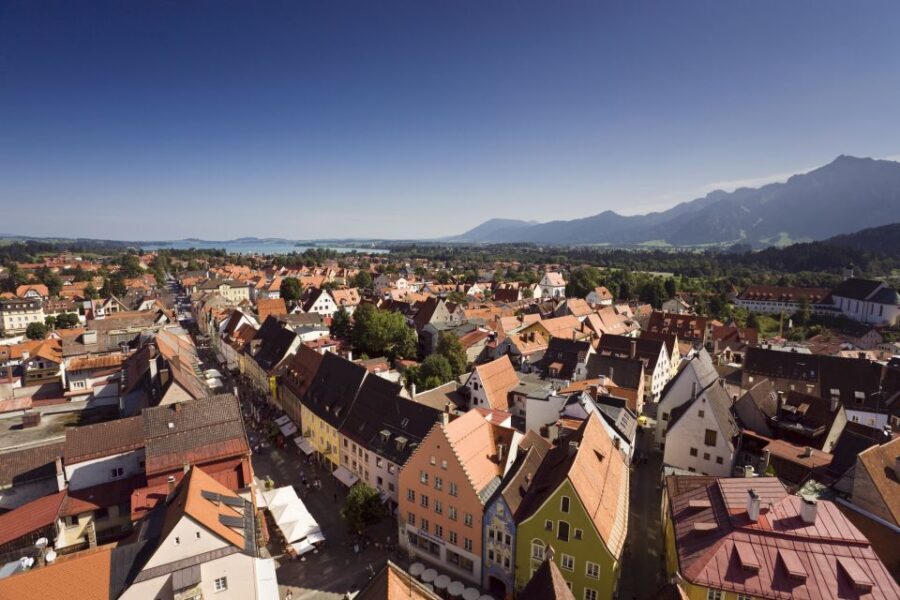
- Sebastian Cemetery + a Medieval city wall view that makes the Old Town feel grown-up, not postcard-flat
- Bleichertörle and the Lechuferweg—old structures and river-side paths that explain how Füssen worked
- Holy Spirit Hospital Church—you’ll look at the interior with guided context, not just pass by
- St. Mang Basilica + the High Castle courtyard paintings—two stops that land as “how is this here?”
- A small group of up to 10 that keeps the tour conversational and question-friendly
Why Füssen’s Old Town Works So Well on Foot
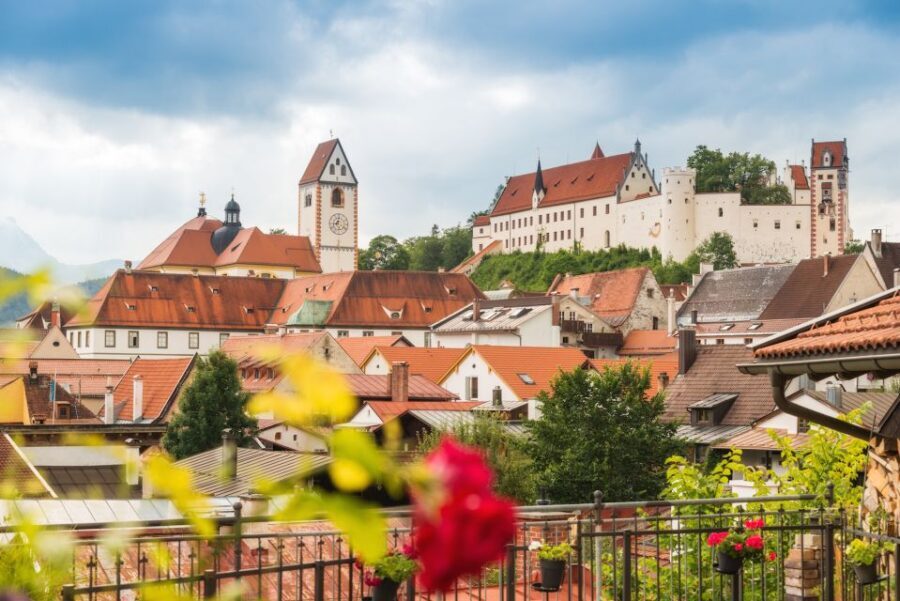
Füssen is one of those Bavarian towns where the streets do half the explaining. The Old Town is compact enough that you can absorb a lot without constant transit. And with a live guide, you don’t just see buildings—you learn what they were for and why they mattered.
This matters because Füssen’s key landmarks weren’t built for today’s tourism. They were built for defense, care, worship, administration, and daily life. So when you walk past them in a logical route, the city’s timeline clicks into place fast—Roman references, medieval survival, and later periods that shape what you see now.
You can also read our reviews of more walking tours in Fussen
Starting Point: Kaiser-Maximilian-Platz, 10 Minutes Early
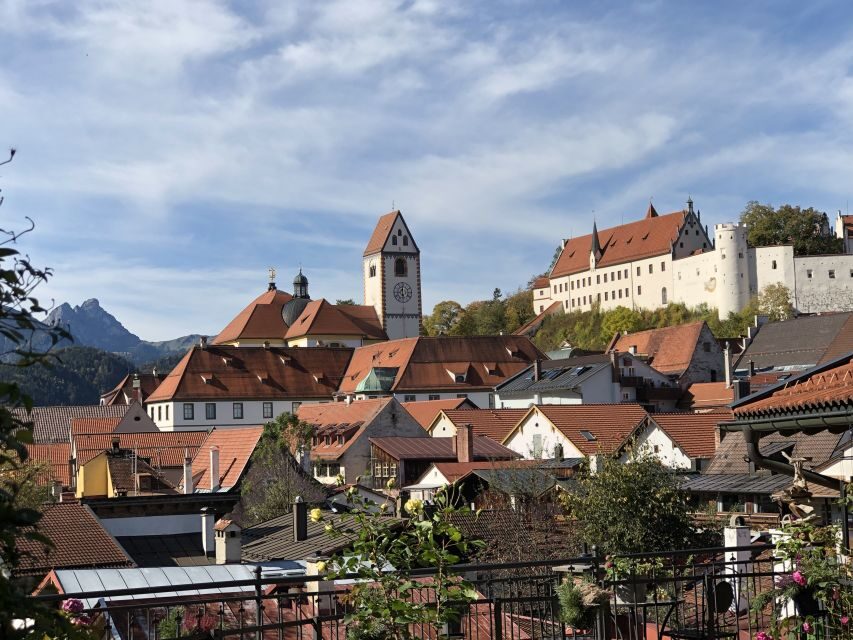
The tour starts outside the Tourist Information at Kaiser-Maximilian-Platz 1. Showing up about 10 minutes early is the easiest way to get settled, spot the guide, and avoid that awkward last-minute shuffle in the square.
This is also where you’ll get your orientation. You’ll begin the walk through historic streets, and the guide will set expectations for what you’re about to see—especially helpful when the Old Town’s layout can feel slightly maze-like once you’re inside it.
And yes, the tour is wheelchair accessible, which is a big deal for a walking-focused itinerary. You still move on foot for about 1.5 hours, so you’ll want to consider your stamina, but accessibility is explicitly supported.
Sebastian Cemetery: The Medieval City Wall Moment
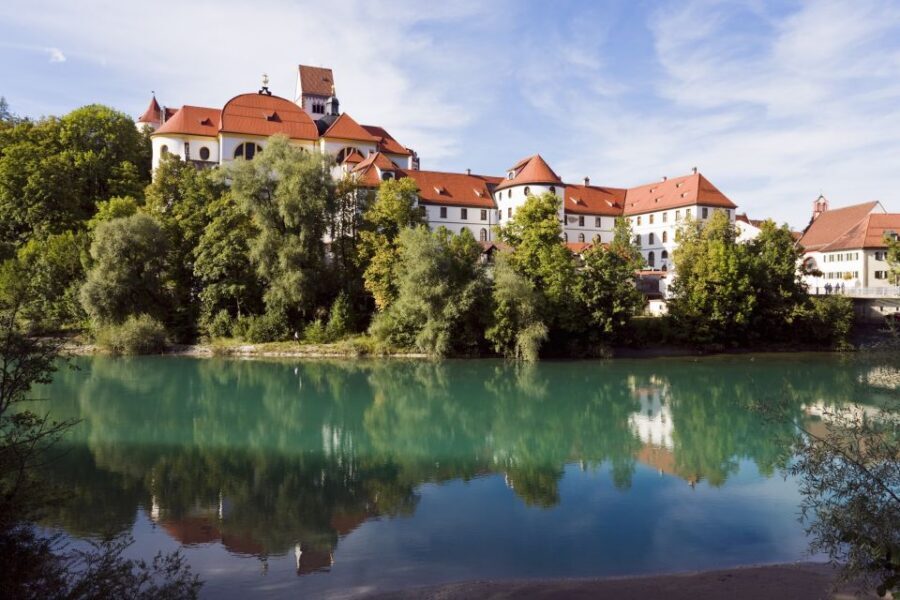
One of the best “wait, I didn’t know this existed” stops is Sebastian Cemetery. It’s not just a cemetery visit. It’s a chance to spot how the town protected itself—right where you’re standing.
You’ll see a Medieval city wall connection here, which turns the cemetery area into something more than a quiet side stop. The guide helps you connect the layout of Füssen’s Old Town with the need for fortification. That’s the kind of explanation that makes the rest of the walking tour easier to follow, because suddenly every street corner feels purposeful.
Practical tip: bring your eyes. This stop rewards slow observation—take a moment before moving on, even if you’re tempted to keep up with the group. That’s where the wall connection becomes memorable.
Walking Toward Franciscan Monastery, Bleichertörle, and Lechuferweg
After Sebastian Cemetery, the route continues toward the Franciscan Monastery and then through the area around Bleichertörle and the Lechuferweg (the river path).
Here’s why this section is valuable: it explains Füssen as a working place, not just a pretty place. The tour uses these stops to show how religious communities, everyday infrastructure, and the Lech River shaped daily life. You’re learning the “how,” not only the “when.”
- Franciscan Monastery: Expect a pause that feels slightly more reflective. Even without long time inside, the guide’s context helps you understand why monasteries were powerful social and spiritual centers.
- Bleichertörle: This is the kind of landmark you might miss if you’re walking on your own. On a guided route, it becomes part of a larger story about the town’s built environment.
- Lechuferweg: The river path gives you a rhythm shift. Instead of only looking at stone and rooftops, you get a perspective on the town’s geography and how the river corridor helped shape settlement.
Practical tip: this is a good point in the tour to ask a question you’ve been holding in. A live guide is most useful when you’re actively noticing details, not when you’re already two streets past them.
Holy Spirit Hospital Church: When You Can See the Interior Properly
Next up is the Holy Spirit Hospital Church. The key detail here is that you don’t just walk past it—you admire the impressive interior with the guide’s help.
This stop changes the mood of the tour. Earlier landmarks lean toward defense and civic structure. Hospital-related sites flip the focus toward care and community responsibility. When the guide explains what the church means in that context, the building stops being a generic church-shaped object and becomes part of a human story.
One thing to watch for: churches always look different depending on how you’re viewing them and how much the light cooperates. So don’t rush. Even a few extra seconds can help you notice features you would otherwise miss while counting steps.
You can also read our reviews of more guided tours in Fussen

St. Mang Basilica and the High Castle Courtyard Paintings
Toward the end, you’ll reach St. Mang Basilica and then the Courtyard of the High Castle with its paintings.
This pair is a strong closer because it combines big identity landmarks with visible artistry. St. Mang Basilica is another point where the guide’s framing helps you understand why the basilica matters to Füssen. Then the High Castle courtyard adds a visual payoff: you’ll marvel at the paintings right where they belong—in the space they were made to decorate and communicate with.
If you’re the kind of person who likes your walking tours to end on a concrete “wow,” this is the portion that tends to stick. Not because it’s dramatic in a theme-park way, but because it’s unmistakably there—paint, courtyard space, and historical setting working together.
Practical tip: keep your phone away for a minute. Look first. Then, if you want, capture a photo for later while the courtyard still feels fresh in your mind.
How the German-Speaking Guide Changes Everything
The tour is led in German. That’s great if you understand German (or at least enough to catch the big points). It’s also worth planning for if you don’t.
A live guide matters most when they can explain the “why.” And the feedback for this tour strongly points to guides being willing to answer questions and speak with real care—two very different things from a scripted walkthrough.
Names that show up in praised guidance include Ella and Frau Schulz, both noted for answering questions and explaining thoroughly. Also, one experience ran close to two hours instead of a strict 1.5-hour window, which suggests the tour can slow down when people are asking good questions.
My advice: if German isn’t your strength, still take the tour. You’ll likely pick up key words through repetition—church names, places, and time periods. But if you need guaranteed understanding, you might consider other language options in Füssen.
Small Group (Max 10): The Real Value of a Short Tour
A lot of tours say small group. This one actually puts a cap in writing: limited to 10 participants. That changes the feel more than you’d expect.
With fewer people, it’s easier to:
- hear the guide without shouting over others
- ask a question without feeling like a spotlight moment
- pause when something catches your eye, without holding everyone up too long
And because the total duration is 1.5 hours, the guide can keep momentum. You get enough time to walk a meaningful circuit but not so much that you’re mentally exhausted before the best stops.
One subtle bonus: small groups often attract curious people. You’ll tend to walk faster in body but slower in attention, which is exactly what you want for history-on-foot.
Price and Time: Why $9 Feels Like a Deal
At $9 per person for a 1.5-hour guided walk in a historic Bavarian town, you’re paying a fairly small amount for real human guidance. In plain terms: you’re buying time saved and context gained.
Here’s how I think about value:
- You’re not paying for a vehicle or an admission-heavy day.
- You’re paying for a route that hits multiple landmark types in a logical flow.
- You’re getting a German-speaking guide who can explain connections between sites.
The only consideration is that it’s still a walking tour. You won’t have long free time at each stop. If your travel style is slow and museum-y, you might want to treat this as your “orientation tour,” then return later on your own for longer looks.
Also, food and drinks aren’t included. That’s normal for short walking tours, but it’s good to plan so you’re not cutting your attention short because you’re hungry.
What This Tour Is Best For (and When to Skip It)
This tour is ideal if you:
- want a fast, organized introduction to Füssen’s Old Town
- like seeing several landmark types—cemetery wall connections, monasteries, church interiors, basilica and castle courtyard art
- enjoy a guide who answers questions and keeps the tone practical
You might skip it if:
- you need a language you don’t have (it’s German only)
- you hate walking for 1.5 hours without long sit-down breaks
- you want deep time inside churches or extended museum-style viewing
Should You Book This Füssen Old Town Walking Tour?
If you like history that you can picture—on actual streets, in actual courtyards—this tour makes a lot of sense. The combination of a small group, a live German guide, and a route that mixes cemetery defenses, monastery life, church interiors, and High Castle artwork gives you a clear “Füssen in one shot” experience.
Book it if you want a smart orientation and a guided storyline you can build on later. Consider something else if you want a slow paced, long-inside experience or if German comprehension is a deal-breaker.
FAQ
Where does the Füssen Old Town walking tour meet?
Meet outside the Tourist Information at Kaiser-Maximilian-Platz 1.
How long is the tour?
The walking tour lasts 1.5 hours.
Is the tour in German?
Yes, it’s a live tour with a German-speaking guide.
How big is the group?
The tour is limited to a small group of up to 10 participants.
What sights are included on the route?
You’ll visit Sebastian Cemetery, the Franciscan Monastery, Bleichertörle, the Lechuferweg, Holy Spirit Hospital Church, St. Mang Basilica, and the Courtyard of the High Castle with its paintings.
Is food or drinks included?
No. Food and drinks are not included.
Is the tour wheelchair accessible?
Yes, the tour is wheelchair accessible.
FAQ
Is there a cancellation option?
You can cancel up to 24 hours in advance for a full refund.
Can I reserve without paying right away?
Yes. There’s a reserve now & pay later option.
What’s included in the price?
The price includes the guided walking tour with a German-speaking guide.
Is transfer included?
No. Transfer to or from the meeting point is not included.
What should I bring for a 1.5-hour walking tour?
Wear comfortable shoes and plan to walk through historic streets for the full tour time.
What time should I arrive at the meeting point?
Arrive about 10 minutes before the activity starts.