REVIEW · WEIMAR
Weimar: Old Town Tour Classical Weimar
Book on GetYourGuide →Operated by Tourist Information Weimar · Bookable on GetYourGuide
Classical Weimar in 90 minutes feels just right. You’ll get a guided, old-town-only walk that ties the names you know—Goethe, Schiller, Herder, Wieland—to the real streets and squares where they worked. I love that the focus stays tight, and you’re not stuck on a long haul of random stops; it’s aimed at orientation and context, not endurance. I also like the live German guide style, where the explanations stay clear and detailed. One consideration: it’s not suitable for people with mobility impairments, since it’s a walking tour that stays outdoors.
This is the kind of tour I’d use as your first day in town. You’ll pass the market square, Democracy Square, and Theaterplatz, then connect the dots to Goethe and Schiller’s residences, plus the Ilm-side park and Goethe’s garden house. The strongest feedback for this experience is how informative and well explained it is, with an experienced guide doing the talking for you. If you’re hoping to go inside major sights, keep expectations realistic: all sights are viewed from outside.
In This Review
- Key Things That Make This Old Town Tour Worth Your Time
- A 90-Minute Classical Weimar Walk You Can Actually Plan
- Where The Tour Starts: Neptune Fountain Meet-Up to Markt 4
- Markt Square: Town Hall, Cranach House, and the Hotel Elephant
- Herderplatz: Photo Stops and St. Peter and Paul’s Church
- Democracy Square: Duchess Anna Amalia Library and the Princely House
- Goethe and Schiller Sites Through Theater Square and Schiller’s Residence
- Ilm Flanking Park and Goethe’s Garden House: A Breather With Meaning
- City Palace and the Square-to-Square Logic
- How the Guide Makes the Difference
- Who This Tour Is For (and Who Might Want Something Else)
- Should You Book the Old Town Tour of Classical Weimar?
- FAQ
- How long is the Weimar old town classical tour?
- Where does the tour start?
- Where does the tour end?
- What language is the live guide?
- Are the sights visited indoors?
- Which areas in Weimar does the tour cover?
- Is this tour suitable for people with mobility impairments?
- Is free cancellation available?
Key Things That Make This Old Town Tour Worth Your Time
- 90 minutes, old town focus: enough time for context without wasting your day
- Classical authors, tied to real locations: Goethe, Schiller, Herder, and Wieland in the places you can see
- Big-sight squares: Markt, Democracy Square, and Theaterplatz are the spine of the walk
- Clear, detailed guiding: the information delivery is a standout strength
- Outdoor-only viewing: you’ll save time and keep moving, but you won’t do indoor visits
A 90-Minute Classical Weimar Walk You Can Actually Plan
Weimar’s classical period can feel like a lot of names. This tour makes it manageable by turning those names into an easy-to-follow route across the old town. You’re not trying to read guidebook trivia while standing in the wrong place; you’re walking from author-linked square to square and getting what each place means.
It’s also practical. A 90-minute time window lets you pair it with a museum visit later, a café stop, or a longer self-guided wander when you know what you’re looking at. If you’re short on time, this is the kind of itinerary that gives you “where do I start?” clarity fast.
You can also read our reviews of more tours and experiences in Weimar.



Where The Tour Starts: Neptune Fountain Meet-Up to Markt 4
The tour’s meeting point is at the Weimar Tourist Information Office at the Neptune Fountain. That matters because it’s a straightforward landmark-based start, and you’re likely to find it without major guesswork.
After you meet, the tour begins at Markt 4. From there, you’ll build out across the old center, with the walk structured to keep the key classical-era stops in a sensible order. If you like to arrive early and get your bearings, this is one of those experiences where showing up a few minutes ahead helps you settle in before the guide takes over.
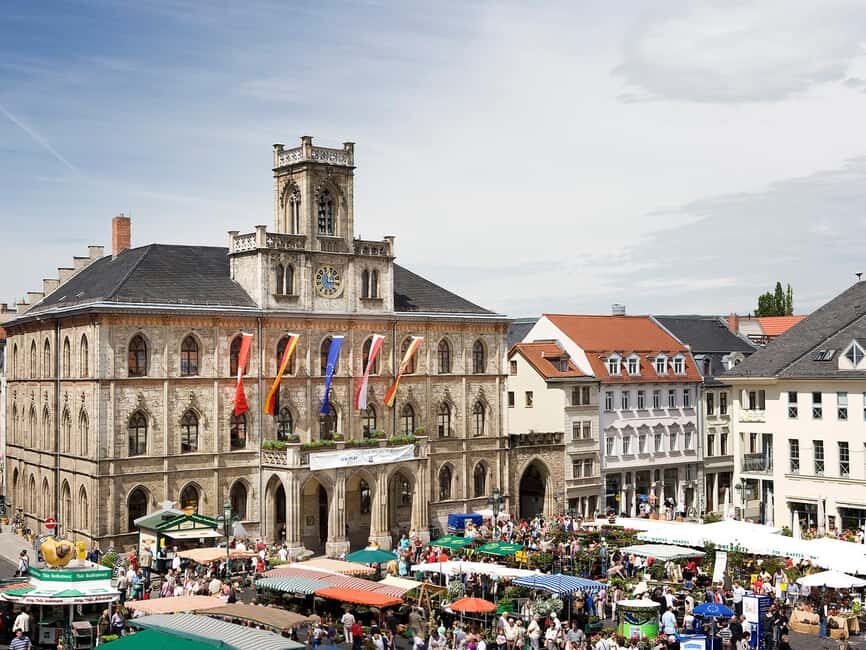
Markt Square: Town Hall, Cranach House, and the Hotel Elephant
The heart of the first phase is the Market Square (Markt) and the surrounding classic landmarks. Expect about 20 minutes of guided focus here, plus plenty of time for photos and quick orientation.
This is where you learn to read Weimar’s “stage.” The Market Square isn’t just pretty stonework—it’s where civic life and visibility would have mattered to the people who lived and wrote here. Seeing the Town Hall, the Cranach House, and the nearby Hotel Elephant area helps you understand the old-town layout as something more than a backdrop.
A small practical tip: in a square like this, the guide’s explanations make the difference. Without that context, you can easily walk right past details. With it, you start noticing how the facades and street lines suggest how people moved through daily life.
Herderplatz: Photo Stops and St. Peter and Paul’s Church
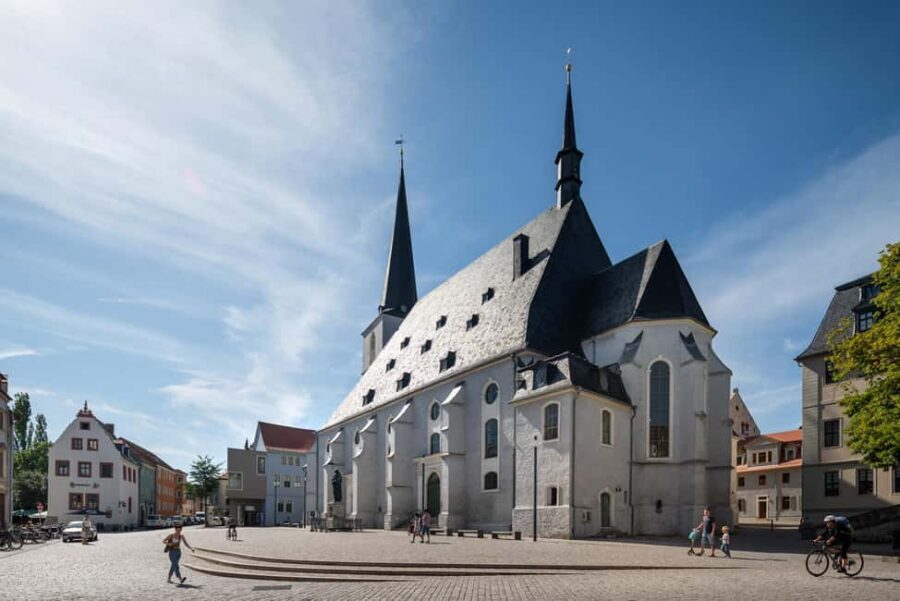
From the Market Square, you’ll move toward Herderplatz, with a mix of a photo stop and guided sightseeing. The goal is to keep the route flowing while still giving you time to catch the key views.
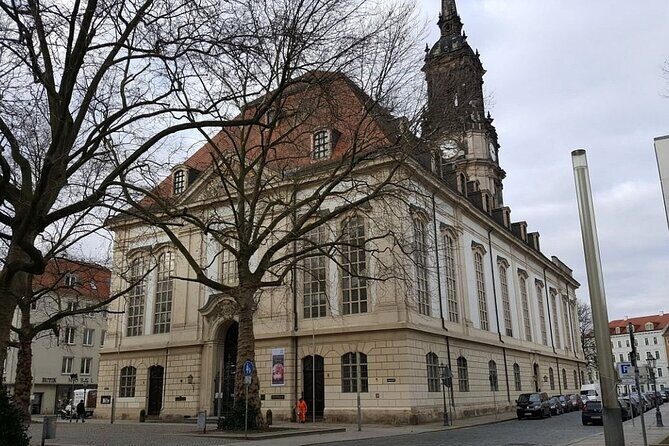
Herderplatz is a name that connects directly to Johann Gottfried Herder, a major figure associated with Weimar’s intellectual circle. The walk brings you to St. Peter and Paul’s Church, one of the sights that anchors the square visually. Even though you’ll be viewing from outside, churches in central squares tend to frame the “center of town” feeling—so you’ll feel where social and public gravity sits.
One thing I’d keep in mind: this stretch is most useful if you’re ready to slow down for 10 seconds here and there. The guide’s commentary is what turns it from “I saw a church and a building” into “I get why it mattered.”
Democracy Square: Duchess Anna Amalia Library and the Princely House
Then comes Democracy Square, which is another of those places where modern labels and historical buildings meet. You’ll do a photo stop and guided sightseeing here as well, and this is one of the tour’s clearest “you’re in the middle of the story” moments.
Two highlights drive the visit: the Duchess Anna Amalia Library and the Princely House. Even from outside, these buildings help you picture the institutions behind the famous names. You’re not just learning biographies; you’re learning the physical setting where ideas could be discussed, written, and preserved.
If you enjoy cultural geography—figuring out how a city’s layout shapes its thinking—this part will click. You’ll start seeing why Weimar earned its reputation: the important institutions weren’t tucked away; they were part of the public fabric.

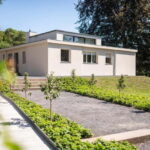

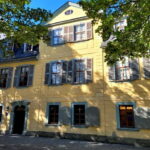
Goethe and Schiller Sites Through Theater Square and Schiller’s Residence
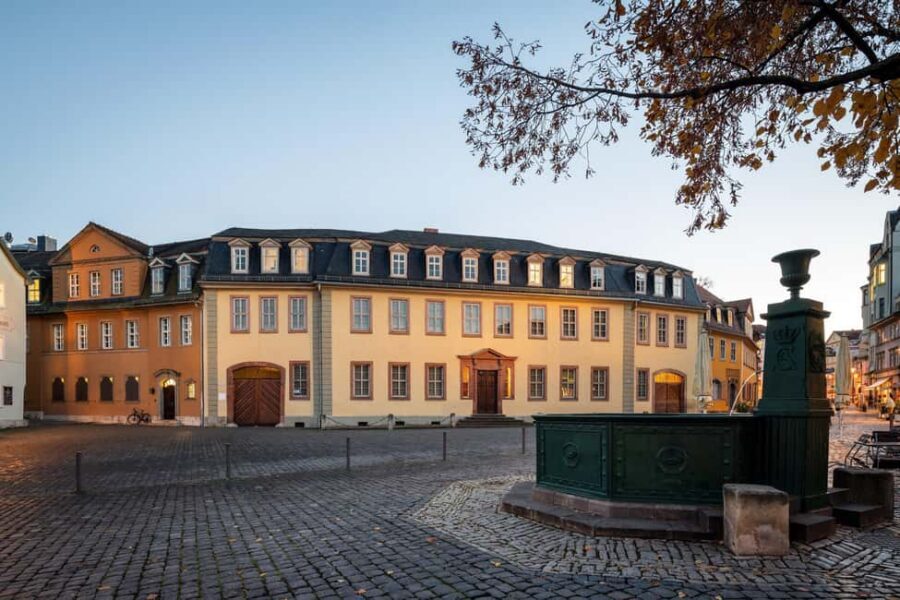
The route continues toward Theater Square, centered on the Goethe and Schiller monument. This is one of the best “big moment” stops of the day because it’s built for recognition. You see the two names paired in a public space, which helps you connect the idea of “classical Weimar” to something tangible and immediate.
From there, the tour moves through the area of Schiller’s residence and Goethe’s residence (again, viewed from outside). This is where the tour earns its educational value: residences let you shift from famous works to the everyday geography around them. The guide’s job here is to make those facades meaningful instead of just scenic.
A practical note: exterior views can feel too fast if you treat them like sightseeing checklist items. Instead, spend a minute looking at proportions, street alignment, and how the entrances face the surrounding space. That’s where the “why this place” explanations land best.
Ilm Flanking Park and Goethe’s Garden House: A Breather With Meaning
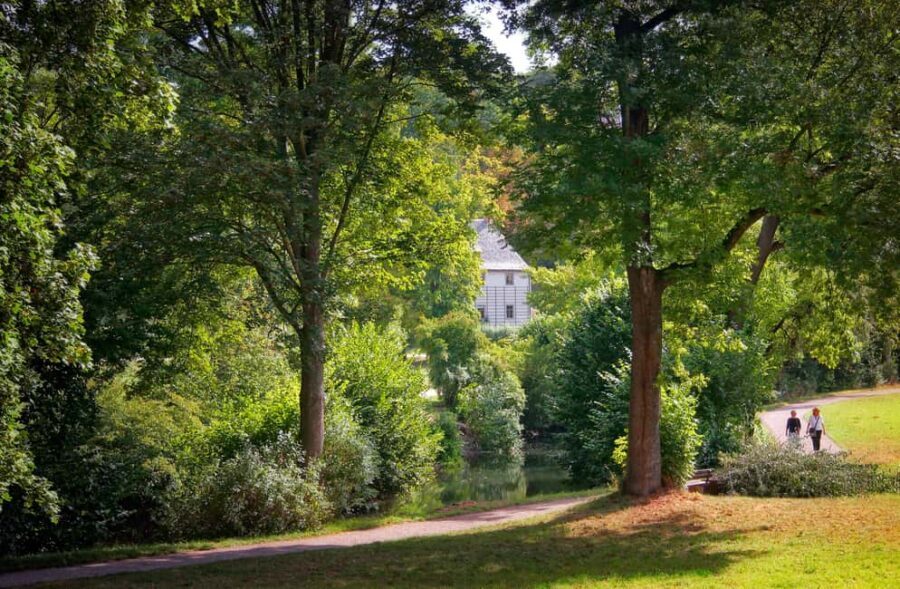
After the author-focused blocks, you’ll get a change of pace with the flanking park on the Ilm and Goethe’s Garden House. This isn’t just a detour. It’s part of the tour’s point: classical Weimar wasn’t only about salons and monuments, it was also about how people used nearby nature and shaped their routines.
Parks along the Ilm give you breathing room, and the garden house connects the famous name to a quieter, more personal setting. Even if you only view from the outside, the space helps you understand why “Goethe” isn’t only about writing—it’s also about observation and environment.
If you’re the type who likes photos, bring patience here. Water and greenery usually make better pictures, but they also tempt you to linger. The guide will keep the timing moving, so you’ll likely get a short window to capture the views and then regroup.
City Palace and the Square-to-Square Logic
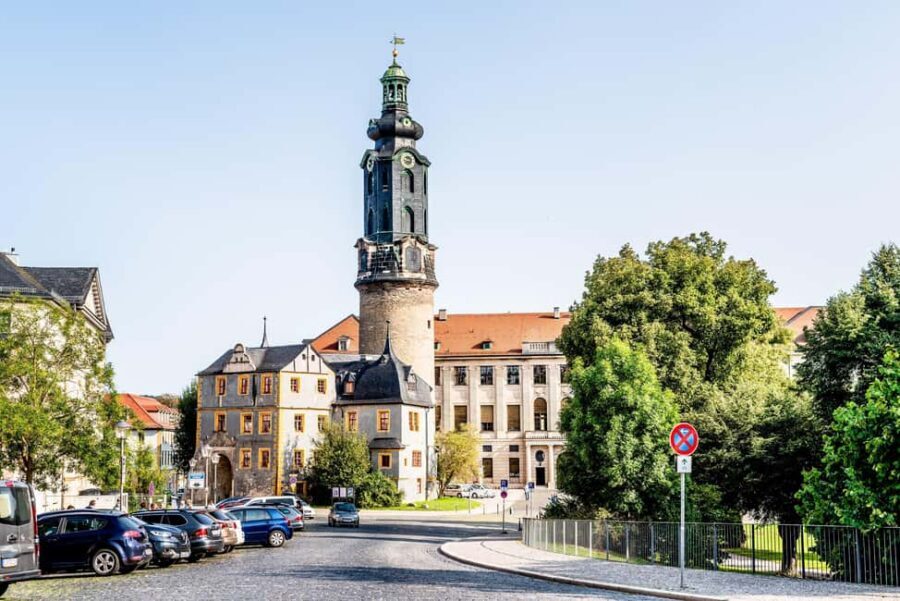
One reason I like this tour format is the way it builds a clean chain of stops. You go from Market Square’s civic setting, to Herderplatz’s church anchor, to Democracy Square’s institutional identity, and then onward to Theater Square’s cultural centerpiece. City Palace appears within that flow as well, helping you connect power, administration, and public life in one coherent walk.
This “logic of streets” is a big deal for first-time visitors. When you later explore on your own, you’ll have a mental map. You won’t feel like you’re wandering through isolated highlights—you’ll feel like you’re moving through a planned narrative of the old town.
How the Guide Makes the Difference
The tour is led by a live German guide, and that matters because so much of what you’ll remember will be the explanations, not the buildings themselves. The standout feedback for this experience is that it feels very informative and well explained, with an experienced guide who knows how to deliver it clearly.
I’d treat the guide as your shortcut through “classical period overload.” You’ll get the key connections—who is linked to what place, and why those locations matter—without having to research every author before you arrive. For many people, that’s the difference between a tour you enjoy and a tour that actually helps you understand a city.
Who This Tour Is For (and Who Might Want Something Else)
This experience is a strong fit if you want:
- a first-day orientation to old town Weimar
- a structured walk tied to Goethe and Schiller (plus Herder and Wieland)
- an outside-focused tour that’s time-efficient
It’s less ideal if you need step-free access or mobility-friendly routes, since it’s explicitly not suitable for people with mobility impairments. It’s also not a fit if you’re mainly looking for long indoor museum time; the plan is built around seeing the sights from outside and keeping the pace moving.
Should You Book the Old Town Tour of Classical Weimar?
Book it if your top goal is understanding Weimar fast, without turning your day into a homework assignment. This tour’s value comes from the tight old town focus and the way it connects classical names to specific places—especially Markt Square, Democracy Square, and Theater Square—so you leave with a clearer picture of why the era mattered.
Skip it (or pair it differently) if you’re seeking deep indoor access or require mobility-friendly routing. Also, if you already know the geography of Weimar well and you’re comfortable doing your own self-guided route, you might find this overlaps with what you can map yourself. But for most visitors, it’s a smart, efficient starting point.
FAQ
How long is the Weimar old town classical tour?
It lasts about 90 minutes, which is designed as a short old-town walk covering the classical period highlights.
Where does the tour start?
You meet at the Weimar Tourist Information Office at the Neptune Fountain.
Where does the tour end?
The tour ends back at the meeting point.
What language is the live guide?
The tour guide speaks German.
Are the sights visited indoors?
No. The included sights are viewed from outside.
Which areas in Weimar does the tour cover?
It stays limited to the old town and focuses on key squares and author-linked locations.
Is this tour suitable for people with mobility impairments?
No, it is not suitable for people with mobility impairments.
Is free cancellation available?
Yes. You can cancel up to 24 hours in advance for a full refund.