REVIEW · BERLIN
Romantic Berlin Rickshaw City and Photo Tour – incl. pick-up
Book on Viator →Operated by Rikscha & Bier Bike & Party Beer Bike - Leo Rickshaw Tours · Bookable on Viator
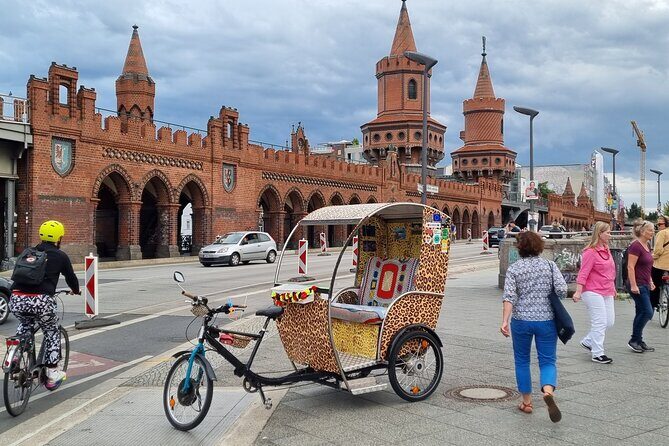
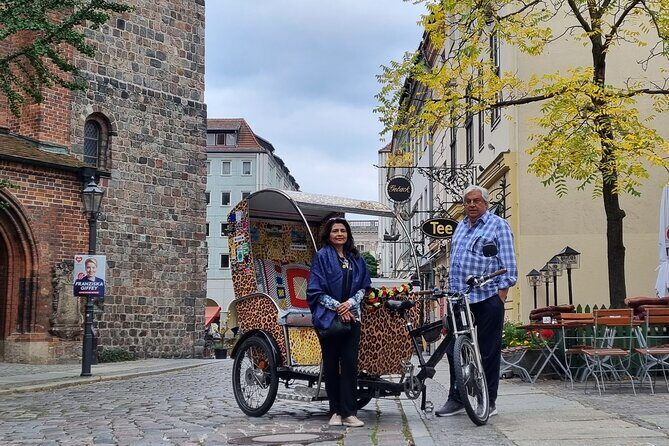
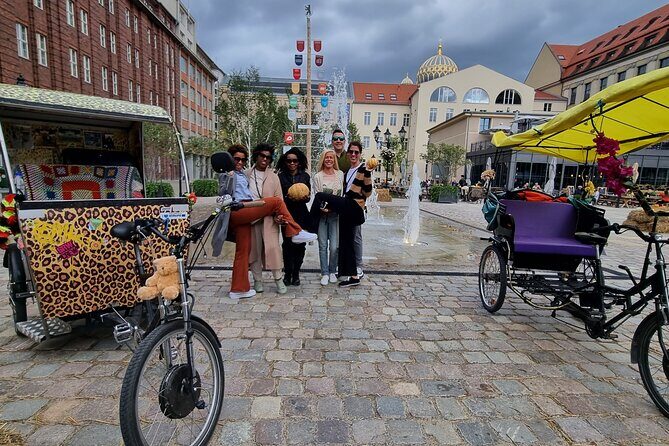
Berlin feels made for two on a rickshaw. This private, romantic photo tour with pickup near Brandenburg Gate rolls you past big landmarks with a guide and a photographer, plus onboard extras like WiFi.
I love the comfort touches: you get a warm blanket and an easy, low-effort way to see more than walking allows. It also comes with music on request, which helps the ride feel like your pace instead of a schedule you’re stuck with.
The one thing to weigh is that this is a short, photo-first route. Some stops are brief view-and-shoot moments, and if you want long, in-depth explanations at every site, you may wish for more time on the ground.
In This Review
- Key Highlights You’ll Feel Right Away
- What This Rickshaw Photo Tour Really Means for Your Day
- Price and Value: $183.35 for Up to Two, With Pickup and Photo Help
- Where You Start: Pariser Platz and the Pickup Radius Around Brandenburg Gate
- Brandenburg Gate to Reichstag: Classic German Architecture and Big Political Turning Points
- Soviet Memorials and the Zoo Park Area: Heavy Remembrance, Then a Breather of Green
- Potsdamer Platz and Topography of Terror: Modern Renewal Next to Nazi Evidence
- Checkpoint Charlie, Friedrichstraße, and Gendarmenmarkt: Border History and Elegant Theater Square
- Bebelplatz and Neue Wache: Book Burnings, War Victims, and How Memorials Work
- Museum Island and the Cathedral Area: UNESCO World Heritage Exteriors With a Morning-Walk Feel
- Tips to Get Better Photos From a Rickshaw (Especially in Cold Weather)
- Who Should Book This Tour, and Who Might Want Something Else
- Should You Book It?
- FAQ
- How long is the Berlin rickshaw city and photo tour?
- Where does the tour start, and is pickup included?
- Is this a private tour?
- Is a photographer included?
- Are admission tickets included for major attractions?
- What happens if Berlin weather is poor?
Key Highlights You’ll Feel Right Away
- Private rickshaw time for up to two: you’re not squeezing into a crowd.
- Photographer included: you’ll spend more time composing shots than asking strangers to take them.
- Warm blanket plus onboard comfort: helpful when Berlin weather is cold.
- Pickup within 2 km of Brandenburg Gate: saves you the pre-tour scramble.
- A photo route mixing classics, checkpoints, and memorials: you’ll cover a lot of emotional terrain in one loop.
- Optional music on request: a small detail that makes the experience feel personal.
What This Rickshaw Photo Tour Really Means for Your Day
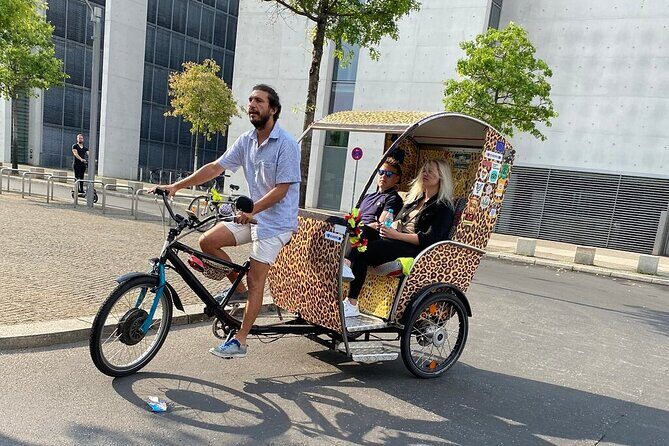
This isn’t a “walk for hours and learn every detail” kind of tour. It’s a guided rickshaw city ride designed to get you close to Berlin’s most recognizable sights while someone else handles the movement, timing, and photo support. With pickup available near Brandenburg Gate and a private setup, you can start relaxed and keep the whole experience feeling like yours.
Because the duration is about 1 to 2 hours, expect quick stops rather than full museum visits. That can be a good trade if your goal is photos, orientation, and a hitting-the-key-sites overview—especially in colder months. It also makes this tour a strong “first day in Berlin” option, when you want to understand where things are before you go back on your own.
Onboard, you’ll have WiFi, a travel guide, and a photographer. Warm blanket coverage plus music on request adds comfort and atmosphere—exactly what you want for a romantic outing, even if the weather isn’t cooperating.
You can also read our reviews of more city tours in Berlin
Price and Value: $183.35 for Up to Two, With Pickup and Photo Help
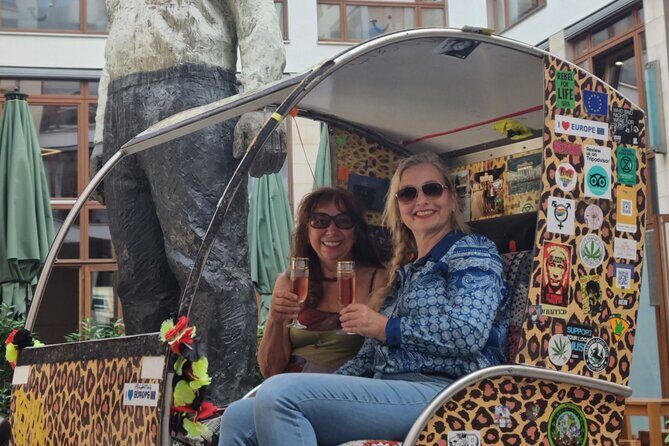
The price is $183.35 per group (up to 2 people). On paper, that sounds higher than a standard group tour. The value comes from what’s bundled into that cost: private transportation, guide, photographer, warm blanket, music on request, and onboard WiFi. You’re paying for a smoother, more personal way to see a concentrated set of sights.
This pricing structure also matters if you’re traveling as a couple (or pairing up with a friend). Since it’s private and sized for your group, you’re not negotiating for space or competing for a good photo moment.
One practical note: pickup is included only within a 2 km radius of the Brandenburg Gate. If you’re farther out, it’s 10 € per extra kilometer, paid on the spot. If you know you’ll want pickup, it’s worth choosing a hotel or starting point within that zone to keep the trip friction-free.
Where You Start: Pariser Platz and the Pickup Radius Around Brandenburg Gate
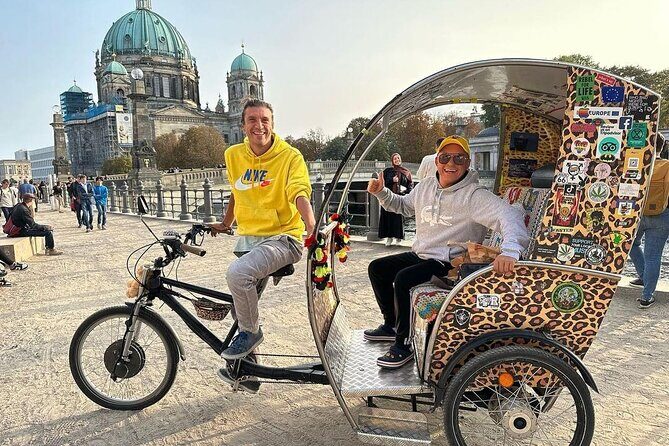
You’ll meet at Pariser Platz 4A, 10117 Berlin, and the tour ends back at the same meeting point. If you’re in the area, this is a simple plan: meet in a central spot and you’re done when you return.
The bigger convenience is pickup: it’s included within 2 km from the Brandenburg Gate. That’s a smart distance for central Berlin hotels—meaning you may not need to plan a transit route at all. If you are beyond that radius, factor in the extra 10 € per kilometer so you’re not surprised on the day.
Since the meeting point is close to a major landmark, it also helps you orient quickly. You’re essentially starting at one of Berlin’s “anchor” locations and then riding outward to match up other history-laden sites.
Brandenburg Gate to Reichstag: Classic German Architecture and Big Political Turning Points
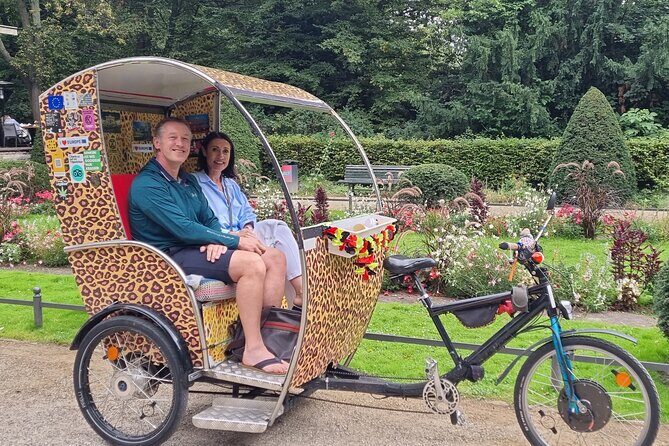
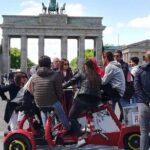
The ride begins with the Brandenburg Gate, created between 1788 and 1791 based on designs linked to Carl Gotthard Langhans the Elder. The gate’s style is classicism, built as a ceremonial finish for the boulevard Unter den Linden. It’s the kind of landmark that looks good in almost every light, which is why it works so well for a photo stop.
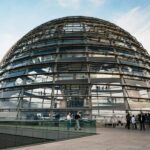
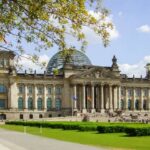
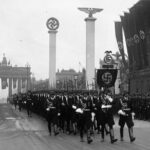
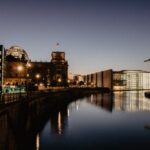
From there, you head to the Reichstag building, where pivotal moments in German history are strongly connected to this site. You’ll hear about the proclamation of the republic on November 9, 1918, the Reichstag fire on February 27, 1933, and the symbolism of the Soviet victory using a red flag placed on April 30, 1945. Admission to the Reichstag is not included, so if you want interior access, you’ll need to plan separately.
Even if you don’t go inside, this stop is valuable because it gives you the mental timeline behind the buildings. You’ll see the exterior with context, then you’ll be able to place it later when you’re reading, visiting independently, or comparing different eras of Berlin.
Soviet Memorials and the Zoo Park Area: Heavy Remembrance, Then a Breather of Green
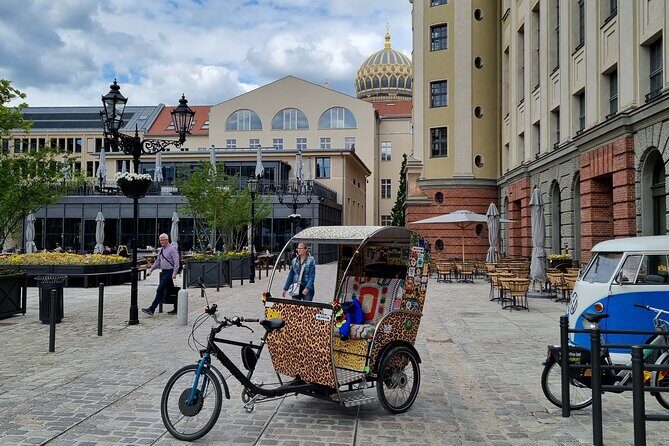
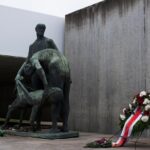
One of the more emotionally weighty stops is the square with T 34 tanks and a bronze statue of a Red Army soldier with his rifle. Behind it, names of fallen Soviet soldiers appear on the pillars. In the memorial area’s rear section, there are graves for around 2,500 soldiers.
This is the kind of moment where the rickshaw format can actually help. You can take a photo without feeling rushed, while the guide gives the meaning behind what you’re looking at. Just remember: this part is about remembrance and loss, not sightseeing fun.
After that, the route shifts toward the zoo area, covering a large green space described as about 200 hectares. You’ll learn that the park’s origins trace back to the late 1600s, when Elector Friedrich III created a pleasure park on former hunting grounds. Over time, it was redesigned with influences including the English public park concept in the 1830s by Peter Joseph Lenné.
What you’ll like here is the contrast. Berlin can feel intense at the memorial and political stops, and this is a breather—trees, bridges, and built features like the Victory Column and the English Garden area by a pond. Even if you aren’t walking far, you’re getting a sense of how Berlin uses green space as part of the city’s storytelling.
You can also read our reviews of more photography tours in Berlin
Potsdamer Platz and Topography of Terror: Modern Renewal Next to Nazi Evidence
Next comes Potsdamer Platz, where the planning was meant to create a whole district, not just a single landmark. It’s full of cafes, cinemas, and shops between newer skyscrapers, and it’s used by both locals and visitors. The tour framing here is about how Berlin rebuilt around the old fractures—an important idea if you’re trying to understand the city’s current look.
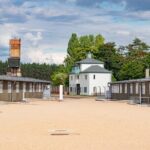
Then the mood turns with the Topography of Terror area. This location was central for planning and control of many Nazi crimes. Between 1933 and 1945, major institutions of the SS and police system were housed here. Even if your photo stop is brief, this site gives you a direct connection to the mechanisms of persecution and control.
This pairing—Potsdamer Platz and Topography of Terror—works well in a single ride because it shows how Berlin contains both recovery and responsibility side by side. You’re not just seeing “what looks pretty today.” You’re seeing why Berlin looks the way it does.
Checkpoint Charlie, Friedrichstraße, and Gendarmenmarkt: Border History and Elegant Theater Square
From the Topography of Terror area, the tour heads toward Checkpoint Charlie, once the best-known border crossing in divided Berlin. The info you’ll get emphasizes that passage was limited to foreigners and certain officials tied to the FRG and GDR administrations.
Then you’ll glide toward Friedrichstraße, described as a north-south axis through Berlin. After the fall of the Wall, the area between Checkpoint Charlie and Friedrichstraße station grew into a popular shopping mile—useful context if you’re walking there later.
You also stop at Gendarmenmarkt, a square built in the late 1600s, originally linked to French immigrant settlement (especially French Protestants). The square’s name shifted over time, ending as Gendarmenmarkt in 1799, tied to the guard regiment connected to the stables located there from 1736 to 1782.
One of the nicest parts is how architecture and storytelling mix here. The concert hall on Gendarmenmarkt is described as a masterpiece by Karl Friedrich Schinkel, and you’ll hear about earlier building use at the site and its rise as a leading theater. If you’re the type who likes a pretty building with a reason behind it, this stop is a strong one.
Bebelplatz and Neue Wache: Book Burnings, War Victims, and How Memorials Work
Another powerful stop is Bebelplatz, where the Nazis carried out book burnings. On May 10, 1933, more than 20,000 books were burned. The list of authors included writers like Erich Kästner and the Mann family, and it also notes broader suppression including authors connected to Erich Kästner’s circle and other major names, plus Heinrich Heine.
This stop can hit emotionally, but it’s also educational. You’ll see how memorial spaces can communicate intimidation and censorship without needing a long lecture. It’s the kind of place where a guided explanation matters, because the site is meaningful even if you only have a couple of minutes.
From there, you’ll reach Neue Wache, a memorial built between 1816 and 1818 from designs by Karl Friedrich Schinkel. Since 1993, it has served as the central memorial in the Federal Republic of Germany for victims of war and tyranny. If Potsdamer Platz is “Berlin’s restart,” then these stops are “Berlin’s responsibility.”
Museum Island and the Cathedral Area: UNESCO World Heritage Exteriors With a Morning-Walk Feel
The route then points you toward Museum Island, described as one of Europe’s outstanding museum complexes and a UNESCO World Heritage Site. Even if you don’t enter museum buildings during a 1 to 2 hour tour, the value is getting oriented to the island’s layout and the clustering of landmark institutions.
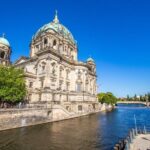
You’ll also pass the Berlin Cathedral, a must if you like grand church architecture. Nearby is the Lustgarten, once part of the Berlin City Palace area and now a square where Berliners and tourists gather.
This portion gives you “city structure” more than “deep museum time.” If you want to later return for a specific museum, having the island in your mental map makes your next day easier.
Another stop on the route is the New Synagogue on Oranienburger Strasse, noted as the largest and most important synagogue in Germany. The area also includes Nikolaiviertel, Berlin’s first and oldest residential district, with historic houses, restaurants, coffee shops, and the Nikolaikirche. The tour ends with a look at Alexanderplatz, described as one of Berlin’s liveliest squares.
Tips to Get Better Photos From a Rickshaw (Especially in Cold Weather)
This tour includes a warm blanket, which helps a lot when Berlin is chilly. Still, dress like you’ll be outside for short periods between stops—think layers you can remove on the move and add when you stop for photos. If you plan to take your own photos too, keep your phone or camera accessible but secured so you don’t waste time.
Because the route is designed around quick moments, your best photos happen when you plan simple shots:
- Start with wide shots at the big markers, like Brandenburg Gate and Checkpoint Charlie.
- Then switch to “human-scale” photos during architectural squares, like Gendarmenmarkt.
- Ask the photographer to place you where the light makes sense, rather than trying to run between spots.
One more small, practical point: music on request can change the mood of the ride quickly. If you’re using the onboard WiFi to pull up maps or check routes, you’ll likely find it easier to remember what you’ve just seen.
Who Should Book This Tour, and Who Might Want Something Else
This tour fits you best if you want:
- A romantic, photo-focused ride rather than a long walking tour
- A private experience with a photographer handling shot support
- Central Berlin orientation with a route covering big landmarks and memorial sites
- Comfort features like a warm blanket and a guide who can adapt to what you want in the moment
It may be less ideal if you want long stops inside buildings or deep, uninterrupted history lessons at every location. The tour is structured for mobility and photos, so you’ll get highlights and context, not a slow-paced deep dive at any one museum.
Should You Book It?
I’d book this if you’re in Berlin for a short time and you want a private, comfortable way to see the highlights while someone helps you get good couple photos. The mix of classic landmarks (like Brandenburg Gate), border-history sites (Checkpoint Charlie), and memorial spaces (Topography of Terror, Neue Wache, Bebelplatz) makes the ride more meaningful than a simple sightseeing loop.
If you’re the type who plans to go back for specific museums later, this tour can be a smart starting point. And if it’s cold, the warm blanket is not a small perk—it’s the difference between enjoying the ride and wishing you had left sooner.
If your main goal is maximum time inside major attractions, you might prefer a museum-centered day. But for a short, romantic, photo-friendly route through Berlin’s most defining places, this is a solid choice.
FAQ
How long is the Berlin rickshaw city and photo tour?
It runs for about 1 to 2 hours.
Where does the tour start, and is pickup included?
You meet at Pariser Platz 4A, 10117 Berlin. Pickup within 2 km of the Brandenburg Gate is included in the price, and longer distances cost 10 € per km paid on the spot.
Is this a private tour?
Yes. It’s a private tour/activity, and only your group participates.
Is a photographer included?
Yes. A photographer is included as part of the experience.
Are admission tickets included for major attractions?
Admission to the Reichstag building is not included. Other stops are listed as free, but the tour notes do not say that all entrances are included across every site.
What happens if Berlin weather is poor?
The experience requires good weather. If it’s canceled due to poor weather, you’ll be offered a different date or a full refund.