REVIEW · BERLIN
Private Taxi Tour of Berlin East and West and Neighbourhood approx. 4-6h
Book on Viator →Operated by Gunter Bauer GAT-Productions · Bookable on Viator
Berlin makes sense fast from a taxi. This private East and West Berlin ride turns 100 years of upheaval into a clear, photo-stop trail, guided by Gunter Bauer. I especially like the mix of big icons and “why it mattered” details, plus the fact that you can get out, walk a little, and still beat the city’s transit friction with an air-conditioned car. One watch-out: the route is time-and-traffic dependent, and if you want lots of inside access or extra flexibility at every stop, you’ll need to say so early.
The best part is how the city’s geography becomes a story. You’ll see the same streets from wildly different angles—empire, war, Cold War, reunification, and today—without exhausting yourself on constant transfers.
In This Review
- Key highlights to look for
- Price and logistics: what you’re really paying for
- The Reichstag-to-governance sweep: empire, Cold War rules, reunified power
- Reichstag area: from controversy to symbol
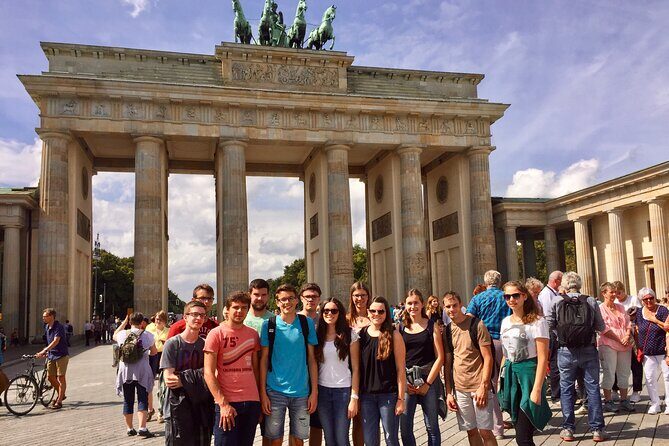
- Brandenburg Gate: Berlin’s “parlor” with a scarred past
- Eastern border reminders and the train-station scale shock
- East-West border near the Spree: the human cost
- Hauptbahnhof: Europe’s huge crossing station, and what it replaced
- Friedrichstraße, the escape-attempt geography, and the “Palace of Tears” concept
- Friedrichstraße: a changing corridor
- Friedrichstraße station and the departure control maze
- Unter den Linden and the government boulevard: walking cues, linden trees, and big buildings
- Unter den Linden: from hunting grounds to civic stage
- Soviet representation: a power statement in stone
- Forum Fridericianum and the operatic mix of politics, books, and memory
- Opernplatz and the book burning spotline
- Neue Wache: guard memory to memorial purpose
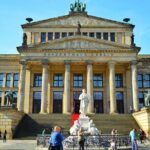
- Gendarmenmarkt: Berlin’s postcard-perfect square with real political layers
- Synagogue and Jewish heritage stop: security you can’t ignore
- Museum choices: German Historical Museum and the “death mask” detail
- Hackesche Höfe: Art Nouveau courtyard energy without the walking grind
- Humboldt Forum and the rebuilt palace debate: what you see on the roof
- Nikolaiviertel: the reconstructed old-town feel with real nearby landmarks
- Tiergarten-to-Imperial icons: Berlin Zoo, Victory Column, embassies, and Bellevue
- Memorial Church and the European Center: silence inside a loud city
- West Berlin boulevards: Kurfürstendamm, KaDeWe, and church-with-history
- Kurfürstendamm and Tauentzienstraße
- Kaiser Wilhelm Memorial Church and the “old tower” preservation idea
- Kulturforum and modern art architecture: Mies van der Rohe’s bold idea
- Sony Center and Potsdamer Platz: a “rebuilt after bombing” lesson
- Wall-era museum stops: Topography of Terror, Wall remnants, and Checkpoint Charlie area
- Abgeordnetenhaus area + Topography of Terror
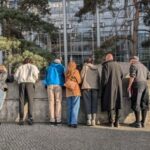
- Niederkirchnerstraße: perforated wall, no death strip here
- Checkpoint Charlie: Cold War pressure point with surviving artifacts
- Alexanderplatz, East Side Gallery, and bridges: Berlin’s Wall as art and transit
- Kreuzberg and the Stalin-Allee stretch: architecture as ideology
- Who should book this taxi tour (and who should consider another style)
- Final verdict: should you book it?
- FAQ
- How long is the Berlin East and West private taxi tour?
- Is pickup included?
- What language is the tour offered in?
- Is WiFi available during the ride?
- What’s included in the price besides the taxi ride?
- Is lunch included?
- Do you get out of the car at stops?
- Are tickets or admission fees included?
- Is it suitable for families and young children?
- Can I cancel for free?
Key highlights to look for
- East and West in one half-day: major landmarks across the Wall era, grouped into a logical drive-and-walk rhythm.
- Taxi convenience that still includes stops: you’re not stuck looking out a window the whole time.
- Photo-friendly orientation points: multiple viewpoints and photo stops where you’ll instantly recognize what you’re seeing later.
- Berlin Wall reality, up close: reminders from different eras of the border, from surviving sections to famous checkpoints.
- High-impact government architecture: Reichstag, the parliamentary area, and nearby power centers explained in plain language.
- A guide who adapts: Gunter Bauer asks what you want to focus on and can adjust stops when possible.
Price and logistics: what you’re really paying for
At $179.82 per person for about 4 to 6 hours, this is not a budget “see everything” deal. It’s a value play.
You’re paying for:
- A private vehicle (not a group bus), so you can move efficiently between far-apart sites.
- Pickup inside the S-Bahn ring (about a 5 km radius around the Brandenburg Gate area), which saves you the “how do we get there” headache.
- On-board WiFi, parking, and an air-conditioned car—nice when Berlin weather turns moody.
- A guide who uses the car as your classroom: driving plus short walking moments, instead of long museum sprints.
Here’s the trade-off. Because it’s a taxi tour, you’ll mostly get views and context, not a “ticket line all day” plan. One review called out that a small vehicle can feel tight for four people, so if you’re a group of 4, consider checking vehicle size expectations before you lock it in. Another common theme: you’ll get the most out of it if you give a clear shortlist of what you must see and what you’re happy to skip.
You can also read our reviews of more private tours in Berlin

The Reichstag-to-governance sweep: empire, Cold War rules, reunified power
A taxi tour works best when the route has a spine. Yours starts in the central-government story, and Berlin gives you plenty to chew on.
Reichstag area: from controversy to symbol
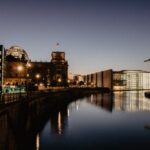
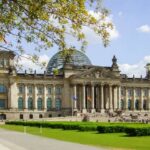
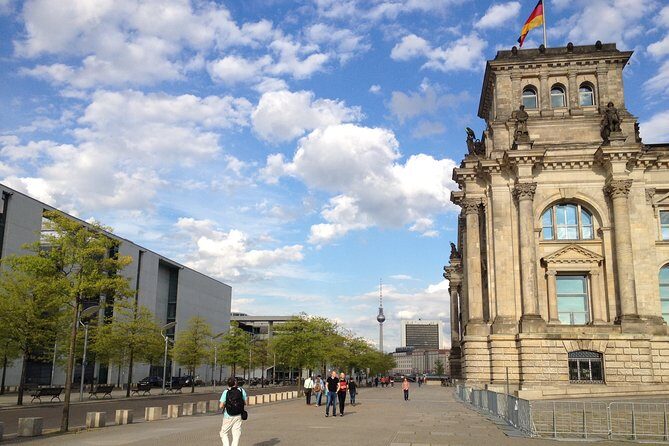
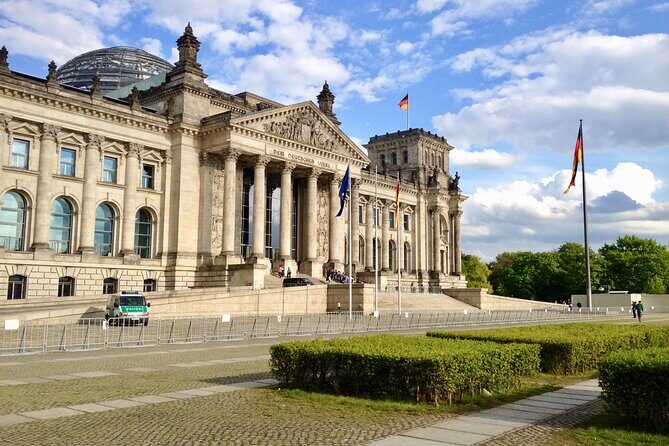
You’ll get the Reichstag context in a way that’s easy to remember. The building isn’t treated as a pretty façade only—it’s explained as a shifting political stage: Soviet victory symbolism, decades of restricted use in the West, and then a big reunification redesign for the Bundestag. You’ll also hear how the Reichstag dome became part of the new “look at the city from above” identity, with glass inserted where the original plan was less ambitious.
If you like architecture that has lived through real policy fights, you’ll appreciate how the guide links changes to political control rather than just dates and names.
Brandenburg Gate: Berlin’s “parlor” with a scarred past
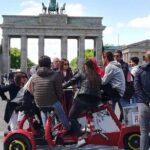
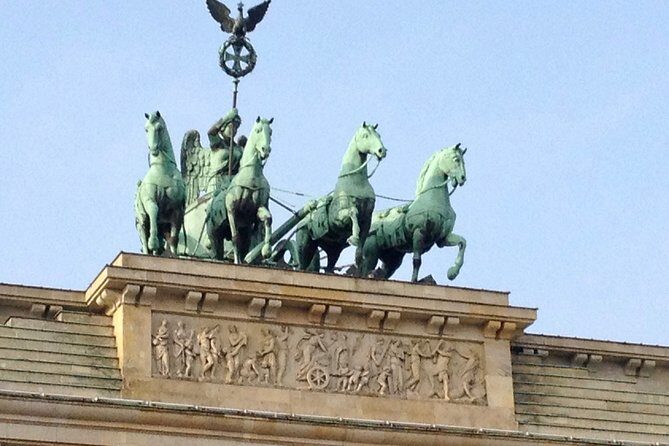
Then comes Brandenburg Gate, which sits like the city’s front room—Paris Platz from one side, but nothing in Berlin is simple once you cross time. You’ll hear how war left so much destroyed that the gate became a lonely landmark. The Cold War detail is the punch: barriers and isolation made it hard to reach from either side while the city lived behind fences.
Tip for your day: take a moment here even if you’ve seen photos a hundred times. The whole “photo spot” idea makes sense only after you understand what was physically impossible back then.
Eastern border reminders and the train-station scale shock
From the central sites, the tour pivots toward the Wall’s everyday mechanics. Berlin doesn’t just show you the Wall—it shows you how border control changed movement, traffic, and even the feel of normal life.
East-West border near the Spree: the human cost
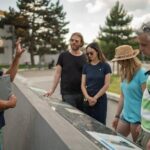
One of the border beats is the area where the water became dangerous after the Wall went up. You’ll hear the story of Günter Litfin, shot while trying to swim through the harbor—an example of how escape attempts weren’t symbolic. The nearby mention of a surviving watchtower and a family’s long grief makes the border feel less like a historical exhibit and more like an active wound.
Hauptbahnhof: Europe’s huge crossing station, and what it replaced
Next, you’ll get contrast through scale: Berlin’s central train hub. The tour frames it as “largest crossing station in Europe,” then gives you what matters—massive halls, many levels, and a design that supports constant transfers. You’ll also hear about how Bahnhof Zoo was downgraded, with ripple effects for connections and travel patterns.
If you’re planning to use transit later, this stop helps you understand why Berlin feels spread out: stations are not just points on a map here. They’re how the city reorganizes itself.
Friedrichstraße, the escape-attempt geography, and the “Palace of Tears” concept
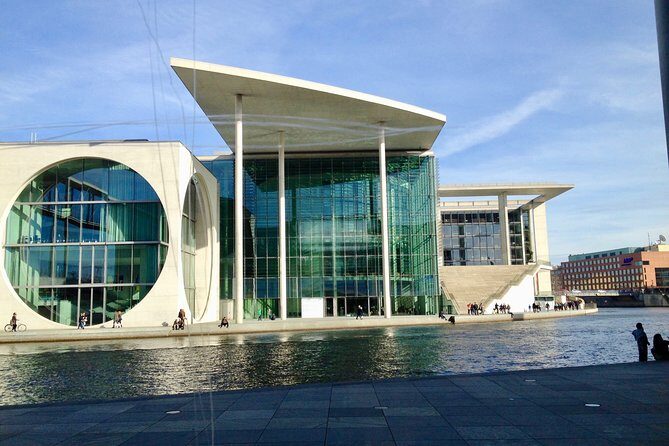
A taxi can do something walking tours can’t: connect the border logic to the street layout.
Friedrichstraße: a changing corridor
You’ll travel along Friedrichstraße, described as a long street with distinct sections: an easier-to-love stretch with shops and classic street energy, then more utilitarian or “workaday” areas closer to the border era. The guide points out how older structures were used as systems once the Wall made Berlin a checkpoint city.
Friedrichstraße station and the departure control maze
Then you hit the border-station story: Friedrichstraße was one of the few places where onward travel between East and West existed, but with strict rules. You’ll hear how checkpoints and barriers created constant tension—and how Stasi surveillance was woven into movement. Nearby, the “Palace of Tears” idea gets explained: family departures under pressure, often with the sense that return might not happen.
If time is tight, this is exactly the kind of stop the guide can trim (there’s an option to omit it depending on traffic). If you have any interest in how border control worked day-to-day, don’t skip it.
Unter den Linden and the government boulevard: walking cues, linden trees, and big buildings
Now the tour shifts into a grand axis. Berlin’s famous boulevard isn’t just scenic; it’s a design argument.
Unter den Linden: from hunting grounds to civic stage
You’ll hear the story behind the linden trees—how the boulevard grew out of the king’s hunting grounds and how the name relates to the planting choice. The guide keeps it grounded: this street became a line where state institutions put their faces on display.
Expect a lot of “look at the street, then look at the buildings” thinking. Berlin rewards attention here.
Soviet representation: a power statement in stone
Another standout segment is the Soviet-era foreign representation building, built to show who held influence. The tour frames it against the American/British/French embassies that were in ruins, and it describes the palace-like structure with an inner courtyard allowed to break alignment norms. It’s the kind of explanation that helps you read architecture as propaganda.
Forum Fridericianum and the operatic mix of politics, books, and memory
This part of Berlin is a crossroads: education, religion, culture, and political violence sit close enough that you could walk in circles—if you don’t have a taxi guiding the timing.
Opernplatz and the book burning spotline
You’ll get the Forum Fridericianum grouping: the cathedral and church buildings, state opera area, Humboldt University context, and the square’s role in Nazi ideology. The tour calls out the glass window in the floor pointing toward a hidden library idea and connects the square to May 10, 1933, when books deemed unsuitable were burned.
If you like history that’s not abstract, this is one of the most direct stops on the route.
Neue Wache: guard memory to memorial purpose
Then you’ll see the shift from Prussian spectacle (changing of the guard) to a memorial function. The tour notes the sculpture that connects to Käthe Kollwitz and how the space became a place for mourning victims of war and tyranny.
Gendarmenmarkt: Berlin’s postcard-perfect square with real political layers
Gendarmenmarkt is the kind of place where you can relax for five minutes—until the guide starts explaining how it was shaped.
You’ll learn the French and German cathedral buildings are not what you’d expect at first glance: Frederick II “cathedral-like” towers on meetinghouse structures. You’ll hear about the German cathedral museum focus and the French cathedral’s Reformed congregation with French services. A small Huguenot museum behind it adds another thread: refugees and rebuilding.
This is also one of those stops where free admission is mentioned, making it a high-value pause in the middle of heavy touring.
Synagogue and Jewish heritage stop: security you can’t ignore
The tour includes a major Jewish site with Moorish-style influences and a golden dome. It’s clear the building’s story includes destruction in the war and later rebuilding that preserved enough of the entrance/purpose to host exhibitions on Jewish life in Berlin.
One practical note: security measures here are described as intense—similar to an airport. So if you’re traveling with bags or you hate delays, plan extra time and go in with a calm mindset.
Museum choices: German Historical Museum and the “death mask” detail
The German Historical Museum stop is framed around military collection roots and the evolution into a central German history museum after reunification. You’ll hear that the building was refurbished and that frescoes outside and in the inner courtyard are linked to replicas of death masks of dying warriors.
If you’re sensitive to graphic war symbolism, consider how you handle intense memorial art. It’s presented as part of a historical narrative rather than shock value.
Hackesche Höfe: Art Nouveau courtyard energy without the walking grind
Then you get a different kind of Berlin: Hackesche Höfe. The tour explains these courtyard ensembles as early 1900s showcase spaces where work and everyday life mixed. After the Wall, they were restored and again shine in Art Nouveau style.
Today, workshops are replaced by shops—some craft-forward, plus items like KPM porcelain and Ampelmännchen products tied to East Berlin identity. If your legs need a break, this is a good stop to slow down without losing momentum.
Humboldt Forum and the rebuilt palace debate: what you see on the roof
The Humboldt Forum stop is described through its long “nothing here” period: a parking lot after destruction and later debates about demolition versus rebuilding. You’ll hear that the Berlin Palace silhouette mattered even while the site was empty, and that the East German side demolished it for months despite criticism.
You’ll also get the specific planning idea: non-European collections and Humboldt University holdings placed in a modern concrete structure with more historically precise reconstruction outside and in the courtyard. The roof terrace is called out as a highlight.
This is a stop that makes sense when you’re thinking about “rebuilding what?” Berlin’s rebuilt spaces are never neutral here—they argue with the past.
Nikolaiviertel: the reconstructed old-town feel with real nearby landmarks
Next, you zoom into “old Berlin” mood with Nikolaiviertel and the Nikolaikirche area. The tour describes the 1980s reconstruction strategy: parts were rebuilt to look older than they historically were, including only a few original structures’ remaining walls and the addition of many apartments.
You’ll get the Nikolaikirche as the city museum focus and the Knoblauchhaus as a furnished Biedermeier-style glimpse of family life. There are also restaurants near the Spree and a St. George statue nearby—small details that make the area feel like a real neighborhood rather than a single monument.
Tiergarten-to-Imperial icons: Berlin Zoo, Victory Column, embassies, and Bellevue
If you enjoy seeing Berlin’s “pause and look” spots, this cluster is for you.
- Berlin Zoo is described as Germany’s oldest and one of Europe’s largest animal collections, with a foundation tied to King Friedrich Wilhelm IV and zoo-building styles linked to animals’ origins.
- The Victory Column connects to unification wars and the captured cannons story, including why post-war decisions affected what stayed and what didn’t.
- You’ll also pass diplomatic enclaves described as Nordic embassies set in a set of connected buildings.
- Then Bellevue Palace, the current seat of the Federal President, framed as a younger brother’s palace with later restoration and modern official use.
This section is a lot of “recognizable Berlin” in a tight loop. The guide’s value is in telling you what to notice in each place—otherwise it’s easy to treat it like a drive-by postcard montage.
Memorial Church and the European Center: silence inside a loud city
Another notable stop is the Memorial Church area from a different side, plus the nearby European Center. The tour explains the Memorial Church’s interior with thousands of glass stones creating that blue-light effect, and it points out the surprisingly quiet interior thanks to a soundproofing air-wall design.
Then it ties into how traffic noise works outside, and why scaffolding is common due to the concrete structure’s sensitivity to emissions. This is one of those “Berlin isn’t gentle to its own monuments” lessons.
West Berlin boulevards: Kurfürstendamm, KaDeWe, and church-with-history
After the city core, the tour turns toward classic West Berlin streets and shopping landmarks.
Kurfürstendamm and Tauentzienstraße
You’ll get orientation on Ku’damm and how it continues into Tauentzienstraße. The guide explains the missing house numbers as a historical quirk and points out the mix of shops, including the big anchor of KaDeWe.
KaDeWe is described in scale terms (one of the largest department stores in Europe), and the tour specifically calls out the gourmet floor with items like champagne, oysters, chocolate, bread, and cheese. Even if you don’t shop, it’s a strong “how West Berlin showed its taste” stop.
Kaiser Wilhelm Memorial Church and the “old tower” preservation idea
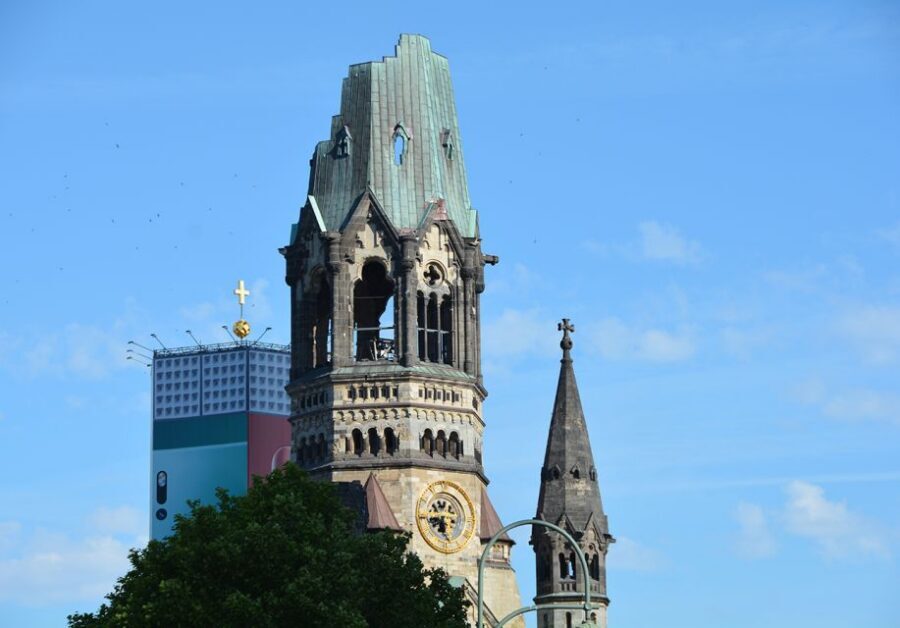
You’ll also see the Kaiser Wilhelm Memorial Church. The tour connects the name to Kaiser Wilhelm I, explains war-wreckage preservation decisions, and notes that only parts of the damaged church were kept while the rest was rebuilt in a modern style. Locals even nickname the modern sections with a lipstick/powder compact comparison—so you’ll hear that Berlin humor here, too.
Kulturforum and modern art architecture: Mies van der Rohe’s bold idea
This is where Berlin turns into design class, and it’s worth it if you like modern buildings with rules you can see.
The tour covers the Kulturforum context—New State Library and New National Gallery area—and then focuses on the Neue Nationalgalerie building by Ludwig Mies van der Rohe. The big point is the self-supporting metal roof and the lack of pillar support inside. The guide then explains the unusual solution for painting displays: exhibitions use wooden panels, with changing exhibitions up top and other works shown in the basement.
If you like architecture that forces you to change your museum expectations, this is a strong stop.
Sony Center and Potsdamer Platz: a “rebuilt after bombing” lesson
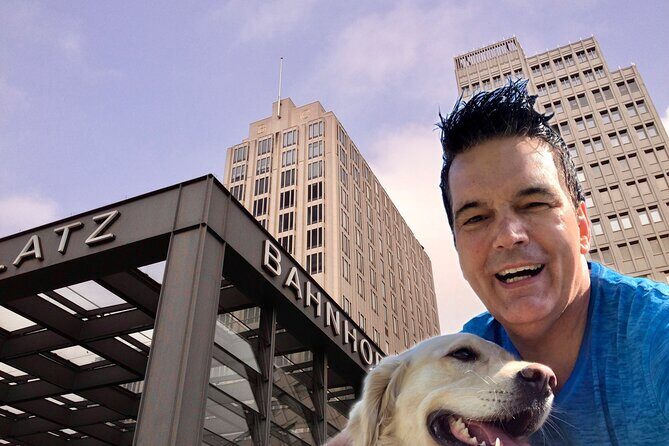
The Sony Center on Potsdamer Platz is described as the commercial and architectural comeback in the middle of an area once depressed and reshaped by history. You’ll hear about Helmut Jahn’s daring glass-and-steel design and the sloping roof that’s compared to a floating form.
A crucial local detail here: the older Hotel Esplanade wing survived bombing, and instead of tossing it, it was moved about 75 meters east, roofed over, and integrated so a ballroom became usable space. If you care about “how cities save what they can,” this is one of the most interesting stories on the route.
Wall-era museum stops: Topography of Terror, Wall remnants, and Checkpoint Charlie area
This is the emotional core of the tour. You’ll see multiple types of reminders, and the guide helps you keep them straight.
Abgeordnetenhaus area + Topography of Terror
You’ll start near the Berlin House of Representatives area, then move toward the Topography of Terror documentation site. The tour explains that excavation uncovered remnants of cellars used by Nazi security organs for interrogations and mistreatment, including targeting communists, social democrats, Sinti, Roma, and others.
Admission is described as free for the short visits. Even if you don’t read everything on-site, the act of walking over excavated ground changes how history lands.
Niederkirchnerstraße: perforated wall, no death strip here
Then comes a short but striking Wall remnant. The tour describes how the “anti-fascist protective wall” here looks perforated and less threatening than the usual death-strip mental image—explained as a local difference in what the leadership expected and needed.
There’s also an escape attempt story involving a cable car from the former Luftwaffe building area, with Stasi surveillance that didn’t intervene.
Checkpoint Charlie: Cold War pressure point with surviving artifacts
Finally, Checkpoint Charlie is framed as an Allied checkpoint with global tension. The guide also mentions a famous tank standoff threat around October 1961 and points out why the site feels different now—most recognizable items are replicas and museum items are elsewhere.
It’s a quick stop, but it anchors the idea that the Wall wasn’t just a barrier; it was a world-risk flashpoint.
Alexanderplatz, East Side Gallery, and bridges: Berlin’s Wall as art and transit
The tour continues the border story into the present-day “we live here now” layout.
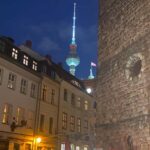
- Alexanderplatz is explained as an area that became a socialist transformation stage in GDR times, with space for marches and the television tower as a socialist engineering statement.
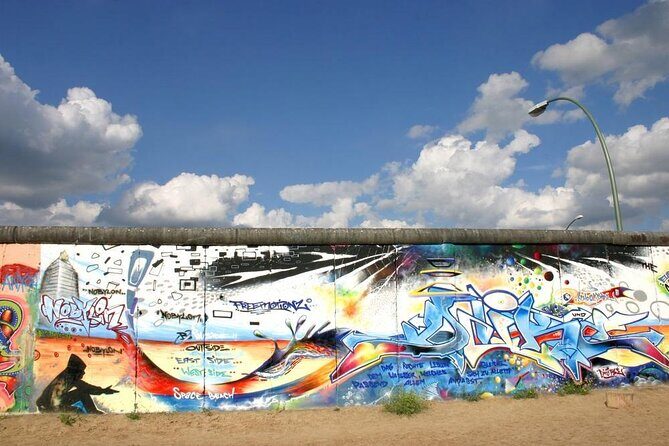
- Then East Side Gallery: you’ll learn it’s about 1,600 meters of the longest surviving Wall section, but not a simple “front wall” story. It includes a behind-river logic and describes the painted wall left over after the reunification era started.
- You’ll also reach Oberbaum Bridge, tied to medieval city boundary logic, customs symbols, and today’s popular crossing between Friedrichshain-Kreuzberg.
For me, this is where the taxi tour shines: you get the history and the modern reality in the same afternoon.
Kreuzberg and the Stalin-Allee stretch: architecture as ideology
The route ends with architecture that carries political memory even after renaming and renovation.
You’ll see the “Stalin-Allee” workers-palace housing idea and how the buildings were controversial for their planning, wage and labor implications, and their connection to the June 17, 1953 uprising crushed by Soviet tanks. Today, the guide frames the renovated “longest monument mile in Germany” idea.
This part is less about pretty façades and more about learning how Berlin was designed as a system.
Who should book this taxi tour (and who should consider another style)
You’ll likely love this tour if you:
- Want a first-day orientation across major East and West sights.
- Prefer getting from place to place in comfort rather than juggling multiple transit routes.
- Enjoy a guide who connects buildings to politics, not just dates.
- Want multiple short walks rather than one exhausting all-day walking tour.
You might not love it as much if you:
- Want lots of long museum time or heavy inside access at every stop.
- Need a very large vehicle for comfort; one review flagged that a small car can be an issue for four people.
- Have a strict list of must-see sites and assume every one will be possible inside the time window—Berlin traffic and hours matter.
Final verdict: should you book it?
If you want a strong, efficient mix of Berlin icons plus Wall-era context—without freezing, transferring, or playing logistics roulette—this private taxi tour is a smart way to start your trip. The price makes sense when you value time and comfort, especially with pickup included inside the S-Bahn ring and the guide’s ability to keep the day moving.
My recommendation: book it early, send your must-see list ahead of time, and be honest about what you want to skip. You’ll get the most out of the ride when you treat it like a guided “Berlin story road trip,” not a checklist.
FAQ
How long is the Berlin East and West private taxi tour?
It runs about 4 to 6 hours.
Is pickup included?
Pickup is included within the S-Bahn ring, roughly about 5 km around the Brandenburg Gate area.
What language is the tour offered in?
The tour is offered in English.
Is WiFi available during the ride?
Yes, WiFi is available on board.
What’s included in the price besides the taxi ride?
The listing notes both the taxi ride and the city tour are included, plus parking fees and private transportation, with WiFi and an air-conditioned vehicle.
Is lunch included?
No, lunch is not included.
Do you get out of the car at stops?
Yes. The plan includes short stops for sightseeing and walking around for close looks at certain sites.
Are tickets or admission fees included?
Many of the specific stops listed show free admission tickets for the time at those sites, but not every stop is necessarily free beyond what’s noted.
Is it suitable for families and young children?
Child seats are available: a child seat for toddlers from six months to three years, plus a booster seat for older children. A baby seat can be brought on request.
Can I cancel for free?
Yes. Free cancellation is offered, with a full refund if you cancel at least 24 hours before the experience starts.