REVIEW · NUREMBERG
Nuremberg: St. Johannis Friedhof &Hesperidengärten IN GERMAN
Book on GetYourGuide →Operated by Nürnberg Tours · Bookable on GetYourGuide
Nuremberg’s cemetery reads like a city atlas. This German-led walk makes St. Johannis feel human, not spooky, with graves arranged by social class and marked by artful epitaphs. I love how the guide turns names and dates into real biographies you can actually picture. I also love the quick pivot to the Hesperidengärten, a garden area tied to recreation and even Mediterranean fruit. One caveat: the Hesperidengärten visit depends on the season, so in winter you won’t get the full payoff.
Plan on about 1.5 hours and roughly 1 kilometer on foot, with comfortable-shoe advice for uneven paths. The tour is in German, so if your German is basic, you’ll want to be ready for listening first and reading only what you can.
At $17 per person, this is strong value because you’re paying for interpretation. A cemetery is one of those places where a good guide can change what you notice by a lot. The format is also compact, and it works well as a history stop when you don’t want another long day.
In This Review
- Key things I’d circle before you go
- Entering St. Johannis Cemetery Like a Nuremberg Storybook
- Where the Tour Starts at Lindengasse and Johannisstraße
- The Grave Tour Highlights: Dürer’s Name and the City’s People
- Hesperidengärten After the Cemetery: Recreation With Fruit in Mind
- Price and Timing: Why $17 for 1.5 Hours Can Be a Solid Deal
- Who Should Book This Nuremberg Cemetery and Garden Walk
- Should You Book Nuremberg’s St. Johannis and Hesperidengärten?
- FAQ
- What language is the tour conducted in?
- How long does the experience last?
- Where is the meeting point?
- Where does the tour finish?
- How much does it cost?
- Can I visit the Hesperidengärten year-round?
- Is the tour suitable for wheelchair users?
- Is the tour accessible for visually impaired people?
- Is there a minimum number of participants?
Key things I’d circle before you go
- Germany’s most beautiful cemetery (2013): You’re stepping into a site with real reputation, not just local fame.
- People-first storytelling: Graves of patricians, craftsmen, artists, and politicians are presented like a city roster.
- Artistic epitaphs: You get help reading the commemorations, not just staring at stones.
- Albrecht Dürer’s grave: A direct link to one of Nuremberg’s best-known figures.
- Hesperidengärten is seasonal (May–October): The garden part is the reason many people book.
- A short walk that’s manageable: Expect about a kilometer, not a marathon.
Entering St. Johannis Cemetery Like a Nuremberg Storybook
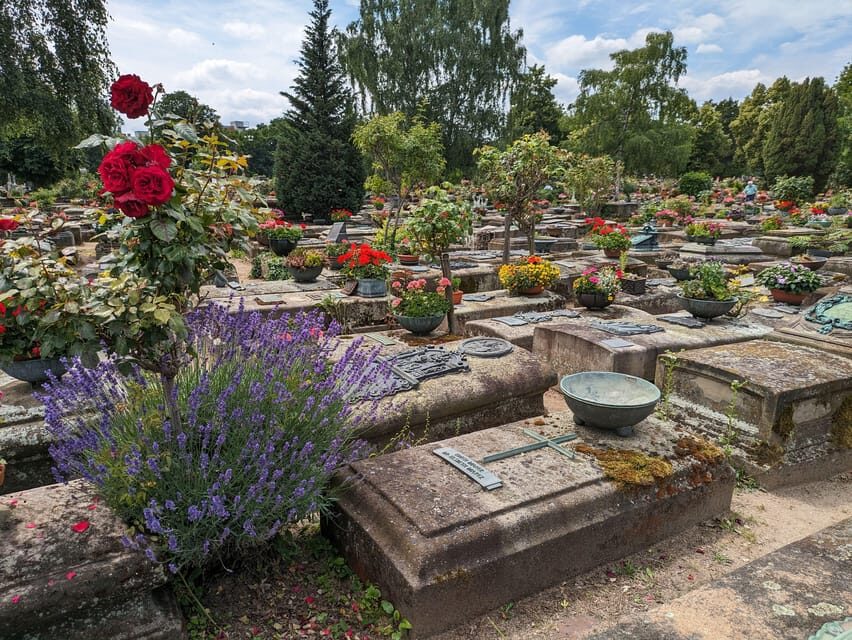
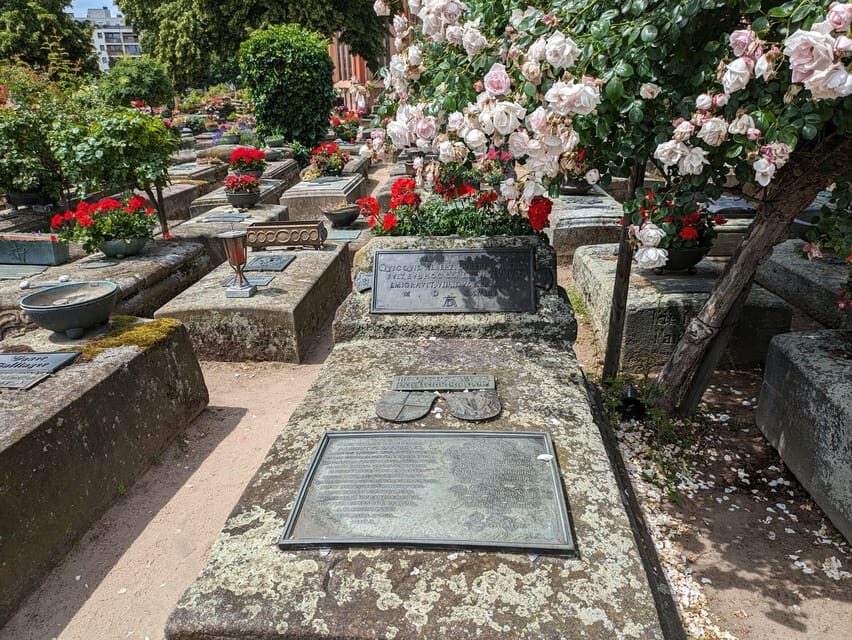
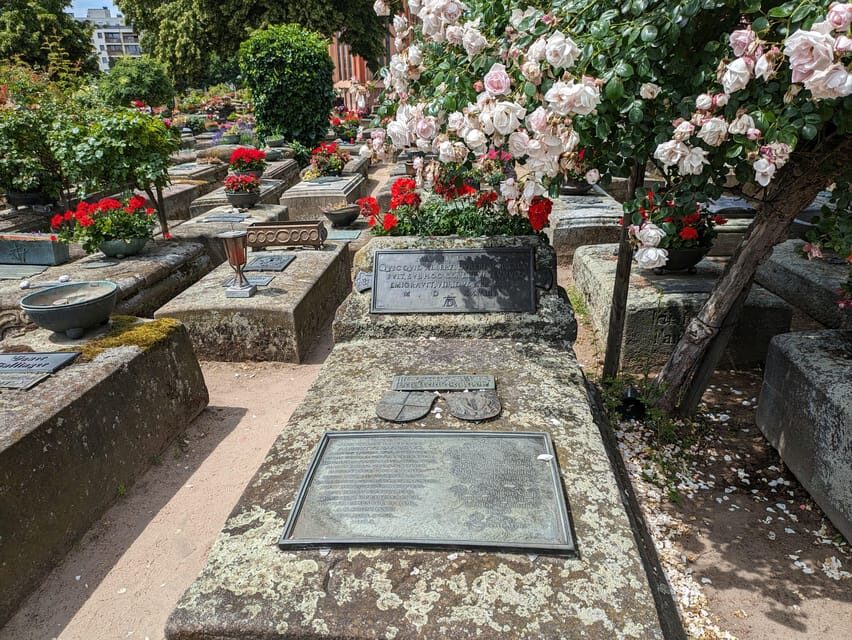
St. Johannisfriedhof is famous across Europe, and it earned the title of Germany’s most beautiful cemetery in 2013. That sounds like marketing, but the reason it matters is practical: this cemetery isn’t just a place of burial. It’s a preserved record of how Nuremberg organized status, trade, art, and politics over time.
On your guided walk, you don’t just wander rows. You move through the logic of the cemetery. The tour focuses on graves tied to key groups—patricians, craftsmen, artists, and politicians. That mix is what makes the place feel like a city history lesson you can walk through. You’ll start noticing patterns: the stones aren’t all the same, and the memorial style often reflects the person and their community role.
One of the best parts is how the guide explains the artistic epitaphs—the inscriptions that commemorate the deceased and their families. Reading epitaphs on your own can be slow and frustrating. With a guide, they become a shortcut to understanding what mattered to those families: reputation, trade, faith, and lineage.
If you’re worried this could feel bleak, don’t. The tone is about history and identity. Even when the topic is death, the focus is on people—who they were and how their world fit into Nuremberg’s growth.
You can also read our reviews of more tours and experiences in Nuremberg.


Where the Tour Starts at Lindengasse and Johannisstraße
Meet at St. Johannisfriedhof, East Entrance at Lindengasse, on the corner of Johannisstraße. Getting this right helps more than you might think. Cemeteries aren’t designed like museums, and the right entrance saves time and stress.
The tour is held in German. That’s not a dealbreaker if you’re comfortable listening, but it does mean you’ll get more out of it if you can follow spoken explanations. If you’re studying German, this is also a great real-world listening task.
Bring comfortable shoes. You’ll be walking outdoors through areas where ground can be irregular. The experience is short—about 1 kilometer—but short doesn’t mean smooth.
Also note the small-group reality: there’s a minimum of 2 participants. That matters if you’re traveling solo or trying to match a very specific time window.
The Grave Tour Highlights: Dürer’s Name and the City’s People
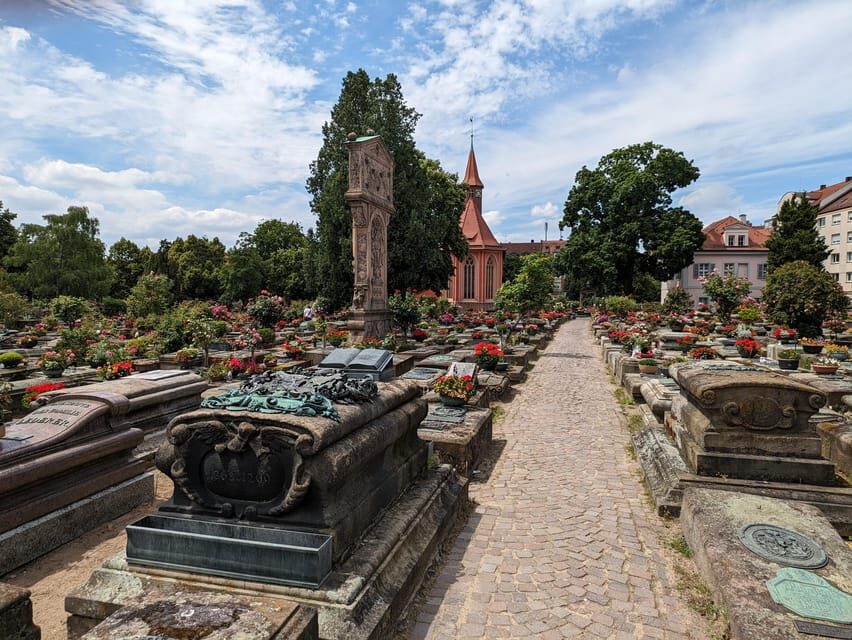
As you move through St. Johannis, you’ll get a guided circuit designed to help you connect individual graves to the broader city story. The tour doesn’t treat the cemetery as random. It presents it like a curated map of Nuremberg’s social fabric.
A standout moment is Albrecht Dürer’s grave. Even if you’ve admired Dürer’s art before, his presence here lands differently than a painting in a gallery. You’re tying the artist to the city and the era through a physical, grounded reference point.
What makes this section work for me is the way the guide connects biographies. You’re not just hearing dates; you’re learning what you should look for and how to interpret what’s carved or inscribed. That’s the difference between visiting a cemetery and actually getting something out of it.
If you’re the type who likes “why this person matters,” you’ll probably enjoy how the tour threads individuals into Nuremberg’s history. And if you’re less into epitaph text, you can still follow along through the guide’s explanations of craftsmanship, art, civic life, and political influence.
Hesperidengärten After the Cemetery: Recreation With Fruit in Mind
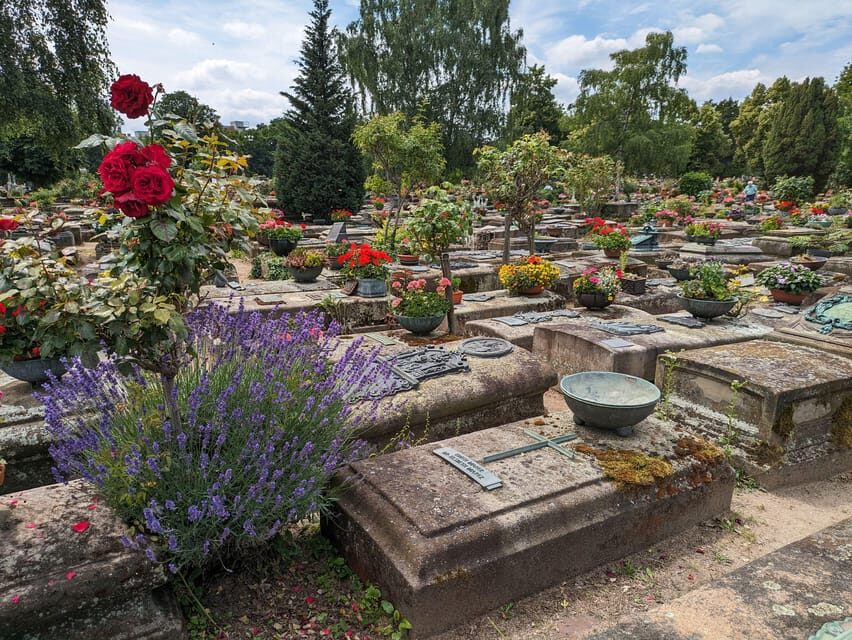
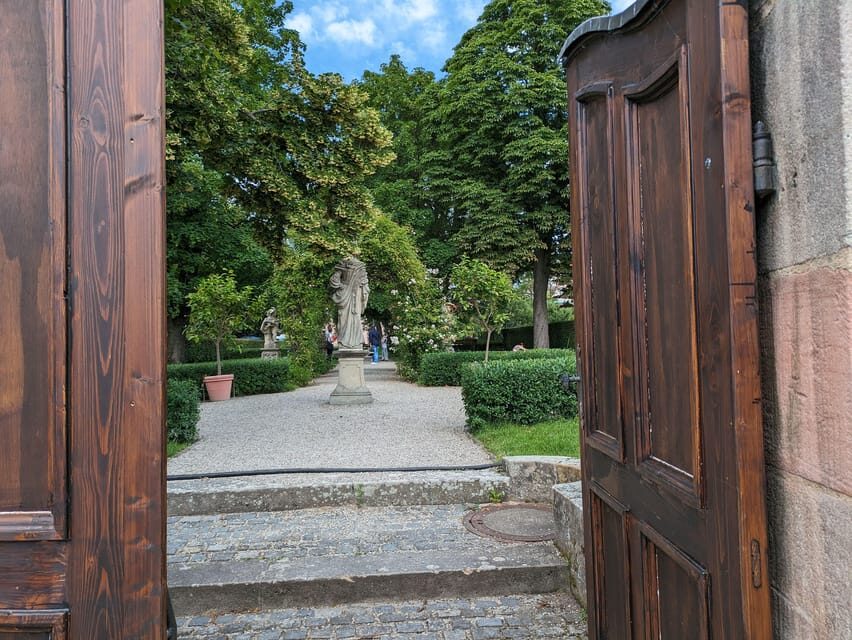
After the graves, the tour detours to the nearby Hesperidengärten. This is where the mood shifts. The gardens are described as part of the green Johannis district, and the whole concept is refreshingly specific: the space was used for recreation, and it also supported cultivating Mediterranean fruit.
That combination is worth your attention. It’s easy to think of gardens as “pretty add-ons,” but here it’s tied to daily life and food culture. The guide helps you see the gardens as functional, not ornamental.
One practical note: the Hesperidengärten can only be visited from May to October. So if you’re traveling outside that window, you may need to adjust expectations. The cemetery portion still delivers, but the full story only clicks when you can walk through the garden area.
There’s also a personal-preference factor. One participant found the garden part a bit less interesting (and heat was a factor). That’s a fair reminder: gardens are still gardens. If you love landscape and strolling, you’ll likely rate it higher. If you’re there mostly for inscriptions and biographies, you might treat the garden as a short palate cleanser.
Price and Timing: Why $17 for 1.5 Hours Can Be a Solid Deal
At $17 per person for about 1.5 hours, this tour is priced like an efficient, guided add-on—not a long private expedition. The value comes from what you’re buying: interpretation.
Cemeteries are places where your own observation skills matter a lot, and where text can be hard to understand without context. Paying for a local guide means you spend your energy noticing details that actually matter—like epitaph art and memorial themes—and you avoid getting stuck trying to decode everything on your own.
The walking time is compact, and it’s reportedly around 1 kilometer. That makes it feasible on days when you’re already doing other sights. It also keeps the experience from dragging. You’re in and out before your attention span takes a hit.
The one condition to remember is language. Since the tour is in German, your enjoyment depends on your ability to follow. If you can follow spoken German at a basic level, the price-to-time ratio feels fair. If German is a big barrier, you might find it harder to connect with the explanations.


Who Should Book This Nuremberg Cemetery and Garden Walk
This tour fits best if you like:
- History that’s specific (not vague “old town” vibes)
- Sites where stories are written in names, class, and craft
- Learning from a guide who can connect what you’re seeing to why it mattered
It’s also a good choice if you want a shorter cultural outing. The walk is about a kilometer, and the overall schedule is tight.
But it’s not suitable for wheelchair users, visually impaired people, or people with low level of fitness. Even if the distance is short, the environment and ground conditions matter. If mobility is an issue, it’s smarter to look for another format.
Language-wise, the tour being German-only is the big gatekeeper. If you’re comfortable listening, you’ll likely enjoy it more because the guide’s explanations drive the experience.
Should You Book Nuremberg’s St. Johannis and Hesperidengärten?
I’d book it if you want a different side of Nuremberg. This isn’t just a cemetery visit; it’s a guided lesson in how the city’s people, status, and creativity left marks on stone. When you add Dürer’s grave and the chance to see Hesperidengärten (May–October only), it becomes a neat combo of memory and greenery.
Skip it—or at least rethink it—if you can’t manage outdoor walking on uneven ground, or if German narration is a barrier. Also, if you’re going during winter months, check your expectations about the gardens part. The cemetery still works on its own, but the full two-part theme depends on the seasonal access.
If you’re looking for a one-session, history-focused experience that feels local and thoughtfully guided, this one earns a strong yes.
FAQ
What language is the tour conducted in?
The guided tour is in German.
How long does the experience last?
The tour duration is about 1.5 hours.
Where is the meeting point?
You meet at St. Johannisfriedhof, East Entrance, Lindengasse, on the corner of Johannisstraße.
Where does the tour finish?
The tour finishes at the Hesperidengärten.
How much does it cost?
It costs $17 per person.
Can I visit the Hesperidengärten year-round?
No. The Hesperidengärten can only be visited from May to October.
Is the tour suitable for wheelchair users?
No. It is not suitable for wheelchair users.
Is the tour accessible for visually impaired people?
No. It is not suitable for visually impaired people.
Is there a minimum number of participants?
Yes. The minimum number of participants is 2.