REVIEW · NUREMBERG
Nuremberg: Medieval Time Travel for Kids
Book on GetYourGuide →Operated by Geschichte Für Alle e.V. · Bookable on GetYourGuide
Medieval Nuremberg comes to life for kids. In just two hours, this guided Old Town walk by Geschichte Für Alle mixes hands-on play with real stories about everyday life, water, and the role of the church.
I love how tightly the tour stays kid-friendly without turning it into a boring history lecture. I also like that you get plenty of movement and participation—quick games, short guided stops, and a guided rhythm that keeps attention moving.
One thing to plan around: it’s German only, and it isn’t suitable for children under 6 or for visitors with mobility impairments. If your group needs another language or has accessibility needs, this may not be the best match.
In This Review
- Key takeaways before you go
- Medieval Nuremberg, but make it playable
- Starting at Henkerhaus: the tour meets you where the story feels real
- Trödelmarkt and the Christmas-market connection at Hauptmarkt
- Pegnitz water lessons: why water mattered before plumbing
- Liebesinsel and Fleischhauerbrunnen: short stops with real payoff
- St. Sebaldus Church relief: church power explained through images
- Weinmarkt to Weißgerbergasse: professions, games, and a shared sacred moment
- What you’ll learn (and why it sticks for kids)
- Price and value: $11 for two hours of real participation
- Timing, shoes, and how to make the most of the 2 hours
- Who this tour is best for
- Should you book Nuremberg: Medieval Time Travel for Kids?
- FAQ
- Where does the tour start?
- How long is the tour?
- What does the tour include for kids besides walking?
- What language is the tour in?
- Is it suitable for young children or mobility-impaired visitors?
- What major Old Town stops will we see?
- Can groups of 10 or more request arrangements?
Key takeaways before you go
- Pegnitz water lessons tied to what life looked like in medieval times
- Hauptmarkt and the Christmas market spot you’ll recognize in the festive season
- St. Sebaldus Church relief explained in a way kids can actually follow
- Historical games plus a sacred ritual staging for active participation
- Medieval professions and daily routines that shift focus from myths to real work
Medieval Nuremberg, but make it playable
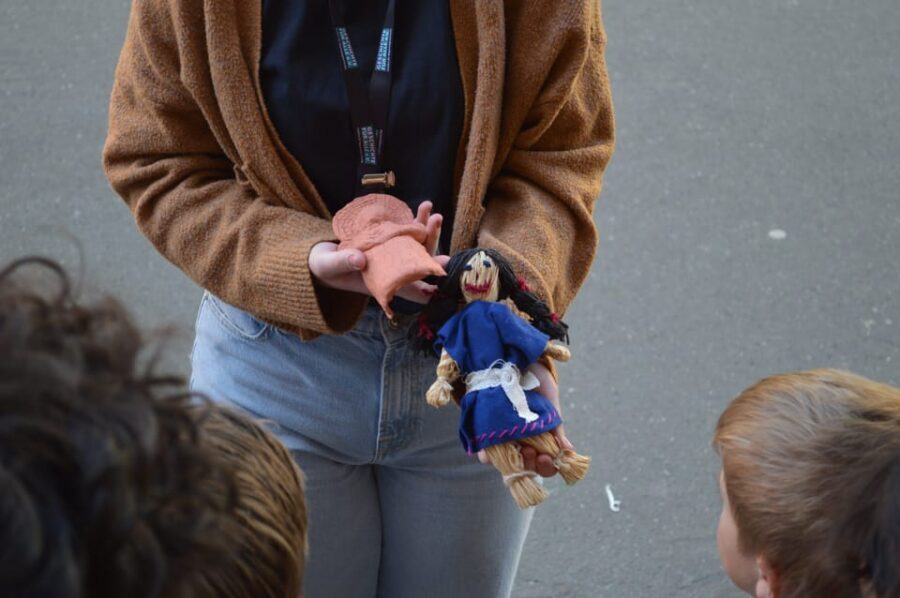
If you’ve ever watched kids glaze over during a grown-up museum talk, this is a smart antidote. This tour turns Old Town Nuremberg into a kid-sized time machine, using role-play, games, and short, focused explanations.
What makes it work is the pacing. You’re not stuck standing around. You keep moving from one meaningful spot to the next, and you’re always doing something—asking questions, playing historical games, or joining in a staged ritual moment.
The vibe is practical, not theatrical fluff. You’ll learn how children lived, what they ate, what they played with, and whether knights and princesses were even part of local reality.
You can also read our reviews of more tours and experiences in Nuremberg.
Starting at Henkerhaus: the tour meets you where the story feels real
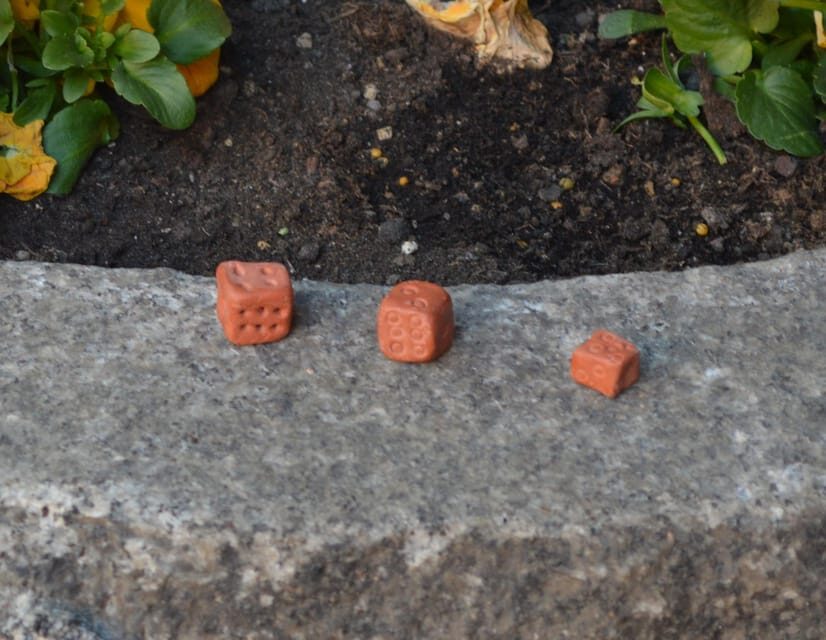
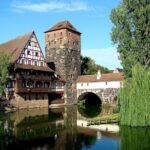
The tour kicks off at the Henkerhaus Museum area, with the guide standing in front of the Hangman’s House. You can spot the guide by the green name badge and the folder that says Geschichte Für Alle.
That meeting point matters. It sets a tone right away: medieval life wasn’t just castles and costumes. It included justice, punishment, and systems that shaped daily routines.
From the start, the guide keeps the focus on children’s experiences. You’ll hear about how kids spent time, what daily life looked like, and what might have surprised them about the world around them.
Trödelmarkt and the Christmas-market connection at Hauptmarkt
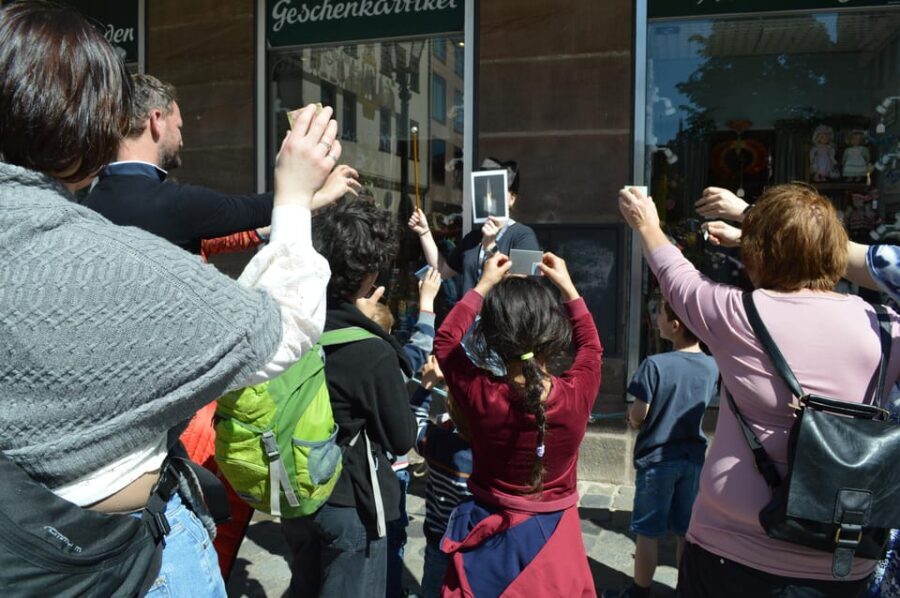
You’ll stop at Trödelmarkt early on, a market area that’s easy to recognize once you’re there. The tour uses the market setting to talk about life in the city—how people moved, traded, and lived with constant activity around food and goods.
Then you’ll reach Hauptmarkt Nürnberg, another big Old Town square. This is the famous market where the annual Christmas market takes place, so even if you’re not visiting in winter, you’ll see why this spot gets so much attention.
The value here is perspective. Markets weren’t just charming places to stroll. They were a living center for commerce and everyday needs—and the tour uses that idea to make medieval city life feel concrete.
Pegnitz water lessons: why water mattered before plumbing
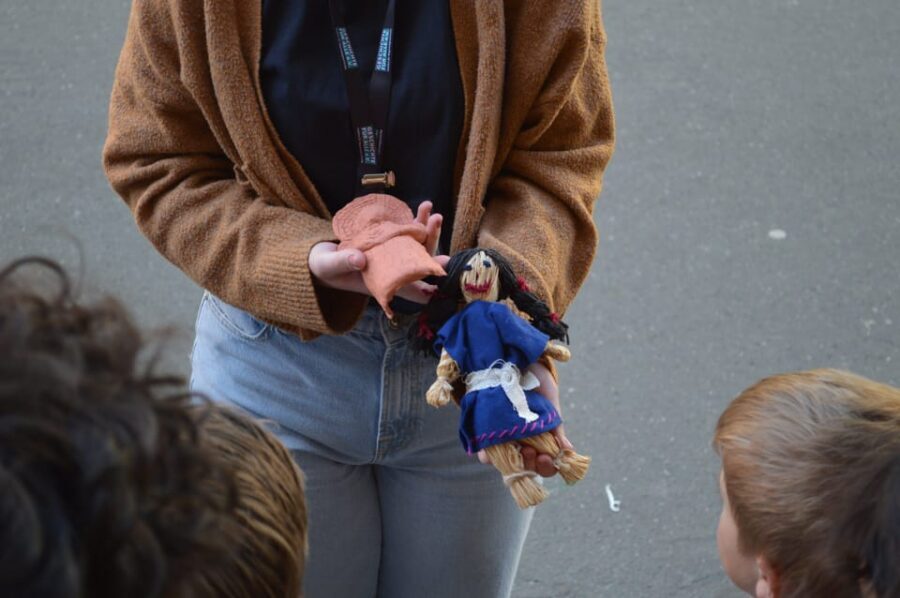
One of the tour’s standout themes is the use of water in medieval times along the river Pegnitz. This is one of those topics that sounds technical until a guide connects it to what people actually did day to day.
You’ll learn how water shaped daily routines and city life—again, taught in a child-friendly way rather than through textbook detail. It’s also a topic that fits Nuremberg’s landscape perfectly, because the river is part of the city’s story.
For kids, it’s a natural hook. For adults, it’s a useful reminder that “history” is often just daily survival turned into systems—water access, cleanliness routines, and how communities functioned.
Liebesinsel and Fleischhauerbrunnen: short stops with real payoff
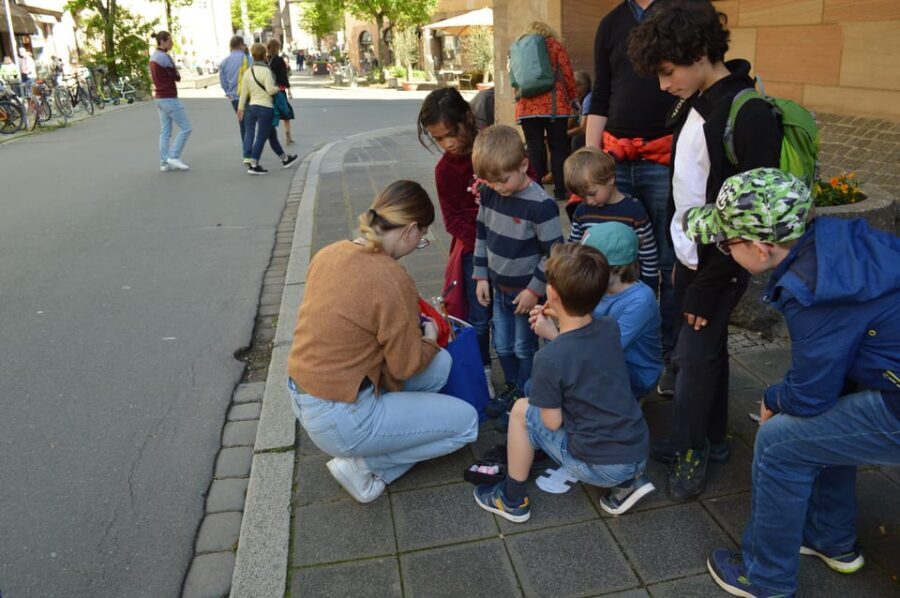
Between the major squares, you’ll make quick walking legs and hit a couple of smaller, memorable stops: Liebesinsel and Fleischhauerbrunnen.
Each stop is brief, but they’re not random. They’re built to keep the tour moving while giving you more story context. In other words, you don’t feel like the guide is rushing just to cover ground—you feel like the guide is using the city’s details like chapters.
This kind of stop-and-explain approach is exactly why the tour works for families. Kids can reset their attention, and you still collect enough information to feel like you learned something meaningful.

St. Sebaldus Church relief: church power explained through images
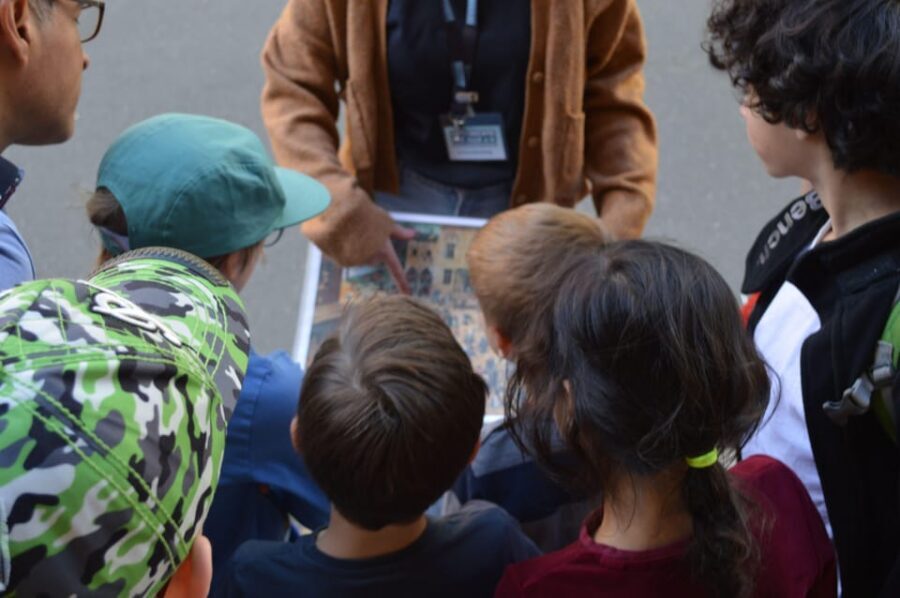
When you reach St. Sebaldus Church, you’re not just looking at architecture. You’ll also explore the relief outside the church, which explains the role of the church in medieval life.
This is one of the most important shifts in the tour. Up to this point, you’ve focused on daily life: children, food, leisure, and work. The church relief adds a layer about community authority and beliefs—still explained in a kid-appropriate way.
I like tours that teach you to “read” what you’re seeing. Here, the relief becomes a story tool, so the church stop doesn’t feel like a passive photo moment. You understand what the image is doing and why it mattered.
Weinmarkt to Weißgerbergasse: professions, games, and a shared sacred moment
As the tour continues to Weinmarkt, you get more of that Old Town rhythm—another historic point that helps connect the city’s layout to the way people lived.
Then you finish at Weißgerbergasse. The key takeaway isn’t just the geography. The tour uses the final stretch to pull together the big themes: work, leisure, and how medieval people organized both daily life and shared community moments.
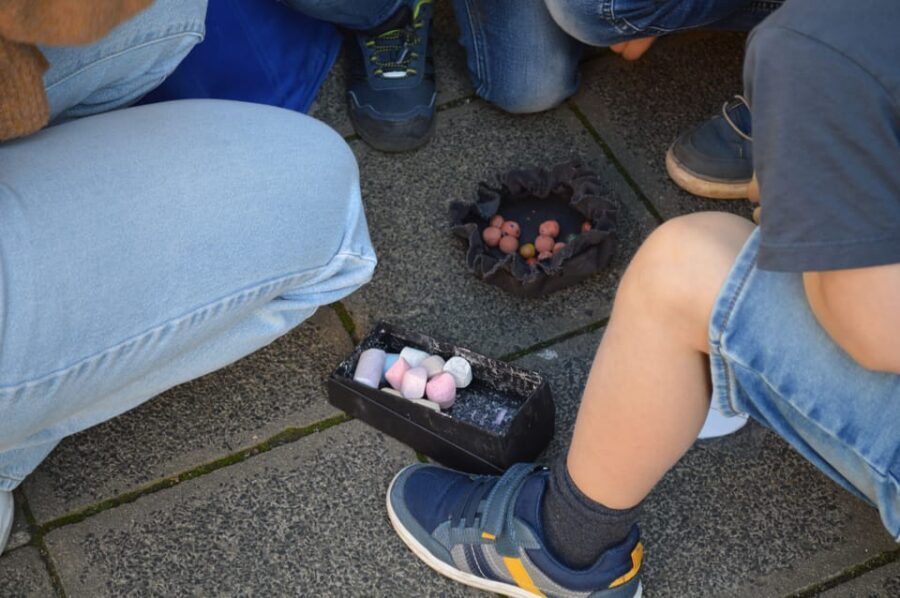
This is also where the activity side really shines. You’ll play historical games and take part in the joint staging of a sacred ritual. That staging is clearly designed for participation, not spectatorship, which is why kids often enjoy it more than they expect.
The tour also introduces different medieval professions. That’s a smart move. It nudges kids away from only thinking in terms of knights and princesses and toward understanding real jobs and responsibilities.
And yes, the tour specifically addresses whether knights and princesses were really a normal fit for the city. It’s a myth-vs-reality kind of lesson, which tends to land well with kids because it feels like answering a big question rather than repeating facts.
What you’ll learn (and why it sticks for kids)
This isn’t a tour that tries to cram medieval knowledge into one big lecture. It focuses on a handful of themes, and it ties them to places you can see.
Here’s what stands out as the most kid-friendly learning style:
- Children’s daily life: what kids ate, what they played with, and how they spent time
- Working life and nutrition: a realistic look at what people actually dealt with
- Leisure and community routines: life wasn’t only work and rules
- The church’s role: authority, belief, and community structure shown through what you can view in the city
The games and role-play matter because they give you memory hooks. You’re not only hearing about a concept; you’re acting it out. That turns history into something your brain can hang onto.
It’s also a tour where kids can enjoy themselves while adults still walk away with real understanding. The balance is intentional, and the pacing keeps both age groups from getting bored.
Price and value: $11 for two hours of real participation
At $11 per person for a two-hour guided walking tour, the value is strong—especially because so much of what you’re paying for is activity, not just narration. You’re getting a live guide in German, multiple guided stops in the Old Town, and interactive elements like historical games and a sacred ritual staging.
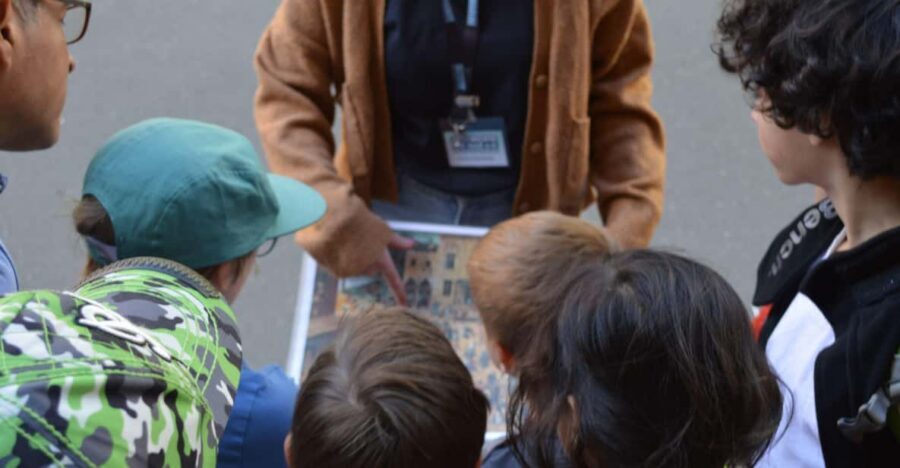
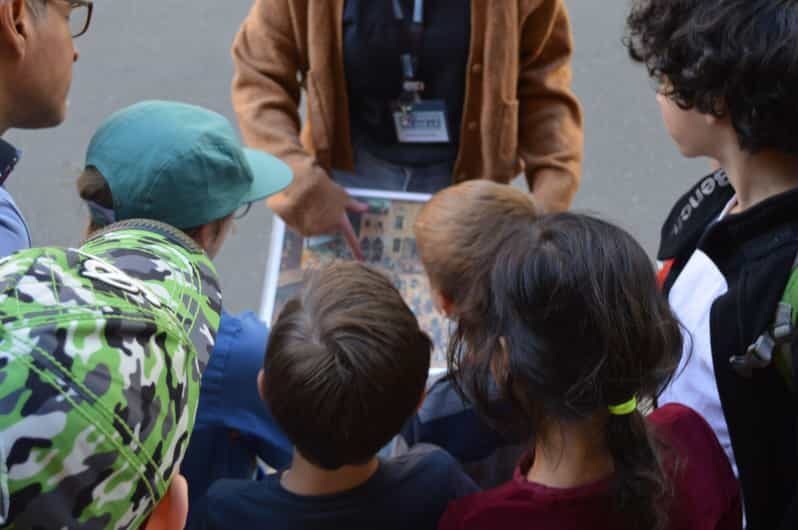
If you’ve ever paid for “family” tours that are mostly a checklist with minimal engagement, this is different. The guide uses materials and representations to keep the experience moving, and kids typically stay interested because they’re doing things, not just listening.
Also, the tour covers major recognizable spots (Trödelmarkt, Hauptmarkt, St. Sebaldus Church area) plus extra story stops, so you feel like you used your time well even if you’re only visiting Nuremberg for a short stay.
Timing, shoes, and how to make the most of the 2 hours
The tour runs about two hours, and the walking segments between stops are short (think roughly 5 to 7 minutes at a time). Still, comfortable shoes are non-negotiable because you’ll be on your feet for the full loop.
Dress for the weather. You’ll be outside most of the time, and being comfortable helps you enjoy the interactive moments rather than just surviving the outing.
If your kids are the type who need to move, this is built for that. If they’re shy, it can still work because the activities are integrated into each stop rather than one big “perform for everyone” moment.
Language tip: because the tour is German, bring help if you need it—at minimum, be ready to explain the themes in simple terms during breaks. A kid-friendly translation in your head goes a long way.
Who this tour is best for
This tour is a great match if you’re traveling with children who like stories, movement, and hands-on activities. It’s also a nice choice for adults who want history that’s explained through real city locations rather than only through books.
It’s not a fit for children under 6, and it isn’t suitable for people with mobility impairments. If anyone in your party needs accommodations, you’ll want to look for an alternative format.
It also makes sense for families who want a structured two-hour activity in Nuremberg’s Old Town without spending all day commuting or dealing with long museum schedules.
If you’re traveling with a larger group—especially 10 or more people—you can contact the provider at [email protected] to ask about group participation.
Should you book Nuremberg: Medieval Time Travel for Kids?
I’d book it if your goal is a family-friendly Old Town experience that treats kids like active learners. The mix of interactive games, guided stops at recognizable landmarks, and lessons tied to daily life themes makes it feel purposeful, not watered down.
I’d think twice only if German is a hard barrier for your group or if accessibility needs make a walking tour unrealistic. Otherwise, this is an easy-value way to see Nuremberg while learning how medieval life shaped what people ate, worked, believed, and played.
FAQ
Where does the tour start?
The meeting point is in front of the Hangman’s House at the Henkerhaus Museum area. The guide stands there with a green name badge and a folder marked Geschichte Für Alle.
How long is the tour?
The tour lasts 2 hours.
What does the tour include for kids besides walking?
You’ll have a guided walking tour with historical games, and you’ll take part in the joint staging of a sacred ritual. The tour also covers what children ate, played with, and how daily life worked.
What language is the tour in?
The tour is in German with a live guide.
Is it suitable for young children or mobility-impaired visitors?
It is not suitable for children under 6. It also isn’t suitable for people with mobility impairments.
What major Old Town stops will we see?
You’ll visit stops including Trödelmarkt, Hauptmarkt Nürnberg, the St. Sebaldus Church area (including the relief outside), Weinmarkt, and you finish at Weißgerbergasse.
Can groups of 10 or more request arrangements?
Yes. If you have a group of 10 or more people, you can contact [email protected] to ask about group participation.