REVIEW · MUNICH
Munich: Third Reich and World War II Private Guided Tour
Book on GetYourGuide →Operated by Rosotravel Germany · Bookable on GetYourGuide
Munich’s street corners carry weight. I like how this private guide walks you through the Third Reich story using the actual buildings, not dusty textbooks, and it stays clear-eyed about what happened and where. The big payoff for me is connecting propaganda-era speeches to the places you can still see today, including Hofbräuhaus and the Nazi party sites. One thing to consider: this is a heavy topic, and you’ll be asked to sit with uncomfortable questions about Munich’s role in Nazism.
I also like the pacing: a focused 3-hour walk that ends at Königsplatz, then (if you choose) a longer option that adds the NS Documentation Center. Starting at Marienplatz means you’re right in the center of where mass political theater played out, and you can still spot the scars of 1945 in the city core. As a walking tour, it’s straightforward, but it does mean lots of time on your feet in Old Town streets.
If you want a guide who can answer questions in real time, this fits well. It’s offered in multiple languages (English, German, French, Italian, Spanish), and it’s a private group, plus it’s listed as wheelchair accessible. If your priority is only quick highlights, though, you might find the context takes a bit longer than a classic sightseeing loop.
In This Review
- Key highlights you’ll feel right away
- Marienplatz to the Neues Rathaus: where propaganda met the blast zone
- Hofbräuhaus am Platzl: Hitler’s 1920 speech and the party’s early momentum
- Feldherrnhalle and Odeonsplatz: the failed coup, the aftermath, and a manifesto
- Resistance in the street: White Rose and the Monument to the Victims
- Führerbau and the 1938 Munich Agreement: when diplomacy wore a Nazi uniform
- Königsplatz for mass rallies and book burnings: the ideology stage
- The 4.5-hour option: NS Documentation Center and how it fills the gaps
- Price, time, and value at $311 per person
- Who this tour suits best (and who might want a different style)
- Good to know before you go: how to make this walk land
- Should you book this Munich Third Reich and WWII private tour?
- FAQ
- Where does the tour meet?
- How long is the walking tour?
- What’s included in the 4.5-hour option?
- Which languages are available?
- Is this a private tour?
- Is the tour wheelchair accessible?
- What sites are included during the walk?
- Does the tour cover the Beer Hall Putsch?
- What’s the cancellation policy?
Key highlights you’ll feel right away
- Marienplatz first: start where political drama and public power were on display
- Beer Hall Putsch route: follow the street path tied to the failed Nazi coup
- Hofbräuhaus am Platzl stop: the 1920 speech that helped shape the party’s rise
- Führerbau and the Munich Agreement: a major 1938 moment tied to a specific building
- Königsplatz for rallies and book burnings: end at the stage where terror met ideology
- Optional NS Documentation Center: film, photos, documents, and explanations covering WWI-to-postwar
Marienplatz to the Neues Rathaus: where propaganda met the blast zone
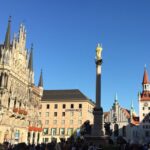
The tour starts at Marienplatz, Munich’s central square, in front of Hotel BEYOND by Geisel (meet opposite St Peter). That matters because you’re beginning in the exact kind of public space where the Nazis relied on crowds, spectacle, and constant messaging.
From the start, the guide helps you look at the city differently. You’re not just seeing architecture; you’re seeing how power wanted to look. And then you get the hard contrast: the Neues Rathaus area still reflects damage from the 1945 bombing that destroyed much of downtown. The point isn’t to turn Munich into a museum of ruins—it’s to show how political violence leaves physical marks, and how cities rebuild their centers over that broken ground.
You’ll also hear how Munich became a key location for the Nazi movement. That storyline sticks because the tour keeps moving through recognizable Old Town streets rather than asking you to memorize names while standing still. If you like history that’s tethered to place, this is a strong match.
You can also read our reviews of more guided tours in Munich
Hofbräuhaus am Platzl: Hitler’s 1920 speech and the party’s early momentum
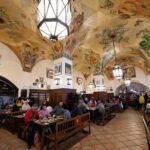
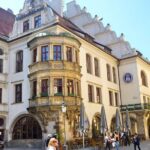
One of the first major anchors is Hofbräuhaus am Platzl. The guide connects this beer hall stop to the origin moment of the National Socialist German Workers’ Party in 1920, when Adolf Hitler made a speech there that helped set the party’s course.
It’s easy to think of early Nazi politics as distant and abstract. Here, you’re shown that it began in very ordinary public settings—places where people gathered, listened, and watched power perform. The guide ties that social reality to the party’s growth, including how supporters gained traction and how opponents formed resistance.
Then the tour starts tracing the route of the Beer Hall Putsch, which is where the story sharpens. You’ll follow the physical path tied to the attempted coup and the violent clash that followed. Even if you already know the basics, walking it helps you understand how quickly political ambitions can turn into street-level chaos.
Feldherrnhalle and Odeonsplatz: the failed coup, the aftermath, and a manifesto
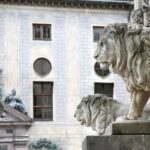
The walk continues toward Feldherrnhalle and Odeonsplatz, following the same general area associated with the Nazis’ attempt to storm the Bavarian Defense Ministry. The guide highlights what made this event so important: it wasn’t just a failed push for power, it became a turning point in how Hitler framed his movement to the public afterward.
One detail you’ll likely remember is the connection to Mein Kampf—the story is that this episode inspired Hitler to write his political manifesto. You’ll also hear how the Nazis used events like this for propaganda afterward, shaping a narrative that supporters could absorb and critics couldn’t ignore.
This is also where the guide’s role becomes really practical. As you walk through the square-like spaces and monuments, you’ll want context on what each moment meant—and you’ll get it. Just be ready to hear about the mechanisms of control and intimidation, not only the dates. The tour leans into cause-and-effect, including how ideology became behavior and how behavior became violence.
Resistance in the street: White Rose and the Monument to the Victims
The tour doesn’t just follow Nazi power; it also points to resistance. You’ll learn about resistance groups in Munich, including the White Rose Group, led by five university students. That portion is important because it prevents the story from becoming one long parade of perpetrators and symbols.
You’ll also see the Monument to the Victims of National Socialism, which helps bring the focus back to human cost. This stop can feel quiet compared to the earlier propaganda sites, and it’s a good reminder that history isn’t only about political leaders. It’s about the people targeted by a system, and the survivors and families who carried the consequences.
If you’re concerned about keeping the tone respectful while still learning, this part helps. It gives the tour emotional balance: you’re allowed to recognize tragedy without turning it into spectacle. The guide is also set up to handle difficult questions, which matters with a subject like this where people arrive with different backgrounds and levels of knowledge.
Führerbau and the 1938 Munich Agreement: when diplomacy wore a Nazi uniform
Another key stop is the former office building of the Nazi Party, including Führerbau, known as the Führer’s building. The tour ties this location to the Munich Agreement in 1938, specifically noting that Chamberlain and Hitler signed it there.
This is where the walking format really helps you. You’re not learning about a treaty in a vacuum; you’re learning it beside the walls where key decisions were made. The guide uses this to connect political theater to real-world consequences. Even if you’ve read about the agreement before, seeing the place pushes the material into your head in a different way.
A smart thing the guide does here is keep the story connected: from Hitler’s early rise, to public events like speeches and rallies, to high-level political decisions that helped steer Europe toward war. It’s not just names and dates. It’s how systems operated—who held power, how they used official moments, and how those moments fit into a larger plan.
You can also read our reviews of more private tours in Munich

Königsplatz for mass rallies and book burnings: the ideology stage
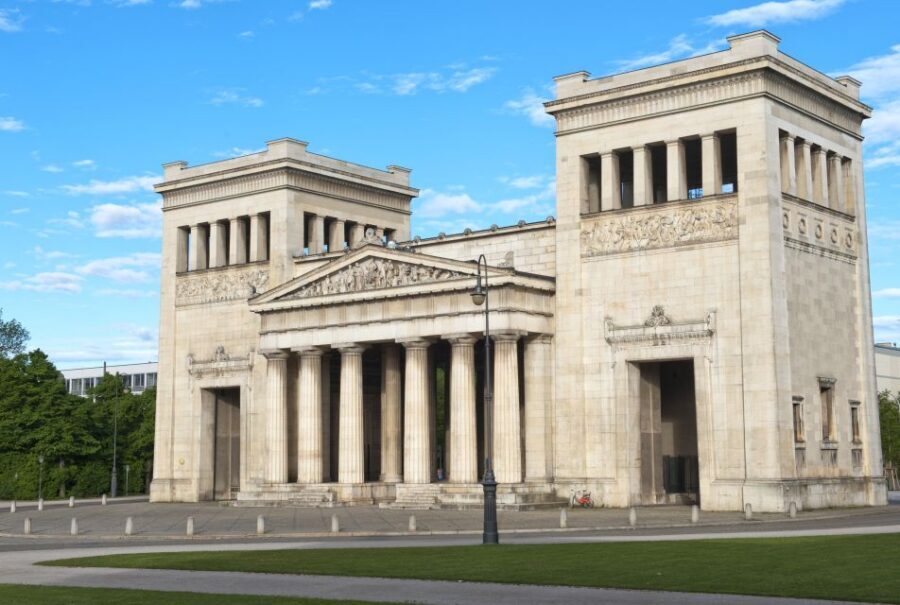
The tour finishes at Königsplatz, a site associated with Nazi mass rallies and book burnings. Ending here is powerful because the space itself reads like a stage: it’s open, ceremonial, and built for gathering. The guide helps you understand why this kind of location mattered for ideology—public rituals make ideas feel normal, even when those ideas are dangerous.
If you’ve ever wondered how propaganda turns into social pressure, this ending helps. You can connect what you’ve learned earlier—speeches, attempted coups, party sites—to the final goal: controlling culture, controlling thought, and controlling what people were allowed to read and believe.
It’s also a good checkpoint. By the time you reach Königsplatz, you’ve already seen the route of the Beer Hall Putsch and the Nazi administrative buildings. So the story lands as a single arc: power building, power displaying, and power enforcing.
The 4.5-hour option: NS Documentation Center and how it fills the gaps
You get a meaningful upgrade if you choose the 4.5-hour option, which includes the NS Documentation Center for the History of National Socialism. This isn’t just extra walking. It changes the whole experience because the center adds interpretation—photos, documents, texts, and film projections, plus media stations that explain the origins, rise, war, and postwar period in Munich.
The tour data says the documentation includes exhibits on WWI and WWII, too, which is useful. It gives you the broader context that you might not get from street sites alone. Street history tells you where events happened; a documentation center helps you understand why those events unfolded the way they did.
If you tend to ask questions after a tour, this option is worth considering. A lot of what makes this subject hard is not the lack of facts—it’s the connections between politics, propaganda, war, and daily life. The guide helps you make sense of those causes and consequences while you’re inside the exhibits.
Price, time, and value at $311 per person
At $311 per person for the 3-hour private walk, the value depends on what you want from history. You’re paying for a private guide and a concentrated route with major Nazi-era sites, plus guided context you can’t easily replicate from a self-guided audio tour.
Here’s how I’d think about it as a buyer:
- If you want the clarity of a guide to explain why these places mattered, the price can feel fair, especially for a private group.
- If you’re mostly collecting photos, you could do it cheaper on your own. But you’d miss the connections between each stop and the bigger storyline.
- If you’re choosing between 3 hours and the 4.5-hour version, the decision becomes simple: add the NS Documentation Center if you want context beyond the street-level landmarks.
Also, the duration is short enough that you can fit it on a busy Munich day, but long enough to feel like a real walking lesson rather than a quick hit of highlights. The optional add-on is where you gain the most for anyone who likes structured explanations and documentary detail.
Who this tour suits best (and who might want a different style)
This tour is a strong fit if you:
- Want Munich and WWII history connected to exact locations
- Like guided explanations you can ask questions about
- Prefer a narrative route that moves from Nazi rise to the war years and 1945
- Appreciate seeing both Nazi sites and resistance/commemoration points
It’s less ideal if you:
- Want a lighter, entertainment-first walking tour
- Get uncomfortable with heavy subject matter and may struggle with the discussions about Munich’s role and citizens’ involvement
- Are hoping for a long seated museum time as your main experience (the walking tour is the core; the museum is only in the longer option)
Good to know before you go: how to make this walk land
Because this is about the Nazi era, your mindset affects your experience. I’d treat it like a guided study session on public power—listening for patterns rather than trying to absorb everything at once.
A practical tip: wear comfortable shoes and plan for a steady walk through central Old Town spaces. The sites you’ll see are spread in a way that makes sense for storytelling, not for quick breaks. If you do the 4.5-hour option, you’ll add time indoors, which can be easier if you need a change of pace.
Also, bring curiosity for the parts that feel morally complicated. The guide is set up to answer questions about causes and consequences, including the relationship between ideology, violence, and daily life. If you’re the kind of person who likes straight answers, you’ll appreciate that tone here. It’s not about avoiding hard topics; it’s about understanding them.
Should you book this Munich Third Reich and WWII private tour?
Book it if you want a private, walking-based history lesson that uses Munich’s own streets and buildings to explain the Third Reich era, from early party rise to WWII and the aftermath in 1945. The route through places like Marienplatz, Hofbräuhaus, Führerbau, and Königsplatz is exactly the kind of “history you can point to” that makes learning stick.
Skip it and choose something lighter if you’re not ready for difficult questions about Munich’s involvement and the mechanisms of Nazi rule. And if you’re deciding between 3 hours and 4.5 hours, I’d lean toward the longer option when you want documentary depth, not just street history. Either way, the guided format is the reason this feels worth the money.
FAQ
Where does the tour meet?
Meet your guide in front of Hotel BEYOND by Geisel, Marienplatz 22, 80331 Munich, Germany, opposite St Peter.
How long is the walking tour?
The standard option is 3 hours (270 minutes).
What’s included in the 4.5-hour option?
The 4.5-hour option adds a visit to the NS Documentation Center for the History of National Socialism.
Which languages are available?
The live guide is listed as available in English, German, French, Italian, and Spanish.
Is this a private tour?
Yes, it’s a private group.
Is the tour wheelchair accessible?
The activity is listed as wheelchair accessible.
What sites are included during the walk?
The tour includes stops such as Hofbräuhaus, Führerbau (former Nazi party offices), the Monument to the Victims of National Socialism, and Königsplatz, plus areas connected to the Beer Hall Putsch.
Does the tour cover the Beer Hall Putsch?
Yes. The route follows the path connected with the Beer Hall Putsch to places like Feldherrnhalle and Odeonsplatz.
What’s the cancellation policy?
Free cancellation is available up to 24 hours in advance for a full refund.