REVIEW · MUNICH
Munich: Historical Walking Tour on the Rise of Hitler
Book on GetYourGuide →Operated by Munich Stories · Bookable on GetYourGuide
Munich can feel calm, then the sidewalks start talking. This historical walking tour follows the rise of Hitler and the Nazis through the city’s key squares and buildings, with a local guide, Alex, turning ordinary street corners into real context. Munich never tells the full story on its own, but this tour shows you where the story hardened.
What I like most is the chronological structure, so the events line up instead of turning into a random list of sites. I also love Alex’s mix of clear explanations and a relaxed tone, including short breaks, room for questions, and a sense of humor that keeps the focus on understanding, not just shock value.
One thing to consider: the tour is live guided in German only. If you don’t read or listen comfortably in German, you may miss some of the finer context and the Q&A flow.
In This Review
- Key points before you go
- Where the tour begins: Marienplatz and a timeline you can follow
- Munich’s path from a cultured city to a Nazi stage
- Seeing Nazi-era architecture in plain sight
- Speeches, parades, and the war Munich had to endure
- Alex’s guiding style: serious topic, human delivery
- Timing and pacing: 2.5 hours that don’t feel rushed
- Price and value: what $30 gets you in Munich time
- Accessibility and practicalities that actually matter
- Should you book this Munich Nazi history walking tour?
- FAQ
- Where do I meet the guide?
- How long is the tour?
- How much does it cost?
- Is the tour in English?
- Does the tour run in bad weather?
- What should I bring?
- Is hotel pickup included?
- Is the tour wheelchair accessible?
- What is the cancellation policy?
Key points before you go
- Meet at Marienplatz at the Marian Column, the tall column with the small golden statue
- Chronological walking route that links the rise of National Socialism to specific places in Munich
- A Munich local guide, Alex (born and raised, history-focused, and strongly motivated to explain causes)
- Nazi-era buildings and repurposed religious spaces you can still see in today’s cityscape
- Rain or shine and roughly 2.5 hours with a pace that stays watchable
Where the tour begins: Marienplatz and a timeline you can follow
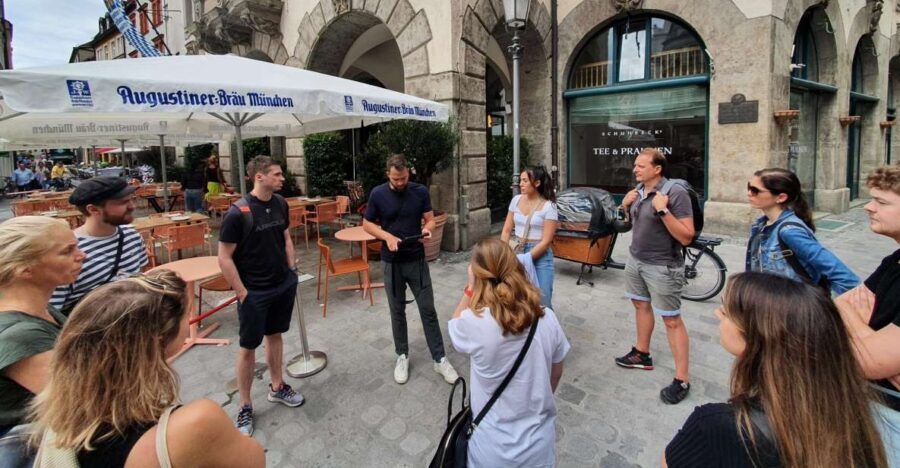
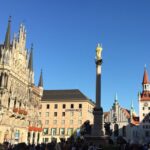
The tour starts where almost everyone in Munich ends up at some point: Marienplatz, right by the Marian Column. It’s an easy meetup, and it also works symbolically. You begin in the heart of the city, where life moves fast and politics is usually invisible, then you walk toward the places where Nazi power took shape in public.
The biggest gift here is the timeline approach. Instead of hopping around, you go in sequence—so you’re not left memorizing dates or guessing how one event led to another. You start to see patterns: how a movement grows from speeches and celebrations into systems, and how that system then leaves behind visible architecture and scars.
Also, the guide makes it plain that this isn’t about turning Munich into a single villain. Munich became important because history happens where people gather, where speeches get heard, and where crowds form. That’s a big reason the tour feels practical rather than preachy: you’re learning how “ordinary public life” can be pulled into extraordinary cruelty.
You can also read our reviews of more walking tours in Munich

Munich’s path from a cultured city to a Nazi stage
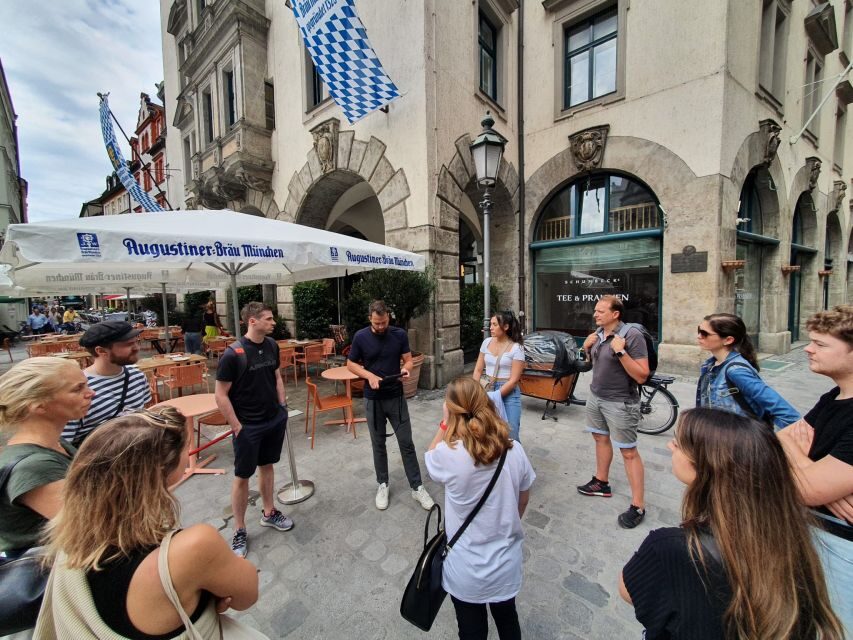
Munich is famous for being open, orderly, and forward-looking today. That contrast is exactly why this tour hits. You’re shown how a city that later became associated with art and culture also played a decisive role during the rise of the Nazi movement.
The tour’s core idea is simple: Munich helped power the rise, not just watched it happen elsewhere. You learn how an initially obscure figure became the feared dictator of the Third Reich, and how Munich helped provide the spotlight. Then you see how the movement rewarded the city with the honorary label capital of the movement, and how that label translated into a building boom.
What you’ll start noticing as you walk is how city space can be shaped for ideology. Public squares aren’t neutral in that story. They’re stages. Places of gathering can be used to train the public in who matters, who belongs, and what future is being promised.
You also get the angle that many history tours skip: not just what happened in the headlines, but why this kind of takeover can find fertile ground. Alex’s focus is on causes—how the rise was made possible—so you come away understanding the mechanics, not only the outcome.
Seeing Nazi-era architecture in plain sight
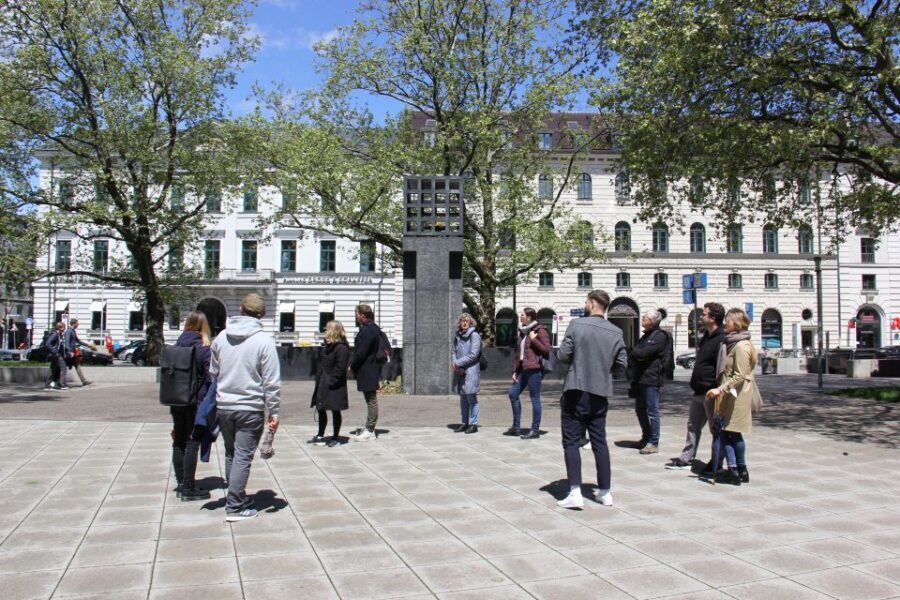
One of the most memorable parts of this experience is how you learn to read the cityscape differently. Nazi-era propaganda buildings and planned spaces were erected with intent, and many survived the war with their major structure still recognizable. That means Munich today can look unchanged while the message beneath it remains written in stone and street alignment.
During the walk, you visit some of the most important buildings and squares tied to National Socialist use—either built by them or repurposed for propaganda and public ritual. Even if you’re not a history buff, the tour gives you a way to look: pay attention to scale, formality, and how a location guides crowd movement. Those are the subtle “design choices” that turn a place into a tool.
I also appreciate that the tour doesn’t only point to surviving monuments. It treats buildings as witnesses. When you understand the context—why something was constructed, what it was meant to project, and what the city endured—you start to connect architecture to human consequences.
And yes, this can feel heavy. But that’s also why it’s valuable. You’re not just taking photos of old facades; you’re learning what those facades were used to communicate.
Speeches, parades, and the war Munich had to endure
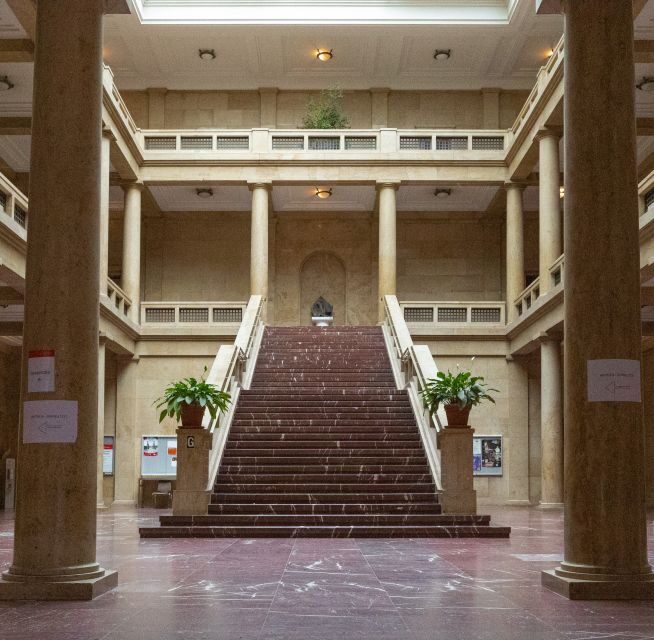
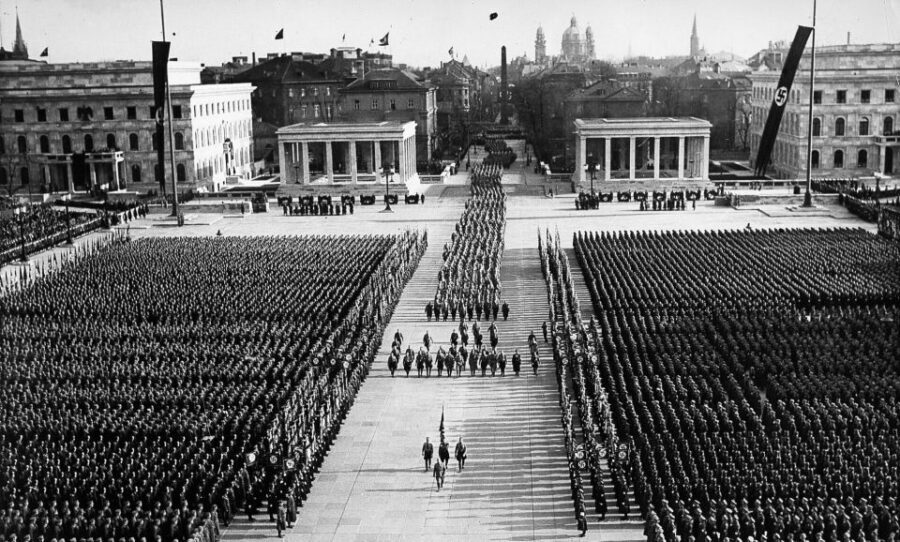
Another reason this tour works is that it links ideology to action. You’re shown places connected to Hitler’s early speeches, Nazi parades, and the way Munich suffered during the bombing war. These aren’t abstract themes. They connect to where people stood, where crowds formed, and where the city’s public life was interrupted and reshaped by violence.
The tour treats public events as pivotal turning points. Once you see the setting for a first speech or a parade route, it’s easier to understand how persuasion became performance. Movements don’t only win through policy; they win through attention, repetition, and emotion delivered in crowds.
Then the story pulls forward into what happens when ideology runs into reality. Munich had to endure the bombing war, and the city’s later look becomes part of the lesson: power can fall, buildings can remain, and the past can be preserved in surprising ways—sometimes unwillingly.
By the time you finish these sections of the walk, you’re likely to have a clearer mental map of cause and effect. The tour doesn’t just say Nazis used Munich. It explains how and why Munich became useful to them at each step.
Alex’s guiding style: serious topic, human delivery
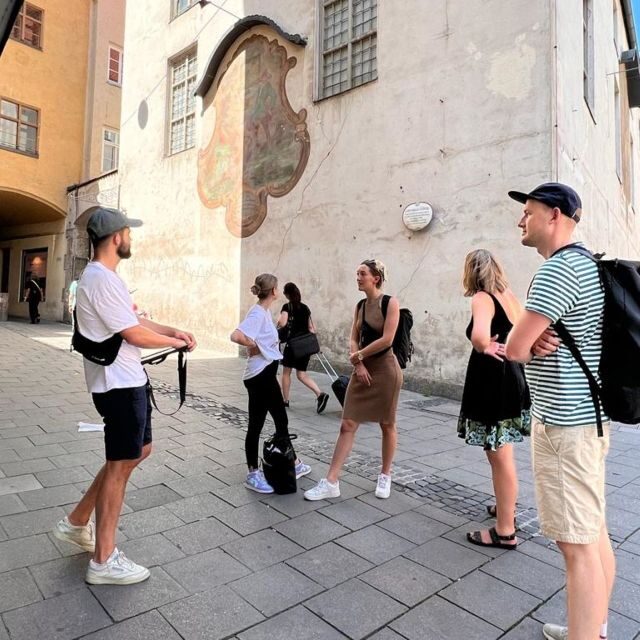
The guide is Alex, a young Munich professional guide, born and raised in the city, age 32. He’s been involved with this topic since his youth, and his drive is about understanding—how National Socialism rose and how an inhuman dictatorship could destroy Europe within a few years.
That “why” matters. Too many tours treat Nazi history like a checklist: location, fact, next stop. Here, you’re nudged toward explanation. You’re learning how the rise happened, what it required from society, and how those requirements were fed through public life.
Alex also sets expectations in a way that keeps the tour accessible. He makes it clear you do not need to be a history professional to join. That matches what I think you want on a walking tour like this: a confident guide who can explain clearly, handle questions, and keep things moving without turning the experience into a lecture.
One more detail I really value: the tour can still have humor. Not in a disrespectful way, but in a way that keeps people talking and thinking rather than freezing in discomfort. That lightness helps when the topic is brutal, because it gives your brain a chance to process instead of just react.
You can also read our reviews of more historical tours in Munich



Timing and pacing: 2.5 hours that don’t feel rushed
The scheduled length is 2.5 hours, and the pace is built for a walking format that stays understandable. You’ll be on your feet long enough to get real context, but short enough to work into almost any Munich itinerary.
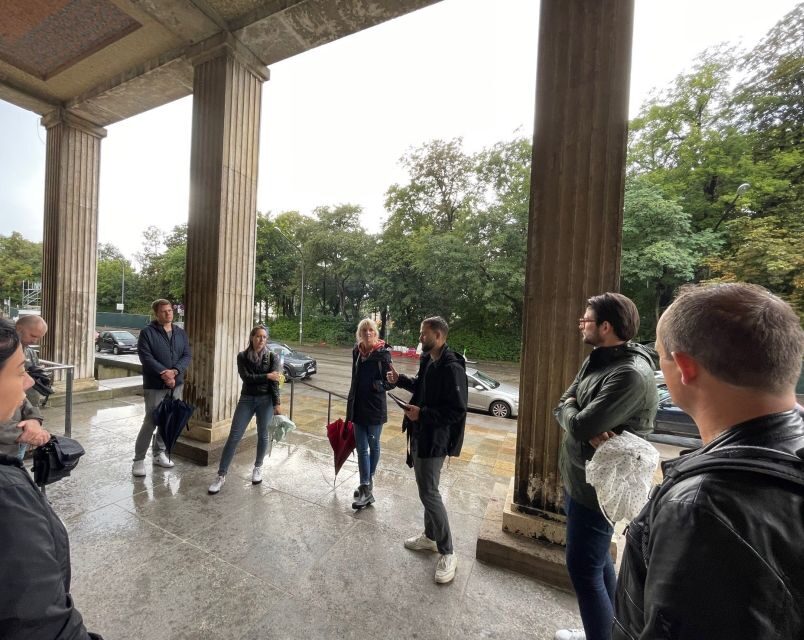
The tour runs rain or shine, so plan accordingly. Comfortable shoes are a must, and Munich weather can shift quickly. If you know you’ll feel cold or damp easily, bring a layer that you can adjust during the walk.
Alex also builds in short pauses for breathing and for questions. That’s important on serious topics. You want a moment to let the information settle, and you want time to ask the thing you didn’t want to interrupt the flow to ask.
If you’re the kind of traveler who likes to read signs, take a photo, and then stand still for a minute, this tour will likely work well for you. If you’re the kind of traveler who hates walking and can’t handle crowds, you might find it more demanding. But the overall structure is meant to keep it manageable.
Price and value: what $30 gets you in Munich time
The price is $30 per person for a 2.5-hour guided walk. For Munich, that’s not a “cheap” price, but it also isn’t a luxury sightseeing add-on. You’re paying for a skilled local guide, a focused theme, and the ability to translate architecture and public space into meaning.
What’s included is a fully guided tour with Alex and personal recommendations to explore Munich like a local. That matters because you’re not just leaving with facts; you’re leaving with direction. A history tour is most valuable when it changes how you see the rest of your trip—where to walk, what to notice, and how to connect what you learned to what you’ll see next.
Also, the tour language is German. If you’re comfortable with German, you get the full value: the explanations and the chance to ask questions in real time. If you aren’t, you may still learn a lot from the structure and the sites, but the impact will likely be smaller.
If you’re deciding between this tour and a general “highlights of Munich” walk, I’d pick based on your curiosity. If you want only postcard Munich, this is not that. If you want the real Munich—layered and honest—this is a strong use of your time.
Accessibility and practicalities that actually matter
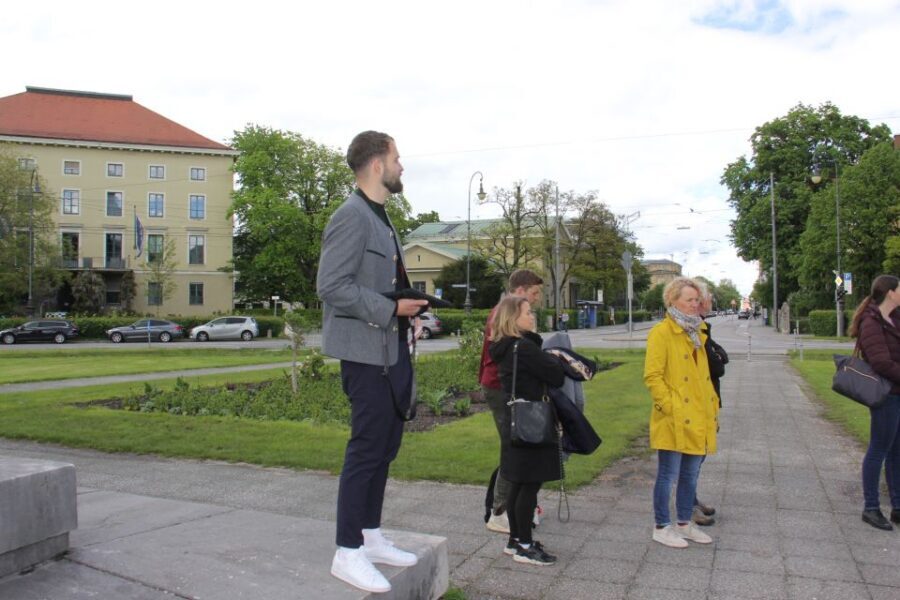
This tour is wheelchair accessible, which is a real plus for a walking-focused activity. Still, it’s worth keeping in mind that it’s a city walk—surfaces and distances are part of the experience.
There is no hotel pickup, so you’ll arrive on your own at the meetup point: Marienplatz at the Marian Column. It’s centrally located and easy to orient around, which reduces stress.
The tour is offered in German. It’s live guided, so comprehension depends on your comfort with the language. If you’re relying on translation apps, it will slow you down and may reduce what you catch during the Q&A.
Should you book this Munich Nazi history walking tour?
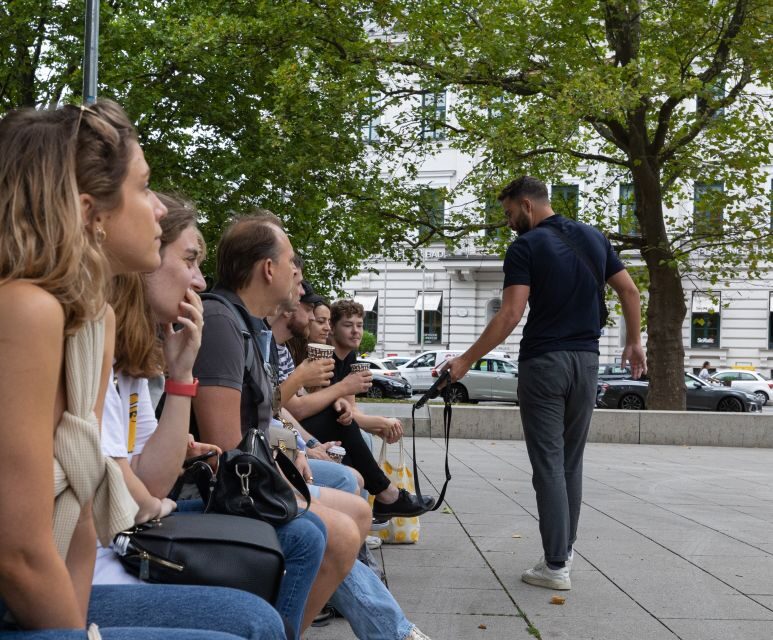
Book it if you want Munich with context, not just charm. The combination of Alex’s local knowledge, the chronological flow, and the focus on specific buildings and public spaces tied to National Socialism makes it a strong choice for travelers who want understanding over surface sightseeing.
Skip it or think twice if German is a barrier for you, or if you want a purely light, casual tour with minimal emotional weight. This is built around a serious theme: the rise of Hitler and how Nazi power shaped Munich. That can be intense, even with the guide’s respectful humor.
If you do book, wear good shoes, bring a layer for weather, and give yourself permission to ask questions. The tour is structured for learning, but it only becomes really personal when you engage—especially on the hardest questions about how societies fall into catastrophic choices.
FAQ
Where do I meet the guide?
Meet your guide at Marienplatz at the Marian Column, the large column with the small golden statue in the middle of the square.
How long is the tour?
The tour duration is 2.5 hours.
How much does it cost?
It costs $30 per person.
Is the tour in English?
No. The live tour guide language is German.
Does the tour run in bad weather?
Yes. The tour takes place rain or shine.
What should I bring?
Bring comfortable shoes for walking.
Is hotel pickup included?
No, hotel pickup is not included.
Is the tour wheelchair accessible?
Yes, the tour is wheelchair accessible.
What is the cancellation policy?
You can cancel up to 24 hours in advance for a full refund.