REVIEW · KOBLENZ
Koblenz – Old Town with the Ehrenbreitstein Fortress
Book on Viator →Bookable on Viator
Koblenz gives you big views fast. This private tour pairs the hilltop Ehrenbreitstein Fortress with a tight loop through Old Town highlights, all tied together by the Rhine’s UNESCO-listed drama. I especially like the undivided attention you get from a licensed guide, and the way the stops are paced so you see the story of the city without losing the thread. One thing to keep in mind: the fortress experience depends on good conditions, and the ticket costs for the fortress and cable car are on you.
From the fortress you get a real sense of where Koblenz sits—high above the Rhine with the whole Rhine Valley stretching out. Then the walking portion hits major landmarks that are mostly free to enter, so your money goes toward the views rather than a long list of paid attractions. The main consideration is timing: with only about three hours total, you’ll want your group to stay on schedule for the fortress visit.
In This Review
- Key points worth knowing before you go
- Ehrenbreitstein Fortress: the Rhine Valley view you can’t fake
- Fortress visit time: plan for the “wow” moment
- Old Town Koblenz on foot: a compact loop with a clear story
- The walking pace is tour-friendly
- Münzplatz: the Roman confluence origin you can actually point to
- Why this short stop works
- Liebfrauenkirche and the onion-domed skyline
- A quick but meaningful church pairing
- St. Castor: Carolingian bones of Koblenz
- Schangelbrunnen and the civic symbols of Koblenz
- Deutsches Eck: the Kaiser Wilhelm memorial and the Rhine bend
- Price and logistics that actually make sense
- When the timing choices matter
- Who this Koblenz private tour suits best
- Should you book the Koblenz Old Town with Ehrenbreitstein Fortress tour?
- FAQ
- What’s the duration of the Koblenz Old Town with Ehrenbreitstein Fortress tour?
- Where does the tour start and end?
- Is this tour private?
- What’s included in the price?
- What’s not included?
- How do I access tickets?
- Are there any stops with free admission?
- How long do you spend at Ehrenbreitstein Fortress?
- What fitness level do I need?
- What happens if the weather is bad?
Key points worth knowing before you go
- Private guide, small group (up to 15): you’ll get a guided pace that works for your group.
- Start at Ehrenbreitstein Fortress: the best view is front-loaded, not saved for the end.
- Cable car link to the fortress: the fortress is connected to town by cable car, but those charges aren’t included.
- Mostly free Old Town stops: several key sights you visit don’t require paid entry.
- Roman confluence origins at Münzplatz: the square connects directly to Koblenz’s early roots.
- Weather matters: the experience requires good weather; poor weather can trigger a date switch or full refund.
Ehrenbreitstein Fortress: the Rhine Valley view you can’t fake
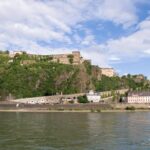
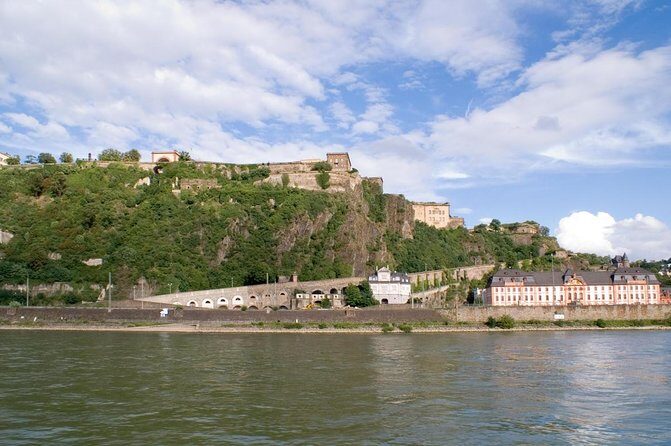
If you want your Koblenz time to count, starting at Ehrenbreitstein Fortress is the right move. This fortress sits about 118 meters above the Rhine, and it was built as a fortification to guard the middle Rhine region, constructed between 1817 and 1828. It’s also the second largest fortress in Europe, so even if you’re not a “fortress person,” the scale lands quickly.
You’ll also hear the human side of the place. Back in 1672, during war between France and Germany, the Archbishop refused requests from both sides for troops to pass by the Rhine. That kind of political friction is exactly why this area mattered. And if you enjoy literature, the fortress is linked to Lord Byron, who wrote about the stark, battered look of Ehrenbreitstein—capturing the feeling of stone and conflict.
Practical tip: your guide begins you right at the fortress area, not at the bottom of the hill. You’ll likely want to dress for wind and cool air, since hilltop viewpoints often feel harsher than the streets below. Even if you’re traveling light, a layer can make the view time more comfortable.
You can also read our reviews of more tours and experiences in Koblenz.

Fortress visit time: plan for the “wow” moment
You should expect about 1 hour 20 minutes at the fortress. That’s a realistic window to see the main viewpoints and learn the context without feeling rushed into a “checklist-only” visit. The catch: entrance fees for the fortress and the cable car ticket are not included, so budget for those separately.
Also note how the fortress is reached: it’s connected to Koblenz by cable car. That means you’re not just walking uphill for a view. You’re using the modern link that keeps the fortress connected to the city’s rhythm.
Old Town Koblenz on foot: a compact loop with a clear story
After the fortress, you transition into Old Town with a guided walking segment designed to stay focused. This is where Koblenz becomes more than a viewpoint. You get a string of landmarks that feel chronological: Roman origins, church history across centuries, and civic symbols tied to local identity.
What I like here is the logic. You’re not hopping randomly. Each stop reinforces the theme of Koblenz as a meeting point along the Rhine, and then as a town that built itself around religion, power, and shared public spaces.
Because the entire tour is around three hours, your best strategy is simple: stay with your guide and don’t drift into side streets just to “see what’s there.” You’ll see enough, and your time will stay balanced between viewpoints and street-level landmarks.
The walking pace is tour-friendly
The tour is aimed at people with moderate physical fitness. That usually means steady walking, likely some stairs/uneven surfaces in older streets, and enough movement to justify wearing comfortable shoes. If you’re the type who needs frequent long breaks, this may feel tight—especially because the schedule assumes your group stays together.
Münzplatz: the Roman confluence origin you can actually point to
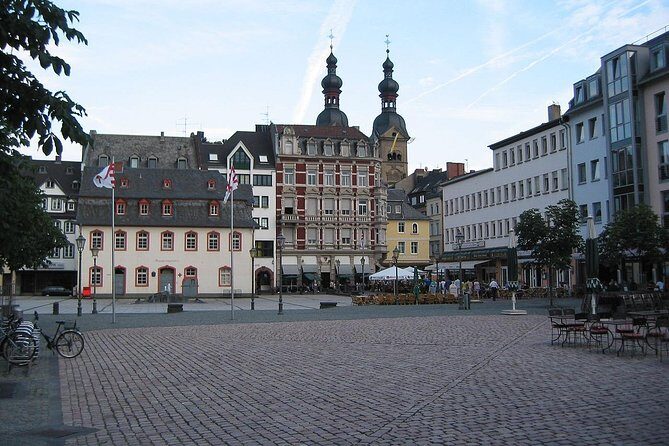
Münzplatz is one of those squares that looks straightforward until a guide connects it to deep roots. The name comes from the electoral coin called Münz, minted in the 11th century. That’s already a clue that this wasn’t just a scenic stop—it was economic and political territory.
Then you get the more jaw-dropping part. On Münzplatz’s site, Romans first founded a Castellum apud confluentes, described as a fort at the confluence. That confluence story is why Koblenz owes its name to the location where rivers meet and move goods, armies, and people.
You’ll only spend about 15 minutes here, and that’s fine. This isn’t a long museum moment. It’s a “get your bearings fast” square. Your guide helps you connect what you see now—square, streets, the city’s layout—to what was happening here centuries ago.

Why this short stop works
A 15-minute stop can feel like filler, but not in this case. You’re absorbing a major origin point early in the walk. If you skip it or rush it alone, the rest of the Old Town landmarks can feel disconnected.
Liebfrauenkirche and the onion-domed skyline
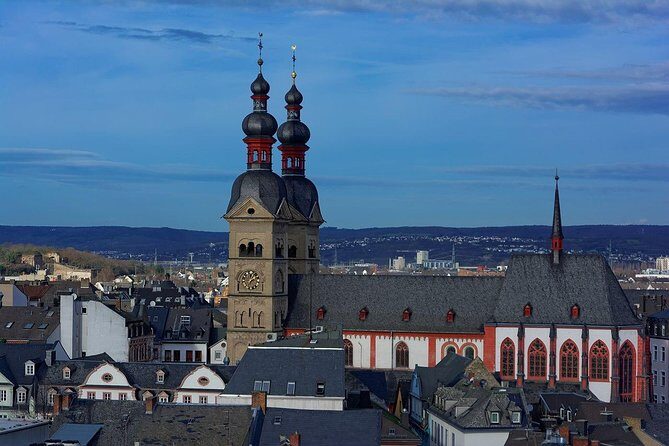
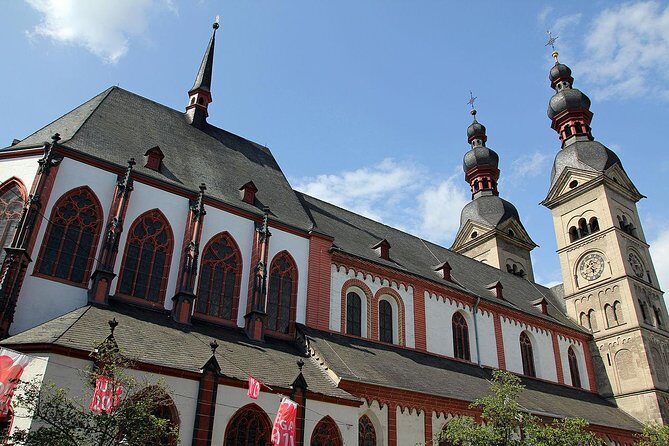
Next comes Liebfrauenkirche, with its recognizable onion domes. It sits on the highest point of the city, so it naturally becomes a compass marker for where you are and how the city sits on its rise.
The church’s timeline hits multiple eras. It’s a 17th-century construction that was destroyed during 1944. After that, it was rebuilt again in 1955, so you’re seeing continuity, loss, and renewal in one footprint.
A detail I’d pay attention to: during the French Revolution, Liebfrauenkirche was one of the main parish churches. That’s a reminder that Koblenz didn’t develop in isolation; the big European political storms washed into everyday local life.
You’ll spend about 15 minutes there, and it’s a good match for a guided outdoor-and-interior-style viewpoint (depending on what your guide focuses on). Since there’s no paid entry cost for this stop, your time investment is mostly about understanding the symbolism.
A quick but meaningful church pairing
This church stop sets up a contrast with the next one. If you enjoy comparing styles and eras, this sequence gives you variety without requiring extra tickets or extra time.
St. Castor: Carolingian bones of Koblenz
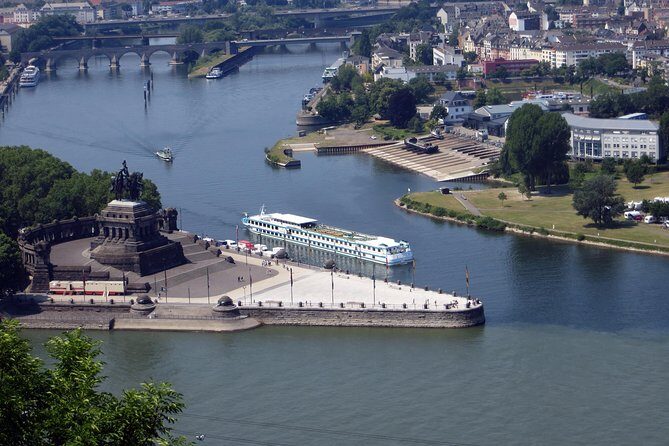
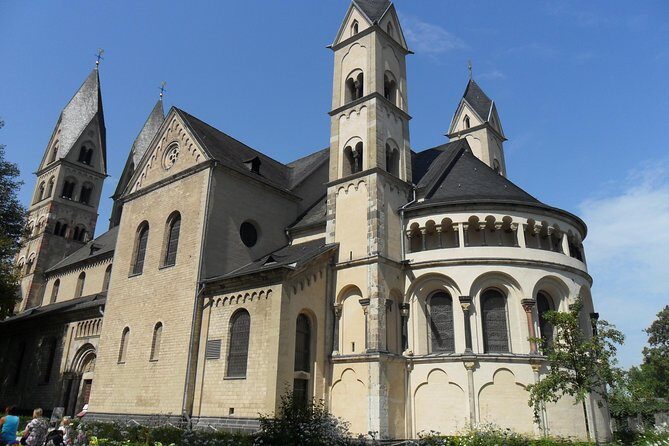
The Basilica of St. Castor is the oldest church in Koblenz, and it’s built in a way that makes age feel real rather than theoretical. The key dates: it was constructed by the Archbishop of Trier between 817 and 836, with support from Emperor Louis the Pious. This is a Carolingian proprietary church—meaning it was tied closely to the church and imperial power structure of the time.
You’ll likely notice the difference in atmosphere right away. Medieval to Carolingian history can feel heavy, but on a guided walk, the story becomes easier to carry. Your guide can connect this to how the area mattered long before it became a modern tourism stop.
The time here is short—about 15 minutes—but the age is not small. This is one of those stops where you might want to pause and look up, or slow down enough to see what your guide points out, because the “oldest” claim deserves a moment of attention.
Schangelbrunnen and the civic symbols of Koblenz
Then you reach Schangelbrunnen, at the city hall area. It’s a perfect example of how a fountain can act like a town’s memory. The word Schängel traces to Koblenz’s allegiance to France from 1794 to 1813—a long period that left cultural marks.
The fountain was designed by Carl Burger and dedicated to the poet Josef Cornelius in 1940. So even if you’re not a fountain person, the story behind the design gives you something to “read” in the scene instead of just taking a photo and moving on.
This is also one of the stops where timing matters. With only about 15 minutes, you want your group to treat it as a quick story stop: look at the fountain, listen to what it represents, and then move on.
Deutsches Eck: the Kaiser Wilhelm memorial and the Rhine bend
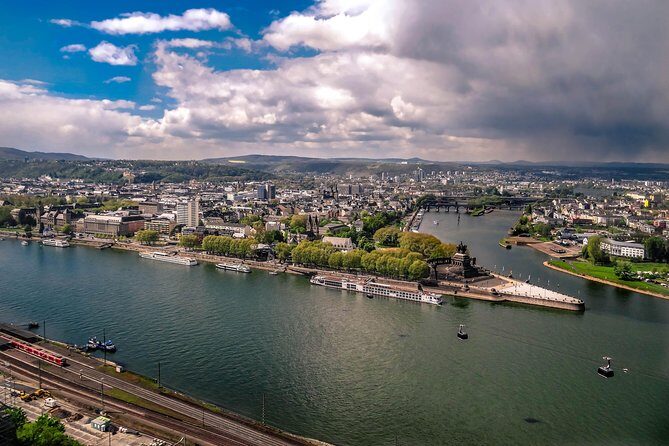
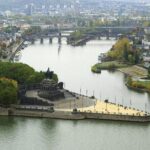
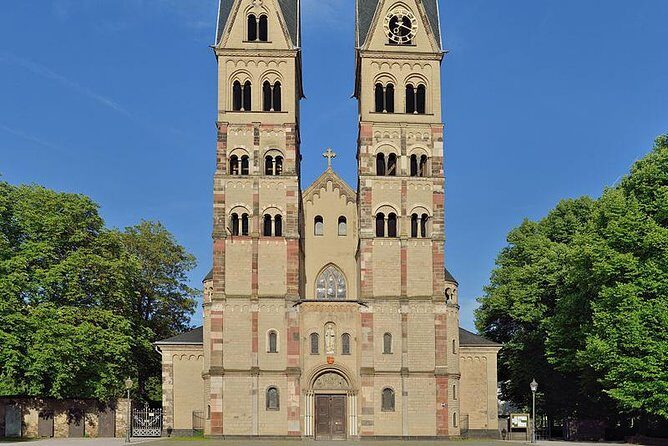
The final stretch leads to Deutsches Eck, also known as the headland in Koblenz. The Kaiser Wilhelm memorial was erected in 1897, and Deutsches Eck is the big closing landmark for the tour.
The name itself is tied to Kaiser Wilhelm as the first German Emperor. This makes the stop feel both local and national—exactly why it works as an end point. You’re finishing at a place that visually anchors the city to the Rhine and to the wider story of Germany’s formation.
You’ll spend about 20 minutes here, so it’s long enough to take in the view and connect it back to the fortress. After Ehrenbreitstein, this final viewpoint feels like the city’s lower, more human perspective.
Price and logistics that actually make sense
This private tour costs $438.73 per group, up to 15 people, and runs about 3 hours. That pricing model is the main value lever. If you fill the group, the per-person cost drops sharply; if you travel as a smaller group, you’ll pay more per person, but you still get the benefit of a guide tailored to your group’s pace.
What you should note up front: the price includes the licensed guide, but it does not include transportation costs, entrance fees for Ehrenbreitstein Fortress, or cable car charges. So think of the base price as paying for the guided time and the structured route, while you separately budget for getting into the fortress and reaching it by cable car.
You also get a mobile ticket, and the tour starts and ends at specific landmarks along the river (start near Greiffenklaustraße; end near Konrad-Adenauer-Ufer). That helps if you’re pairing this with another Rhine walk later, or if you want to keep your time-efficient sightseeing tight.
When the timing choices matter
You can choose a morning, afternoon, or evening departure time. The practical effect is that your best light for Rhine views may vary. Morning tends to feel crisp and clear; late day can offer softer light. Since the tour depends on good weather, pick the time that matches your comfort for cooler breezes and hilltop exposure.
One more reality check: the experience is designed for good conditions, and if poor weather cancels it, you’ll be offered a different date or a full refund. Since it’s non-refundable if you cancel for any other reason, it’s worth waiting to book until you have at least decent weather confidence—or keeping your plans flexible.
Who this Koblenz private tour suits best
This tour is best for you if you want a focused, guided route that mixes a major landmark with real Old Town texture. It’s also ideal if you like learning context—Roman origins at the confluence, church histories spanning centuries, and civic symbols explained in plain language.
It fits well for:
- Couples or small groups who don’t want to juggle planning, entrances, and directions
- First-timers who want the city’s main story in a short visit
- People who value a guide who can keep momentum without turning it into a “race”
- Anyone who enjoys viewpoints but doesn’t want only sightseeing-from-a-distance
A possible mismatch: if your group hates time limits or needs long, slow breaks at each site, three hours can feel tight—especially with the fortress visit and the walking portion combined.
Should you book the Koblenz Old Town with Ehrenbreitstein Fortress tour?
I’d book it if you want your Koblenz day to feel organized and rewarding, with the Rhine Valley view first, then a guided walk through meaningful Old Town stops that are mostly free to enter. The format is strong: private attention, clear pacing, and enough time to connect fortress, churches, squares, and Deutsches Eck into one story.
Skip it or reconsider if your schedule is extremely inflexible or if your travel dates don’t allow weather wiggle room. Since the experience needs good weather, you’ll be happier if your plan includes a backup option for the day.
If you like tours that are informative and keep the mood upbeat, this one’s built for that. The guide-led pacing is a big part of why it works, and the route gives you the kind of Koblenz overview you can build on later—whether you’re continuing along the Rhine or just grabbing a meal after.
FAQ
What’s the duration of the Koblenz Old Town with Ehrenbreitstein Fortress tour?
It lasts about 3 hours.
Where does the tour start and end?
It starts at Ehrenbreitstein Fortress (Greiffenklaustraße, 56077 Koblenz) and ends at Deutsches Eck (Konrad-Adenauer-Ufer, 56068 Koblenz).
Is this tour private?
Yes. It’s a private tour/activity, and only your group participates.
What’s included in the price?
A licensed guide is included.
What’s not included?
Transportation costs, entrance fees for Ehrenbreitstein Fortress, and cable car ticket charges are not included.
How do I access tickets?
You’ll receive a mobile ticket.
Are there any stops with free admission?
Yes. Münzplatz, Liebfrauenkirche, the Basilica of St. Castor, Schangelbrunnen, and Deutsches Eck are listed as free.
How long do you spend at Ehrenbreitstein Fortress?
About 1 hour 20 minutes.
What fitness level do I need?
The tour notes a moderate physical fitness level is recommended.
What happens if the weather is bad?
The tour requires good weather. If it’s canceled due to poor weather, you’ll be offered a different date or a full refund. If you cancel for other reasons, it’s non-refundable and can’t be changed.